
DKNY S/S 2014 Looks
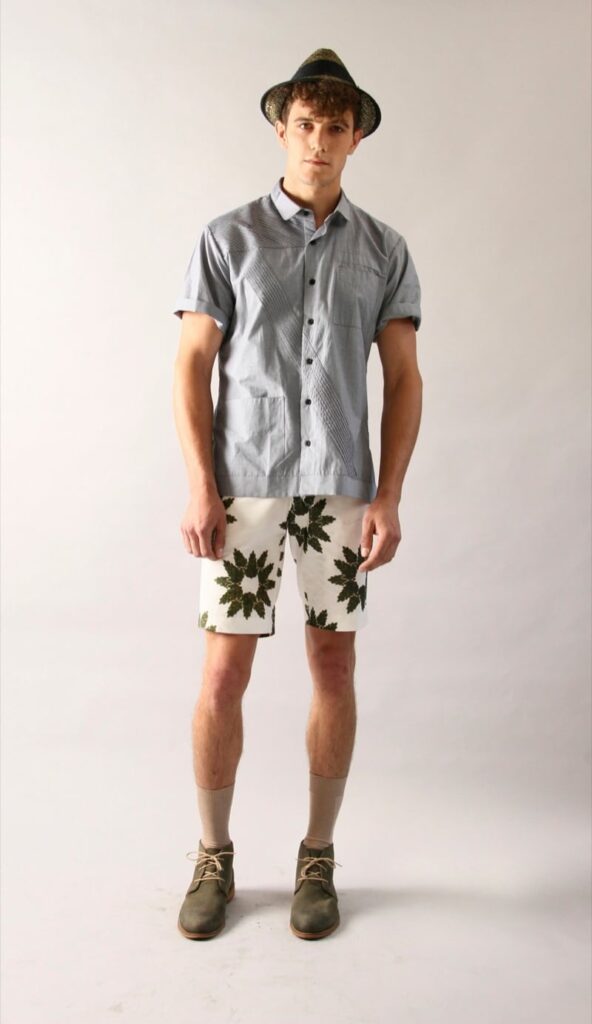
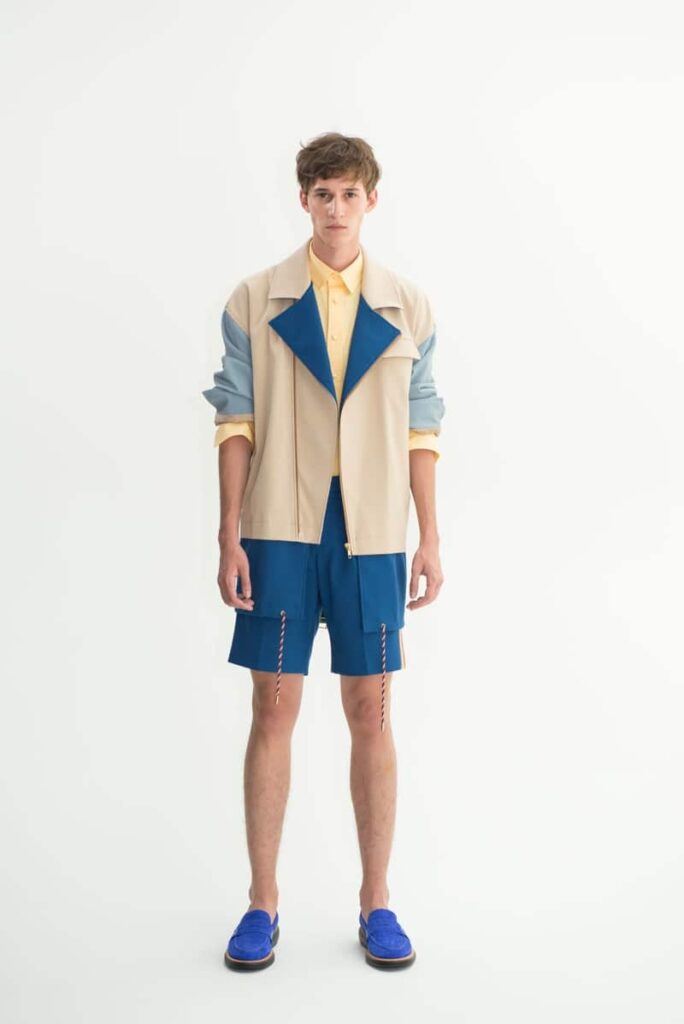
ok DKNY ~ you got me on these two looks.
Work within the fashion space including looks, brand development, digital presence, and systems supporting modern fashion businesses.
ok DKNY ~ you got me on these two looks.

Model: Abel van Oeveren
Photographer: Andreas Laszlo Konrath
Styling: Clare Richardson.
Someone please help prevent me from blowing all my money on buying this collection and winter 2013!!! UGHZ!!!
ZAMARTZ ~ My Quick Picks from New York Fashion Week
ZAMARTZ ~ My Quick Picks from New York Fashion Week
ZAMARTZ ~ My Quick Picks from New York Fashion Week
ZAMARTZ ~ My Quick Picks from New York Fashion Week
ZAMARTZ ~ My Quick Picks for New York Fashion Week

ZAMARTZ ~ My Quick Picks for New York Fashion Week
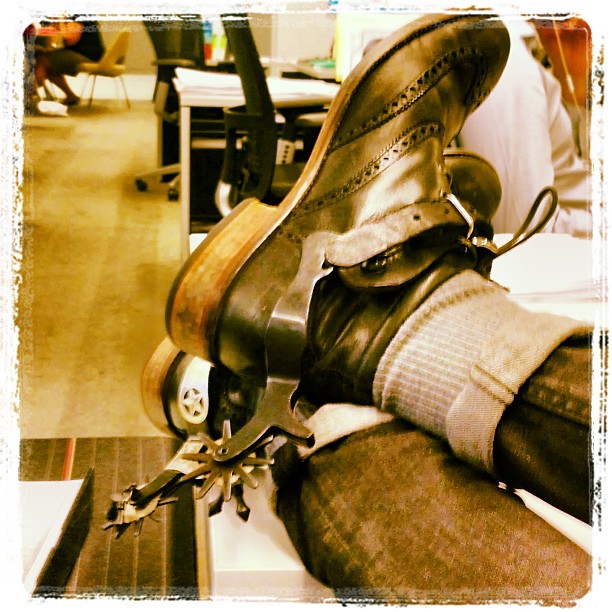
Today I wore my spurs into work – a purchase inspired by Tanya Johnson and endorsed by Peter Kovacs. I was not able to find a place in manhattan to purchase them so Amazone.com is your best bet. Some notes :: Hard to walk down stares, they do make that cowboy “clink” sound (so satisfying) and they are definitely something novel to see at any job involving suites!
| ♠️⭐️
| Read Insta-comments -> http://bt.zamartz.com/18DKxH1

All that fashion talk that no one understands! A beautiful Lorem Ipsum alternative.
Bag ‘N’ Noun relaxed printed jacket printed oversized Prada backpack white shirt collar sheer white Converse. Prada Saffiano green leather shorts capsule Prada A.P.C. Metal collar necklace chiffon Acne mint button up. Dress Missoni rose gold Copenhagen Colette chambray shirt Mulberry Elle.
Cashmere Chanel I. cotton Raf Simons denim. Shoe center part Saint Laurent Maison Martin Margiela razor pleat silver collar knitwear printed nails oversized sweatshirt round sunglasses. Motif preppy Fjallraven indigo denim crop statement. Strong eyebrows knot ponytail dark red lipstick black clutch trouser playsuit.
Plaited Weekday parka print cuff. Tulle chunky sole flats chelsea boot Paris skirt backpack Choupette. Céline neutral casio grunge street style loafers Cara D. peach Karlie K. rope necklace. Miu Miu vintage ankle boots Lanvin headscarf 90s tucked t-shirt.
Photoshoot with an 80s work-out theme on the UWS. In a $1.3M apt. (of which we got to stay the night in a huge. huge. huge. bed)
I say more? | ??? | Read Insta-comments -> http://bt.zamartz.com/18RYO4V
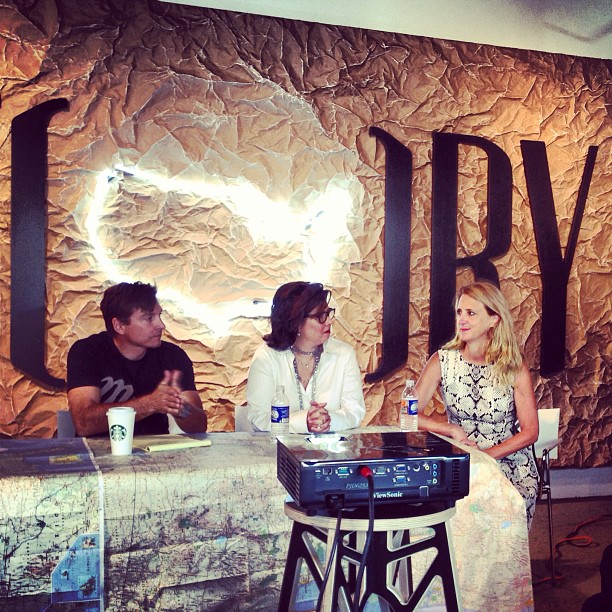
On Aug. 20, 2013, I was glad to stumble upon a discussion on “American Made” held at Story in the downtown Meatpacking District. This open panel raised a lot of good points and turned into a surprisingly constructive conversation. The discussion touched everything from factory safety and product sustainability to the idea of an American manufacturing rebirth—and the outdated mindsets that have treated labor as a commodity.
All of those topics can stand on their own, but I want to drill into the question I introduced: the stigma of learning a trade skill, and the lack of a younger workforce to support any real rebirth in U.S. manufacturing and craftsmanship.
After graduating high school, most students are pushed toward college with the promise that it leads to a higher salary and a stable career. Many are also told that certain concentrations—business, finance, and similar tracks—will practically guarantee a “high salary” job. On the rare occasion that this actually plays out, good for them: it takes hard work and a bit of luck. In reality, plenty of graduates enter the world with no job, let alone one in their field, and they’re already buried in debt.
Meanwhile, many of the options that used to exist during America’s manufacturing boom are now all but extinct. The workforce that has kept these industries alive is quickly retiring, and there’s no replacement line behind them. Family-owned businesses and trade schools that once sustained this lifeline of labor are too often treated like dumping grounds for glamour-less work—or a place to send “problem kids” to be straightened out by hard labor. The idea of honing a skill and becoming a craftsman has been reduced to micro-businesses, niche products, and small pockets of urban economy rather than being recognized as a real path to a stable, respected career.
In the American fashion manufacturing industry, it’s nearly impossible to find quality sewers, pattern makers, pattern cutters, leather workers, and other skilled labor—let alone people who actually want to learn the craft. Many of these roles can pay $40–100k a year, yet there isn’t a strong workforce pipeline to replace retirees, and there aren’t enough craftspeople to expand as demand returns.
This doesn’t improve until we revive the idea that apprenticing is education—and that working with your hands is not second-class, not a last resort, not a stereotype for the underprivileged, the simple-minded, or a placeholder for cheap immigrant labor. We should welcome back the idea of being a master of a trade as something honorable and valuable. We should support companies that invest in employees, and recognize the obvious truth: when a company stands behind its people, it usually correlates directly with the quality and standards of its product.
This isn’t complicated, but it does require people to stop pretending it’s someone else’s problem.
If “American Made” is going to be more than a label, we need to stop treating skilled labor like a backup plan. You can’t rebuild manufacturing with marketing. You rebuild it with people.
Made + Story Panel = Nanette Lepore, Alex Bogusky and Sheryl Connelly
photo via @nanettelepore