


A look at lifestyle content exploring how work, creativity, and personal interests intersect and influence decision-making.


There’s a particular kind of quiet you can find in Brooklyn when you’re near the water—busy, but softened. A long stretch of boardwalk, the river breathing beside it, and the skyline set back like a thought you can’t quite finish.
He sits with a book open in his hands, cap pulled low, knees folded in. The page has that steady pull that makes the rest of the world feel optional. Around him, the city keeps its own pace: distant footsteps, a few voices drifting past, the metal rails holding the edge between land and water.
It’s an ordinary scene, which is why it feels like a small miracle. The kind of moment you don’t plan for, but later you remember the light and the space and how simple it looked to be completely elsewhere without leaving.
I like the way places can live alongside us like that—how a walkway, a bench, a view of towers and clouds can become part of a memory without announcing itself. Brooklyn doesn’t always give you room to exhale, but sometimes it does, and you take it when it comes.
Book Boo in BK, paused mid-chapter, with the whole city behind him like background noise.
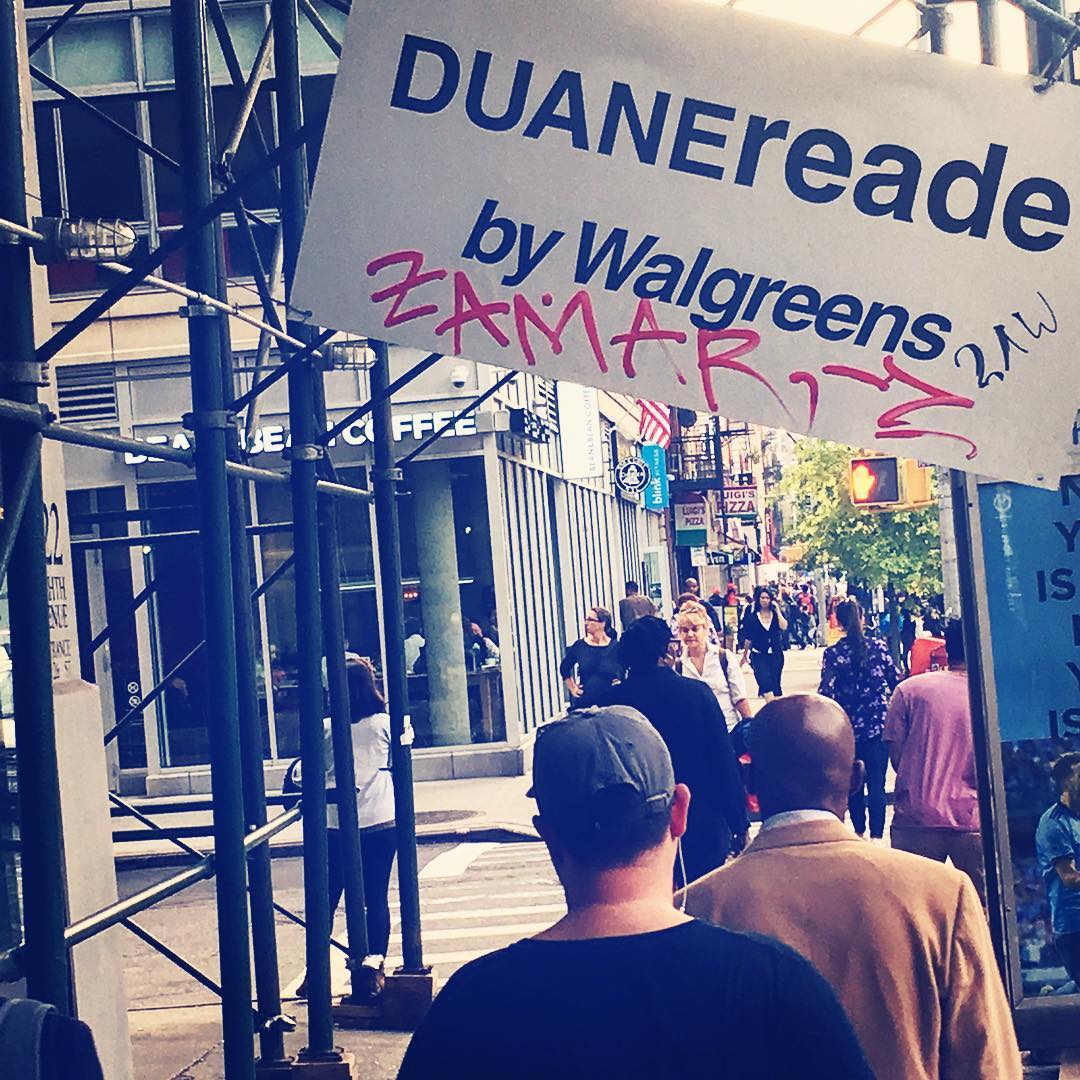
As Seen in NYC doesn’t announce itself. It shows up halfway through a block, under scaffolding ribs that turn the sidewalk into a narrow corridor of shadow and noise. The city is loud here—traffic bouncing between buildings, metal humming overhead—and most people are already past before they notice anything at all.
A DUANEreade by Walgreens sign hangs above, big, official, corporate to the core. And underneath it, sprayed fast and unapologetic, is ZAMARTZ. Not sanctioned. Not polished. Just there.
That’s New York. Even the most controlled branding eventually gets interrupted. Someone leaves a mark. A clean surface becomes lived-in.
People move beneath it without breaking stride—heads down, shoulders forward, chasing the next light before it turns red. The crosswalk raises its little stop hand. The corner pretends to be a pause. Nothing actually stops.
I like this kind of detail because it isn’t trying to be iconic. It’s a reminder that the city is layered: scaffolding and storefronts, temporary structures and permanent ambition, private intent written in public ink. The mundane here isn’t empty—it’s textured.
If you’ve ever walked under scaffolding and felt the world compress into a tunnel, you know the feeling. And if you look up at the right moment, you might catch the city leaving a note.
Sometimes, it even says your name.
There’s a certain kind of quiet you only find in a room full of plants. Not silence exactly—more like a soft, green breathing. Leaves cut across the light like slow-moving shadows, and everything feels paused for just a second, as if the city outside is holding its noise at the door.
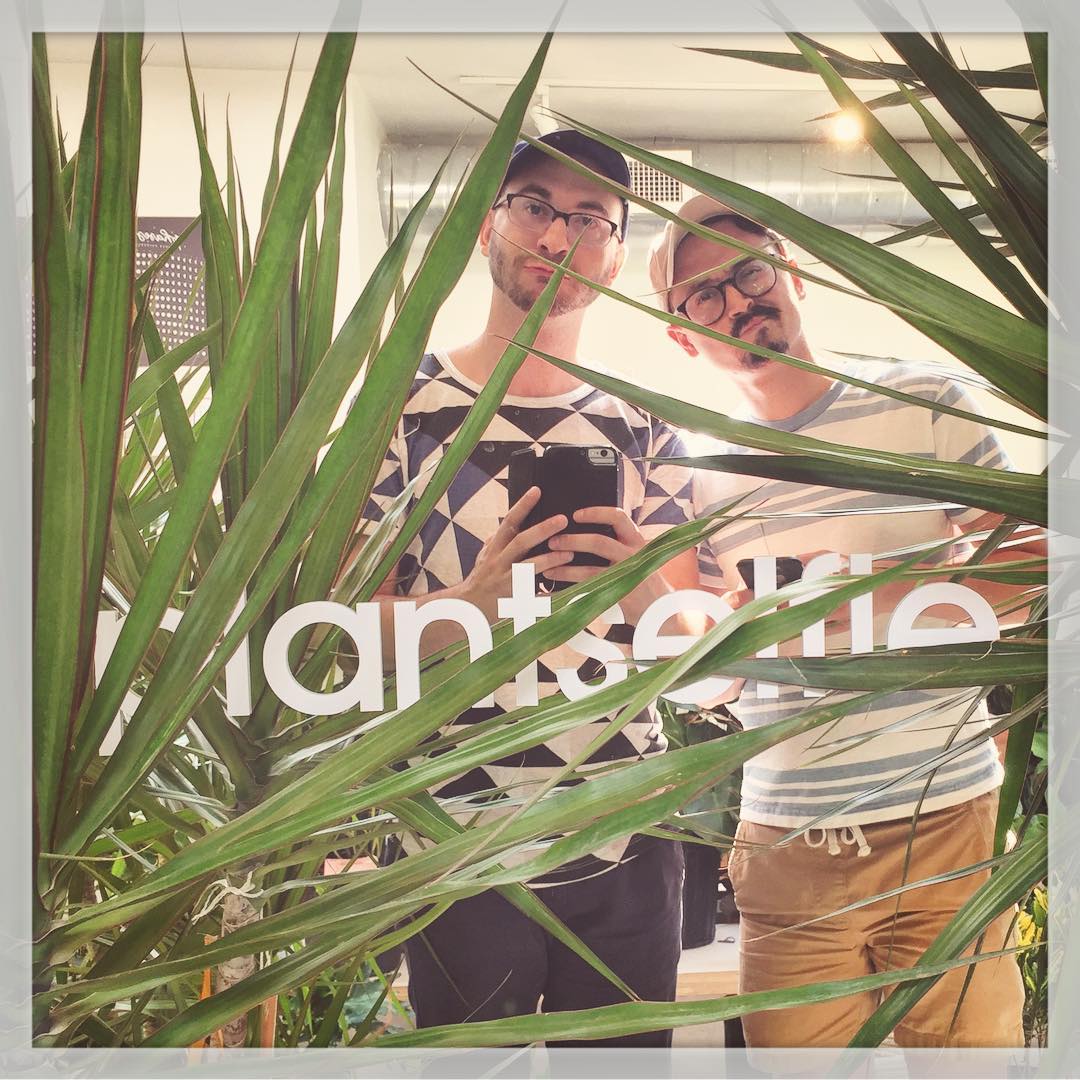
Boys in the Jungle is what we called it, which sounds dramatic until you realize it’s just two of us standing close, half-hidden behind long blades of green. A mirror selfie, sure, but also a small record of being together in a place that asks nothing from you except to look.
The plants do what old houses do: they make the air feel lived-in. They hold onto warmth. They turn the ordinary—glass, fluorescent light, a phone held at chest height—into something a little more like a scene you’d remember later.
We’re in Brooklyn, but the image doesn’t insist on location. It insists on texture: patterned shirts, hats pulled low, the bright wash of indoor light, and the bold interruptions of leaves in the foreground. The jungle isn’t wild; it’s curated. Still, it has that same effect—making you feel smaller in a good way, like you can step back from yourself.
Sometimes that’s all a photo needs to do: prove that a moment existed, green and uncomplicated, before you walked back out into the day.
| ?️⛳️?
| #minigolf #boyfriendswhobeach #avalon
| Angel and myself ended the summer with a trip to the New Jersey shore with my parents (Donna and Ray).
Continue reading End of Summer Cuteness – New Jersey ShoreOn the table, two small boxes sit like a quiet conversation. Denim-blue sleeves, gold lettering. One reads A to Z, centered and calm. The other scatters the alphabet across its face, as if the letters were poured out and left to settle where they pleased.
It’s a matchbox, but it doesn’t feel like a disposable thing. It feels kept. The kind of object that lives alongside you, waiting in a drawer for the night the power goes out, or the evening you decide to light a candle just to make the room softer.
I like how simple design can hold memory. An alphabet is one of the first maps we learn, a way of naming the world so it stops being a blur. Here it’s stamped in gold, warm against the textured blue, turning a plain utility into something close to a small heirloom.
AtoZ Matchbox is a tiny reminder that everyday items don’t have to be loud to be meaningful. They can be steady. They can be beautiful. They can sit in the background of your life until you need a spark—then suddenly they’re the whole moment.
The weekend ended the way some weekends do—slowly, in the soft middle space between one last pour and the drive home.
We were out among the rows of vines on the North Fork, where the green feels patient and the air has that quiet, worked-in kind of calm. Someone sits on a set of painted picnic benches, glass in hand, smiling like they’re keeping a small secret. The colors beneath them look almost childlike, like something meant for a playground, but here they belong to the day: bright stripes against grass and trellis lines.
There’s a particular comfort to vineyards. They’re orderly without being stiff. You can hear the place living—leaves shifting, distant voices, the thin clink of glass—while time moves at a different pace. It’s easy to let the weekend stretch longer than it should, to pretend the week ahead is only a rumor.
By the end, though, the sweetness turns reflective. Not sad, just settled. Like closing a door gently instead of letting it swing.
If you’ve ever tried to hold on to a Sunday afternoon, you know the feeling: a small, warm ache to keep what’s good exactly where it is—sunlight, laughter, the last sip—before it becomes memory.
North Fork Wine Country has a way of feeling both ordinary and a little unreal—like the day is sun-warmed at the edges, and the rest of it is quietly humming underneath.
We leaned into a weathered shingle wall, close enough to share shade and a laugh, the kind that comes easy when you’ve already decided not to rush. There’s something about wine country weekends that makes time behave differently. Minutes loosen. Conversations stretch out. Even the small moments—sitting still, shoulders touching, looking into a camera—feel like they’re holding onto you.
I like the North Fork for its softness. It isn’t trying to be a grand performance. It’s tasting rooms and back roads, the gentle clink of glasses, and that slow drift from one place to the next. Rosé tastes like summer even when summer is almost over, and the air feels like it’s been filtered through salt and fields.
Traveling together can be loud in other places—planning, lines, landmarks—but here it’s quieter. You notice textures: cedar shingles, sunlit wood, the way the afternoon settles into your clothes. You listen to one world press up against another: weekend crowds and local calm, bright smiles and the private comfort underneath them.
We came for a simple getaway. We left with that rare feeling of being more settled than when we arrived.
Some evenings feel like they’ve been waiting all day to arrive.
The backyard is still, the kind of stillness that doesn’t ask for silence, just a little attention. Light pours through the trees and settles on the deck rails, turning plain wood into something warmer, almost new. It’s the same yard, the same familiar space, but the hour changes everything—softening edges, stretching shadows, making the ordinary look briefly cared for by the sun.
Boys in the back yard can mean a lot of things. Sometimes it’s noise and motion. Sometimes it’s just being there—sitting down, breathing out, letting the day fall away in small pieces. A chair that holds your weight. A breeze that moves through leaves without much effort. A dog nearby, content and watchful, as if this routine is part of the yard’s foundation.
I like moments like this because they feel unedited. Nothing is being improved or renovated. There’s no big event, no announcement—just a quiet scene that reminds you how much of life is made from repeat places and passing light.
If you stay long enough, the sun slips behind the trees and the yard returns to itself. But for a while, it’s enough to sit on the deck and let the evening do what it does best: make a home feel bigger.
Lunch at Kitchen Kettle Village has a way of slowing the day down. Out on the patio, the tables feel tucked into summer—shade from the trees, the low murmur of people passing by, and that easy kind of light that makes you forget to check the time.
We ended up lingering longer than we planned, letting the afternoon stretch. There’s something comforting about eating outside when the air is warm but not heavy, when a breeze moves through and everything feels a little less urgent. Even a simple lunch tastes better when you can hear the world around you—chairs shifting, glasses clinking, conversations floating in and out like background music.
Kitchen Kettle Village sits in that familiar Pennsylvania rhythm: busy, but gentle. It’s the kind of place that invites wandering after you eat, the kind of place where you can carry a relaxed, full feeling from one shop to the next without needing a reason.
By the time we finished, it didn’t feel like we’d just grabbed lunch. It felt more like we’d paused—just long enough to let the day settle, to be present, and to enjoy a small pocket of summer.
Evenings like this always feel like the first real page of summer.
A small backyard turns into its own little world: warm water breaking into bubbles, patio lights glowing against the fence, leaves leaning in from above as if they’re listening. The air holds that early-summer softness—half heat, half promise—and everyone settles into it without needing to say much.
There’s a particular comfort in these ordinary celebrations. No big plan. No itinerary. Just friends gathered close, shoulders wet, voices rising and falling with the water’s churn. Somewhere nearby, the city keeps humming, but it feels distant—like it belongs to another life on the other side of the fence.
I like how moments like this make a place feel lived-in. Not staged, not polished. Just used in the best way. The patio becomes a memory machine: light, laughter, the smell of leaves at night, and that quiet realization that the season has finally shifted.
The summer starts, not with fireworks, but with a backyard and a little warmth you can sink into.