Soba Lunch Break

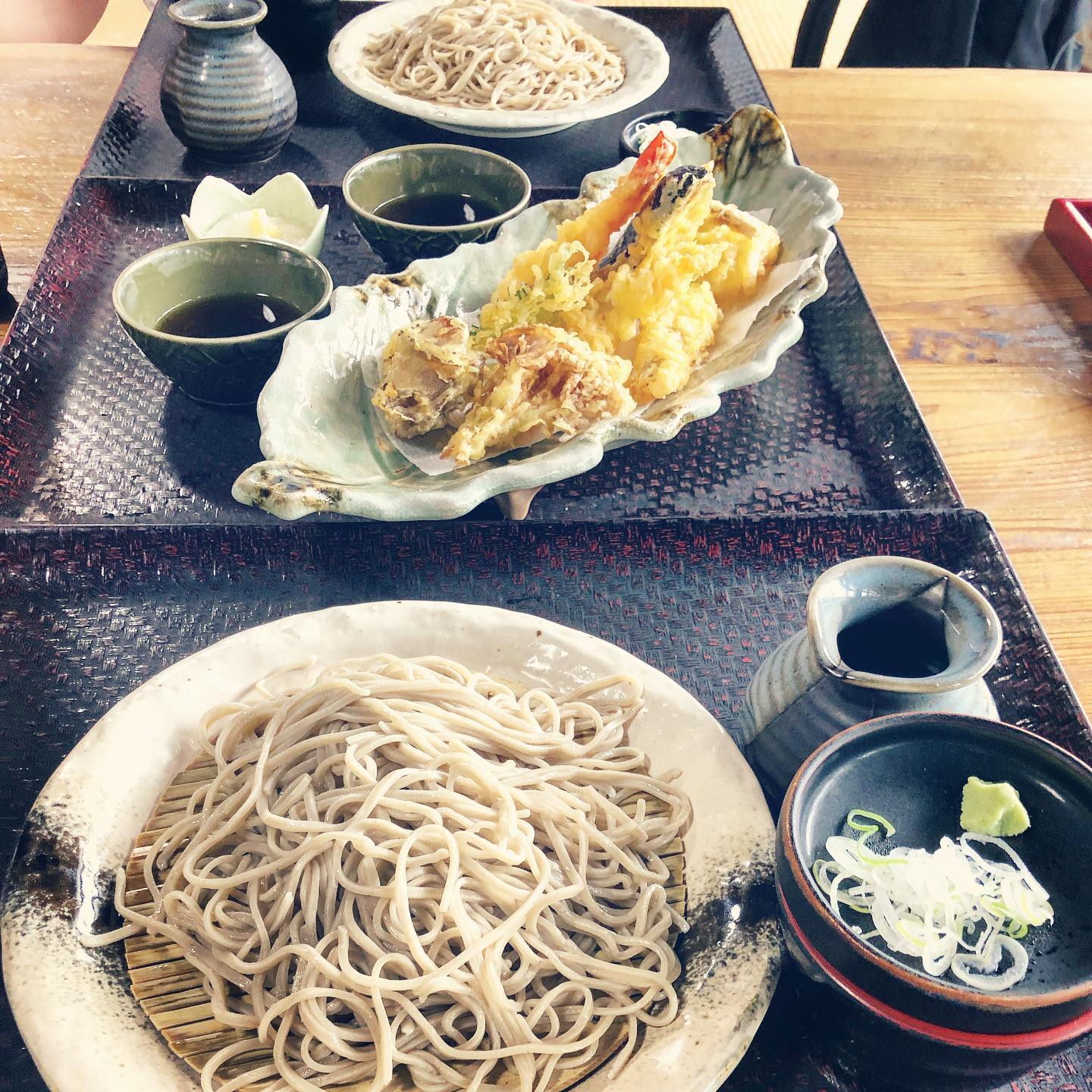
Lunch arrived on a lacquered tray like a small, quiet ceremony.

Two plates of soba sat in soft heaps, the noodles pale and unshowy, the kind of food that doesn’t need to perform. Beside them were the familiar accompaniments—dark dipping sauce in little cups, a dish of sliced scallions, a small dab of wasabi, and a ceramic pitcher set down with the same care as everything else.

The tempura was the bright interruption: light batter, crisp edges, shrimp and vegetables stacked like they’d just been lifted from the oil. Even before the first bite, the table felt steadier, as if the afternoon had agreed to slow down.

There’s something reassuring about a lunch like this, especially on the road. You do the simple motions—dip, lift, slurp, pause—and the noise in your head thins out. The meal becomes a kind of marker, a brief place to sit while one part of the day hands itself off to the next.

I don’t remember every detail of where I was headed afterward, but I remember this: buckwheat and broth, crunch and steam, and the sense that for a little while, nothing needed to be more complicated than eating.

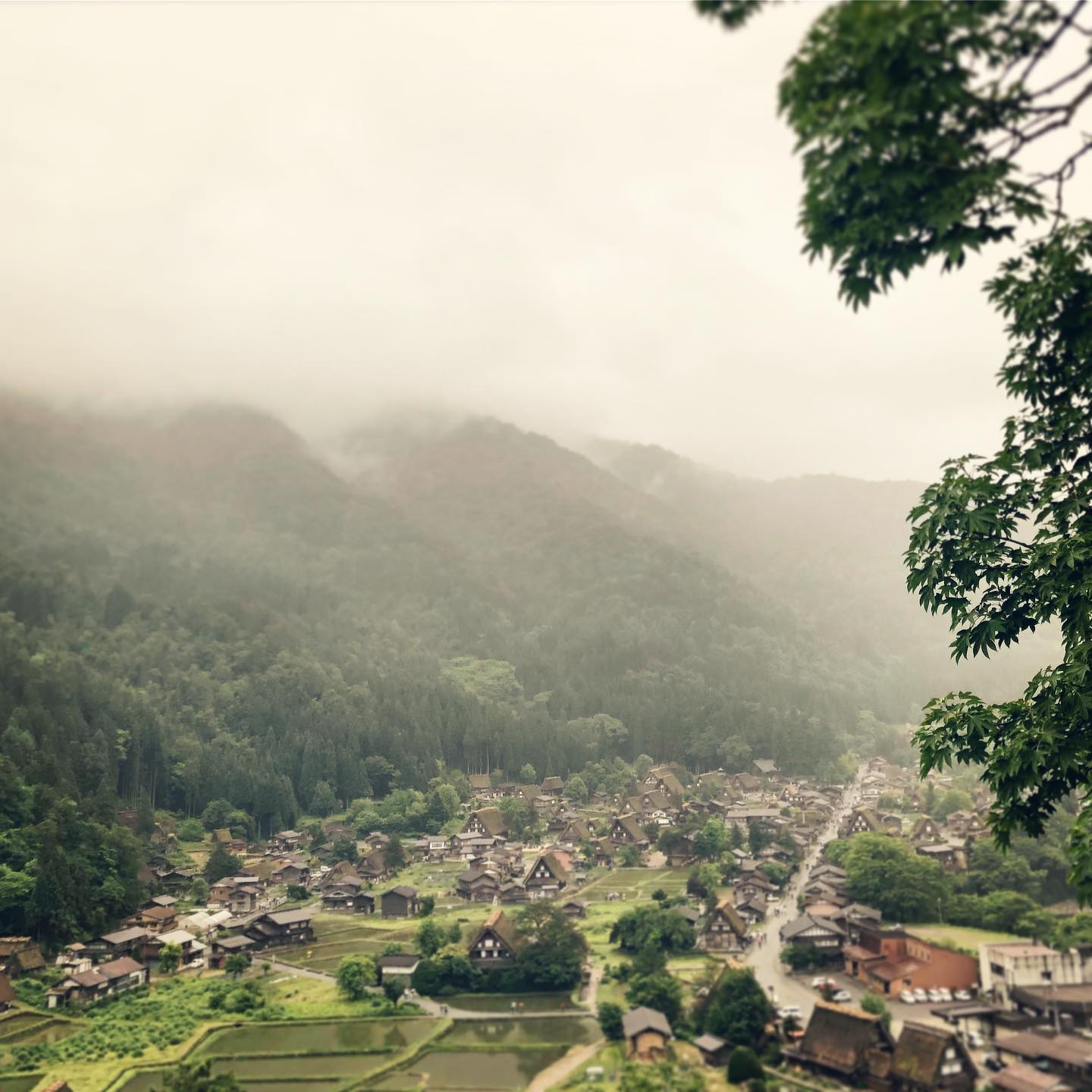
If you’re traveling through Shirakawa-go Village, a soba break like this is an easy way to let the place sink in.

Ryokan Dinner Delux

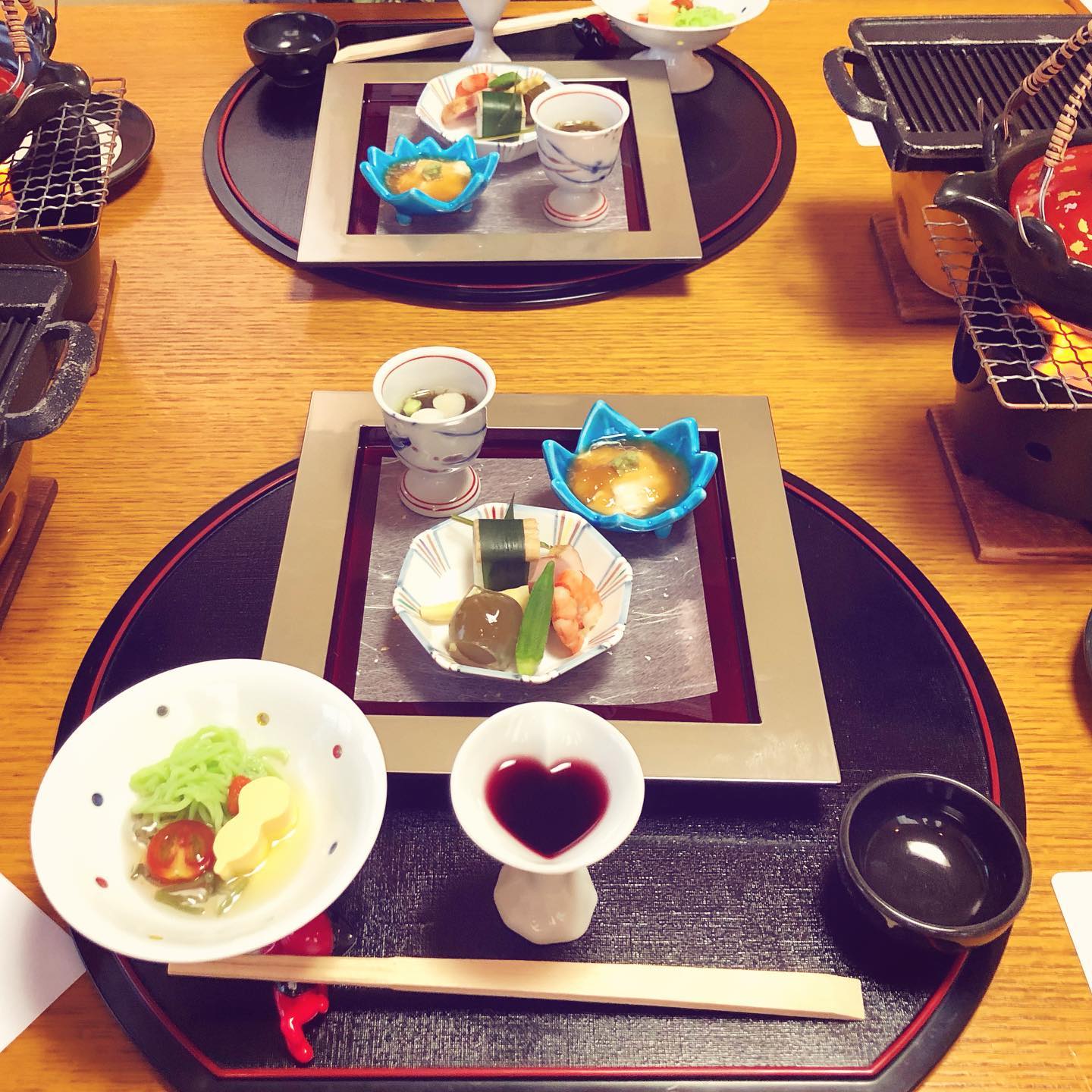
A ryokan dinner has a quiet way of making the world feel smaller.

Two trays set on warm wood. Small bowls that look like they were chosen as carefully as the food inside them. A blue dish holding something soft and shining. A little cup that asks you to slow down. Even the sauce feels like it has a mood—dark, still, and poured into a heart-shaped bowl as if to remind you this is meant to be noticed.

Ryokan Dinner Delux is not loud. It doesn’t try to prove anything. It just arrives, course by course, like a house settling around you. The table becomes a landscape of textures: smooth porcelain, lacquered edges, steam rising where it can, and a grill waiting nearby with its own patient heat.

There’s a kind of comfort in being fed this way. Not the heavy comfort of too much, but the gentle comfort of enough. Enough variety, enough warmth, enough time.

I always forget how much a meal can feel like a place until I’m sitting in front of one like this—hands resting, mind quieting, listening to the small sounds that happen between bites.

Handmade Gold Lead design

There’s something quietly moving about handmade work that doesn’t ask to be loud. It just sits there—finished, glossy, and patient—holding the hours that went into it.

This Handmade Gold Lead design makes me think of small objects that become part of a place, the way a familiar coat hangs by the door or a set of keys lands in the same dish every night. In the photo, two dark, polished boxes rest on a worn wooden surface. The gold leaf catches the light in simple shapes: a paw print pattern on one box, and a maple leaf on the other, like a little marker of time and season.

Gold leaf work has a way of feeling both delicate and stubborn. It’s thin enough to float, but once it’s sealed into a surface it becomes part of the object’s skin. The contrast here—soft gold against deep black—feels steady, almost ceremonial, even if the box ends up holding everyday things: a ring, a coin, a note you don’t want to lose.

The caption mentions Kanazawa, Japan, and it fits. The city is known for its gold leaf craft, and these boxes carry that sense of careful tradition without looking untouchable. They look meant to be used, to be picked up, to gather fingerprints, to live alongside you.

Sometimes that’s the best kind of design: something made by hand that quietly becomes yours.

Cooking with Koji

The first thing I notice is the quiet order of the room: pans hanging in place, utensils lined up, the kind of kitchen that feels lived-in without being loud about it. Three people stand around portable burners, aprons tied on, heads bent toward the small, careful work that turns ingredients into something warmer than the sum of its parts.

Cooking with Koji sounds like a lesson in a single ingredient, but it’s really an introduction to time. Koji asks for patience the way an old house asks you to listen—subtle changes, small aromas, a shift in texture that’s easy to miss if you rush.

In the photo, there’s a calm focus as someone offers a small dish across the counter, as if passing along a secret. A pot waits, a bottle stands by, and a tray sits ready for what comes next. Nothing looks dramatic, and that’s the point. The most memorable kitchens aren’t always the ones that perform; they’re the ones that hum.

Koji sits at the center of so much Japanese cooking—miso, soy sauce, sake—quiet foundations that make everyday food taste deeper, rounder, more complete. Watching it up close reminds me that tradition isn’t a museum thing. It’s a practiced thing, repeated until it becomes natural, like reaching for the same coat in winter without thinking.

If you’ve been curious about fermenting, start here: with a simple workspace, shared attention, and the willingness to let flavor grow.

Breakfast for 2

There are mornings that feel like they’re in a hurry, and then there are mornings that settle in—quietly, deliberately—like a house holding heat in its stones.

Breakfast for 2 was the second kind. A low table, two places set, and a spread of small dishes that made the moment feel larger than it was: bowls of rice, small plates of fruit and pickles, and warm soup—everything arriving in modest portions that add up to something generous.

Across the table, two people framed by a backdrop of pale, tangled lines, like winter branches caught mid-sway. The room feels hushed, and the food does what good breakfast does: it slows you down without insisting.

I keep thinking about how meals like this make time behave differently. The clink of ceramics, the pause between bites, the small decisions—what to try next, what to save for last—turn into their own kind of conversation. Not every morning needs a speech. Some just need a table and enough care to make staying still feel natural.

And then, eventually, the day starts moving again. But for a while, it was simply breakfast, for two—quiet, warm, and complete.

Choco Mint

There’s something quietly comforting about a small, themed snack—like it’s trying to set a season for you. On the table, the mint-green boxes sit in a calm arrangement: KitKat Premium Mint beside Choco Mint Pocky sticks, both leaning into the same promise of cool sweetness. Even the packaging feels like a breath you didn’t know you were holding—mint leaves, soft color, chocolate pictured in neat pieces as if order itself could be dessert.

Choco mint is one of those flavors people argue about, but in the moment it doesn’t feel controversial. It feels simple. The chocolate is familiar and steady, and the mint lifts it just enough to make everything taste cleaner, brighter, like cold air coming in through a cracked window.

The Pocky sticks are slender and precise, made for slow snacking, while the KitKat is the opposite—something you can break apart and share, or keep to yourself without ceremony. Together they make a small pairing that’s more mood than meal.

If you’re looking for an easy treat that lands somewhere between dessert and a palate reset, choco mint kind of does the job. It’s cool, sweet, and briefly feels like it changes the room around you.

Face of a Winner

There’s a certain kind of quiet triumph that only shows up after the noise. The screen flashes, confetti scatters, and for a moment the arcade feels like its own small weather system—bright, loud, and sealed off from whatever the day was doing outside.

“Face of a Winner” is a simple title, but it catches something true: the way a camera finds you right after you’ve been trying. Not posing, not polishing the moment, just letting the result land. A crown icon, a first-place badge, and that familiar Mario Kart palette—candy colors wrapped around the sharp little satisfaction of getting it right.

I like how victory looks less like a victory lap and more like a pause. The face isn’t shouting. It’s steady, almost surprised, like the body is still catching up to what happened. In the background are characters that have been traveling with us for years, drifting through childhood memories and mall arcades, always ready for another race.

Winning doesn’t have to be a grand thing. Sometimes it’s just a single frame that proves you were there, hands on the wheel, eyes forward, and for one round at least, the world lined up.

Golden Ice Cream

Two cones, two hands, and a little shimmer that feels almost out of place in the plain daylight.

We tried Golden Ice Cream—soft serve crowned with delicate flakes of edible gold. It’s the kind of treat that looks like a dare: too pretty to bite, too bright to be real. But the first taste is familiar and simple, the way good soft serve always is. The gold doesn’t change the flavor so much as it changes the moment.

Standing outside with the street behind us, it felt like one of those small travel scenes you keep longer than you expect. A regular afternoon made slightly stranger, slightly more memorable. The cones catch the light; the gold clings to the ridges and settles into the swirl. For a minute you pay attention—really pay attention—to texture, to warmth, to how quickly something ornate becomes ordinary once you start eating it.

If you’re in Japan and you spot a shop offering gold leaf on ice cream, it’s worth stopping. Not because it tastes like luxury, but because it turns a quick snack into a quiet story: something fleeting, sweet, and bright enough to notice before it disappears.

Almost time for bed …

There’s a certain hush that settles over a place when the day is finished with you.

Almost time for bed … and the ryokan room has already done the quiet work of turning itself into a small refuge. Two futons laid out on tatami, folded comforters with deep blue patterns like water in low light, and that soft, practical order you only notice when you finally stop moving.

The walls feel plain in the best way—nothing fighting for attention. A simple arrangement on the shelf, a framed piece above it, a few belongings tucked to the side like they’ve learned to be polite. It’s the kind of room that doesn’t entertain you so much as it gives you space to hear your own thoughts.

If you’ve been soaking in onsen water and walking through evening air that smells faintly of cedar and steam, this is the part where everything slows down. Not a grand ending—just a gentle closing. You can almost hear the building settle, the way an old house does, as if it’s living alongside you for the night.

I like that nothing here insists on being new. It’s simply ready. Ready for sleep, ready for another early morning, ready for the small ritual of waking up somewhere far from home and feeling, for a moment, completely held by the quiet.

Room with a View

Some places don’t ask for your attention—they just hold it.

From the room, the view is a pale bridge suspended in a thick spill of green, the kind of structure that looks like it’s been there long enough to forget who built it first. The arches repeat like a quiet sentence. Nothing dramatic happens, but everything feels alive anyway: leaves layered over leaves, a shaded river cut below, the suggestion of cool air moving even when you can’t see it.

“Room with a View” is an easy phrase to say, but it’s rarer to feel. A good view doesn’t just show you something pretty; it gives you space to hear your own thoughts. It makes the world feel settled—worn in, not worn out. The bridge does that. It connects two sides you can’t quite see, and for a moment it makes you content to stay on your side and simply look.

In a ryokan, the day tends to slow down around small rituals: the soft shuffle of steps, the quiet order of a meal, the way light changes on paper and wood. Outside, the green presses close, and the bridge stands firm in it—stone and concrete holding their breath while the trees keep growing.

It’s not the kind of view you photograph to prove you were there. It’s the kind you return to, because it reminds you how to be still.

Boyfriend Who Bridge at Onsen

The bridge near the onsen curves forward like it already knows where your feet will land. Steel ribs cross overhead, framing a ribbon of boardwalk and sun-warmed rails. Beyond it, the hills stack up in soft green layers, and everything feels briefly suspended—half engineered, half borrowed from the mountains.

He stepped into the moment with the kind of seriousness that’s usually reserved for jokes. A bridge pose, right there in the middle of the walkway—back arched, hands planted, body making its own small span. It was simple and strange in the best way, like adding a secret door to an ordinary afternoon.

Travel is often like that. You go looking for water and quiet, and you end up finding a new angle on someone you thought you knew. The onsen promises a reset, but the real reset happens in the in-between spaces: the walk there, the light on the beams, the way laughter echoes and then disappears.

After, the path keeps curving. The forest stays put. And for a while, the day feels bigger than your plans—held up by metal, wood, and a goofy, perfect little act of balance.

Breakfast before Exploration

The day starts the way I like it best: quietly, with warm wood under everything and small dishes that make you slow down. A Japanese breakfast set arrives like a little map of the morning—rice steamed into a soft white mound, miso soup still sending up a faint cloud, and tamagoyaki cut into neat, sunny blocks.

Around it, the table fills in the details. Pickles, seaweed, a few vegetables, and bowls that feel like they’ve been used for years, washed carefully, and put back where they belong. At the edge, a small grill does its steady work, the kind of heat that makes the air smell like salt and patience.

Before exploration, there’s this: a moment to be in one place. Travel can make you feel like you’re always arriving late to your own life, but breakfast like this pulls you back. It asks you to notice textures, to listen for the soft clink of ceramic, to let the warmth of soup and the steadiness of rice set the pace.

Outside, the day is already moving. But here, for a little while, everything is arranged, balanced, and calm. Then you stand up, step out, and let the morning unfold.

Exit mobile version