Pre Dinner Cocktail

A pre-dinner cocktail can feel like a small pause button—an in-between space where the night hasn’t started yet, but you can sense it coming.

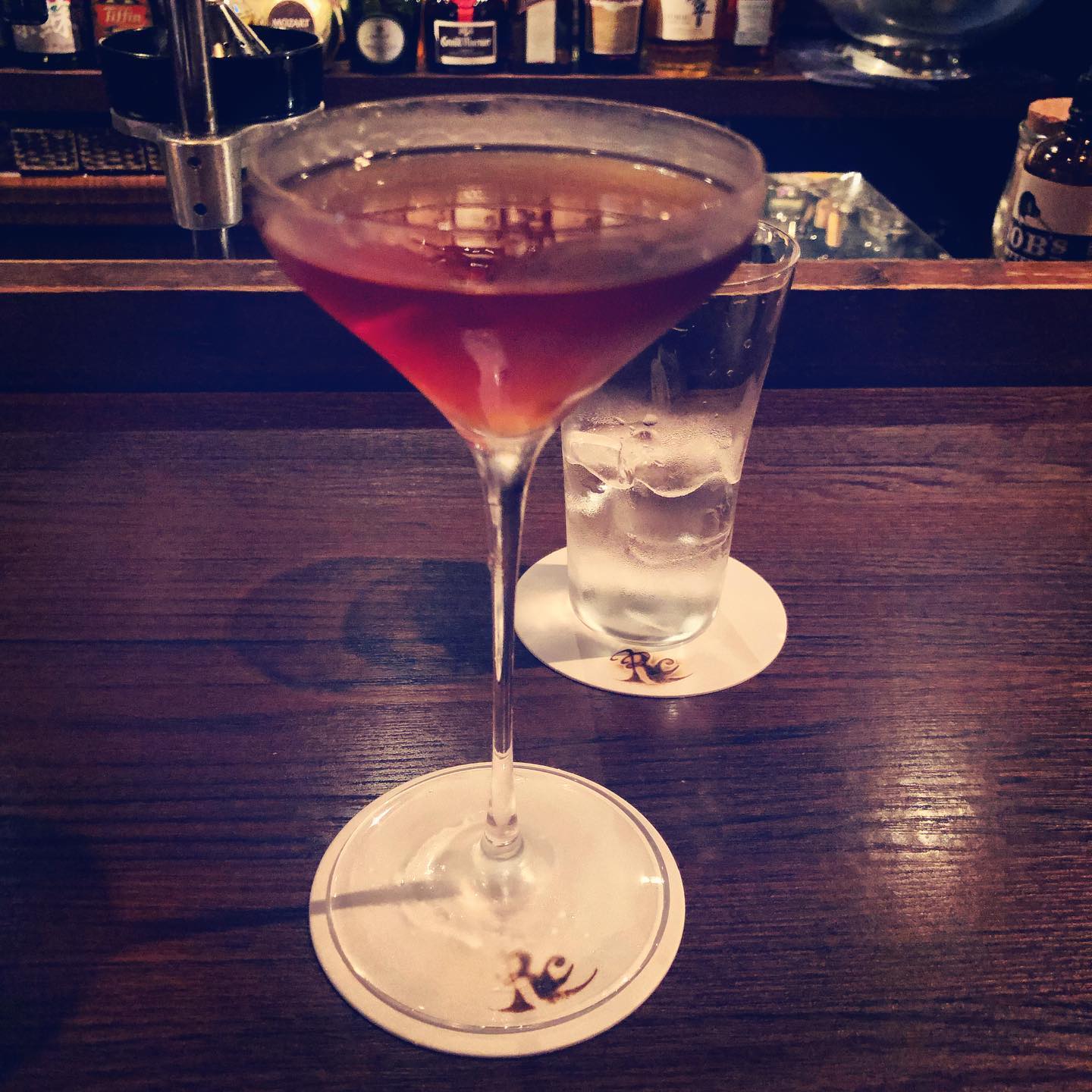
In Kyoto, I found that pause at a wooden bar counter, the kind that holds onto the warmth of the room. A stemmed glass set down gently, a deep ruby drink catching the low light, and beside it a tall glass of ice water that makes everything feel a little more deliberate. Behind the bar, bottles line up like quiet witnesses. Nothing loud, nothing rushed—just the soft clink of ice, the muted shine of glass, and a calm that seems practiced.

The drink itself sat somewhere between sharp and smooth, like it was designed to wake up your palate without stealing the whole evening. It’s the sort of cocktail that doesn’t beg for attention; it just waits for you to notice what’s already there.

I like these moments before dinner. They remind me that travel isn’t only the big sights and the crowded streets. Sometimes it’s a simple bar stool, a dark red drink, and the feeling of one world gently pressing up against another—the familiar ritual of a cocktail, placed into a new city, made quietly unforgettable.

Break those Bad habits

There’s a quiet kind of instruction in places that don’t ask for much. A shrine in Kyoto can feel like that—green canopy overhead, gravel underfoot, and a hush that isn’t silence so much as space.

In the photo, the structure is draped with paper wish slips, layered until it looks almost alive, like a small hillside made from folded intentions. Each strip carries a neat line of ink, a private request turned outward and left to hang in the open air. It’s hard not to think about repetition—how we return to the same thoughts, the same patterns, the same excuses—until they begin to feel like architecture.

Break those Bad habits isn’t a loud command. It’s more like noticing the way a place holds your attention. You stand there and realize how much of life is routine: the route you take, the words you reach for, the comforts you keep even when they don’t comfort anymore.

Maybe the point isn’t to tear everything down. Maybe it’s simpler: write one honest sentence. Leave it somewhere. Walk away lighter. Habits don’t always break with force; sometimes they loosen when you finally give them a name, and let the wind have the rest.

Golden Boys Day

The day felt bright in the easy way travel sometimes does—no big plan, just a shared direction.

In Kyoto, the gold pavilion sat across the pond like something carefully placed in the world and then left alone to be itself. The water held it without trying. Pines leaned in at the edges, and the hills behind everything looked soft and patient, the way old places can.

We stood at the shoreline long enough for the scene to settle into us. Then we did what we always end up doing when we’re happy: turned the camera back toward our own faces and tried to fit the feeling into a frame.

It’s a small thing, a photo. Two sunlit smiles, a couple hats, round glasses. But I keep thinking about how moments like this don’t shout. They just hum. They say: you’re here, you made it to this particular day, and you get to carry it home.

“Golden Boys Day” isn’t really about the gold at all, even though the pavilion shines like a promise. It’s about walking side by side through a place layered with time, and realizing that the best souvenirs are the quiet ones—light on the water, warmth on your skin, and someone next to you who makes the world feel a little wider.

Meditative Moment

The garden holds its breath.

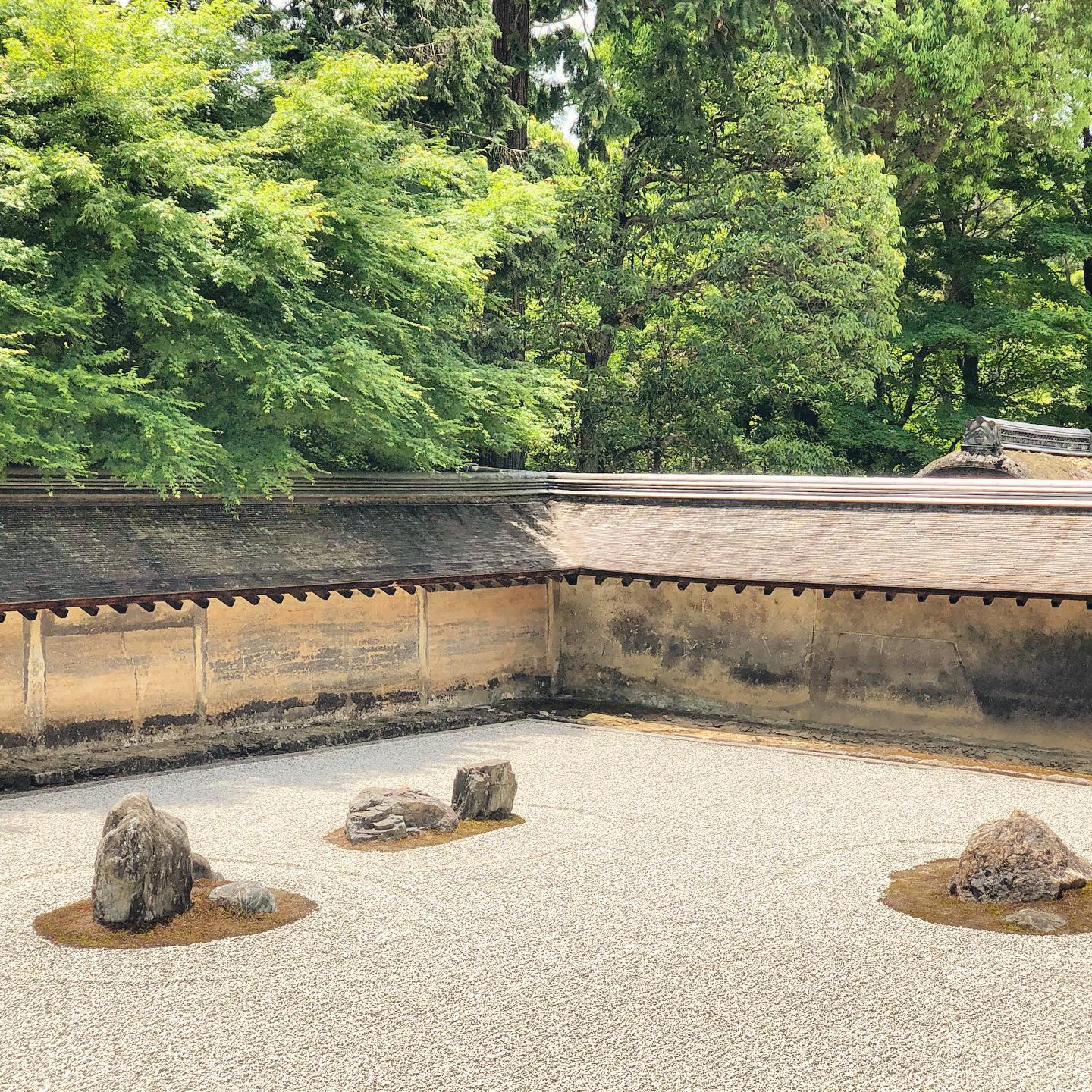
A low wall, weathered like old stone that has learned patience, keeps a quiet boundary between the world and this raked sea. White gravel spreads out in careful lines, and a few rocks rise from it like thoughts you don’t have to chase. Nothing is crowded. Nothing is asking to be improved.

Meditative Moment feels like that: a small pocket of time where you can stand still and listen to one place push up against another—the soft insistence of green trees above, the clean openness below. The patterns in the gravel look deliberate, but not strict. They’re reminders that calm can be made by hand, then remade tomorrow.

In Kyoto, it’s easy to believe that simplicity is not emptiness, but attention. You notice the way the light lands, the way the wall carries age, the way the scene stays settled. It doesn’t perform. It just exists, steady and quiet, the kind of quiet that makes room for you.

If you’ve been moving too fast, imagine stepping up to the edge of this garden and letting your mind become as uncluttered as the sand. Not blank—just clear enough to hear yourself again.

Midday Maiko

There’s a particular kind of quiet that shows up at midday—when the light is sharp, the shadows are honest, and even a busy street seems to pause for a breath.

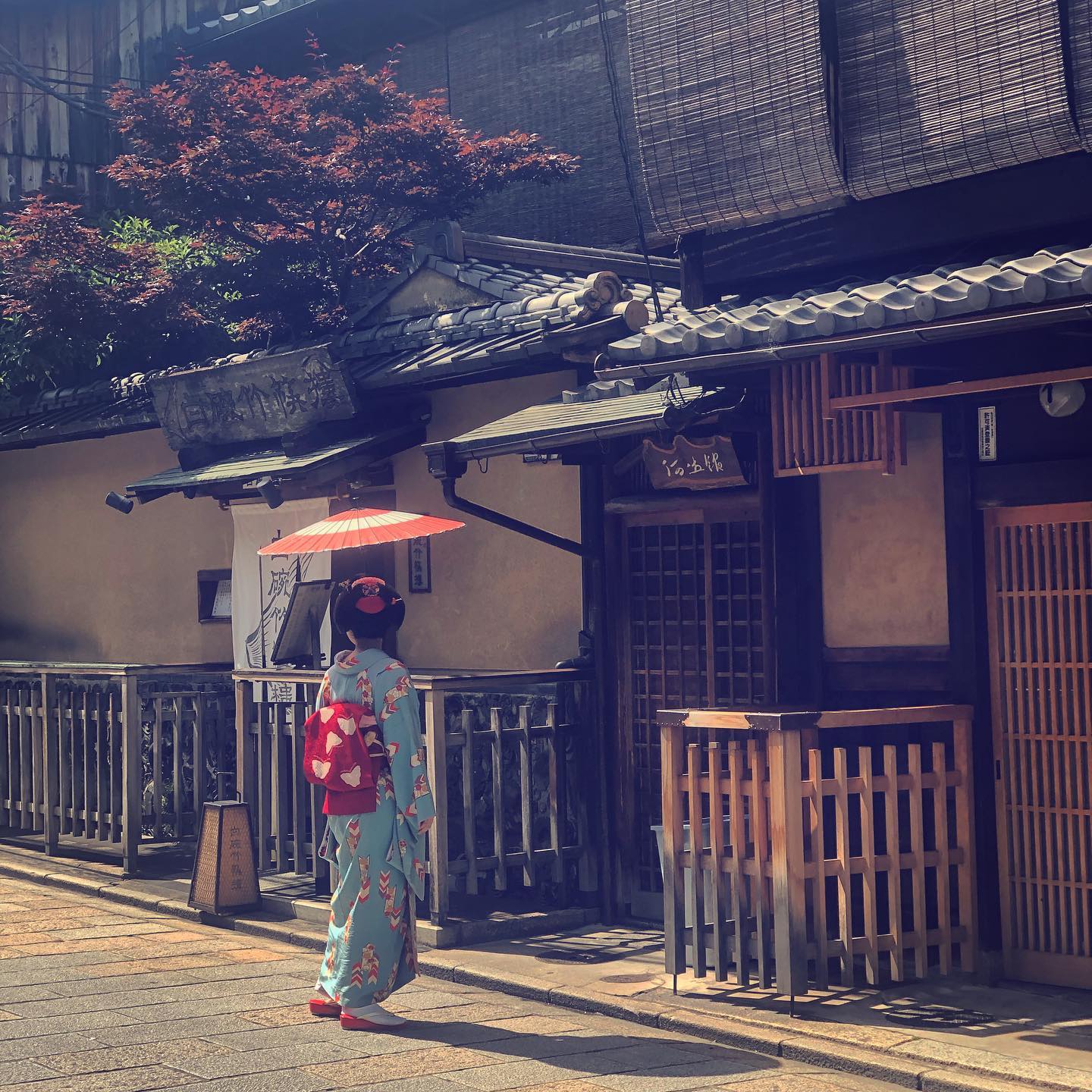
In today’s photo, a maiko stands beneath a red parasol on a Kyoto lane lined with wooden facades and tiled roofs. The scene feels carefully built, but not staged: bamboo shades hanging in the sun, a small gate catching a band of light, and the street stones warmed into a soft glow.

What I love most is how the moment balances stillness and motion. The maiko’s kimono is patterned with color and small repeating shapes, but her posture is calm, almost listening. It’s the kind of image that makes you think about the way places carry their own memory—how a neighborhood can hold tradition without turning into a museum.

Kyoto often gets described in superlatives, but the details are what linger: the angle of the roofline, the gentle clutter of signs and latticework, the way a single parasol becomes its own weather.

Midday Maiko is less about spectacle and more about a brief meeting between light and time—one quiet figure, one bright umbrella, and a street that seems to know exactly where it is.

Boats on the Philosophers walk

The water along the Philosopher’s Walk doesn’t hurry. It slides between stone walls and green edges as if it has all day to remember where it’s been.

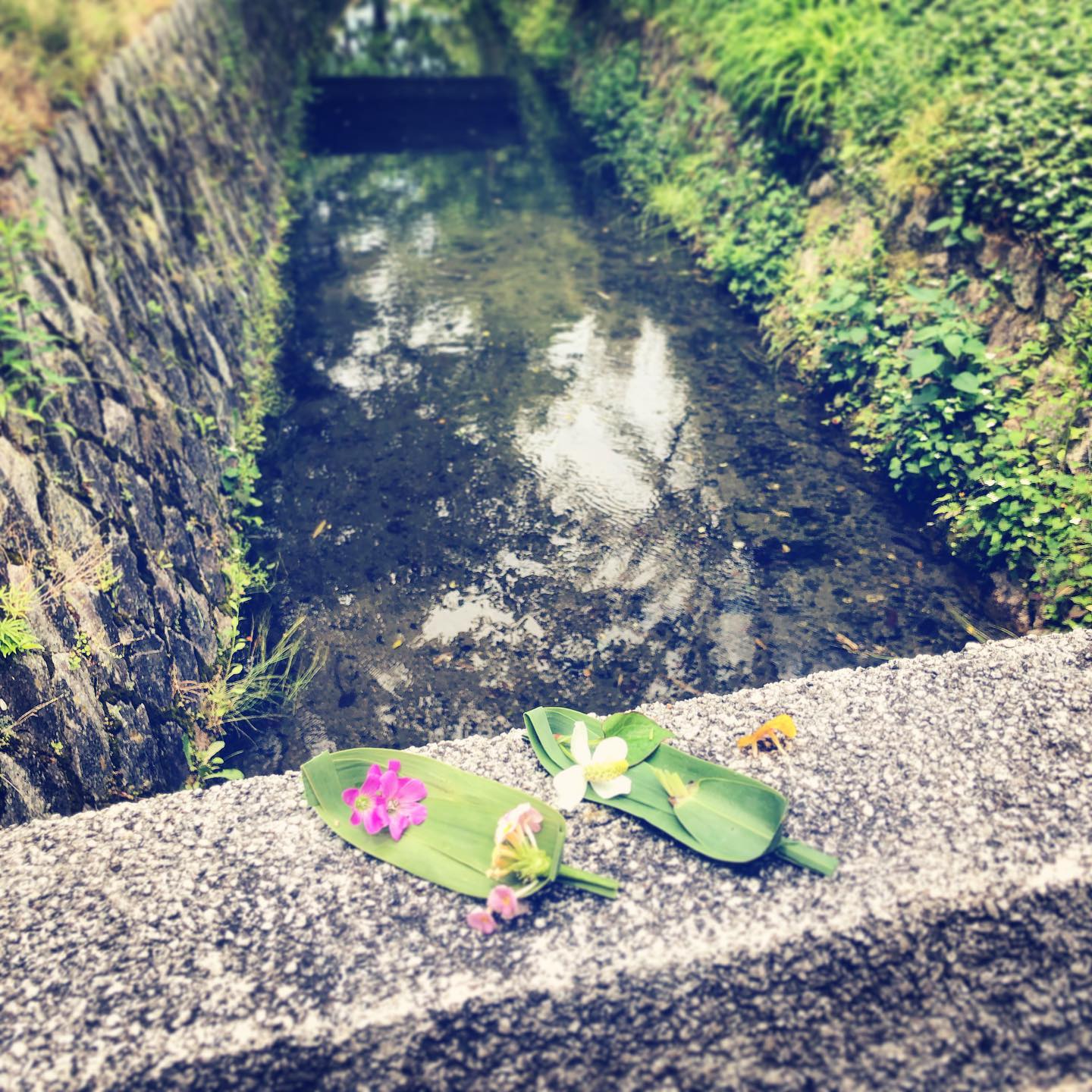
In the photo, two small leaf boats rest on the rough bridge ledge—simple folds of green carrying bright flowers, a quiet offering set down like a thought you don’t say out loud. Below them, the canal holds a soft reflection of sky and branches, the surface broken only by small ripples and the slow drift of light.

Kyoto has a way of making ordinary things feel lived-in. Stone, water, moss—materials that don’t try to impress, they just keep showing up, season after season. Walking here feels less like sightseeing and more like listening. The path invites you to notice what’s usually background: the texture of a wall, the hush under a bridge, the way a single petal can change the mood of a whole scene.

Maybe that’s the point of this place. Not to arrive anywhere in particular, but to let your thoughts move at the same pace as the canal—steady, clear, and unforced.

If you ever find yourself on the Philosopher’s Walk, pause on a bridge and look down. You might see something small and handmade, briefly afloat in the world, doing its quiet work of remembrance.

Whiskey Tasting

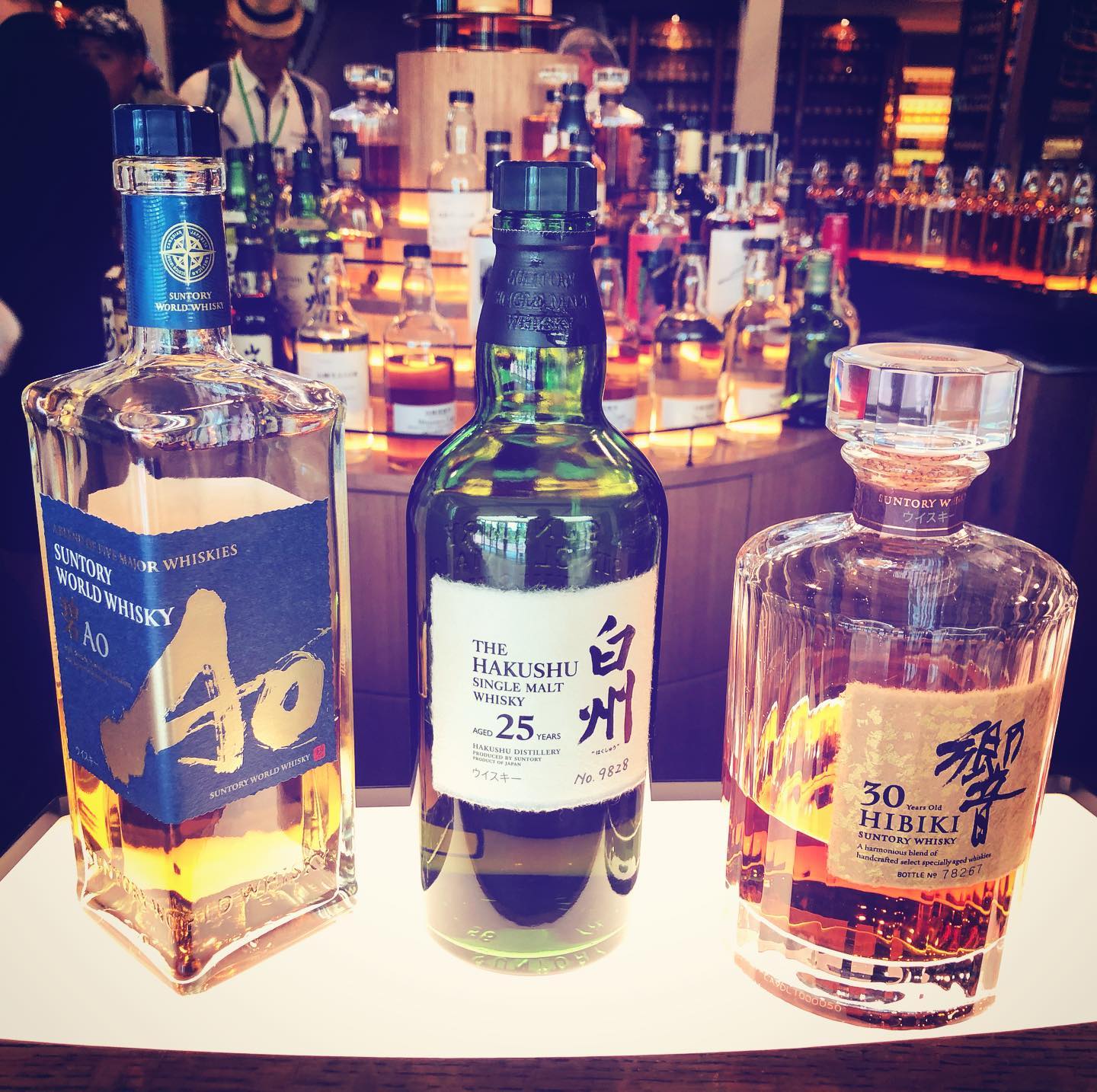
The bottles stood in the warm light like small landmarks—glass catching amber and copper, labels quiet but sure of themselves. Suntory World Whisky Ao on one side, Hakushu 25 in the middle, Hibiki 30 on the other. Behind them, more bottles blurred into a soft glow, as if the whole room was humming at a lower volume.

Whiskey Tasting isn’t just about picking a favorite. It’s about noticing what you usually rush past: the first clean scent when you lift the glass, the way the flavor opens up slowly, the pause that comes after you swallow. There’s a patience to it. You sit still long enough to hear the place living—murmur of voices, clink of glass, the steady presence of the bar like a house that has held a thousand small conversations.

Japanese whisky has a way of feeling both precise and generous. One sip can be bright and green, another round and honeyed, another deep with oak and time. You don’t need to force meaning onto it; it arrives on its own, somewhere between the label and your own memory.

If you’ve never done a tasting, start simple: take a breath, take a small sip, let it linger. The rest of the evening will take care of itself.

Ready to take off

Ready to take off.

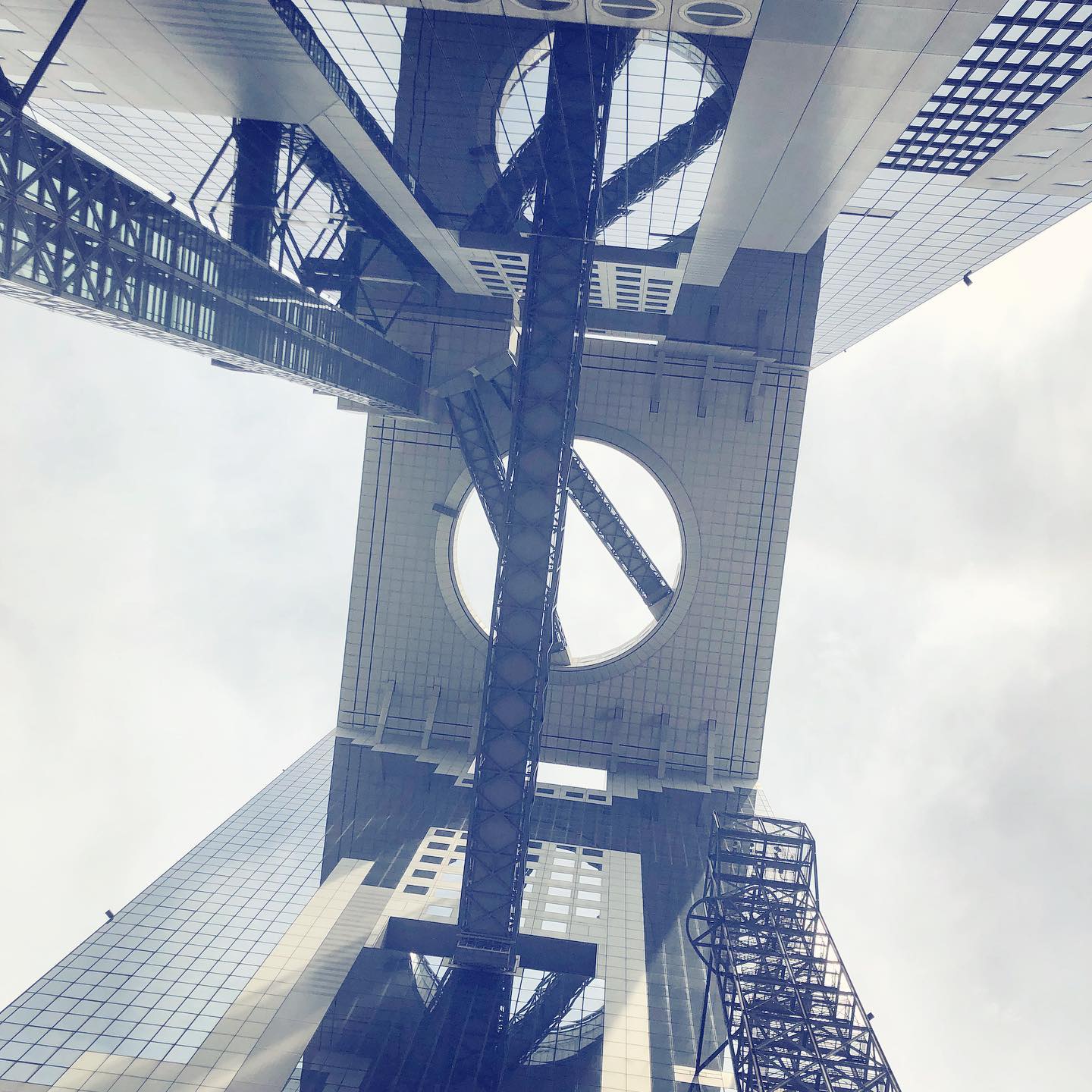
I stood beneath the Umeda Sky Building and looked straight up, the way you look up at a winter sky when the snow starts to soften the world. Steel ribs, tiled planes, and that impossible circle cut through the center—an opening that makes the whole structure feel less like a building and more like a thought you can step inside.

There’s something honest about architecture that doesn’t try to hide its bones. You can see the crossings and the joints, the way it holds itself together, and it feels strangely alive—quietly working, humming without sound. In Osaka, with the city moving around you, it becomes a small pause. A place where the mundane turns a little mysterious if you’re willing to stand still long enough.

From below, the skybridge reads like a runway. Not for planes, but for your attention—pulling it upward, away from the street, away from the checklist of a day. It’s the kind of view that makes you remember how big “up” can feel.

If you find yourself in Umeda, give yourself the minute it takes to stop and look. Let the lines lead your eyes. Let the open circle frame a patch of pale sky. And for a moment, let it be enough to simply be ready to take off.

Morning Visit before a hot day

The morning felt like a small mercy—an early visit before the heat could press down and flatten everything into glare.

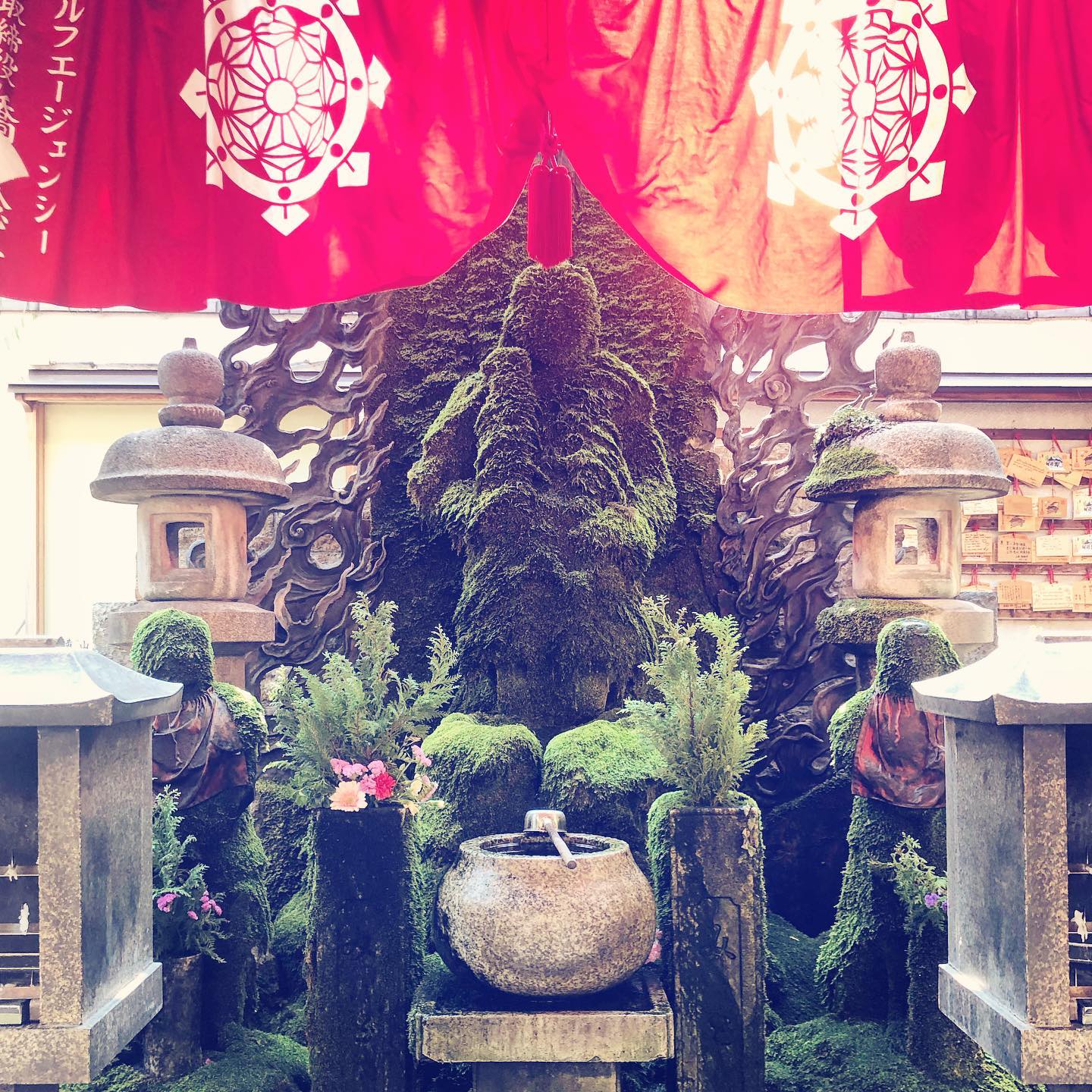
Inside the shrine space, the red drapes hang like a warm curtain against the day, patterned and still, holding back the brightness outside. Beneath them, stone lanterns stand on either side like quiet sentries. In the center, the figure is softened by time and moisture, wrapped in moss the way an old house can be wrapped in memory—nothing loud, nothing asking to be noticed, just steadily there.

The air is cooler than the streets of Osaka, and it carries that particular calm you only find in places that have been receiving people’s hopes for a long time. A small basin sits in front, water gathered and waiting, with a ladle laid across the rim as if someone has only just stepped away. The details feel ordinary—stone, water, greenery—yet arranged in a way that makes you slow down.

Before long the day will turn sharp and hot, and the city will move at full speed again. But for a moment, standing here, you can listen to one world push up against another: the busy outside and the quiet within. And you leave a little lighter, as if the shade follows you out.

From Osaka with Love

Neon makes its own weather in Osaka.

In the flood of light at Dotonbori, the Glico Runner hangs there like a promise that never gets tired of being repeated—arms wide, caught mid-stride, forever arriving. Around him, signs stack and shimmer, blue bleeding into magenta, language and logos layered like memories that don’t quite separate.

I stood beneath it all and let the noise move past me. The city felt bright and bigger the longer I looked, the way a familiar place can expand when you stop trying to name every detail. There’s a hum to it—screens buzzing, footsteps shifting, distant music leaking from somewhere you can’t see. Not chaotic, exactly. More like a living house: always speaking in creaks and currents if you listen long enough.

From Osaka with Love sounds like a postcard, but it felt more like a small private message, tucked into the electric night. The kind you send when you want someone to know you’re safe, and also a little changed.

If you’ve ever had a city meet you halfway—half spectacle, half quiet—this is that feeling. A bright surface with a softer underside, and a lingering sense that the night is holding something back, just out of frame.

Top of the Mountain

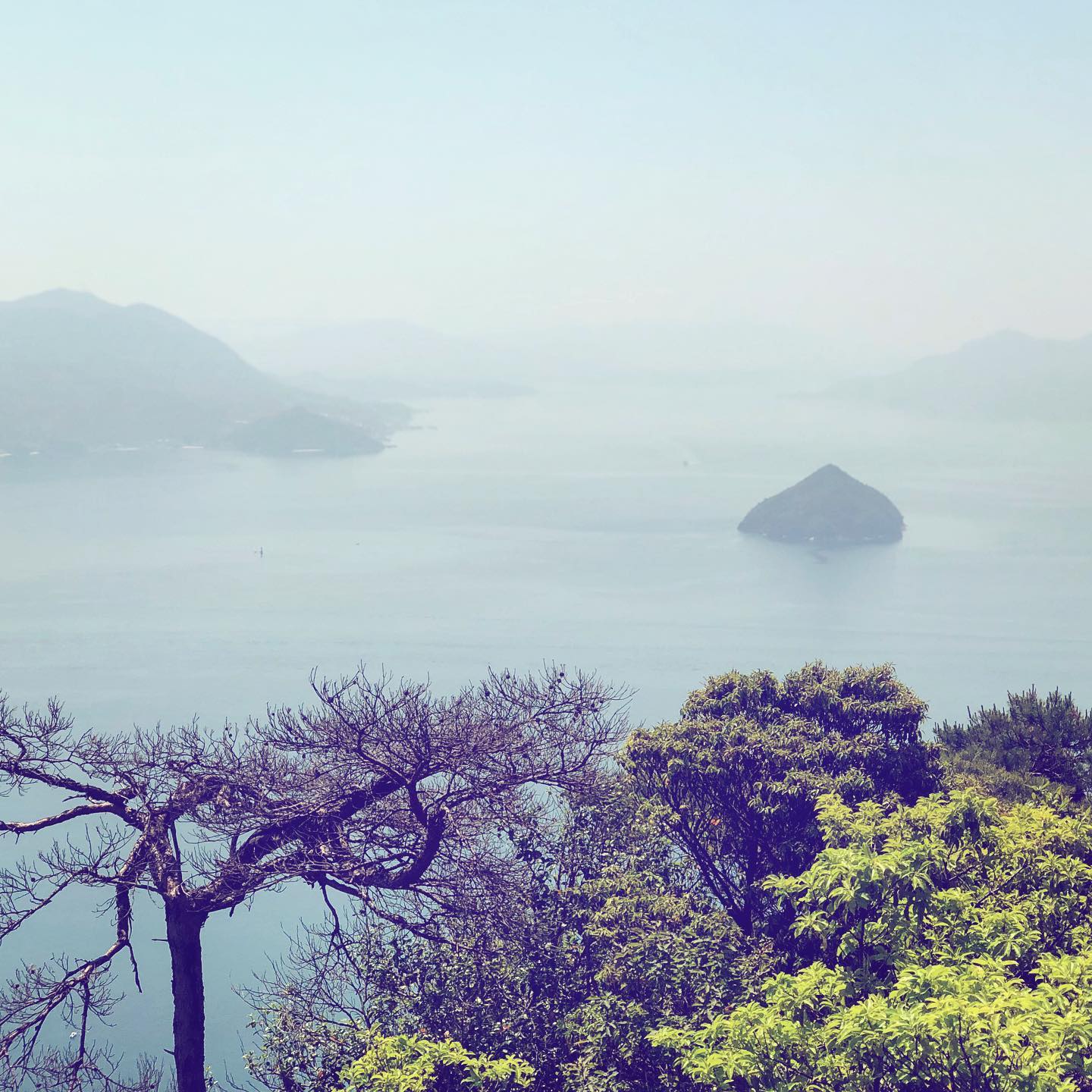
The top of the mountain isn’t always a sharp line against the sky. Sometimes it’s a soft place, washed out with light, where the world looks farther away than it really is.

From up here the water turns quiet and pale, a wide sheet of blue-gray with islands resting in it like small, steady thoughts. The hills fade into one another until the edges disappear. The air feels thin, not in the dramatic way, but in the way that makes you notice your own breathing and the simple work it took to get here.

The trail up was the usual rhythm: steps, sweat, a pause to drink, then the slow bargaining you do with yourself when the incline refuses to let up. And then—without any announcement—the view opens. It’s not loud. It doesn’t demand anything. It just sits there, patient and clear, letting you arrive.

I like these moments because they feel honest. Up high, the small things are still small, but they matter again: a bare branch reaching into the frame, new green leaves catching the sun, the hush that falls over you when you realize you’re finally standing where you aimed to stand.

“Top of the Mountain” is a simple title, but it fits. Not because the peak is an ending, but because it’s a brief, bright pause before you turn back toward the ordinary world and carry a little of this quiet with you.

Kamotsuro Tokusei Gold Daignjo (Kinpaku) Sake in Hiroshima

There’s a small quietness to sake that I’ve always liked. It doesn’t announce itself the way other drinks can; it waits for you to slow down enough to notice what’s there.

In Hiroshima, I came across Kamotsuro Tokusei Gold Daignjo (Kinpaku) Sake in Hiroshima, a name that feels almost ceremonial before the bottle is even opened. Set on the table, it looked simple and deliberate: a clear bottle resting on a dark tray, a small patterned cup nearby, warm wood grain underneath—like the beginning of a ritual you don’t have to explain.

Daiginjo carries that promise of care—rice polished down, aromas kept clean and lifted—and the kinpaku adds a faint sense of occasion, a little shimmer tucked into an otherwise calm drink. It’s the kind of detail that turns an ordinary pour into a moment: light catching the glass, the cup waiting, the room settling.

I keep thinking of it as a Hiroshima evening scene—something quiet after walking streets that hold both history and everyday life. You sit, you pour, and for a minute you’re not chasing the day anymore. You’re letting it arrive.

If you find this bottle, give it what it asks for: a small cup, a slow sip, and enough silence to notice the warmth reaching you.

Exit mobile version