Best Lunch & Best Vegetarian Food of Trip

There are meals that feel like more than a stop in the middle of the day. They settle in, quietly, the way a familiar house holds winter heat.

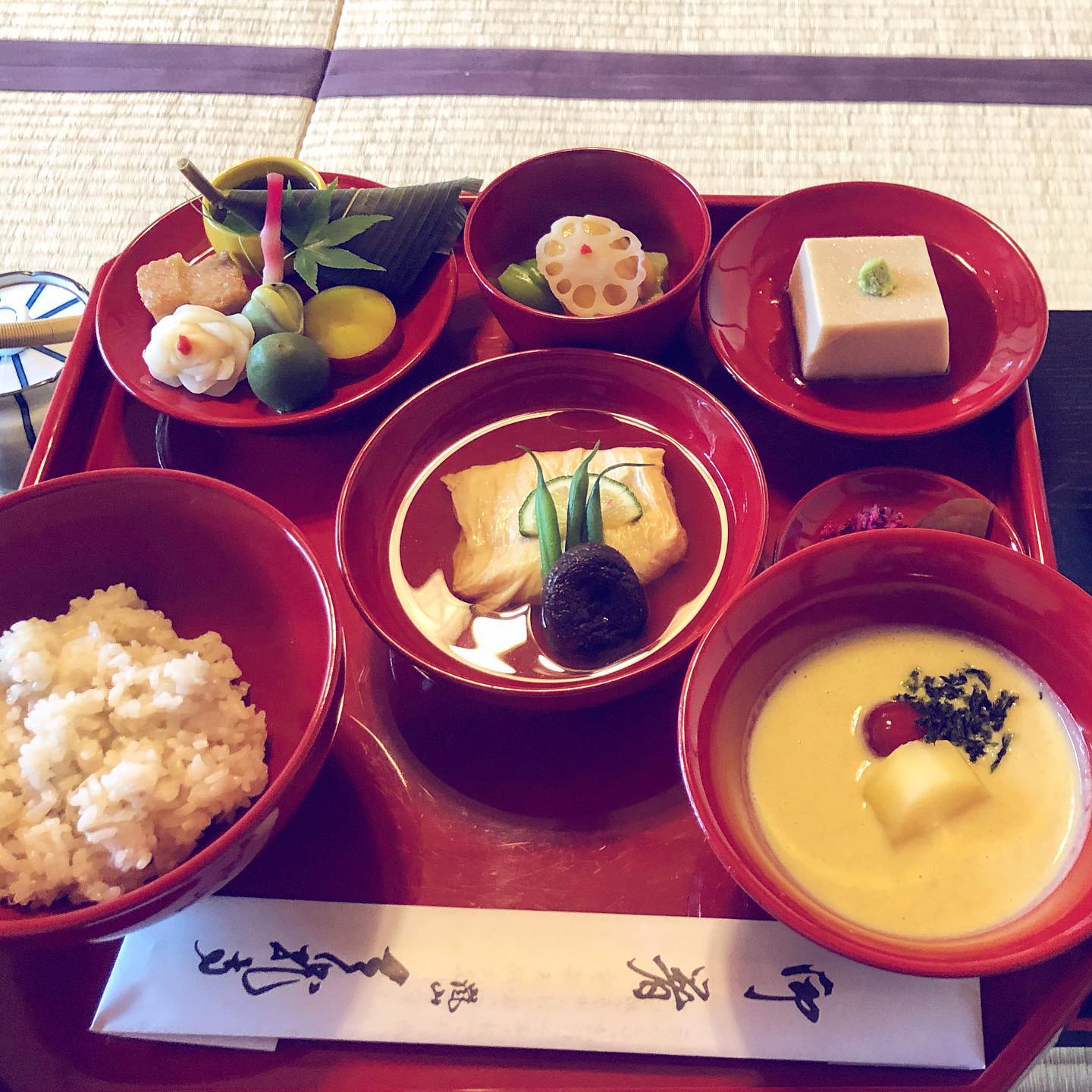
This was one of those lunches: the best lunch and the best vegetarian food of the trip, set out in red lacquer bowls on a tray, each dish small enough to invite attention. Rice still warm. Silky tofu with a dab of green. A pale, custard-like bowl with something sweet and delicate floating near the surface. Little bites arranged like the day had time to be patient.

In Kyoto, even lunch can feel ceremonial without being showy. You sit down, and the noise in your head lowers a notch. The texture of tatami, the careful spacing, the simple colors—everything makes room for you to taste what’s in front of you.

I came looking for a good vegetarian meal and left with something else, too: the sense that travel isn’t always about chasing highlights. Sometimes it’s about noticing the ordinary become meaningful when it’s treated with care.

Best Lunch & Best Vegetarian Food of Trip wasn’t just a title. It was a small, quiet benchmark for how satisfying a simple midday meal can be in Kyoto.

Best Burger Kyoto

There are meals that feel like a landmark, even when they arrive on a simple tray lined with paper. In Kyoto, where the days can be all angles and quiet temples and slow footsteps, a burger can land with the kind of warmth you didn’t know you were missing.

This one came glossy and browned, the bun shining under the lights like it had been brushed with patience. The patty was thick and dark at the edges, the cheese spilling out in a soft, molten fold, and a pale sauce clinging to the side like a small storm cloud. A pickle tucked in at the back, crisp and green. Beside it, a metal cup of fries—thin, pale-gold, scattered with salt—doing what fries do best: promising comfort without asking questions.

“Best Burger Kyoto” is a bold claim, and maybe that’s part of the fun. You eat, you listen to the room, you watch the table, you let the city’s noise fade into the background hum. For a moment, Kyoto feels less like a checklist and more like a place you can actually live inside.

If you’re traveling with someone—especially someone who measures a trip by the bites you remember—this is the kind of stop that makes the rest of the day feel brighter. Not because it’s fancy. Because it’s honest, hot, and exactly what it should be.

Through the Red Gates

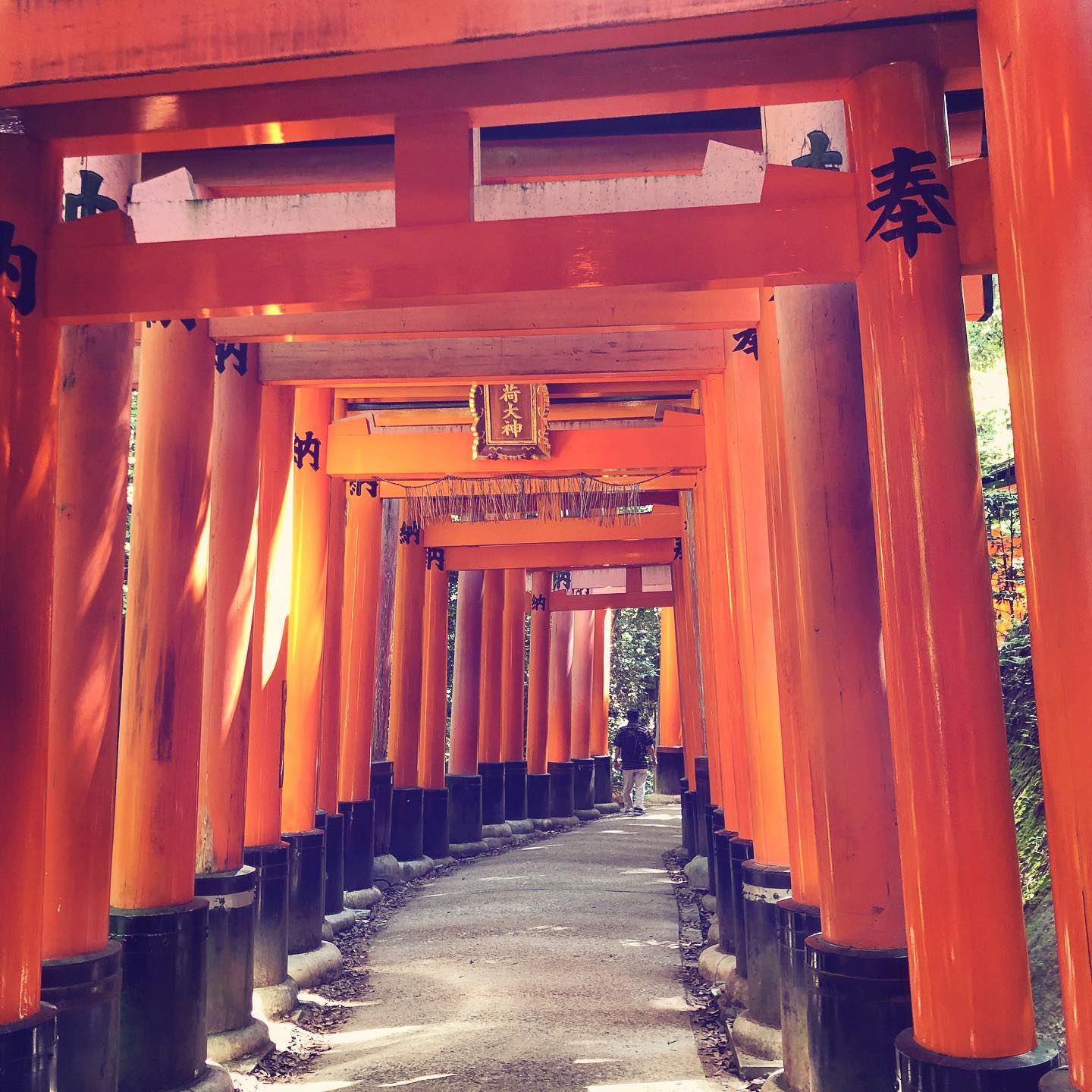
There’s a particular kind of quiet you find when you step beneath a line of torii—quiet made out of repetition. One gate, then another, each painted the same deep red, each catching the light in a slightly different way.

Through the Red Gates felt less like walking to a destination and more like moving through a rhythm. The path narrows and bends, the posts rising up on either side like a corridor built out of patience. Between the beams you get small glimpses of the outside world—green edges of hillside, a slice of sky—then you’re pulled back into the warm red glow again.

I kept thinking about how places can hold time without looking like they’re trying. The gates are weathered in spots, polished in others, and the worn stone beneath them tells its own story: footsteps layered over footsteps, ordinary days stacked quietly into something lasting.

Somewhere ahead a lone figure walks the same line, framed by gate after gate, reduced to a silhouette for a moment. It’s an easy scene to carry with you later, the kind that shows up unexpectedly when you’re back home and a hallway light hits just right.

If you ever find yourself in Kyoto, give yourself enough time to move slowly here. Let the gates do what they do best: turn a simple walk into a small, steady pilgrimage.

Kyoto Style Sushi

There’s something quietly reassuring about a neat tray of sushi—orderly, composed, and unhurried. This Kyoto style sushi set arrives like a small landscape you can eat: glossy nigiri lined up beside clean-cut maki, each piece doing its job without trying to be louder than the next.

The colors tell you where to look first. Deep tuna, pale fish with a thin silver edge, a soft yellow egg topping that feels almost like a warm light on the plate. There’s cucumber rolled into a tight green center, and a thicker maki that carries more weight—sweet and savory tucked inside rice and nori like a secret.

Kyoto has a way of making food feel intentional. Even when it’s simple, it’s not careless. The rice looks pressed just enough, the slices laid down with confidence. Nothing is messy. Nothing is rushed. It’s the kind of meal that makes you slow your hands down.

I like thinking of sushi this way—not as something to conquer with soy sauce and speed, but as a set of small moments. Pick one up, pause, notice the texture, the temperature, the way the sea and the kitchen meet.

If you’ve ever eaten sushi in Japan (or tried to recreate that feeling elsewhere), you know it isn’t only taste. It’s a calm you can sit with for a while.

Morning Bamboo Forest

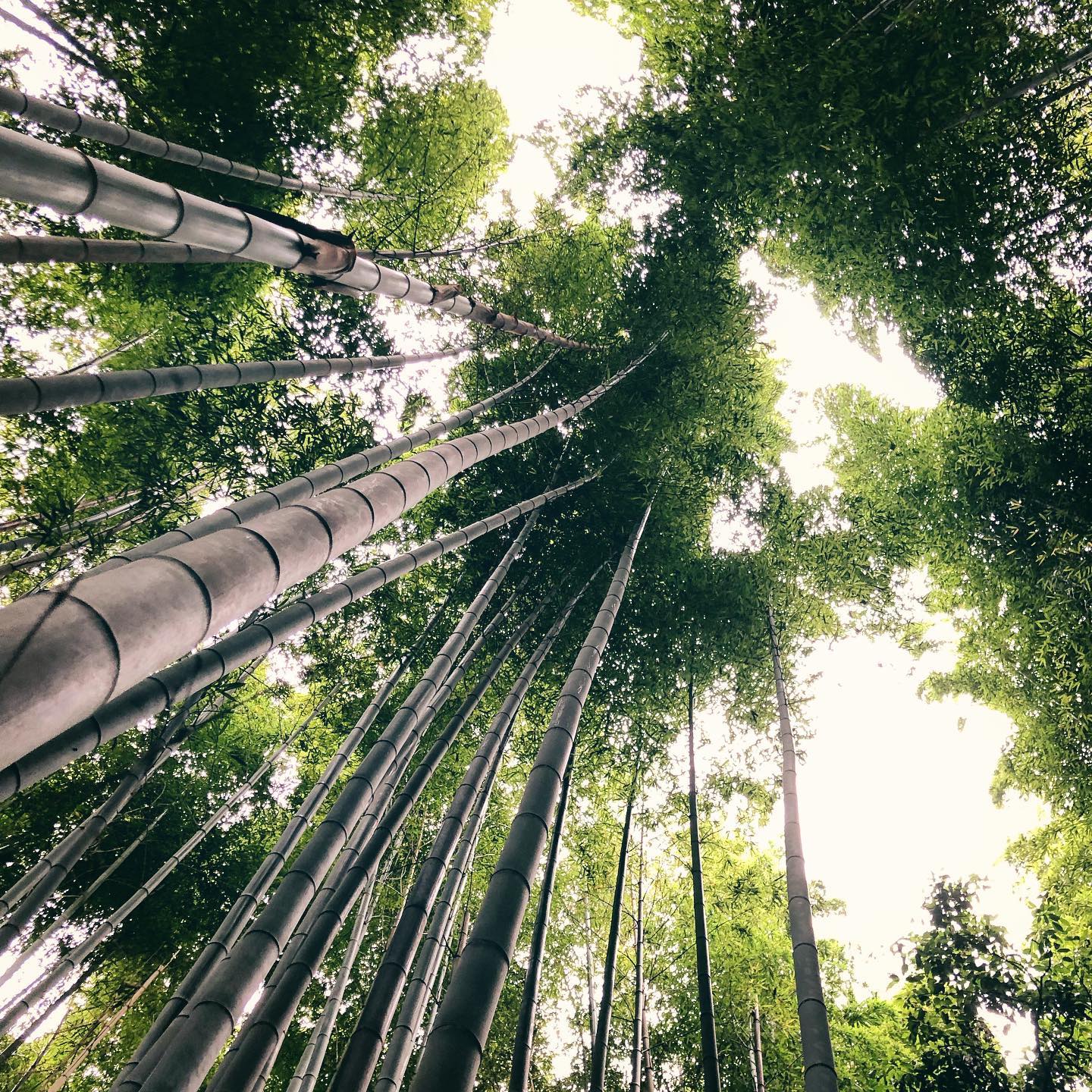
In the morning, the bamboo makes its own kind of weather.

Looking up, the trunks feel impossibly straight—smooth, gray-green poles stitched with dark rings—while the canopy above gathers into a living ceiling. Light slips through in pale patches, the way it does when clouds thin out after a long night. Everything is hushed but not silent; it’s the sort of quiet where you notice the smallest things: leaves brushing, a faint creak in the stalks, your own breath finding a slower pace.

Morning Bamboo Forest is an easy title to write down, but it doesn’t quite hold what it feels like to stand inside it. The place isn’t trying to impress you. It simply keeps being itself—tall, patient, and a little mysterious. One world pushes up against another: the bright open sky above, the green shade below, and the narrow paths that pull you forward without asking where you meant to go.

If you’ve ever needed a reset that doesn’t come from noise or novelty, a bamboo grove at daybreak does the job. You leave with your shoulders dropped, your thoughts spaced out, and a small sense that the day might be wider than you planned.

Midday Maiko

There’s a particular kind of quiet that shows up at midday—when the light is sharp, the shadows are honest, and even a busy street seems to pause for a breath.

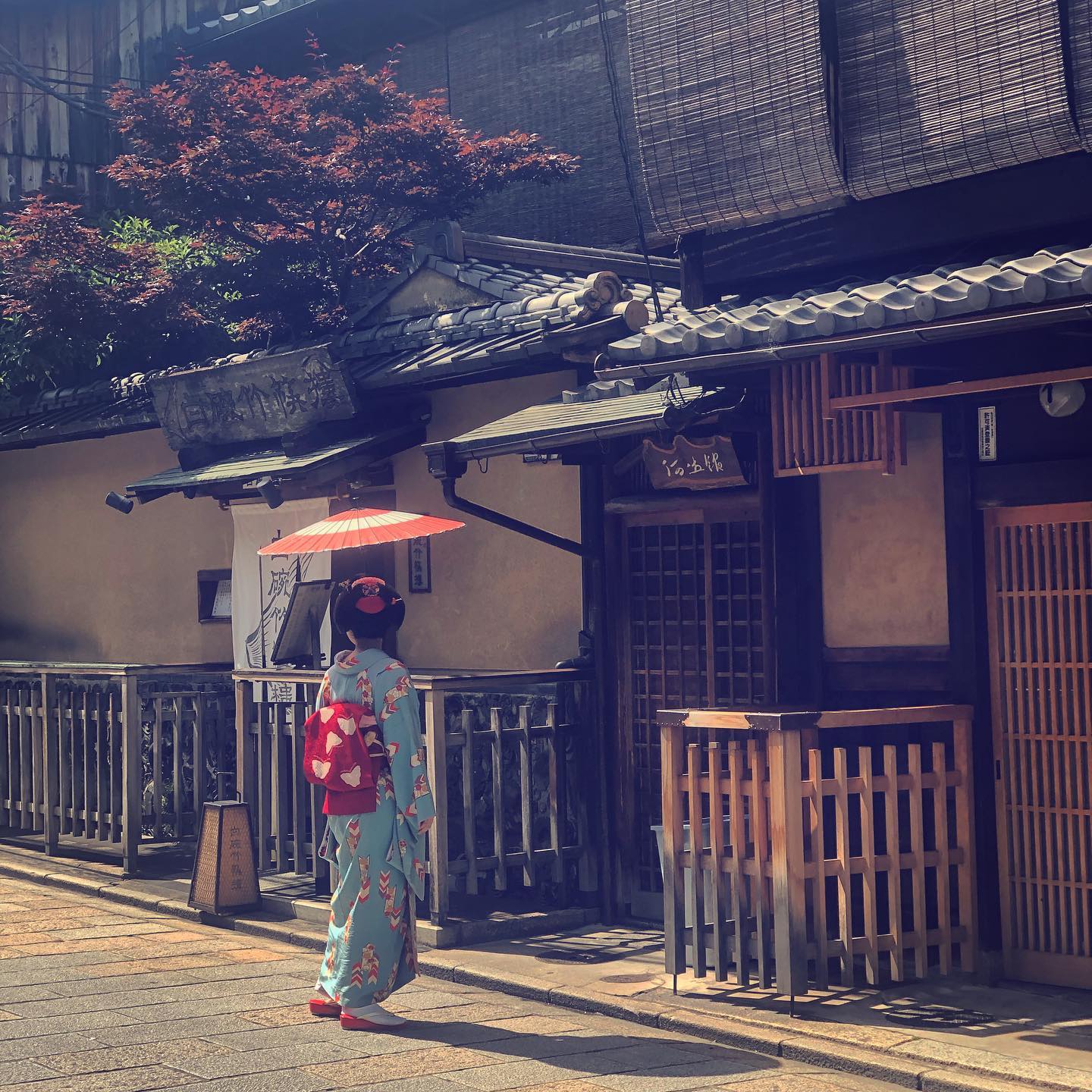
In today’s photo, a maiko stands beneath a red parasol on a Kyoto lane lined with wooden facades and tiled roofs. The scene feels carefully built, but not staged: bamboo shades hanging in the sun, a small gate catching a band of light, and the street stones warmed into a soft glow.

What I love most is how the moment balances stillness and motion. The maiko’s kimono is patterned with color and small repeating shapes, but her posture is calm, almost listening. It’s the kind of image that makes you think about the way places carry their own memory—how a neighborhood can hold tradition without turning into a museum.

Kyoto often gets described in superlatives, but the details are what linger: the angle of the roofline, the gentle clutter of signs and latticework, the way a single parasol becomes its own weather.

Midday Maiko is less about spectacle and more about a brief meeting between light and time—one quiet figure, one bright umbrella, and a street that seems to know exactly where it is.

Meditative Moment

The garden holds its breath.

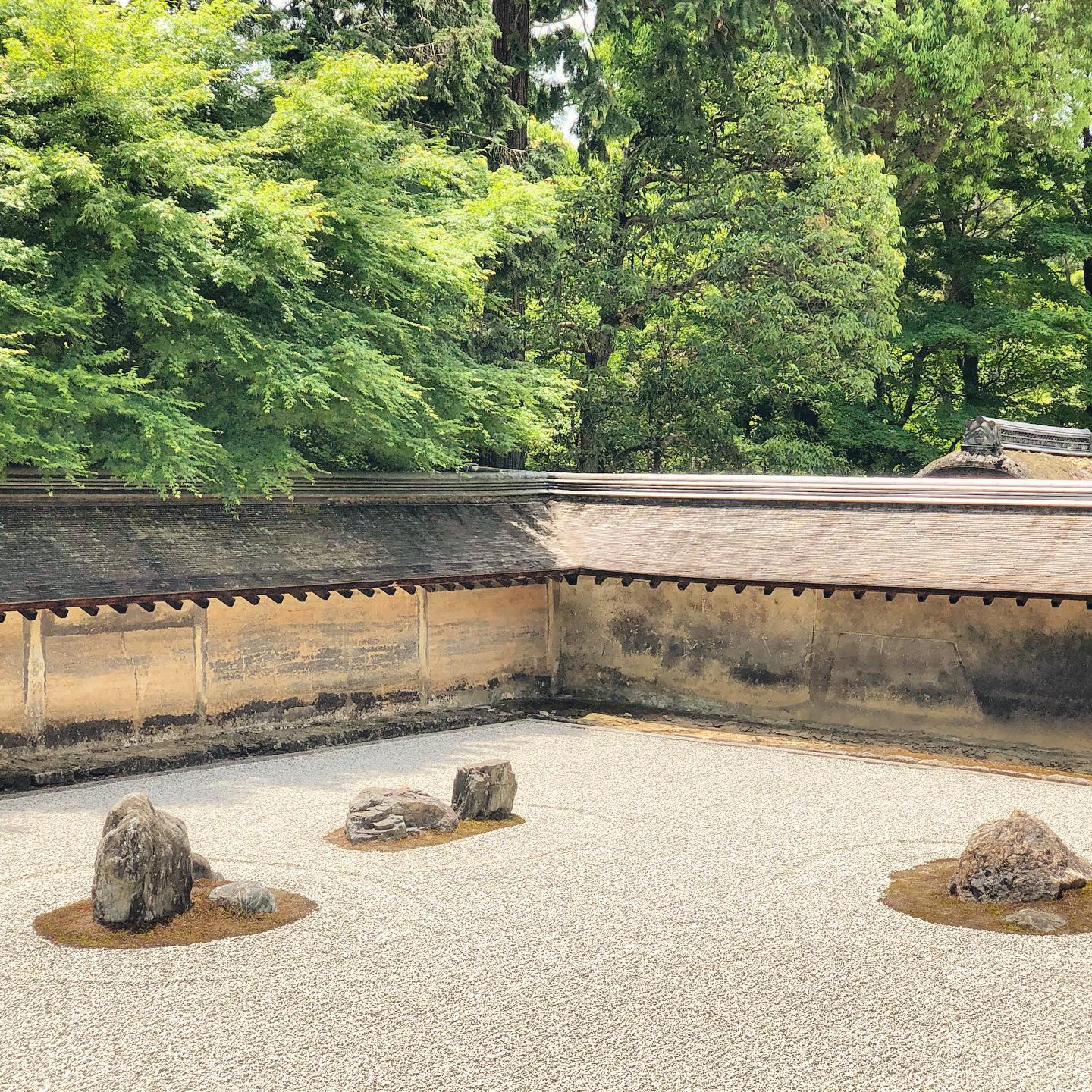
A low wall, weathered like old stone that has learned patience, keeps a quiet boundary between the world and this raked sea. White gravel spreads out in careful lines, and a few rocks rise from it like thoughts you don’t have to chase. Nothing is crowded. Nothing is asking to be improved.

Meditative Moment feels like that: a small pocket of time where you can stand still and listen to one place push up against another—the soft insistence of green trees above, the clean openness below. The patterns in the gravel look deliberate, but not strict. They’re reminders that calm can be made by hand, then remade tomorrow.

In Kyoto, it’s easy to believe that simplicity is not emptiness, but attention. You notice the way the light lands, the way the wall carries age, the way the scene stays settled. It doesn’t perform. It just exists, steady and quiet, the kind of quiet that makes room for you.

If you’ve been moving too fast, imagine stepping up to the edge of this garden and letting your mind become as uncluttered as the sand. Not blank—just clear enough to hear yourself again.

Golden Boys Day

The day felt bright in the easy way travel sometimes does—no big plan, just a shared direction.

In Kyoto, the gold pavilion sat across the pond like something carefully placed in the world and then left alone to be itself. The water held it without trying. Pines leaned in at the edges, and the hills behind everything looked soft and patient, the way old places can.

We stood at the shoreline long enough for the scene to settle into us. Then we did what we always end up doing when we’re happy: turned the camera back toward our own faces and tried to fit the feeling into a frame.

It’s a small thing, a photo. Two sunlit smiles, a couple hats, round glasses. But I keep thinking about how moments like this don’t shout. They just hum. They say: you’re here, you made it to this particular day, and you get to carry it home.

“Golden Boys Day” isn’t really about the gold at all, even though the pavilion shines like a promise. It’s about walking side by side through a place layered with time, and realizing that the best souvenirs are the quiet ones—light on the water, warmth on your skin, and someone next to you who makes the world feel a little wider.

Break those Bad habits

There’s a quiet kind of instruction in places that don’t ask for much. A shrine in Kyoto can feel like that—green canopy overhead, gravel underfoot, and a hush that isn’t silence so much as space.

In the photo, the structure is draped with paper wish slips, layered until it looks almost alive, like a small hillside made from folded intentions. Each strip carries a neat line of ink, a private request turned outward and left to hang in the open air. It’s hard not to think about repetition—how we return to the same thoughts, the same patterns, the same excuses—until they begin to feel like architecture.

Break those Bad habits isn’t a loud command. It’s more like noticing the way a place holds your attention. You stand there and realize how much of life is routine: the route you take, the words you reach for, the comforts you keep even when they don’t comfort anymore.

Maybe the point isn’t to tear everything down. Maybe it’s simpler: write one honest sentence. Leave it somewhere. Walk away lighter. Habits don’t always break with force; sometimes they loosen when you finally give them a name, and let the wind have the rest.

Pre Dinner Cocktail

A pre-dinner cocktail can feel like a small pause button—an in-between space where the night hasn’t started yet, but you can sense it coming.

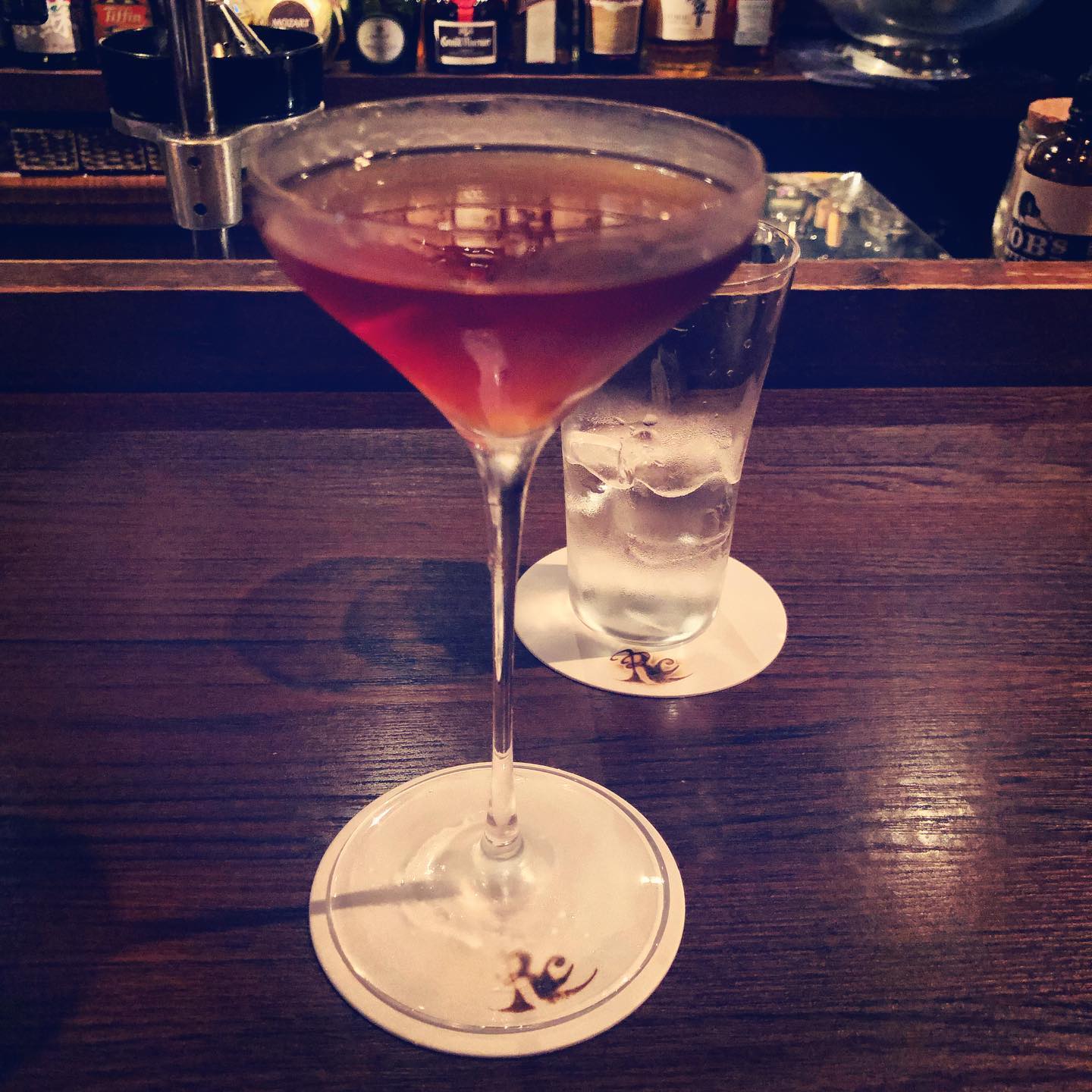
In Kyoto, I found that pause at a wooden bar counter, the kind that holds onto the warmth of the room. A stemmed glass set down gently, a deep ruby drink catching the low light, and beside it a tall glass of ice water that makes everything feel a little more deliberate. Behind the bar, bottles line up like quiet witnesses. Nothing loud, nothing rushed—just the soft clink of ice, the muted shine of glass, and a calm that seems practiced.

The drink itself sat somewhere between sharp and smooth, like it was designed to wake up your palate without stealing the whole evening. It’s the sort of cocktail that doesn’t beg for attention; it just waits for you to notice what’s already there.

I like these moments before dinner. They remind me that travel isn’t only the big sights and the crowded streets. Sometimes it’s a simple bar stool, a dark red drink, and the feeling of one world gently pressing up against another—the familiar ritual of a cocktail, placed into a new city, made quietly unforgettable.

Boats on the Philosophers walk

The water along the Philosopher’s Walk doesn’t hurry. It slides between stone walls and green edges as if it has all day to remember where it’s been.

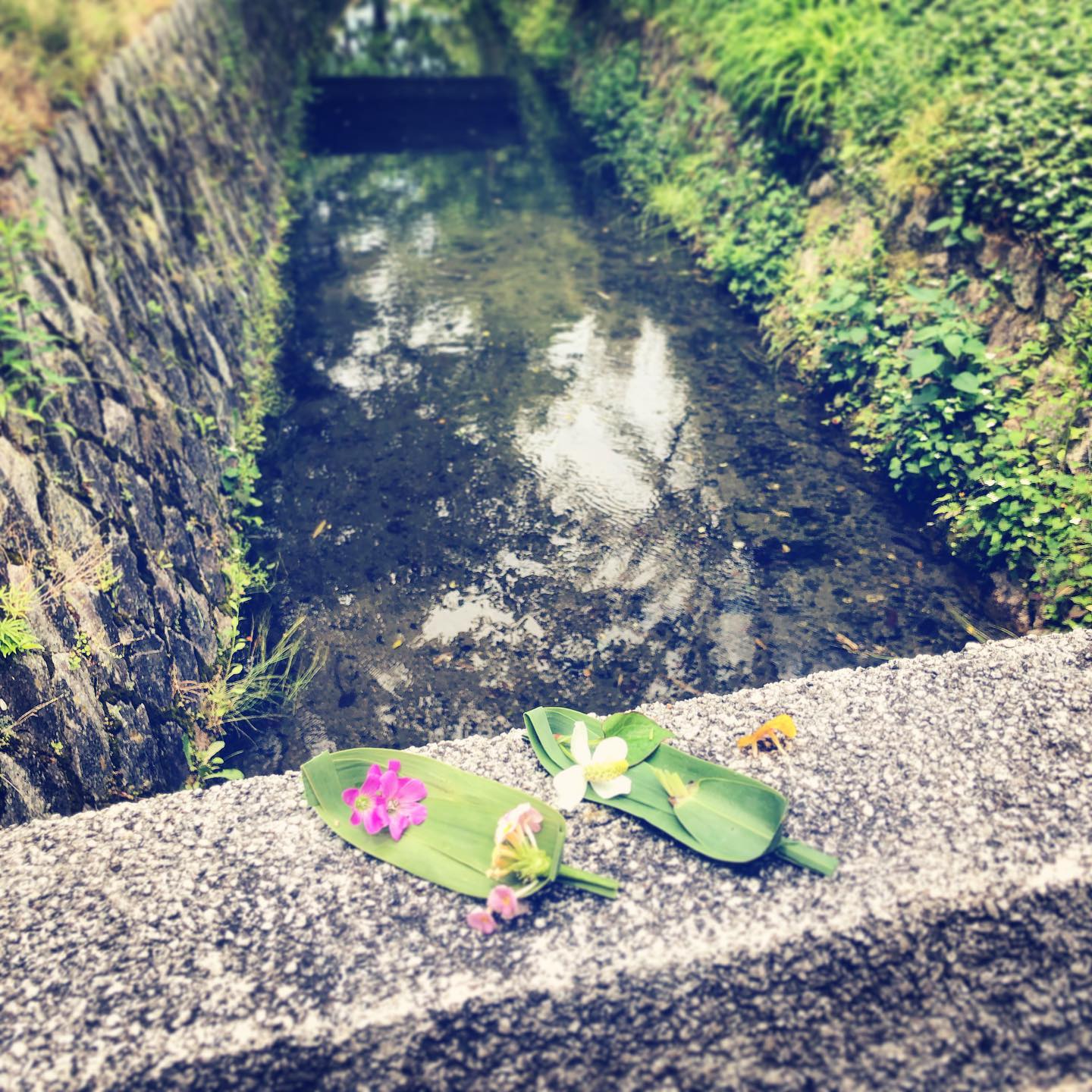
In the photo, two small leaf boats rest on the rough bridge ledge—simple folds of green carrying bright flowers, a quiet offering set down like a thought you don’t say out loud. Below them, the canal holds a soft reflection of sky and branches, the surface broken only by small ripples and the slow drift of light.

Kyoto has a way of making ordinary things feel lived-in. Stone, water, moss—materials that don’t try to impress, they just keep showing up, season after season. Walking here feels less like sightseeing and more like listening. The path invites you to notice what’s usually background: the texture of a wall, the hush under a bridge, the way a single petal can change the mood of a whole scene.

Maybe that’s the point of this place. Not to arrive anywhere in particular, but to let your thoughts move at the same pace as the canal—steady, clear, and unforced.

If you ever find yourself on the Philosopher’s Walk, pause on a bridge and look down. You might see something small and handmade, briefly afloat in the world, doing its quiet work of remembrance.

Birthday Celebration at Kyoto Sushi

Happy b-day Ian

Finally found time to take Ian (my temp roomy) out for his bday. Happy b-day IAN! Such a nice night at Kyoto sushi in Greenpoint.

| ??? | #sushimoments #diamondboys #bday | Read Insta-comments -> http://bt.zamartz.com/14HwA8J

Exit mobile version