
There’s something about a monument that feels less like a tourist stop and more like a quiet instrument—measuring time, measuring weather, measuring the distance between what we imagine and what we live.
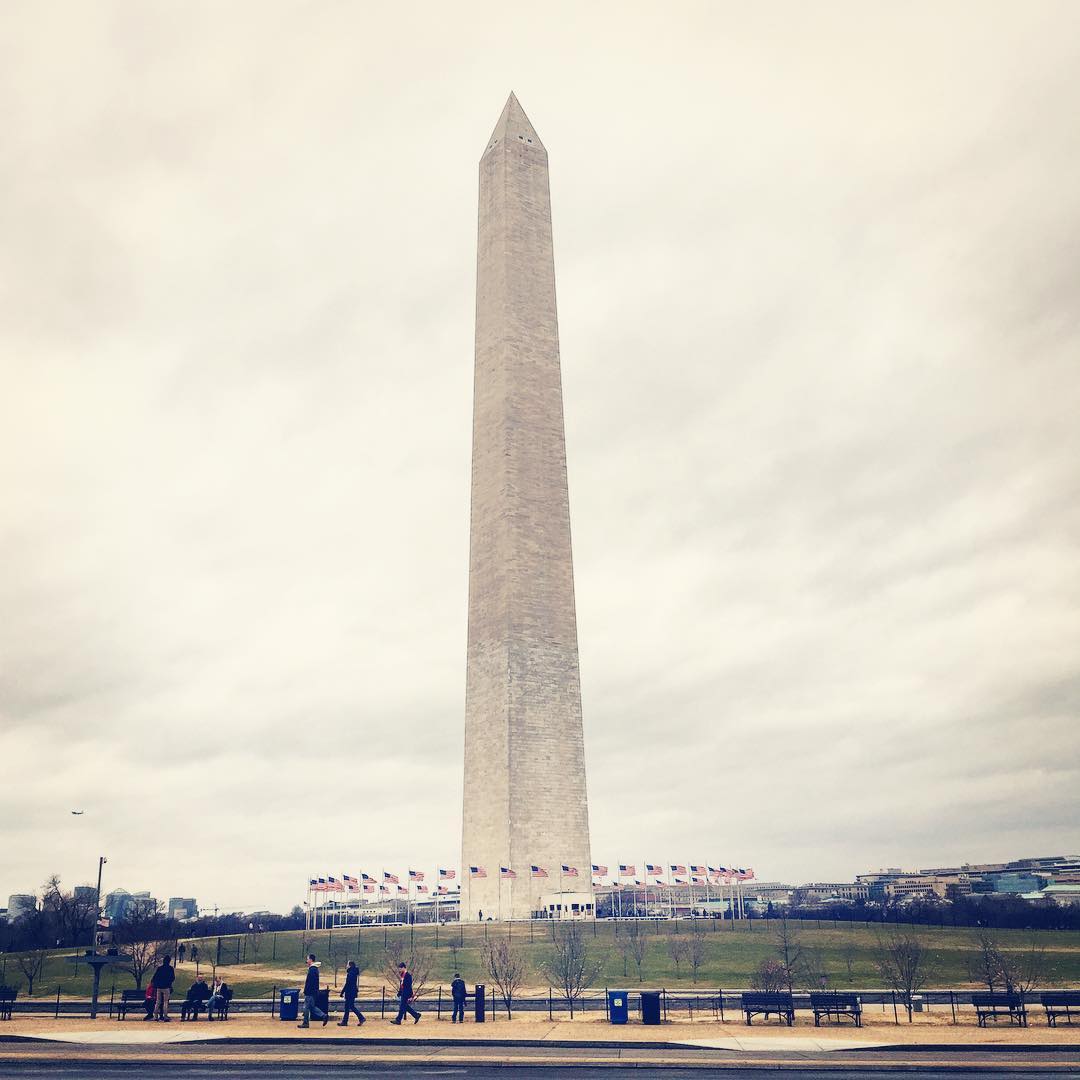
The Washington Monument rises into an overcast sky, pale and steady, as if it’s been holding that color for years. Below it, the flags keep moving, repeating their small, tireless gestures. People pass through the frame at ground level—walking, pausing, looking up—ordinary silhouettes against a structure built for the long view.
“Thank you GW” is a simple line, almost casual, but it lands with weight when you’re standing there. Not in the loud, celebratory way. More like the way an old house creaks at night and reminds you it’s still around, still doing what it was made to do.
In Washington, DC, history isn’t tucked away; it’s out in the open air, sharing space with bus routes, winter grass, and the muted hum of a city going about its day. The monument doesn’t ask for much attention, but it gets it anyway—because it’s hard not to look at something that tall and think about what had to happen for it to be there.
Mostly, I felt grateful for the stillness. For the scale. For the reminder that some things are meant to outlast the weather.
