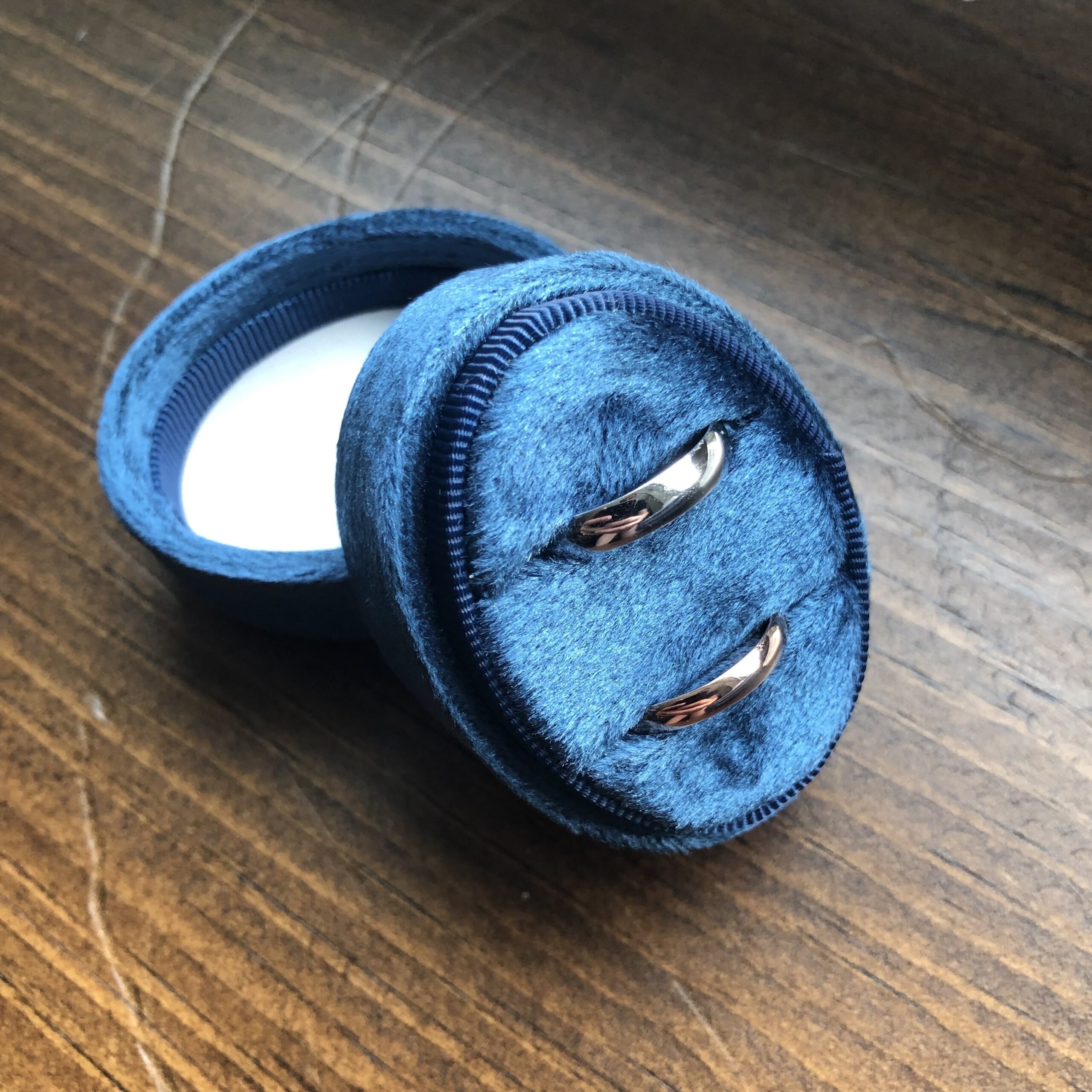
The Typical Engagement 2019

The best laid plans of Dyson and men sometimes go awry. Especially, if you have my luck…adaptation – Robert Burns’ poem To a Mouse, 1786

Days, months, years, hours, minutes, seconds ~ planning, something Angel and I  have a mastery over, led us to an early gap in coordination. Our planning was sound in the established goals and ultimate execution, but the timing of commencement was not quite aligned. This manifested itself in a less than  grand and slightly bumbling engagement. In retrospect, it fits us perfectly and is a great introduction to the culmination of our matrimonial union.

Call me Zachary.
Some months ago — never mind how long precisely — having little time or no time in my calendar, and nothing particular to interest me, I thought I would propose to Angel on the other side of the world.adaptation – Herman Melville novel Moby-Dick, 1851

Years ago, I set a goal to travel to Japan; and after meeting Angel, it became my goal to travel to Japan with him. Characteristically in line with my other excursions, events, and eccentric ideas, I was unable to make this a small and simple trip. Using Angel’s sabbatical as an excuse, we were able to plan a month living and exploring the country. The planned start of the journey was to arrive in Tokyo, but the first big event in the country was to be a surprise for Angel.

Patience is a high virtue… but virtue can hurt you, if you have a cute plan for your engagement proposal…adaptation – Chaucer, The Canterbury Tales , 1387-1400

Some months prior to the start of our trip planning, Angel sat me down, to what I now know to be a normal conversation starter, but my first experience was received as something quite startling… a simple “we need to talk.” To limit myself from digressing into another long story inside a story, I will attempt to cut this short; we talked about getting married and I promised to propose soon. 

Jump ahead, weeks before our trip to Japan, I thought myself quite skilled in delaying my proposal delivery. From our first “we need to talk” until this day I had been planning the surprise in Japan. I would start with a special bottle of Sake in our hotel suite and finish the final proposal the following day at the Senso-jo Temple in Asakusa. My longtime friends, Arek and Gavin, would meet us and help film it all.

You never know what worse luck your quirky/off-center  luck has saved you from.Adaptation ― Cormac McCarthy, No Country for Old Men, 2005

Odds are never in my favor and that day my kindling plan was snuffed out by an afternoon conversation starting with “we need to talk.” Just as casual as the cheese lunch we were eating –some focaccia, brie, and olive oil – Angel proclaimed, “I am tired of waiting. I want to get married.” To my bewilderment and with a slight chuckle, I had to explain all of my near-future plans and in turn cancel them. This is typical for my luck or the modus operandi of  my life – things are always just a bit off center. The memorable engagement I planned was instantly overshadowed by this, a slightly more fitting engagement story.

The moral of this story is to keep it simple, do not over think it, and if it is meant to be, the delivery is not important.

“Yesterday is history, tomorrow is a mystery, but today is a GIFT. That’s why it’s called the present.”Adaptation ― Bil Keane, The Family Circus newspaper cartoon, 1994

Now with our future intent declared, we embark on a new journey. First we must complete the planning for our trip to Japan, which in effect is our honeymoon. Again in our “typical” fashion, we are doing things a bit out of order – The honeymoon, the wedding planning, and then the wedding. On top of that, another quest has been given to us, that is, stay on budget and have the wedding in New York City.

engagement sake in japan

Update: We had a surprise waiting for us in Japan from our travel agent… very tasty bottle of sake – the agent had no idea this was part of the original plan.

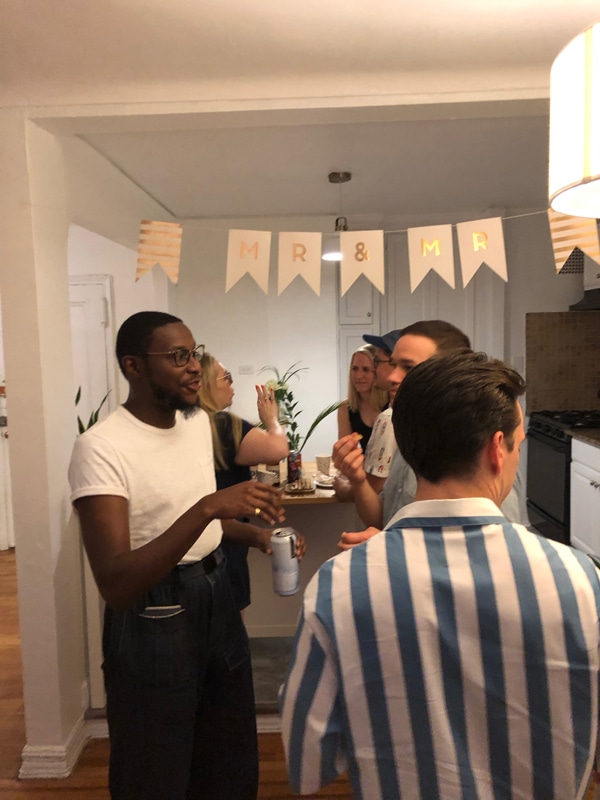
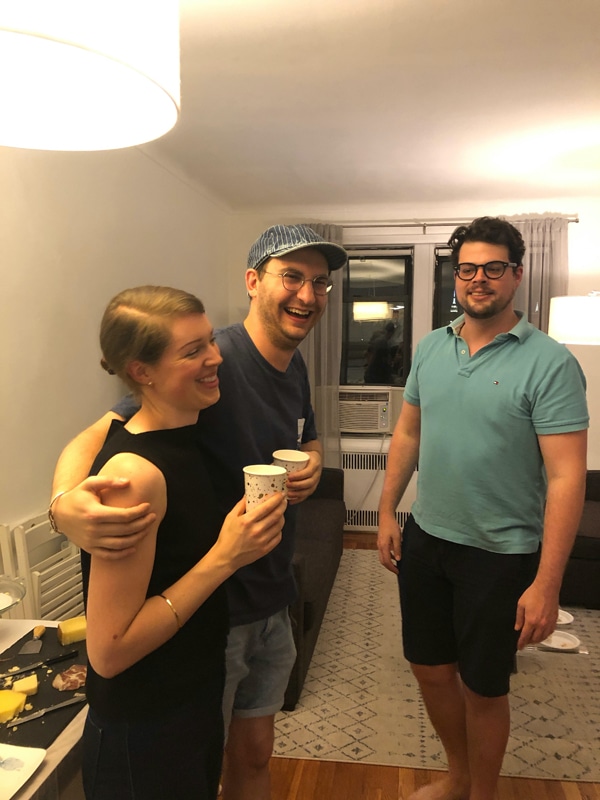
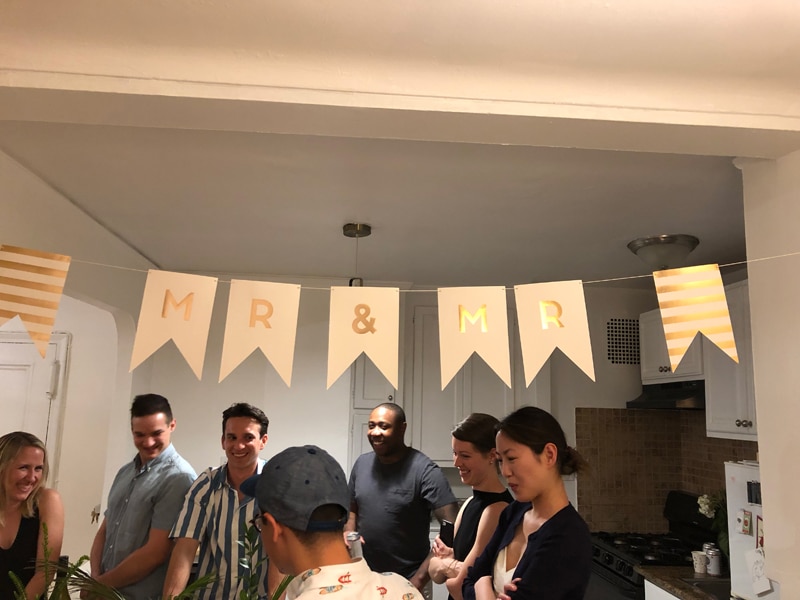
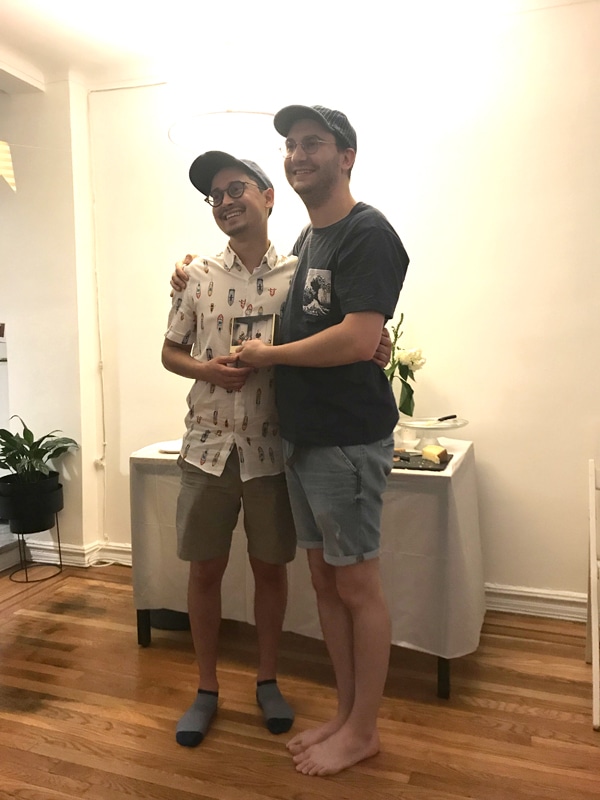
Update: After we arrived home from Japan our friends through us a surprise engagement party. They picked us up for a friends dinner and it ended up being a party just for Angel and me! 

READ PART 2 – THE WEDDING DATE >

| Read Insta-comments -> https://bt.zamartz.com/2LMay7b

We are Officially Engaged

On a small table, two bottles of sake catch the light, and a handwritten note rests beside them like a keepsake you’ll want to fold carefully and save.

We are Officially Engaged.

It’s strange how a moment can feel both loud and quiet at the same time. Loud in the way it changes the shape of the future, quiet in the way the present keeps sitting there, steady, asking you to notice it. A simple table. A drink poured slowly. Ink on paper. The kind of details that become anchors later.

Tokyo has a way of making ordinary scenes feel cinematic. The city hums just beyond the room, and inside there’s this pocket of stillness where gratitude can finally land. This is what I want to remember: not just the announcement, but the tenderness of being cared for, the warmth of a shared toast, the soft weight of a new beginning settling in.

To everyone who has been cheering us on from near and far, thank you. We’re holding this close, taking it in, and letting it unfold one day at a time—together.

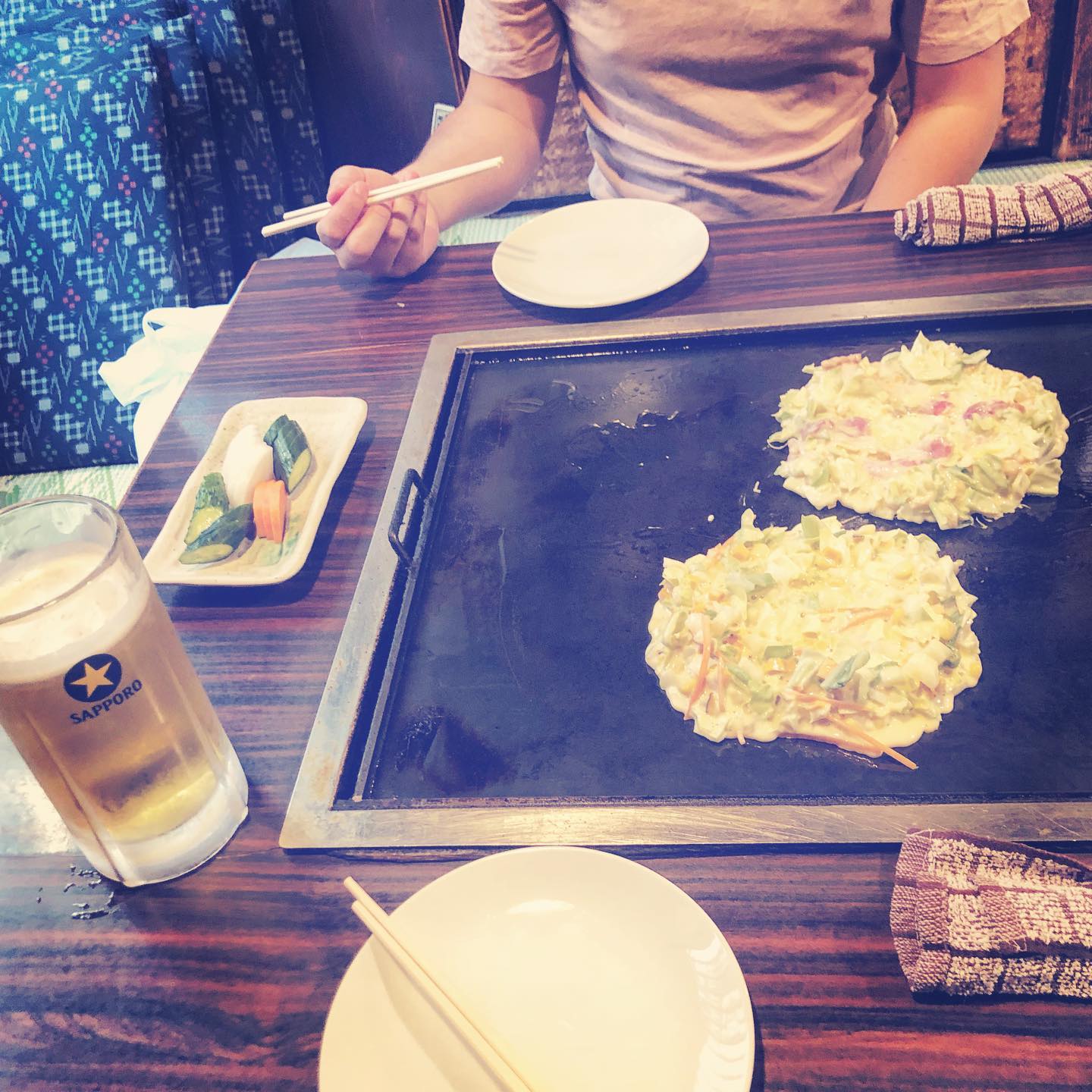
Okonomiyaki first meal – Sometaro

Our first meal in Japan was okonomiyaki at Sometaro—simple, warm, and a little mesmerizing.

The griddle sat in the middle of the table like a small, black stage. Two pale rounds of cabbage and batter sizzled quietly, edges loosening as if they were waking up. Steam rose and disappeared. Chopsticks hovered. A cold beer sweated beside a small plate of pickles, the kind of everyday details that make travel feel less like a highlight reel and more like a real afternoon you get to keep.

There’s something grounding about cooking at the table. You’re forced to slow down and watch. The food doesn’t arrive finished; it becomes dinner in front of you. The room around us faded into small sounds—the scrape of metal, the soft chatter, the steady hiss—until it felt like the whole city had narrowed to that warm rectangle.

Okonomiyaki is comfort food with a little ceremony: turn, wait, share, eat while it’s hot. It was the kind of first meal that doesn’t try to impress, and somehow that makes it unforgettable. After the flight and the rush of arrival, Sometaro felt like a quiet welcome.

Breakfast Temple Visit

Tokyo in the morning has a different temperature to it—less hurry, more hush. I arrived at Senso-ji with breakfast still warm in my stomach and the feeling that the day hadn’t decided what it would become yet.

At the gate, the giant lantern hangs like a steady heartbeat. Red beams frame it overhead, and the paint and paper look both weathered and cared for, the way old places do when they’re allowed to keep their age. There’s something grounding about standing beneath something so familiar in photos and finally noticing the details: the creases, the rope, the quiet weight of it all.

I’ve learned that travel isn’t always the big sights—it’s the small moments where one world brushes up against another. A temple visit after breakfast feels simple, almost ordinary, and maybe that’s the point. You walk in, you look up, you slow down. For a few minutes, the city doesn’t ask anything from you.

Senso-ji holds that kind of space. Not empty, not silent—just settled. Like it’s been listening for a long time, and it’s in no rush to answer.

If you ever find yourself in Tokyo early, go before the day gets loud. Let the lantern be the first thing you really look at.

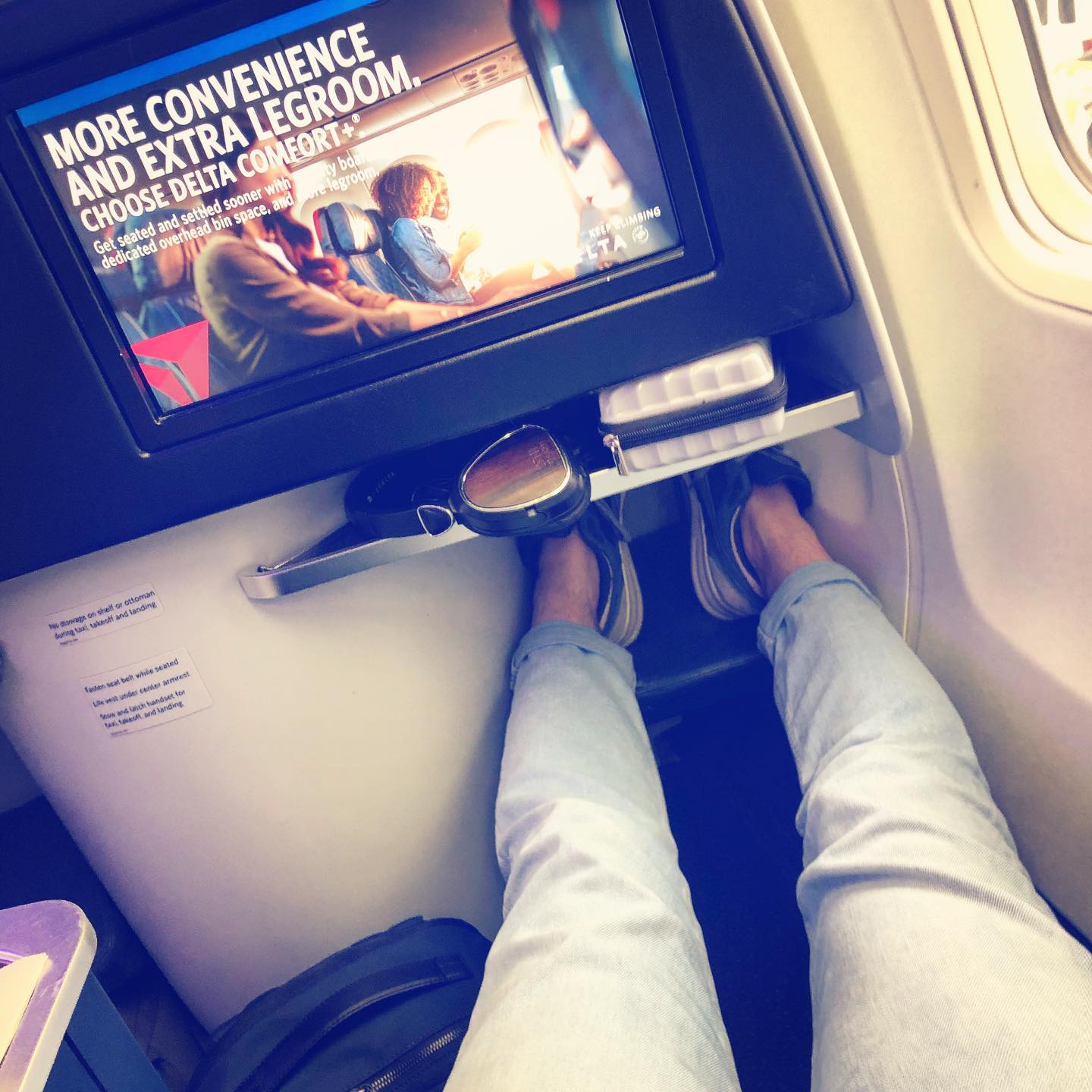
JFK > SEA, first leg of the trip to Japan

The cabin light has that familiar, late-afternoon glow—the kind that makes everything feel a little softer than it really is. I’m stretched out in my seat, shoes tucked forward, the screen in front of me running an ad about comfort and legroom, as if it’s trying to narrate the moment while I’m living it.

JFK > SEA is only the first leg, but it already feels like the threshold. Airports have their own weather: recycled air, muted announcements, the low tide of people moving with purpose. On the plane, time becomes something you can fold up and put away for later. The tray table clicks. The seat settles. A small pocket of stillness appears.

There’s a strange comfort in these in-between hours—suspended over the country, watching the world reduce itself to patterns and light. It’s not Japan yet, not even close, but the trip has started in the only way trips really start: by leaving.

Seattle is a pause, a breath, a handoff. Soon there will be different signs, different streets, different morning sounds. For now, I’m content to let the hum of the plane and the quiet choreography of travel do their work—carrying me forward while I sit still, thinking about the distance ahead and the stories waiting on the other side of it.

Spring Beach Time 1989

Spring beach time, 1989: not quite summer, not quite anything else. The sand is still cool enough to register, the wind sharp in that early-season way that keeps adults zipped up and kids unfazed.

In the photo, my mom walks along the packed shoreline holding my hand. I’m about a year and a half old—still learning balance, still trusting that the ground will mostly behave. A red sweatshirt is tied around her waist like a practical marker of foresight. She carries a weekend bag, the kind you pack when you don’t yet know how long you’ll stay or what the weather will decide. Behind us, tire tracks cut clean parallel lines, evidence that the beach has already been crossed, flattened, crossed again.

The best throwback photos aren’t dramatic. They look like errands. A walk. A hand held without discussion. Forward motion without a destination. The details date it—the haircut, the sandals, my small late-80s outfit—but the feeling isn’t stuck in a decade. It’s the ordinary certainty of being guided across uneven ground before you know how to do that yourself.

Spring at the beach was never about swimming. It was about arriving early, when the shoreline was still half-awake, and letting the day remind you how to be outside.

A picture doesn’t bring the past back. It just proves it happened. Sometimes that’s enough.

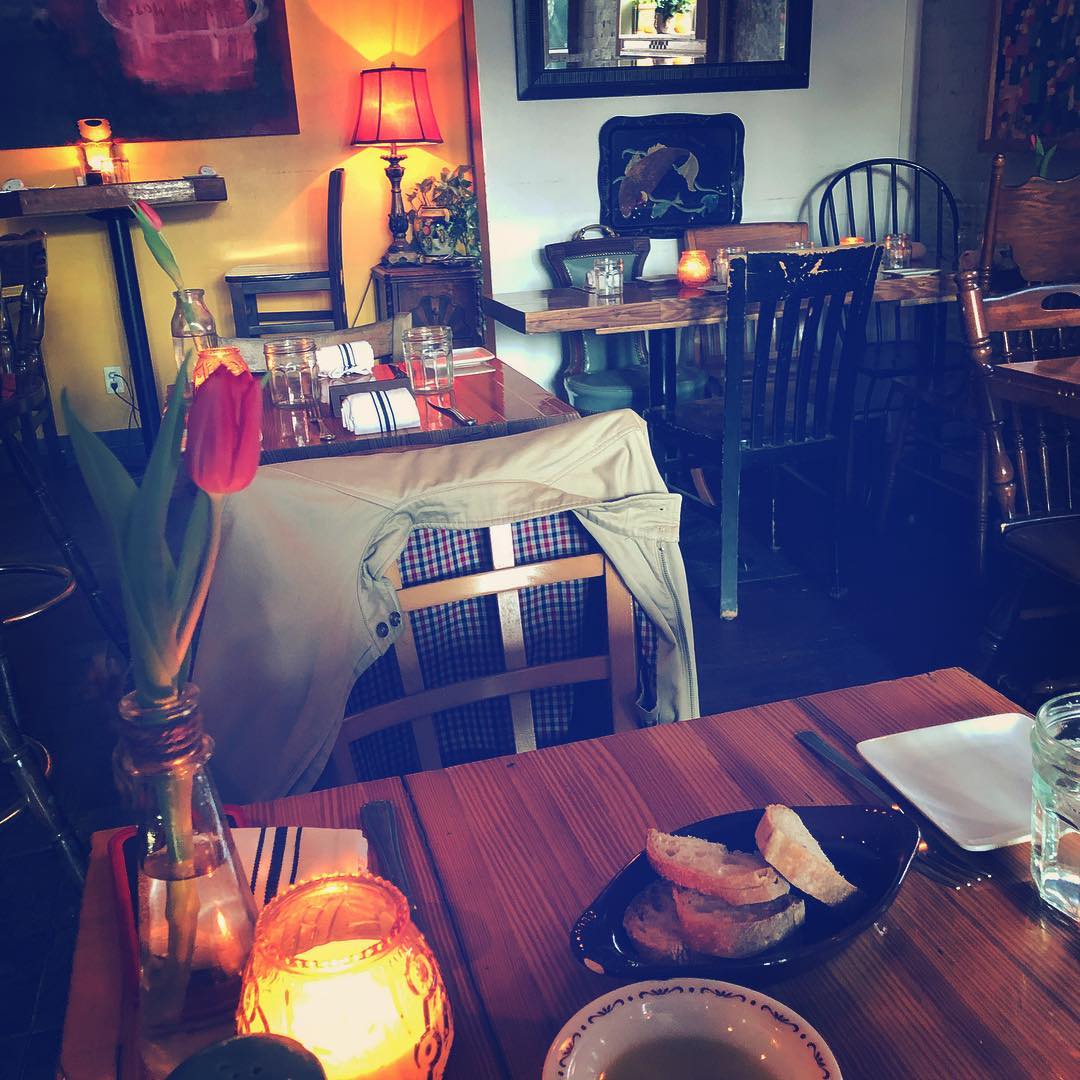
6:30 Dinner – we opened the place

6:30 dinner, and somehow we opened the place.

There’s a special hush that only exists when you arrive before everyone else. The room feels borrowed from another hour—tables set but untouched, water glasses lined up like small promises, candlelight pooling in amber circles. A lamp glows in the corner, making the whole place look like it’s remembering something.

We slid into our seats with that quiet satisfaction of being early, of being unhurried. Bread showed up first, warm and plain in the best way, the kind you tear without thinking. A tulip stood in a bottle on the table, casual and bright, like an afterthought that somehow makes everything feel intentional.

Then pasta—comfort without ceremony. The sort of dinner that doesn’t need a story to justify it, because it is the story: steam rising, forks turning, the steady rhythm of eating while the day finally lets go of you. The restaurant stayed mostly still for a while, as if it was letting us have those first minutes.

Eventually the place woke up. Chairs scraped back, voices gathered, little constellations of conversation forming at nearby tables. But I kept noticing the early light, the way the candle kept working, the sense that for a brief stretch we were inside the quiet before the night became a night.

Some evenings don’t ask for more than that—warmth, food, and a room that holds you gently until you’re ready to go back out.

Weekend lunch and snacks

Weekend lunch and snacks doesn’t have to be loud to feel like a small ceremony.

On the table, everything is simple and deliberate: toasted bread cut into thick slices; a soft, herbed cheese waiting like a quiet centerpiece; a small cup of mustard with a spoon that looks used exactly once; and, off to the side, little toasts layered with tomato, mozzarella, and basil. The colors do most of the talking.

It’s the kind of meal that feels borrowed from a slower world. Nothing is rushed. You build each bite in your hands, tasting what’s fresh, what’s salted, what’s still warm from the toast. The basil sits on top like a final thought. The tomatoes look like they were chosen carefully, not because they were perfect, but because they were ready.

I like lunches like this on the weekend because they leave room for the rest of the day. You can eat, pause, look out a window, and feel the hours open up again. It’s not a feast, not really. It’s more like a reminder that a few good ingredients, arranged with care, can make the ordinary feel bright and settled.

If there’s a secret here, it’s attention: to texture, to taste, to the quiet satisfaction of making something small and complete.

Happy Birthday Angel

There’s a particular kind of warmth that settles over a table when a birthday is the reason everyone showed up. It’s not loud, not staged. It’s in the small things: the shine of glassware catching low light, the quiet order of plates and folded napkins, the way people lean in toward one another as if the evening is a room you can step into and close the door behind you.

Happy Birthday Angel. A simple line, but it carries a whole soft history—shared meals, familiar jokes, the comfort of being known. At dinner, that feeling becomes tangible. You can see it in the relaxed shoulders, in the easy smiles, in the way the table feels lived-in before the first course even arrives.

Restaurants can be anonymous places, but nights like this give them a pulse. The wood grain under candlelight, the clink of forks, the paused moment before everyone starts talking at once—little ordinary details turning quietly meaningful.

Birthdays aren’t only about marking time. They’re about gathering it. Collecting a handful of people and making one evening feel like it belongs on a shelf in your mind, ready to be taken down later when you need something steady.

Here’s to Angel—celebrated well, surrounded by friends, and held for a moment in the gentle ceremony of dinner.

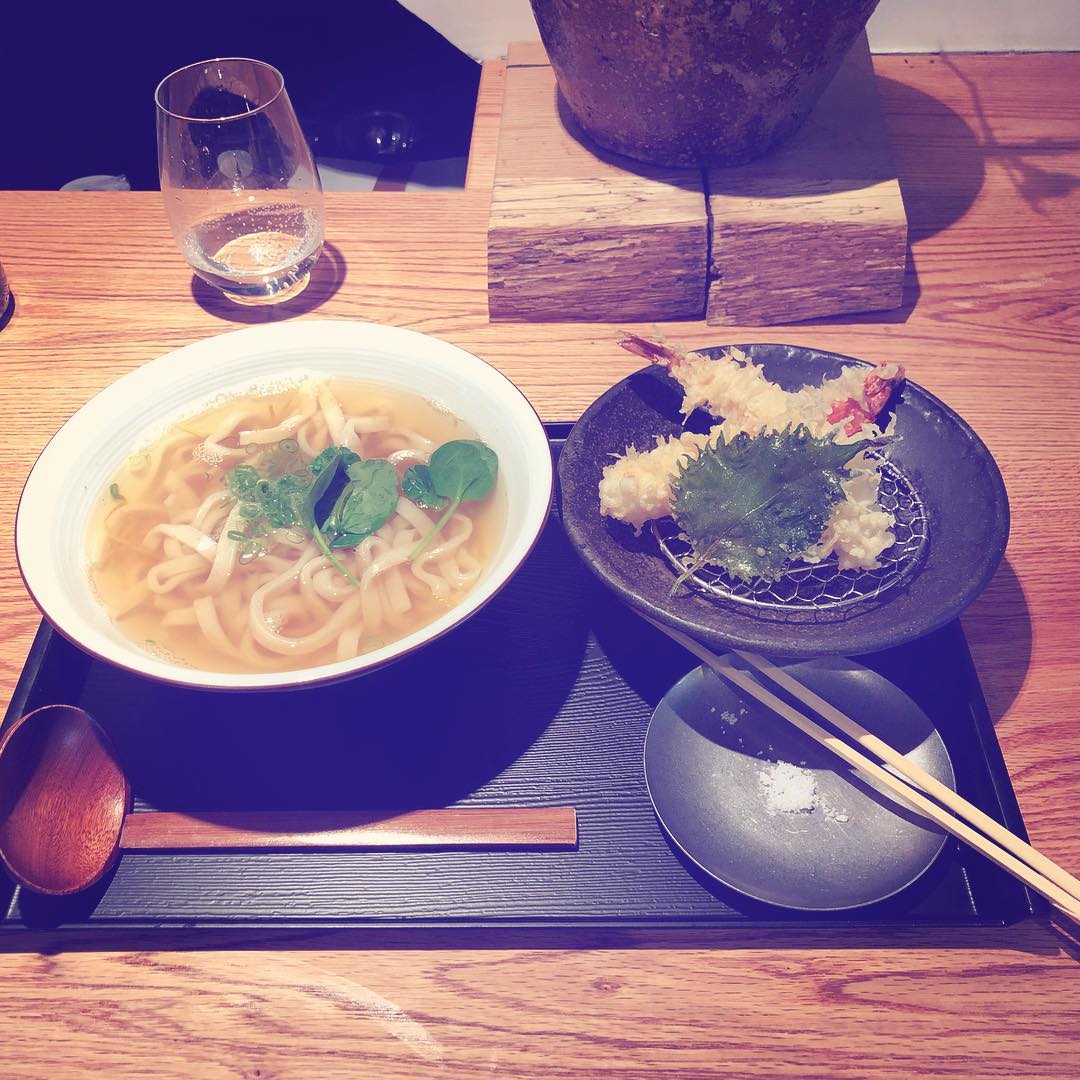
Wow – Delicious Udon and Tempura

There’s something quietly reassuring about a simple tray of food arriving the way it’s meant to: warm, balanced, and unhurried. A bowl of udon soup, pale broth holding thick noodles, a few greens drifting at the surface. Beside it, shrimp tempura—light, jagged, crisp—resting on a small rack so it stays airy instead of sinking into itself.

It’s an ordinary scene at a wooden table, but the kind that makes the moment feel bigger than it is. Chopsticks laid across a small plate, a pinch of salt waiting for the tempura, a glass of water catching the light. Nothing is trying too hard. The meal doesn’t need to announce itself.

The udon is the steady part: soft noodles, gentle heat, the calm you can taste. The tempura is the contrast—crunch and salt and that faint sweetness of shrimp under the batter. Together they do what good comfort food always does: they make you slow down, notice what’s in front of you, and let the rest of the day loosen its grip.

If you’re ever deciding between something that looks impressive and something that feels right, this is a reminder that “right” wins. A bowl, a plate, a quiet bite that lands exactly where you needed it.

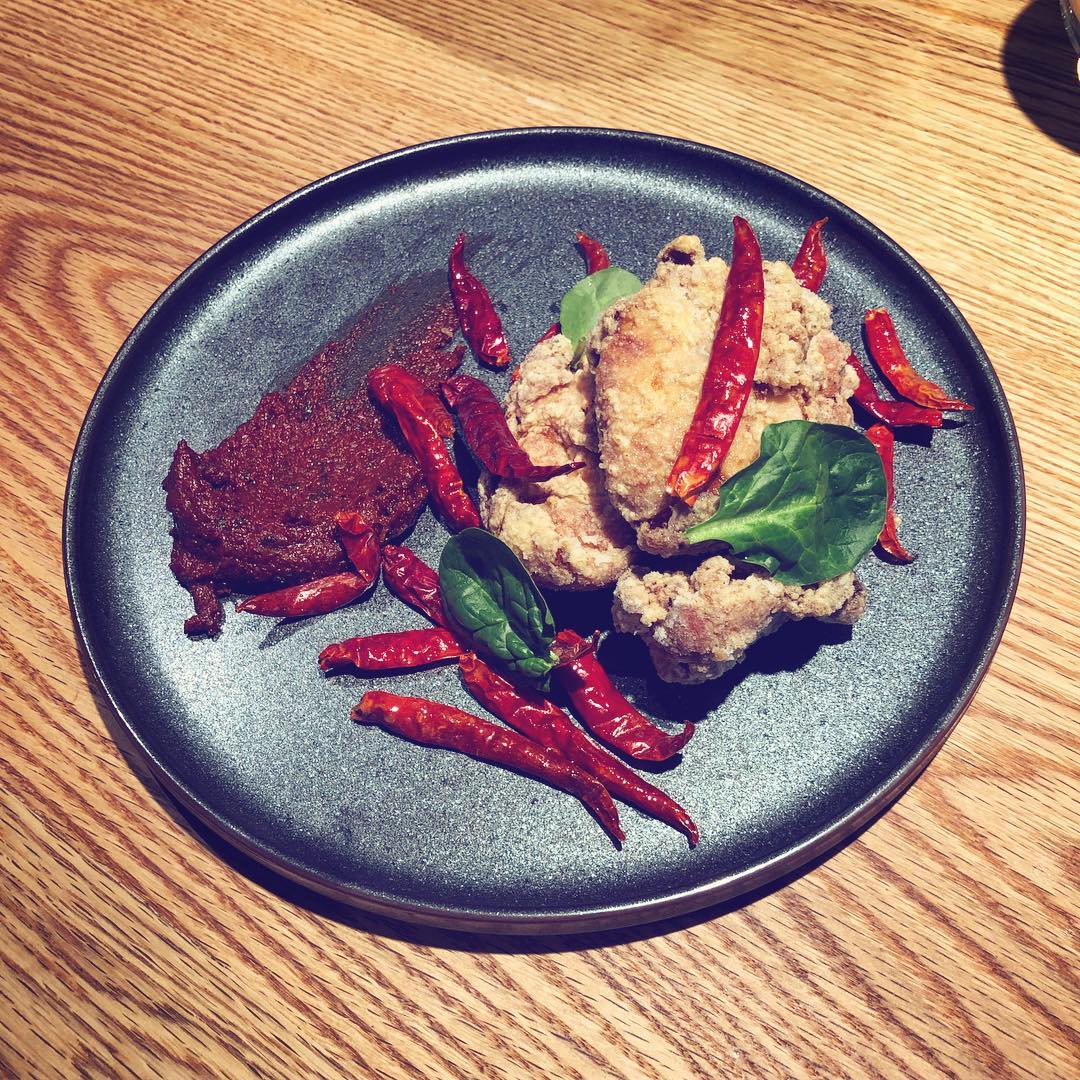
Tore no Karaage – mmmmm

There’s a kind of quiet satisfaction in a plate that doesn’t try too hard. Tore no Karaage – mmmmm sits in the center like a small warm stone—crispy chicken, pale and craggy from its coating, surrounded by dried red chilies that look like scattered embers. A few green leaves rest on top, softening the whole thing, as if the dish is taking a breath.

I keep coming back to the contrast: the crunch you expect from karaage, the slow heat implied by those peppers, and that dark smear of sauce on the side—like a shadow you can dip into when you want the bite to deepen. It feels intentional without being fussy.

Food like this has a way of pulling you into the moment. You notice the table grain, the matte black plate, the way the light hits the ridges of fried batter. The room around you goes a little quieter. The day, whatever it was, narrows down to salt, heat, and texture.

If you’re hunting for Japanese fried chicken with a spicy edge, this is the sort of dish that makes you pause between bites—not because you’re finished, but because you don’t want to rush it.

Dyson, “I’m snooow much fun”

Dyson, “I’m snooow much fun”

Dyson runs straight into winter like it’s an invitation. In the middle of all that white, he’s a dark, eager shape cutting a path through the churned-up snow, tennis ball held tight like a prize he earned fair and square. His ears are up, his eyes are locked in, and his whole body says the same thing: throw it again.

Snow has a way of rewriting a place. It softens the edges, hushes the street, and makes even familiar ground feel briefly new. Every footprint becomes a small story—where you went, how fast, how excited you were to get there. Dyson seems to read the page as he goes, adding lines as quickly as he can.

There’s a particular joy in watching a dog take the cold personally, like it’s not something to endure but something to conquer. The air might sting, the snow might melt into slush later, but right now it’s all possibility. A ball, a run, a return. Simple rules, endless rounds.

Maybe that’s the best part of days like this: the reminder that you don’t need much to feel full of it. Just a bright green-and-blue circle, a stretch of snow, and someone who comes back every time like it’s the first time.

Read Insta-comments -> https://bt.zamartz.com/2EslTCs

Exit mobile version