It’s easy to walk into a room like this and forget the rest of the day exists.
A crowd of lucky cats—paint chipped, faces softened by time—sit under a scatter of green bulbs like they’ve been waiting for the lights to come on. The biggest one holds its paw up in that familiar invitation, the kind that feels half blessing and half inside joke. Around it, smaller cats gather in mismatched rows, each with its own expression: alert, smug, sleepy, watchful.
I visited them the way you visit old houses or quiet fields: slowly, trying not to disturb whatever has settled there. There’s something comforting about repetition—cat after cat after cat—like a ritual you don’t have to understand to appreciate. The room hums with little details: the shine on worn paint, the soft shadows on the shelves, the sense that luck might be less a miracle and more a collection of small hopes.
Outside, the world keeps moving. In here, the cats keep their steady vigil, paw raised, asking for nothing and promising nothing—only making space for curiosity. I left feeling lighter, as if I’d been reminded that wonder can be ordinary, and that sometimes you can find it sitting quietly in a room full of statues.
A red cloth can make a small moment feel ceremonial. At Tea House Anmitsu, the tray arrives like a quiet still life: a wooden spoon resting in the open, a dark cup of tea holding its own reflection, and a bowl that feels both careful and generous.
Anmitsu is the kind of dessert that asks you to slow down. Here, the bowl is layered with soft white mochi, glossy beans, and bright fruit, then finished with a scoop of matcha ice cream that looks almost like it’s been sculpted. Nothing is loud, but everything has a texture—cool and creamy, chewy and smooth, sweet with a clean, green bitterness at the edge.
It’s easy to forget how much atmosphere matters until you sit with it. The wood grain, the simple ceramics, the red beneath it all—details that make the experience feel settled, not staged. You taste, you pause, you sip the tea and let the warmth pull the sweetness back into balance.
Some places feed you. Others give you a small pocket of calm to carry back out into the day. This one does both.
The castle rises out of the trees like something that has been waiting a long time to be noticed. Dark walls stacked in patient tiers, roofs curled at the edges, and small gold details catching what little light the day is willing to give. The sky is heavy and pale, the kind of gray that makes everything quieter.
I like places like this because they feel lived alongside, not just looked at. A castle isn’t only a landmark; it’s a container for years. Even from a distance you can sense the weight of seasons passing over the same angles and eaves, the way wind and rain return to familiar corners. The structure holds its posture anyway.
Standing there, it’s easy to think about how landscapes change around what remains. Trees thicken, paths get redirected, a city grows louder somewhere beyond the frame. And still the keep sits above it all, steady, as if it has its own weather.
“Castle on the Hill” is a simple title, but it fits. There’s a calm in that elevation—just enough distance to feel the world soften, just enough height to watch time move without needing to chase it. Okayama Castle doesn’t shout. It just stays.
Dinner at MOS Burger has a quiet, almost ordinary kind of comfort—the kind you notice more when you pause long enough to really look.
On the table: two burgers in glossy buns, fries tucked into paper sleeves, and iced drinks sweating in clear plastic cups. It’s fast food, sure, but it feels carefully arranged, like a small still life in the middle of a busy day. The light is soft, the wood grain is warm, and everything seems to wait for the first bite.
There’s something reassuring about meals like this in Japan. Not because they’re extravagant, but because they’re steady. Familiar shapes, small unfamiliar details. The wrappers are printed with tidy little icons. The fries are crisp and simple. The burgers are pleasantly messy—lettuce slipping, sauce pressed into the paper.
I like how moments like this don’t demand much. You sit, you unwrap, you drink something cold, and for a few minutes the day narrows down to the sound of ice and the easy rhythm of eating. Outside, the city keeps moving. Inside, dinner is just a round table, a couple of burgers, and the small satisfaction of being exactly where you are.
There’s something quietly comforting about a table that doesn’t ask for much: a warm pot of tea, a few small plates, the soft clink of porcelain against dark wood.
At Cure Maid Cafe in Japan, the snacks arrive like a little still life. White teapots with a delicate logo sit near cups of amber tea, and slices of cake rest on plain plates as if they’ve been set down to cool in a calm room. In the center, a glass dessert glows in layers—blue at the bottom, pale cream above—topped with fruit that feels bright against the muted tones of the table.
It isn’t a grand meal, and that’s part of what makes it linger in your mind. The portions are small enough to let you keep talking, to keep watching the room, to let the moment stretch without hurrying you toward the end.
I like places like this for their gentle attention to detail—the kind that doesn’t show off, just quietly holds everything together. A pot of tea can be ordinary anywhere, but here it feels like a small ritual: something warm to wrap your hands around while the outside world keeps moving.
If you’re planning a visit, go with time to spare. The best part isn’t only the sweets—it’s the pause they create.
There are days when a place feels like it has been waiting for you—quietly, without urgency—until you finally arrive.
Beautiful Temple Day didn’t start as anything grand. Just a bright sky, a little heat on the shoulders, and that slow pull of trees gathering around a path. Then the torii gate rose up in front of me, all weathered wood and clean lines, framed by leaves and a wide, open blue. Standing beneath it, I felt that familiar shift: one world pressing up against another, the ordinary thinning at the edges.
The gate wasn’t shouting for attention. It didn’t need to. The grain of the wood held its own history, darkened by time, sun, and rain. And above, the light made everything feel briefly simpler—like you could hear your own thoughts without them echoing back as noise.
I lingered longer than I meant to. Not out of ceremony, exactly, but out of a kind of respect for the stillness. Places like this don’t demand belief. They invite pause. They remind you that you can step out of your day for a moment and come back a little lighter.
Maybe that’s all a beautiful temple day really is: a small crossing, a breath, and a quiet return.
There’s something quietly reassuring about a small, bright room designed for one purpose: to let the day loosen its grip.
In Tokyo, the bath isn’t an afterthought. It’s a ritual tucked into clean lines and warm wood tones, a deep tub filling steadily while the sink runs beside it, as if the whole space is breathing in and out. Bottles sit in a neat row, waiting their turn. The mirror holds the scene like a window—water turning pale and cloudy, the surface trembling, then settling.
Ready to Soak feels less like an announcement and more like permission. Permission to be still for a moment. Permission to let travel be ordinary and human: tired legs, a long walk back, the soft click of a bathroom door, steam rising into a quiet ceiling.
I like how places can carry their own kind of care. Not loud, not luxurious in the flashy way—just thoughtful. A room that doesn’t ask you to perform, only to show up.
Tonight the city can keep humming outside. Inside, the bath fills, the air warms, and time slows to the pace of water.
Tokyo at night feels like a second weather system—light instead of snow, heat instead of cold. In Shinjuku, the glow stacks up in layers: signs, windows, screens, and reflections that turn the street into something almost physical.
This is the kind of brightness that doesn’t erase shadows; it makes them sharper. A tall tower of blue lines holds steady in the distance while the street level churns with smaller lights and moving silhouettes. You can stand still and watch the city live alongside you, as if it’s breathing through cables and concrete.
Neon City Lights at Night is a simple title, but the scene is anything but simple. It’s crowded without feeling claustrophobic, loud without needing sound. There’s a particular calm hidden inside the spectacle—a reminder that even the most electric places become familiar once you let them.
I keep thinking about how cities store memories the way old houses do. Not in quiet creaks and settling boards, but in repeated routes, in signs you recognize before you can read them, in the soft hum of movement that never fully stops. Under all that color, the street is still just a street—waiting for you to walk through it and leave with something you didn’t plan to carry.
Tokyo, day two, and I find myself looking down more than up.
In Asakusa, the street has its own quiet language: textured pavement, a yellow tactile strip running along the edge, and a manhole cover set like an emblem in the ground. The cover is patterned like a flower—metal petals, small dots, a careful symmetry—proof that even the parts of a city built to be stepped over can still be made with attention.
My shoes hover at the bottom of the frame, toes angled toward it, like I’ve walked into a small, accidental still life. It’s an unremarkable corner of sidewalk, yet it feels like a postcard of how Tokyo works: practical first, then quietly beautiful.
Walking through Asakusa today, I kept noticing how the city repeats itself in tiny ways. Grooves in the curb. The grit of concrete. The steady promise of that yellow line, guiding people who need it and reminding everyone else to make room. The streets don’t demand that you understand them all at once. They teach you by repetition.
By late afternoon, I realized day two wasn’t about collecting sights. It was about learning Tokyo from the ground up—one pattern, one step, one small pause at a time.
Tsukiji has a way of making lunch feel like a small pilgrimage. You drift down a narrow street stitched with power lines and shop signs, past counters and awnings, past people moving with that steady, practiced pace of a place that’s been doing the same work for a long time.
A banner for grilled tuna flaps above the crowd like a bright, simple promise. The air feels busy even when you stand still—salt, smoke, and something sweet you can’t quite name. It’s ordinary in the way that good places are ordinary: built from routine, repetition, and hands that know what they’re doing.
I came for sushi, but the walk there mattered as much as the first bite. Tsukiji isn’t quiet, yet it carries a kind of calm under the noise. You watch one world push up against another—tourists pausing to point, locals slipping through, vendors calling out, knives flashing briefly and disappearing back into work.
Then lunch arrives: clean cuts of fish, rice pressed just right, a bite that tastes like the sea without trying to explain itself. You don’t need much more than that. You finish, step back into the street, and the market keeps flowing as if nothing happened—except you’re a little more awake than you were before.
The night in Shinjuku feels like it runs on electricity. Light doesn’t just hang in the air—it moves, it pulses, it leans into the crowd and asks you to lean back.
Dance Robots Dance is the simplest way to name what happens in that room, but the scene is bigger than the words. A metallic figure catches every laser line and throws it back in sharp color. Across the floor, other glowing shapes flicker and spin, like a future made from reflections and noise. The audience gathers shoulder to shoulder, faces turned toward the stage, watching the spectacle the way you watch a storm—half delighted, half braced for the next flash.
There’s something oddly human in it: the choreography, the timing, the small pauses that let the room breathe before the lights slice through again. Among all the neon and chrome, you still feel that familiar push and pull—wonder, curiosity, the sense that one world is pressing right up against another.
Later, when the music fades, what stays is the color. The memory of pink and green beams crossing above a crowd. The idea that Tokyo can make even a noisy night feel secret, like you stumbled into it by accident and got to keep it for a moment.
The best laid plans of Dyson and men sometimes go awry. Especially, if you have my luck…adaptation – Robert Burns’ poem To a Mouse, 1786
Days, months, years, hours, minutes, seconds ~ planning, something Angel and I have a mastery over, led us to an early gap in coordination. Our planning was sound in the established goals and ultimate execution, but the timing of commencement was not quite aligned. This manifested itself in a less than grand and slightly bumbling engagement. In retrospect, it fits us perfectly and is a great introduction to the culmination of our matrimonial union.
Call me Zachary. Some months ago — never mind how long precisely — having little time or no time in my calendar, and nothing particular to interest me, I thought I would propose to Angel on the other side of the world.adaptation – Herman Melville novel Moby-Dick, 1851
Years ago, I set a goal to travel to Japan; and after meeting Angel, it became my goal to travel to Japan with him. Characteristically in line with my other excursions, events, and eccentric ideas, I was unable to make this a small and simple trip. Using Angel’s sabbatical as an excuse, we were able to plan a month living and exploring the country. The planned start of the journey was to arrive in Tokyo, but the first big event in the country was to be a surprise for Angel.
Patience is a high virtue… but virtue can hurt you, if you have a cute plan for your engagement proposal…adaptation – Chaucer, The Canterbury Tales , 1387-1400
Some months prior to the start of our trip planning, Angel sat me down, to what I now know to be a normal conversation starter, but my first experience was received as something quite startling… a simple “we need to talk.” To limit myself from digressing into another long story inside a story, I will attempt to cut this short; we talked about getting married and I promised to propose soon.
Jump ahead, weeks before our trip to Japan, I thought myself quite skilled in delaying my proposal delivery. From our first “we need to talk” until this day I had been planning the surprise in Japan. I would start with a special bottle of Sake in our hotel suite and finish the final proposal the following day at the Senso-jo Temple in Asakusa. My longtime friends, Arek and Gavin, would meet us and help film it all.
You never know what worse luck your quirky/off-center luck has saved you from.Adaptation ― Cormac McCarthy, No Country for Old Men, 2005
Odds are never in my favor and that day my kindling plan was snuffed out by an afternoon conversation starting with “we need to talk.” Just as casual as the cheese lunch we were eating –some focaccia, brie, and olive oil – Angel proclaimed, “I am tired of waiting. I want to get married.” To my bewilderment and with a slight chuckle, I had to explain all of my near-future plans and in turn cancel them. This is typical for my luck or the modus operandi of my life – things are always just a bit off center. The memorable engagement I planned was instantly overshadowed by this, a slightly more fitting engagement story.
The moral of this story is to keep it simple, do not over think it, and if it is meant to be, the delivery is not important.
“Yesterday is history, tomorrow is a mystery, but today is a GIFT. That’s why it’s called the present.”Adaptation ― Bil Keane, The Family Circus newspaper cartoon, 1994
Now with our future intent declared, we embark on a new journey. First we must complete the planning for our trip to Japan, which in effect is our honeymoon. Again in our “typical” fashion, we are doing things a bit out of order – The honeymoon, the wedding planning, and then the wedding. On top of that, another quest has been given to us, that is, stay on budget and have the wedding in New York City.
Update: We had a surprise waiting for us in Japan from our travel agent… very tasty bottle of sake – the agent had no idea this was part of the original plan.
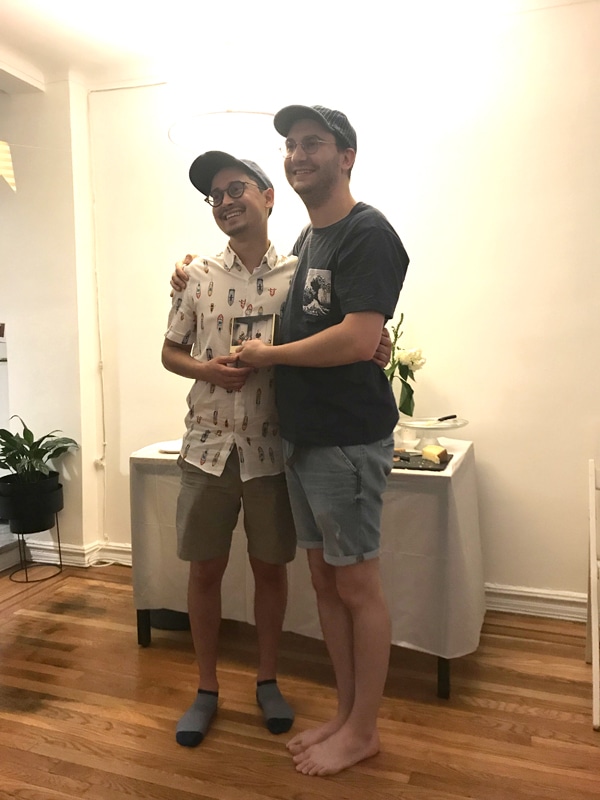
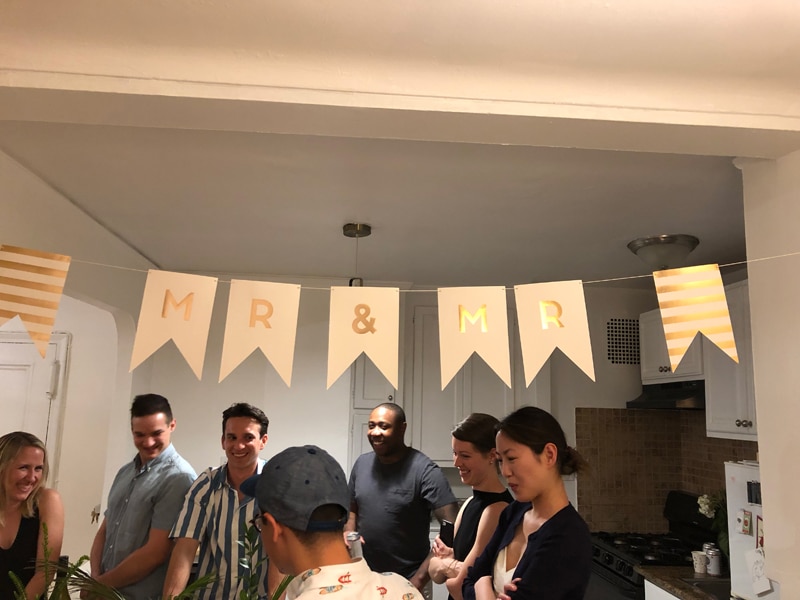
Update: After we arrived home from Japan our friends through us a surprise engagement party. They picked us up for a friends dinner and it ended up being a party just for Angel and me!