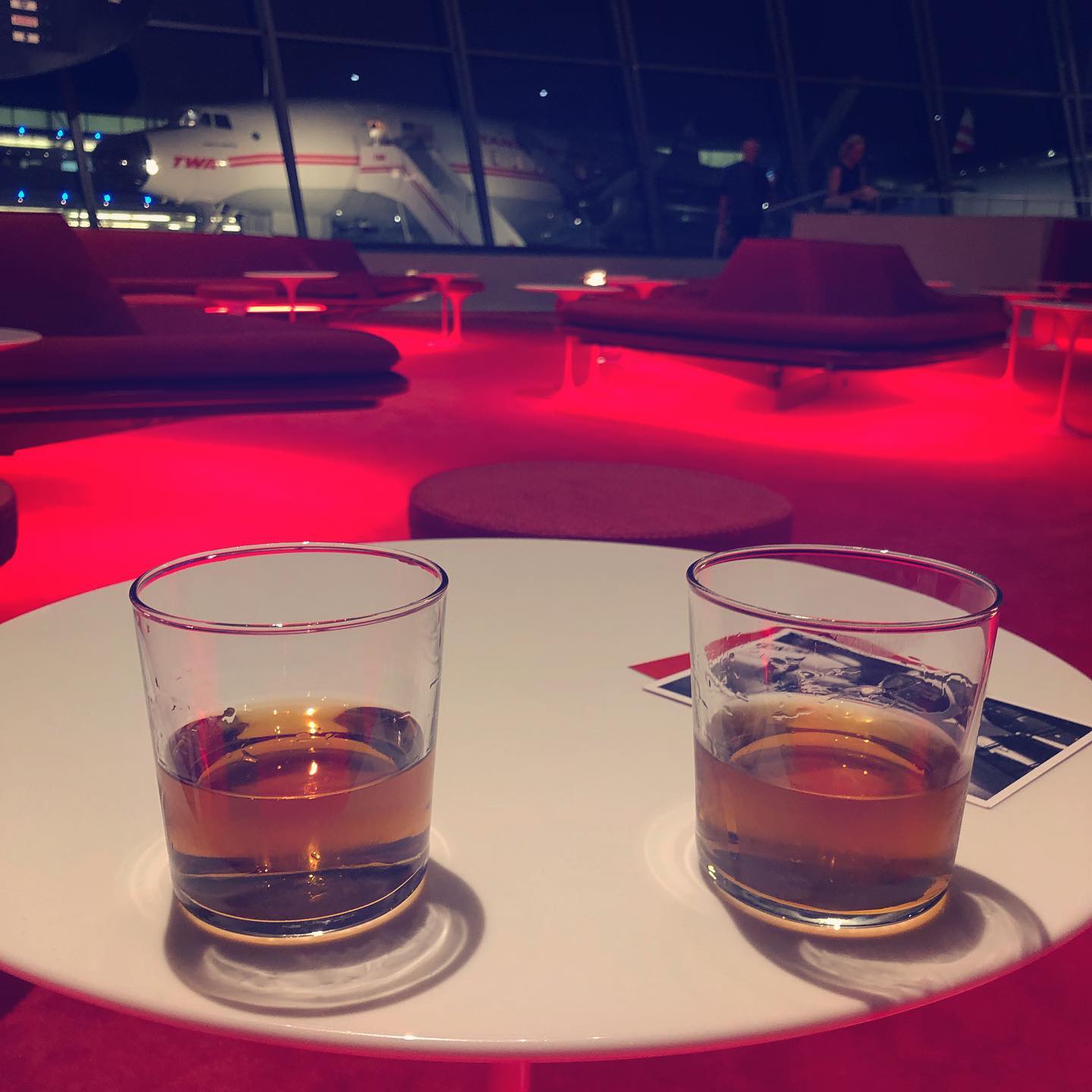
Mini Honeymoon Cocktails

Two small glasses sit on a white table, the kind you cradle with warm hands while night presses against the airport windows. Outside, a plane rests under floodlights; inside, the room glows magenta and hushed, like a waiting place trying to be gentle.

Mini Honeymoon Cocktails isn’t really about mixology. It’s about the pause you make in transit—before the next gate, before the next city, before the world asks you to be practical again. The first sip tastes like sweetness cut with something sharp, like realizing you’re married and it still hasn’t fully landed.

There’s a particular tenderness to celebrating in an airport. Everything is designed for leaving, but you can still build a small island of staying: two seats, two glasses, and the soft roar of other lives rolling by on wheels.

If you’re planning your own mini honeymoon moment, keep it easy. Order one drink you both actually enjoy, ask for water alongside it, and let the clink be the ceremony. No grand backdrop required. Just the shared look that says: we’re here, we’re together, we’re going.

Small drinks for a big beginning.
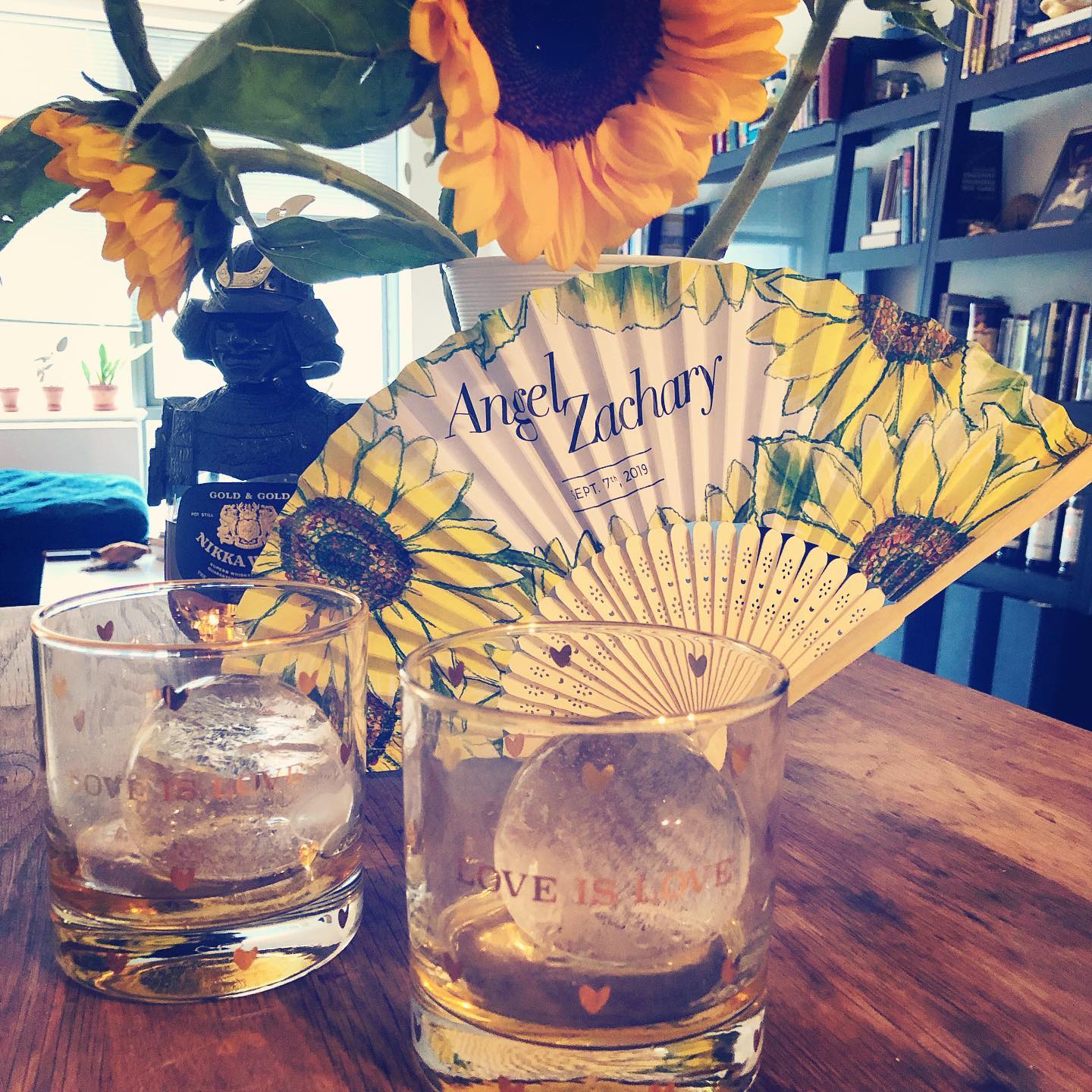
Countdown – 1 day – AtoZ

There’s something quietly electric about the last day of a countdown. Not loud, not frantic—just a small hum under everything, like a house settling at night.

On the table: two low glasses with “LOVE IS LOVE” catching the light, clear and simple as a promise. Behind them, sunflowers lean in, bright and a little oversized, like they’re trying to witness the moment too. And there, spread open like a breath, a sunflower-patterned fan with names written across it—Angel, Zachary—dated for a day that’s almost here.

It’s the kind of scene that feels ordinary until you look again. A tabletop, a few objects, a room with books and afternoon light. But in the midst of the mundane, meaning gathers. The fan isn’t just decoration; it’s a marker of a future hour when people will stand, smile, and realize the waiting has turned into arrival.

Countdown – 1 day – AtoZ.

Tomorrow is the day the details stop being details and become memory. The glasses will be lifted, the flowers will droop, the fan will fold closed. And what’s left—what matters—will be that steady warmth: love, spoken plainly, and meant.

Golden Boys Day

The day felt bright in the easy way travel sometimes does—no big plan, just a shared direction.

In Kyoto, the gold pavilion sat across the pond like something carefully placed in the world and then left alone to be itself. The water held it without trying. Pines leaned in at the edges, and the hills behind everything looked soft and patient, the way old places can.

We stood at the shoreline long enough for the scene to settle into us. Then we did what we always end up doing when we’re happy: turned the camera back toward our own faces and tried to fit the feeling into a frame.

It’s a small thing, a photo. Two sunlit smiles, a couple hats, round glasses. But I keep thinking about how moments like this don’t shout. They just hum. They say: you’re here, you made it to this particular day, and you get to carry it home.

“Golden Boys Day” isn’t really about the gold at all, even though the pavilion shines like a promise. It’s about walking side by side through a place layered with time, and realizing that the best souvenirs are the quiet ones—light on the water, warmth on your skin, and someone next to you who makes the world feel a little wider.

Dyson is just as good as Hachiko

Dyson is just as good as Hachiko, or at least that’s what it felt like standing there in the bright Shibuya light—one world pressing up against another.

The Hachiko statue has a gravity to it. People orbit, pause, smile, move on. Bronze made warm by hands and time, set against the everyday rush of Tokyo. It’s easy to arrive expecting a simple photo spot and leave with something quieter: a reminder that loyalty can become a landmark, and that a city can hold tenderness in plain sight.

Dyson, meanwhile, is not cast in metal. He’s living and impatient and funny in the way a dog can be—present tense all the time. The comparison is unfair, and still it makes sense. Hachiko is the story we carry around; Dyson is the small, real version of it that waits at home (or in your mind) and makes the idea feel possible.

I like places that do this—where the mundane and the meaningful overlap without announcing themselves. A statue in a pocket of shade. A person posing beside it, trying to be lighthearted. A memory taking shape while traffic moves and the city keeps humming.

If you’re in Tokyo, go say hello to Hachiko. Stay a minute longer than you planned. Listen to the noise and see what it leaves behind.

6:30 Dinner – we opened the place

6:30 dinner, and somehow we opened the place.

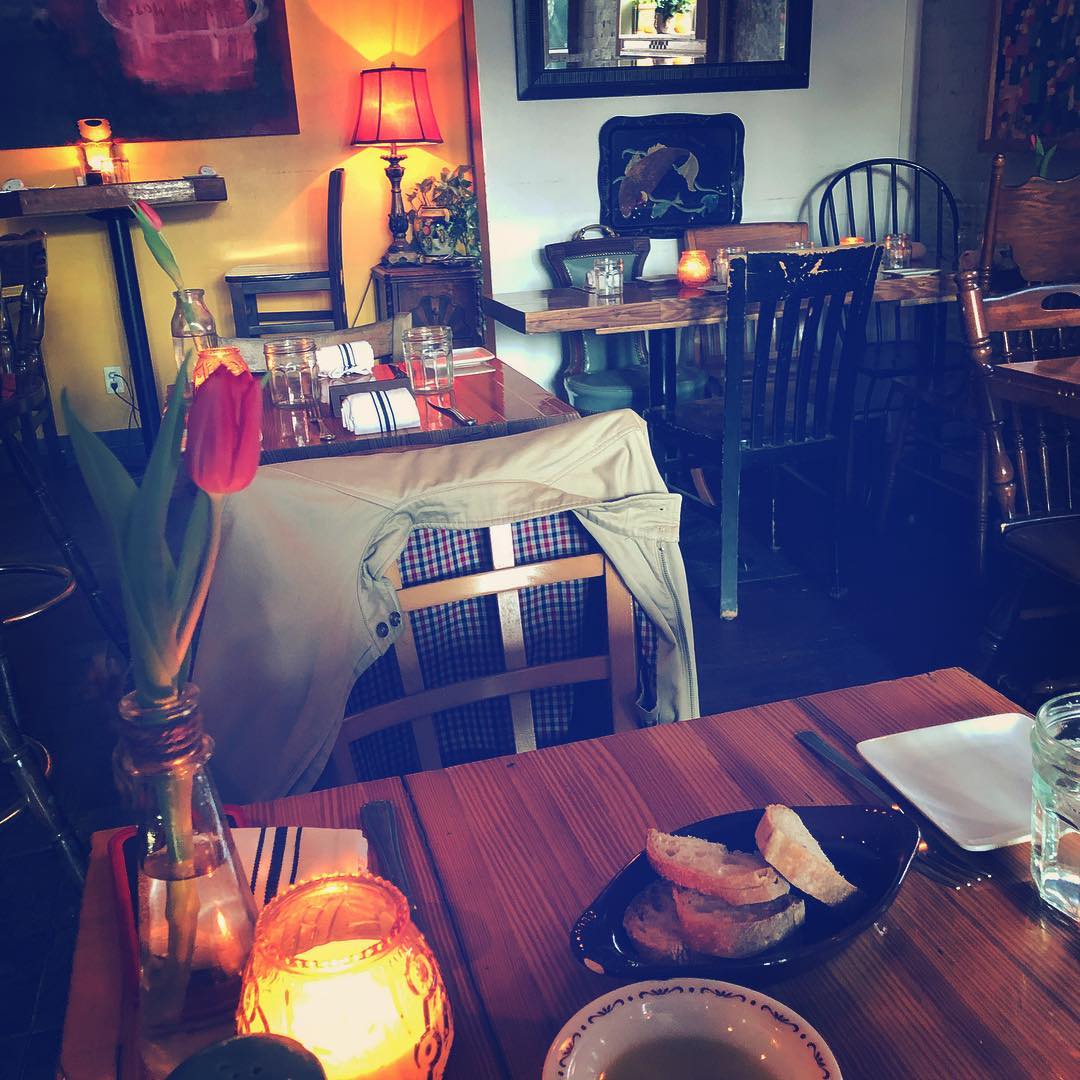
There’s a special hush that only exists when you arrive before everyone else. The room feels borrowed from another hour—tables set but untouched, water glasses lined up like small promises, candlelight pooling in amber circles. A lamp glows in the corner, making the whole place look like it’s remembering something.

We slid into our seats with that quiet satisfaction of being early, of being unhurried. Bread showed up first, warm and plain in the best way, the kind you tear without thinking. A tulip stood in a bottle on the table, casual and bright, like an afterthought that somehow makes everything feel intentional.

Then pasta—comfort without ceremony. The sort of dinner that doesn’t need a story to justify it, because it is the story: steam rising, forks turning, the steady rhythm of eating while the day finally lets go of you. The restaurant stayed mostly still for a while, as if it was letting us have those first minutes.

Eventually the place woke up. Chairs scraped back, voices gathered, little constellations of conversation forming at nearby tables. But I kept noticing the early light, the way the candle kept working, the sense that for a brief stretch we were inside the quiet before the night became a night.

Some evenings don’t ask for more than that—warmth, food, and a room that holds you gently until you’re ready to go back out.

Happy Birthday Angel

There’s a particular kind of warmth that settles over a table when a birthday is the reason everyone showed up. It’s not loud, not staged. It’s in the small things: the shine of glassware catching low light, the quiet order of plates and folded napkins, the way people lean in toward one another as if the evening is a room you can step into and close the door behind you.

Happy Birthday Angel. A simple line, but it carries a whole soft history—shared meals, familiar jokes, the comfort of being known. At dinner, that feeling becomes tangible. You can see it in the relaxed shoulders, in the easy smiles, in the way the table feels lived-in before the first course even arrives.

Restaurants can be anonymous places, but nights like this give them a pulse. The wood grain under candlelight, the clink of forks, the paused moment before everyone starts talking at once—little ordinary details turning quietly meaningful.

Birthdays aren’t only about marking time. They’re about gathering it. Collecting a handful of people and making one evening feel like it belongs on a shelf in your mind, ready to be taken down later when you need something steady.

Here’s to Angel—celebrated well, surrounded by friends, and held for a moment in the gentle ceremony of dinner.

Robe in Hotel Bed

A robe left on a hotel bed always feels like an invitation and a warning at the same time.

The room is quiet in that careful way conference hotels are quiet: carpet swallowing footsteps, air conditioning breathing in measured sighs, the hallway’s life kept at a distance. Inside, it’s just the bed—white sheets pulled tight—and the simple weight of fabric waiting where a person should be.

Travel does that. It compresses you. Days become lanyards and schedules, small talk and bad coffee, a loop of elevators and meeting rooms. Then you come back to the room and everything you carried in your head finally sets down. The robe is there like a placeholder for rest, a soft uniform for the hour when you’re no longer presenting anything.

I think that’s what I notice most in places like this: how the ordinary becomes briefly strange. A bed that isn’t yours. A mirror that doesn’t know you. A silence that feels rented.

And still, there’s comfort. The room doesn’t ask for your history. It doesn’t creak with the ghosts of old years or hold the familiar scuffs of a life lived. It just offers clean edges, a lamp glow, and the chance to be anonymous for a night.

Somewhere outside the window, the city keeps going. In here, the robe waits. So do I.

Weekend Vaca with Boo in NOFO

The weekend in NOFO felt like the kind of pause you don’t plan, you just fall into.

The sky was a wide, soft gray—nothing dramatic, just a ceiling of cloud that made the water look steadier and more honest. We stood close at the edge of it all, shoulder to shoulder, letting the wind do what it wanted with our shirts and our hair, letting the moment be unposed even as the camera caught it.

There’s a comfort in getting away with someone you love and realizing you don’t have to fill every second. A short drive turns into a different rhythm: slower meals, longer looks, quiet jokes that only make sense to the two of you. NOFO has that effect. It doesn’t demand a checklist. It just gives you room.

I keep thinking about how places can hold feelings the way old houses hold heat—subtle, stored up, and easy to miss until you step back inside your own life. This trip wasn’t loud. It didn’t need to be. It was the simple relief of salt air, an arm around a shoulder, and the ocean stretching out like a reset button.

If you want the little details and reactions, the Instagram comments tell the rest of the story.

The two most beautiful thing this weekend in one photo

There are weekends that feel too big to hold in your hands, so you try to press them flat into something simple—one frame, one breath, one small proof that you were there.

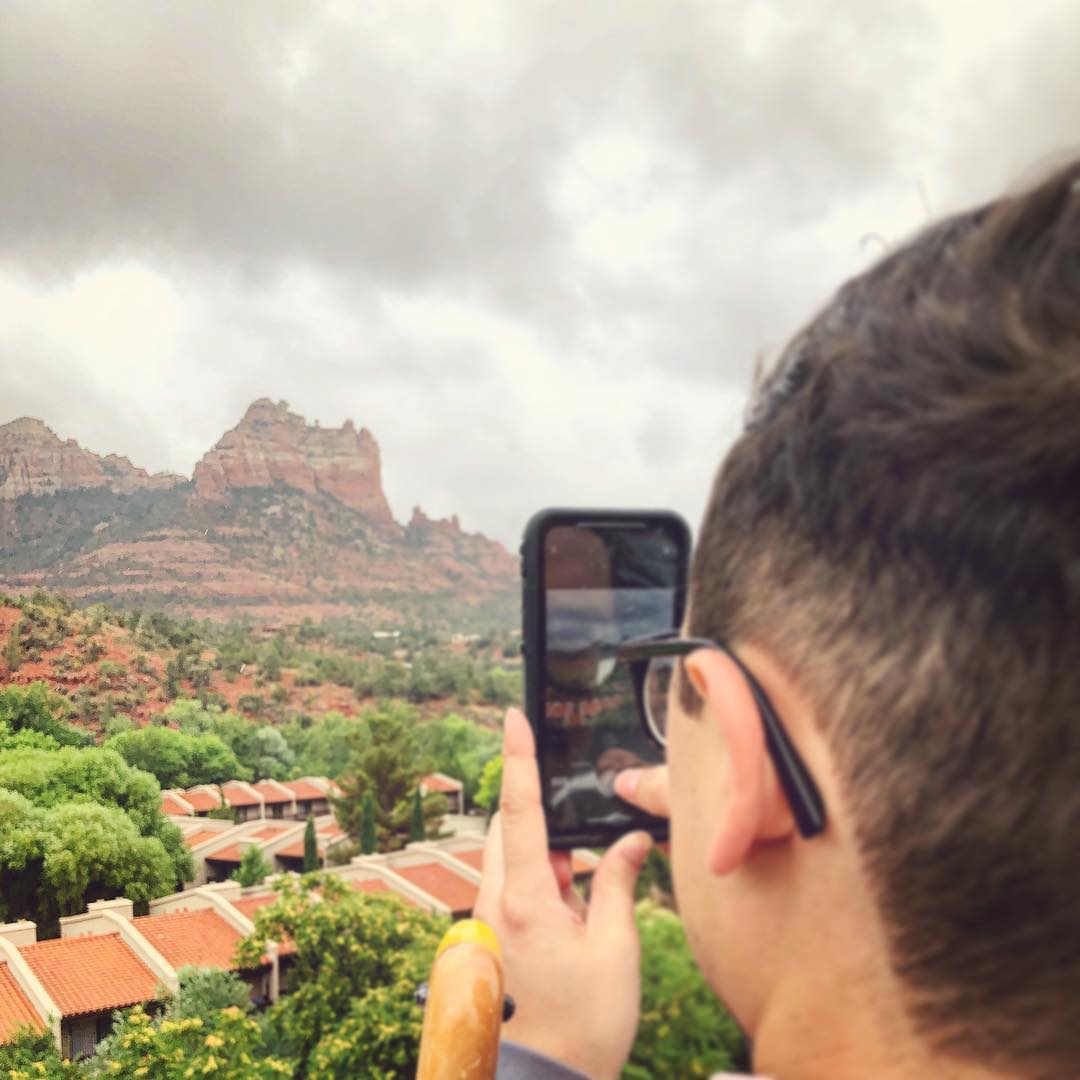
In this photo, the red rocks sit under a heavy sky, muted by cloud and distance, the way landmarks do when you’re not trying to conquer them—only notice them. Below, rows of clay-colored roofs and soft green trees make their own quiet pattern, a lived-in grid at the edge of the wild.

And then there’s the other beautiful thing: the small human moment in front of all that ancient stone. Someone leaning in with a phone, framing the same view, saving it the way we all do now. Not to replace the memory, but to give it a place to live when the weekend is over.

I like how the scene holds two kinds of scale at once—the patient, unmoving rock and the quick, fleeting act of photographing it. The world pushes up against itself: wilderness and neighborhood, weather and weekend, permanence and a thumb tapping a screen.

Maybe that’s what makes the best trips feel settled instead of crowded. You don’t take the landscape home. You just let it follow you a little, like color on your sleeves.

Family bonding time

The photo catches a quiet kind of closeness—two dads stretched out together, the world narrowed to a couch, a soft black-and-white filter, and a puppy tucked in like a warm punctuation mark at the bottom of the frame.

There’s something about moments like this that feels bigger than it looks. No big plans, no perfect lighting, no reason to perform. Just the small weight of an animal settling in, the familiar angles of someone you love beside you, the unspoken agreement to stay still for a while.

Bonding can sound like an activity, like something you schedule or work at, but more often it’s these ordinary minutes that do the stitching. A shared look at the camera. An arm draped where it always ends up. A dog’s sleepy eyes, half-trusting and half-curious, as if it’s learning the shape of this home in real time.

Family bonding time doesn’t need much space. It just needs a little quiet, and the willingness to be there—together—until the day feels settled.

Two dads cuddling with puppy, framed in a simple snapshot, says what a lot of words can’t: this is what “home” looks like when it’s alive.

Great Dinner in PA with my cutie

Dinner in Pennsylvania always seems to arrive the way weather does—quietly at first, then all at once. We stepped out into the evening with that small, earned kind of happiness: full plates behind us, a little warmth in our cheeks, and the sense that the night didn’t need to be anything more than what it already was.

I keep thinking about the way places hold you. A restaurant table, a familiar street, the soft clink of silverware and glass—ordinary things that still feel like a marker in time. It’s the same comfort I find in old houses: not perfect, not staged, just lived-in. You can almost hear the room breathing around you.

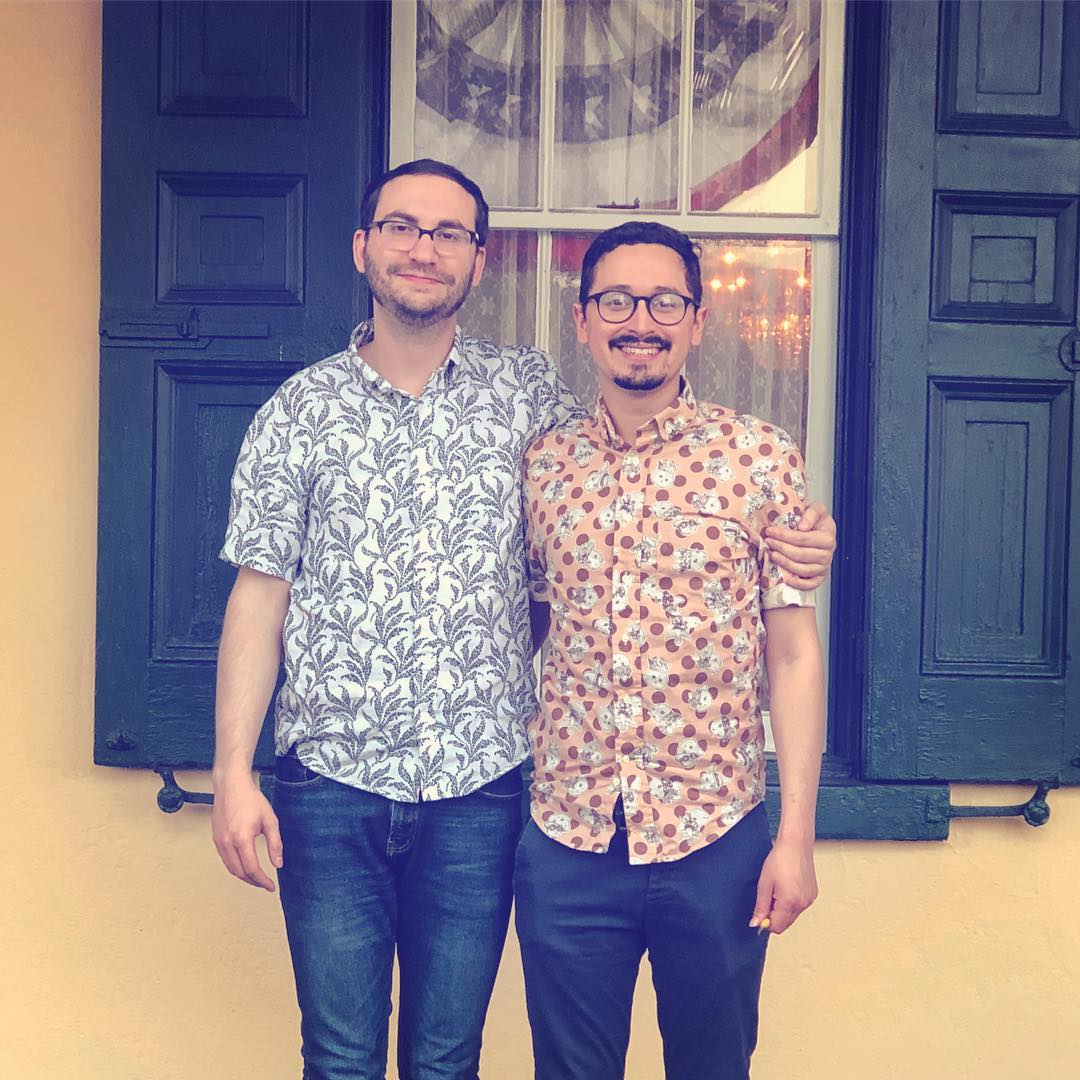
After dinner we paused for a photo, standing close like we always do when we’re not trying to make a moment out of it. Two patterned shirts, an easy smile, the dark shutters framing us like a memory you can step back into. The window behind us caught a little glow, as if the inside of the building was still holding onto the evening.

I don’t remember every bite, but I remember the steadiness of it—how good it feels to share a meal with someone who makes the world feel a bit brighter and a bit bigger.

Great Dinner in PA with my cutie, tucked away like a small keepsake.

Presidential Photobomb

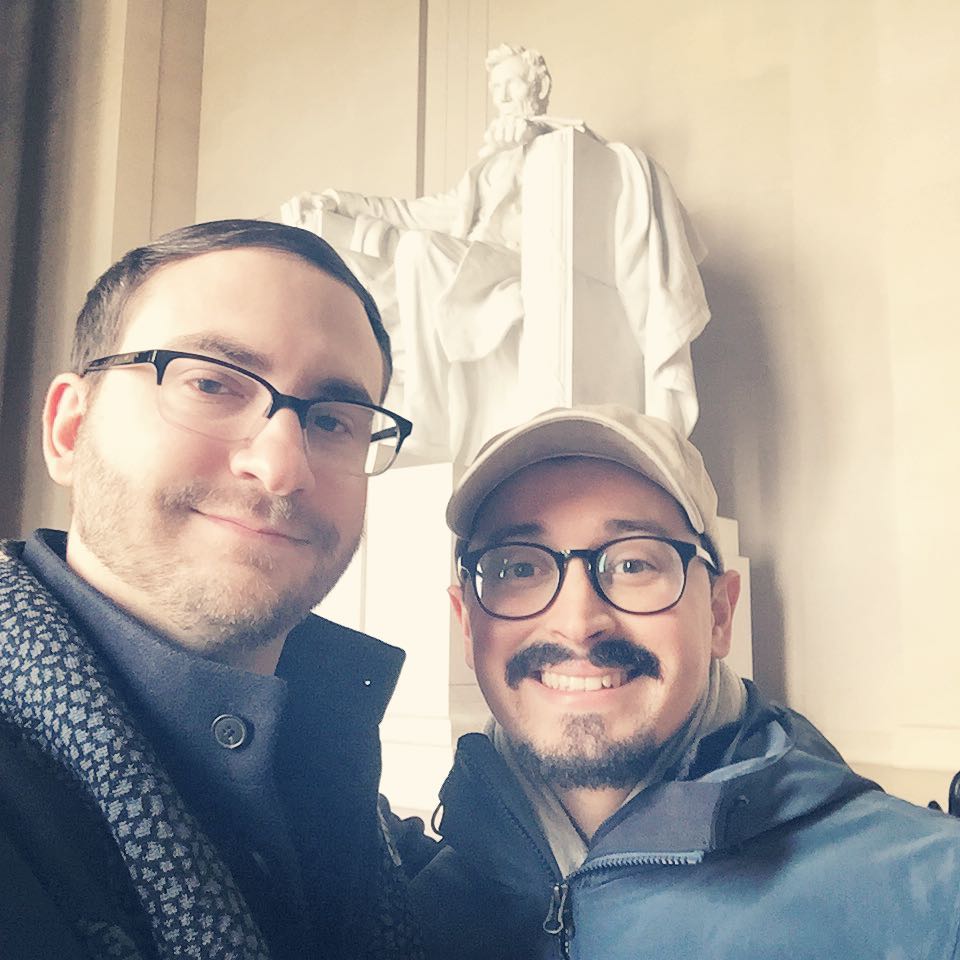
There’s a certain kind of quiet inside the Lincoln Memorial—stone and echo, like a room built to hold its breath. And then, of course, there’s us: bundled up, leaning in close, trying to fit a whole day into one small frame.

We snapped this photo and only later really noticed how perfect the timing was. Lincoln sits behind us in his permanent, patient stillness, looking like he’s tolerating the modern ritual of the selfie with the same calm he gives everything else. It feels like a photobomb, but the slow, presidential kind—less “gotcha,” more “remember where you are.”

Washington, D.C. has a way of doing that. You walk around with coffee in your hand, chatting about where to go next, and suddenly you’re standing in front of something you’ve seen your whole life in textbooks. The scale of it doesn’t hit you all at once; it comes in pieces: the cold air, the marble, the softness of light on white stone.

We came for a photo, but left with that lingering feeling that some places are bigger than their monuments. They’re built out of memory, and the quiet pressure of history, and the strange comfort of being very small for a moment—together—while something enormous sits watching from the background.

Exit mobile version