Weekend Reading for the Soul, at the farmers market

????

My company, ZAMARTZ, sponsors the local farmer’s market in Upper Merion Township, Pennsylvania—or King of Prussia, as it’s known to the locals.  As part of this sponsorship, I have a booth at the farmer’s market. Recently, my long-time best friend, Hannah Biddle, came to visit me at my booth.

Hannah’s about to make a big life change and move to another state. In the meantime, we’re trying to find time to spend together amidst our respective busy schedules and the state of the world. Anyway, she came that day to give me a book she’d found: Water, Woods & Wild Things, a memoir by American writer Hannah Kirshner that recounts her excursion to a Japanese mountain town and her introduction to its culture, craftsmanship and community.

Angel and I are both Japanophiles, as I’ve attested to before, and Hannah knows our interests well. This book was a great way for us to get into the spirit of our balcony and its verdant garden. Hannah didn’t even know I’d just gotten my green Japanese maple when she gave me the book! And my garden, Japanese maple and all, is just the right, serene setting for me to sit down, do some weekend reading, and get into the mindset of the Japanese and their slower way of life.
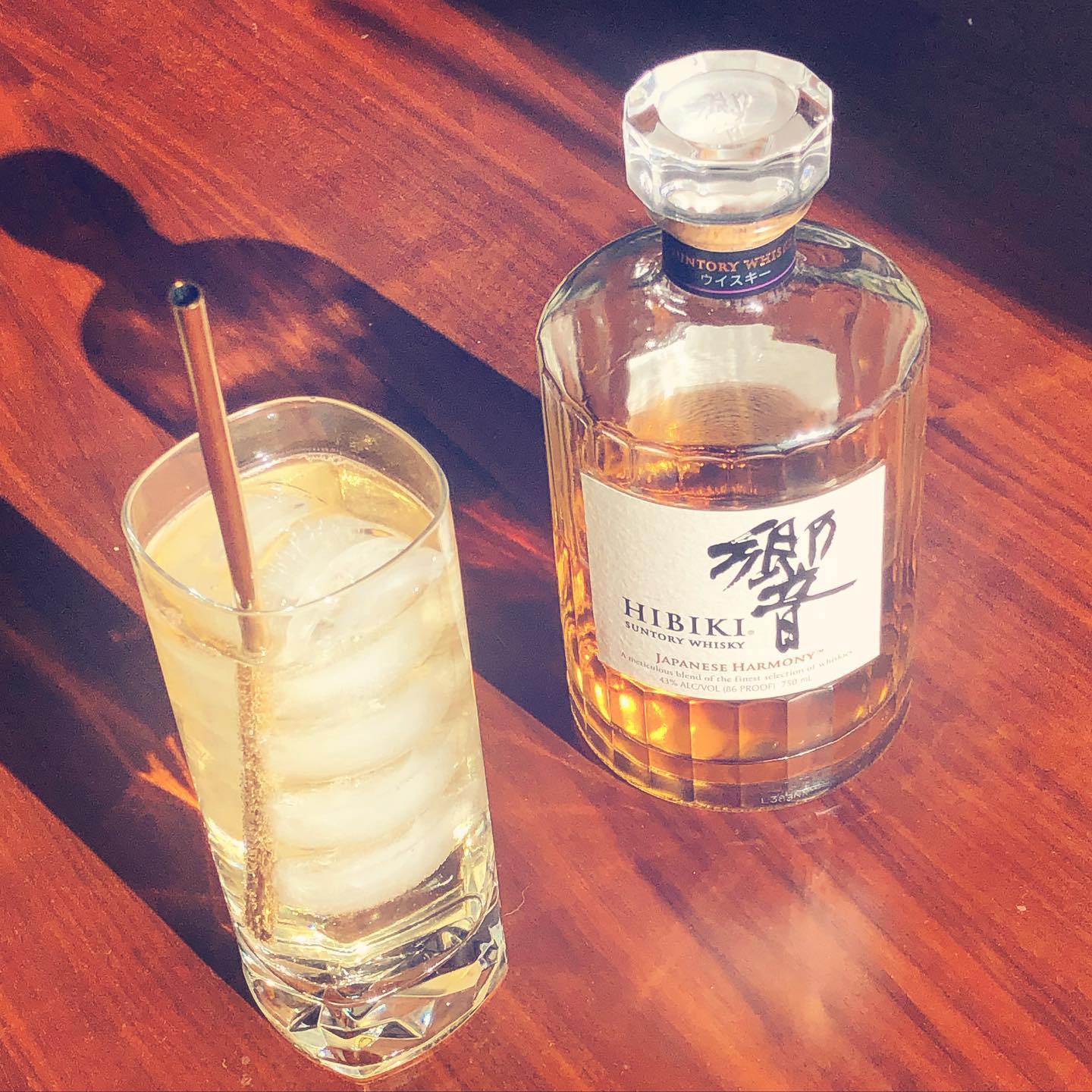
Japanese Whiskey Soda – take me back

There are certain drinks that don’t just taste like something—they sound like something. Ice settling. Glass sweating. A thin clink as you stir and everything goes briefly quiet.

A Japanese whiskey soda does that to me. It’s simple in the way good things are simple: whiskey, a tall glass, clean ice, and soda that lifts everything up instead of burying it. In the photo, the Hibiki bottle sits close by, amber and steady, like it’s keeping watch over the moment.

“Japanese Whiskey Soda – take me back” is exactly right. It takes me back to evenings that felt unhurried, when the world was smaller and the night had room in it. The kind of memory where the details matter—the cold glass in your hand, the wooden table warming under low light, the quiet confidence of a drink that doesn’t need to prove anything.

If you want to make one at home, keep it gentle. Use plenty of ice. Stir the whiskey cold first, then add soda slowly so the bubbles stay alive. It’s not a cocktail that asks for attention; it’s one that rewards it.

Some tastes are a shortcut to a place you miss. This one is crisp, bright, and familiar—like a door you didn’t realize was still unlocked.

Just some Pearl Shopping

The showroom is quiet in the way a familiar house can be quiet—alive, but not asking for attention. Light pools along the ceiling in a soft ring, and the fixtures drift overhead like pale leaves caught midair. Below, glass cases curve around the room, holding their small, careful brightness.

There’s something oddly grounding about pearl shopping. Not the rush of it, not the “new thing” feeling—more the slow choosing. Pearls don’t shout. They sit there, patient, asking you to come closer and decide what kind of day you want to remember.

I keep thinking about how places carry their own weather. Outside could be loud and sharp, full of errands and screens and speed, but in here everything feels muffled, as if the room has its own snowfall. Even the reflections on the counters seem to move more slowly.

Maybe that’s why I like it: the calm attention, the small ritual of looking. The way the ordinary act of shopping can turn into a brief, private moment—standing under clean light, considering something simple that’s lasted a long time.

Just some pearl shopping, then. Nothing dramatic. Just the quiet pleasure of choosing a little shine to take back out into the day.

The Dyson Guardian

The Dyson Guardian sits low and steady in the shade, a stone animal softened by time and moss. It’s the kind of figure you can pass without noticing if you’re rushing, but if you stop, it starts to feel like it has always been there—watching a narrow stretch of path, holding its place while everything around it grows.

The woods are bright with green. Leaves crowd the frame, ferns and small plants filling every gap, as if the forest is patiently reclaiming every edge. Behind the statue, a red fence runs along a stone wall, clean and geometric against the uneven rocks. That red line feels like a quiet reminder that this is a human place, even as the trees lean in.

I like how shrines do this: they make the ordinary feel slightly wider. A set of steps, a damp smell in the air, the faint suggestion of incense or rain—small details that open a door in your attention. The guardian doesn’t perform. It simply stays. Its face is worn but still expressive, a calm snarl frozen into something closer to patience.

Maybe that’s what I mean by “The Dyson Guardian.” Not a brand or a joke, but a private nickname for a sentinel that seems to pull stray thoughts out of the air and leave the mind a little cleaner. You walk on, and the forest sound returns, but you carry that stillness with you for a while.

Weekend Office Work

The weekend has a different kind of quiet when you choose to work. Not the quiet of sleeping in, or drifting from coffee to errands, but the steady hush of doing what needs to be done while the rest of the world pretends time is endless.

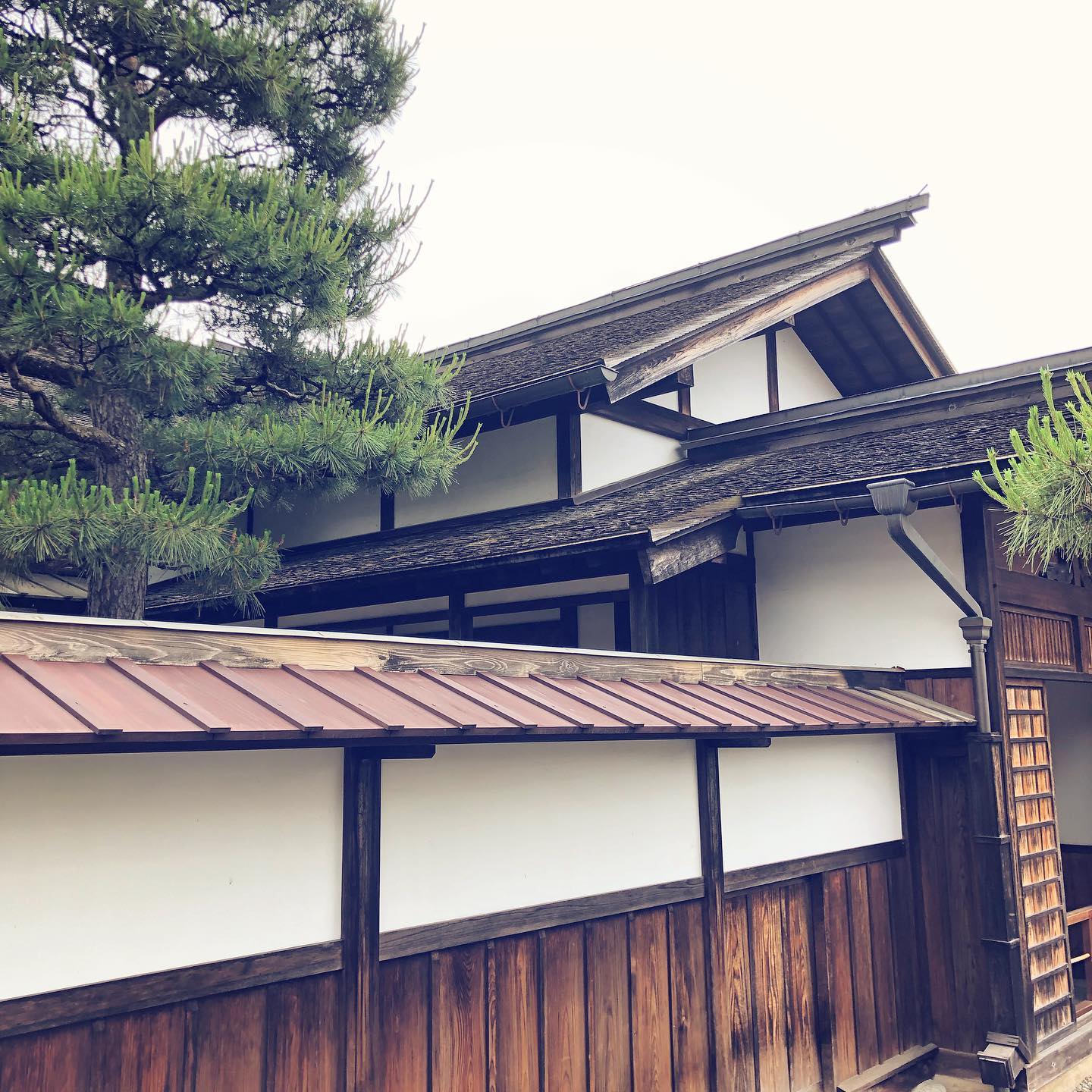
Outside, Takayama feels composed and patient. The old wooden house stands in clean lines and dark beams, white walls tucked beneath a deep roof. Pine branches lean in from the edge of the frame like they’re keeping watch. Everything looks built to last: not flashy, not hurried, just held together by craft and years.

I like that contrast—trying to answer emails and finish tasks while a place like this sits nearby, unconcerned. It reminds me that work is rarely dramatic. It’s repetitive and ordinary. And still, it shapes the days.

There’s something grounding about being around buildings that have weathered seasons without announcing it. The wood darkens, the roof carries its own history, and the whole structure seems to say: keep going, but don’t rush.

So the weekend office work happens. A few loose ends get tied, a few plans become less vague. And when I look up from the screen, I’m grateful for the calm presence of Takayama’s traditional streets—quiet proof that time can move slowly and still get everything done.

Ryokan Dinner Delux

A ryokan dinner has a quiet way of making the world feel smaller.

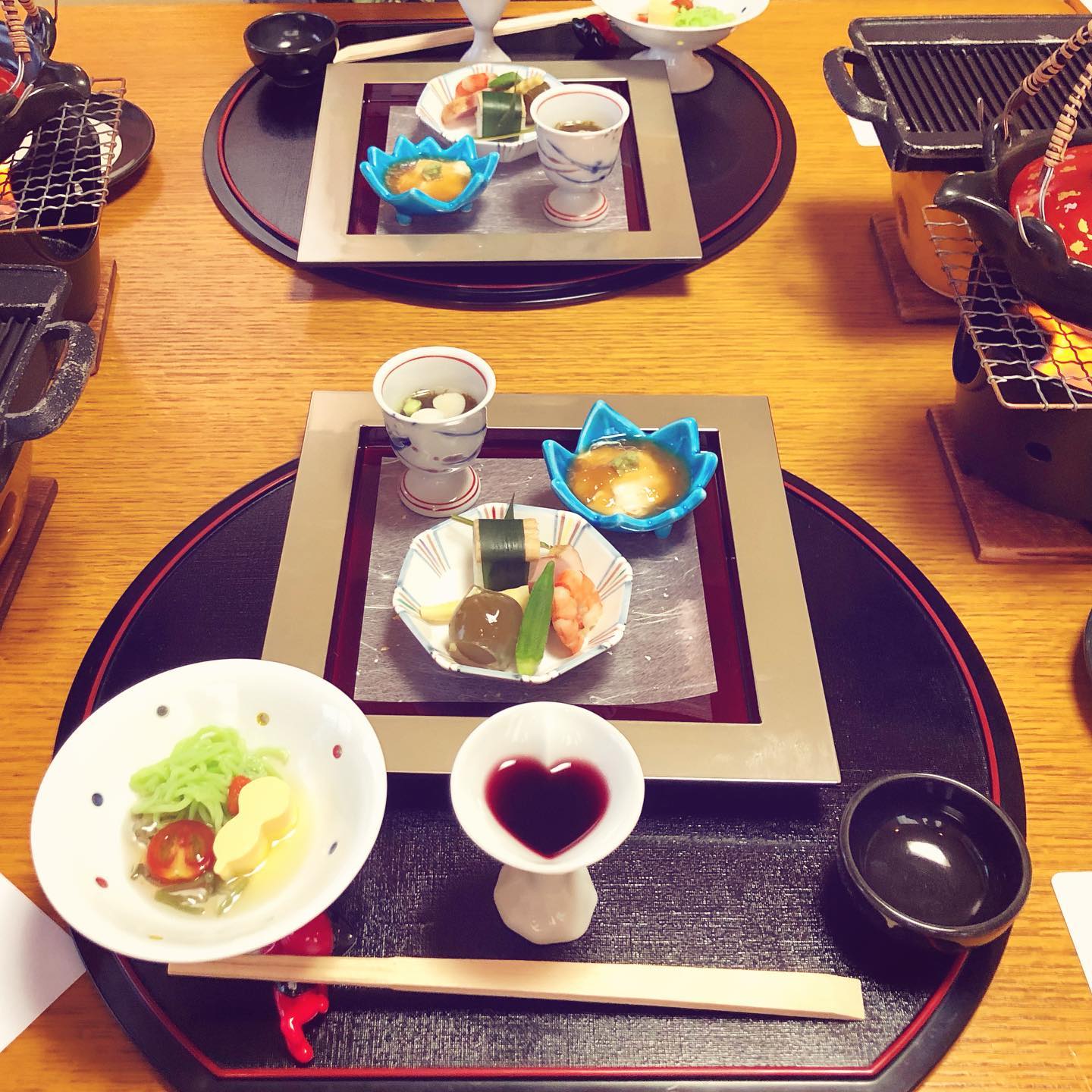
Two trays set on warm wood. Small bowls that look like they were chosen as carefully as the food inside them. A blue dish holding something soft and shining. A little cup that asks you to slow down. Even the sauce feels like it has a mood—dark, still, and poured into a heart-shaped bowl as if to remind you this is meant to be noticed.

Ryokan Dinner Delux is not loud. It doesn’t try to prove anything. It just arrives, course by course, like a house settling around you. The table becomes a landscape of textures: smooth porcelain, lacquered edges, steam rising where it can, and a grill waiting nearby with its own patient heat.

There’s a kind of comfort in being fed this way. Not the heavy comfort of too much, but the gentle comfort of enough. Enough variety, enough warmth, enough time.

I always forget how much a meal can feel like a place until I’m sitting in front of one like this—hands resting, mind quieting, listening to the small sounds that happen between bites.

Soba Lunch Break

Lunch arrived on a lacquered tray like a small, quiet ceremony.

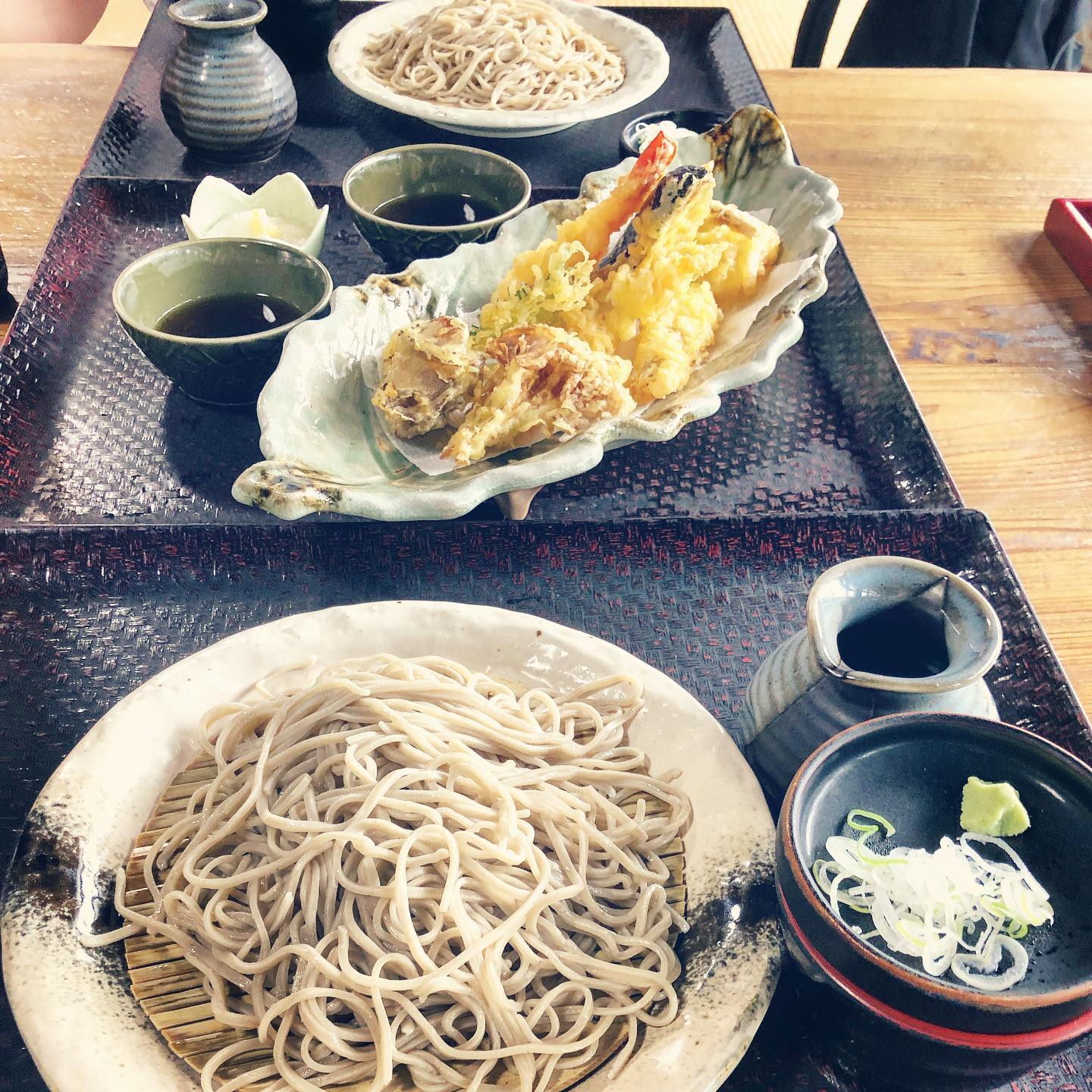
Two plates of soba sat in soft heaps, the noodles pale and unshowy, the kind of food that doesn’t need to perform. Beside them were the familiar accompaniments—dark dipping sauce in little cups, a dish of sliced scallions, a small dab of wasabi, and a ceramic pitcher set down with the same care as everything else.

The tempura was the bright interruption: light batter, crisp edges, shrimp and vegetables stacked like they’d just been lifted from the oil. Even before the first bite, the table felt steadier, as if the afternoon had agreed to slow down.

There’s something reassuring about a lunch like this, especially on the road. You do the simple motions—dip, lift, slurp, pause—and the noise in your head thins out. The meal becomes a kind of marker, a brief place to sit while one part of the day hands itself off to the next.

I don’t remember every detail of where I was headed afterward, but I remember this: buckwheat and broth, crunch and steam, and the sense that for a little while, nothing needed to be more complicated than eating.

If you’re traveling through Shirakawa-go Village, a soba break like this is an easy way to let the place sink in.

Village in the fog & rain

The valley looks like it’s holding its breath.

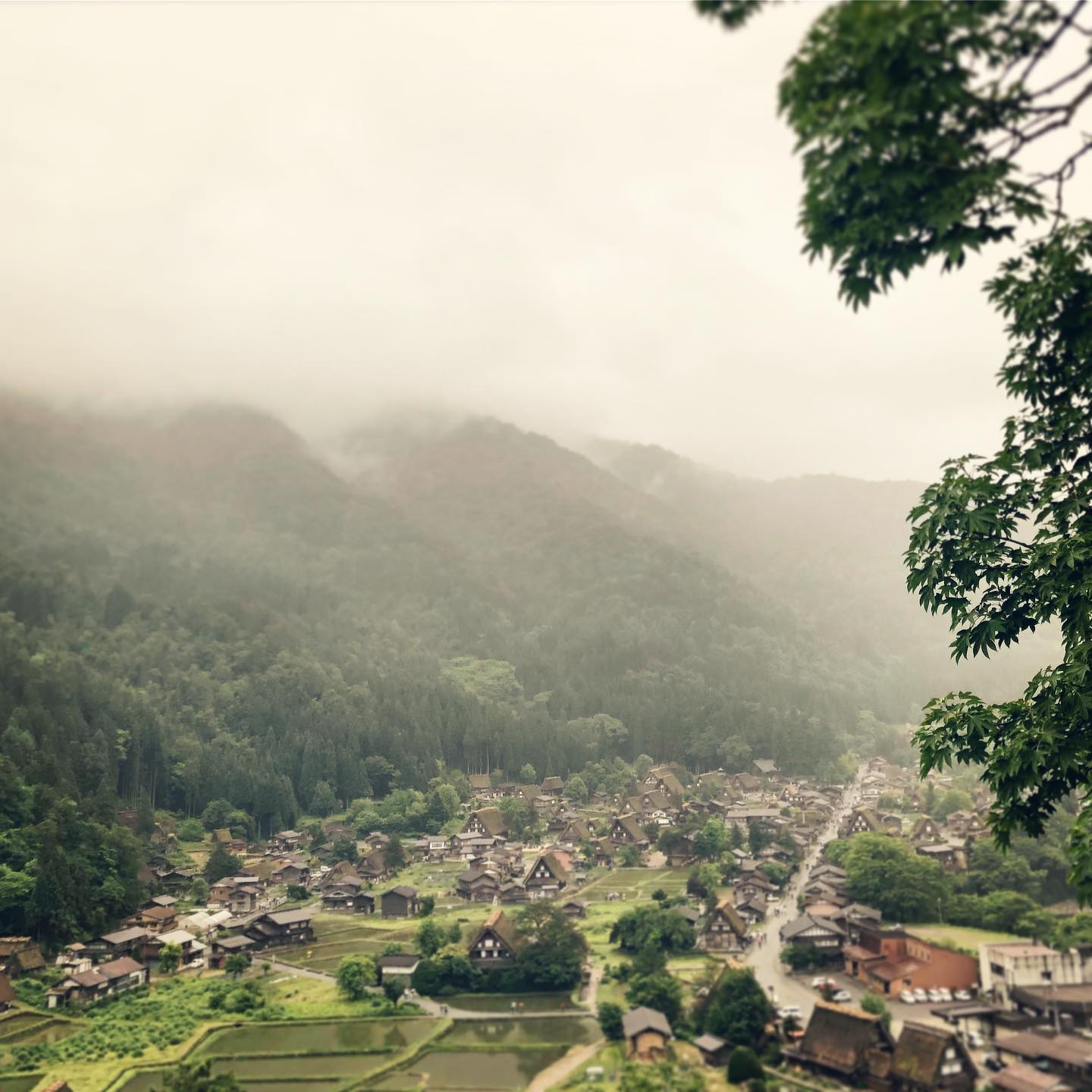
From above, Shirakawa-go sits gathered in the lowlands—dark roofs, pale roads, small squares of green—while fog drapes the mountains and loosens the edges of everything. Rain flattens the light, turning the village into a quiet study of soft color and distance. The farther the forest climbs, the more it disappears, as if the day is gently erasing what it can’t quite hold.

I like places most when they feel lived beside, not performed. Even from this vantage point you can sense the steady, practical rhythm below: homes set close, fields stitched into orderly patches, paths running like thin lines of intention through wet air. The famous shapes of the gasshō-zukuri roofs read as simple geometry from here, but there’s warmth implied in them—work, meals, voices, a life continuing while the weather makes everything else hazy.

Fog does something generous. It keeps the scene from becoming a checklist of details and turns it into a feeling instead: a muted, rain-scented calm, the kind that makes you slow down and listen. In a place like this, even the modern road looks temporary, like it could be swallowed by clouds at any moment.

Village in the fog & rain—exactly as it sounds, and somehow more.

Handmade Gold Lead design

There’s something quietly moving about handmade work that doesn’t ask to be loud. It just sits there—finished, glossy, and patient—holding the hours that went into it.

This Handmade Gold Lead design makes me think of small objects that become part of a place, the way a familiar coat hangs by the door or a set of keys lands in the same dish every night. In the photo, two dark, polished boxes rest on a worn wooden surface. The gold leaf catches the light in simple shapes: a paw print pattern on one box, and a maple leaf on the other, like a little marker of time and season.

Gold leaf work has a way of feeling both delicate and stubborn. It’s thin enough to float, but once it’s sealed into a surface it becomes part of the object’s skin. The contrast here—soft gold against deep black—feels steady, almost ceremonial, even if the box ends up holding everyday things: a ring, a coin, a note you don’t want to lose.

The caption mentions Kanazawa, Japan, and it fits. The city is known for its gold leaf craft, and these boxes carry that sense of careful tradition without looking untouchable. They look meant to be used, to be picked up, to gather fingerprints, to live alongside you.

Sometimes that’s the best kind of design: something made by hand that quietly becomes yours.

Cooking with Koji

The first thing I notice is the quiet order of the room: pans hanging in place, utensils lined up, the kind of kitchen that feels lived-in without being loud about it. Three people stand around portable burners, aprons tied on, heads bent toward the small, careful work that turns ingredients into something warmer than the sum of its parts.

Cooking with Koji sounds like a lesson in a single ingredient, but it’s really an introduction to time. Koji asks for patience the way an old house asks you to listen—subtle changes, small aromas, a shift in texture that’s easy to miss if you rush.

In the photo, there’s a calm focus as someone offers a small dish across the counter, as if passing along a secret. A pot waits, a bottle stands by, and a tray sits ready for what comes next. Nothing looks dramatic, and that’s the point. The most memorable kitchens aren’t always the ones that perform; they’re the ones that hum.

Koji sits at the center of so much Japanese cooking—miso, soy sauce, sake—quiet foundations that make everyday food taste deeper, rounder, more complete. Watching it up close reminds me that tradition isn’t a museum thing. It’s a practiced thing, repeated until it becomes natural, like reaching for the same coat in winter without thinking.

If you’ve been curious about fermenting, start here: with a simple workspace, shared attention, and the willingness to let flavor grow.

Golden Ice Cream

Two cones, two hands, and a little shimmer that feels almost out of place in the plain daylight.

We tried Golden Ice Cream—soft serve crowned with delicate flakes of edible gold. It’s the kind of treat that looks like a dare: too pretty to bite, too bright to be real. But the first taste is familiar and simple, the way good soft serve always is. The gold doesn’t change the flavor so much as it changes the moment.

Standing outside with the street behind us, it felt like one of those small travel scenes you keep longer than you expect. A regular afternoon made slightly stranger, slightly more memorable. The cones catch the light; the gold clings to the ridges and settles into the swirl. For a minute you pay attention—really pay attention—to texture, to warmth, to how quickly something ornate becomes ordinary once you start eating it.

If you’re in Japan and you spot a shop offering gold leaf on ice cream, it’s worth stopping. Not because it tastes like luxury, but because it turns a quick snack into a quiet story: something fleeting, sweet, and bright enough to notice before it disappears.

Breakfast for 2

There are mornings that feel like they’re in a hurry, and then there are mornings that settle in—quietly, deliberately—like a house holding heat in its stones.

Breakfast for 2 was the second kind. A low table, two places set, and a spread of small dishes that made the moment feel larger than it was: bowls of rice, small plates of fruit and pickles, and warm soup—everything arriving in modest portions that add up to something generous.

Across the table, two people framed by a backdrop of pale, tangled lines, like winter branches caught mid-sway. The room feels hushed, and the food does what good breakfast does: it slows you down without insisting.

I keep thinking about how meals like this make time behave differently. The clink of ceramics, the pause between bites, the small decisions—what to try next, what to save for last—turn into their own kind of conversation. Not every morning needs a speech. Some just need a table and enough care to make staying still feel natural.

And then, eventually, the day starts moving again. But for a while, it was simply breakfast, for two—quiet, warm, and complete.

Exit mobile version