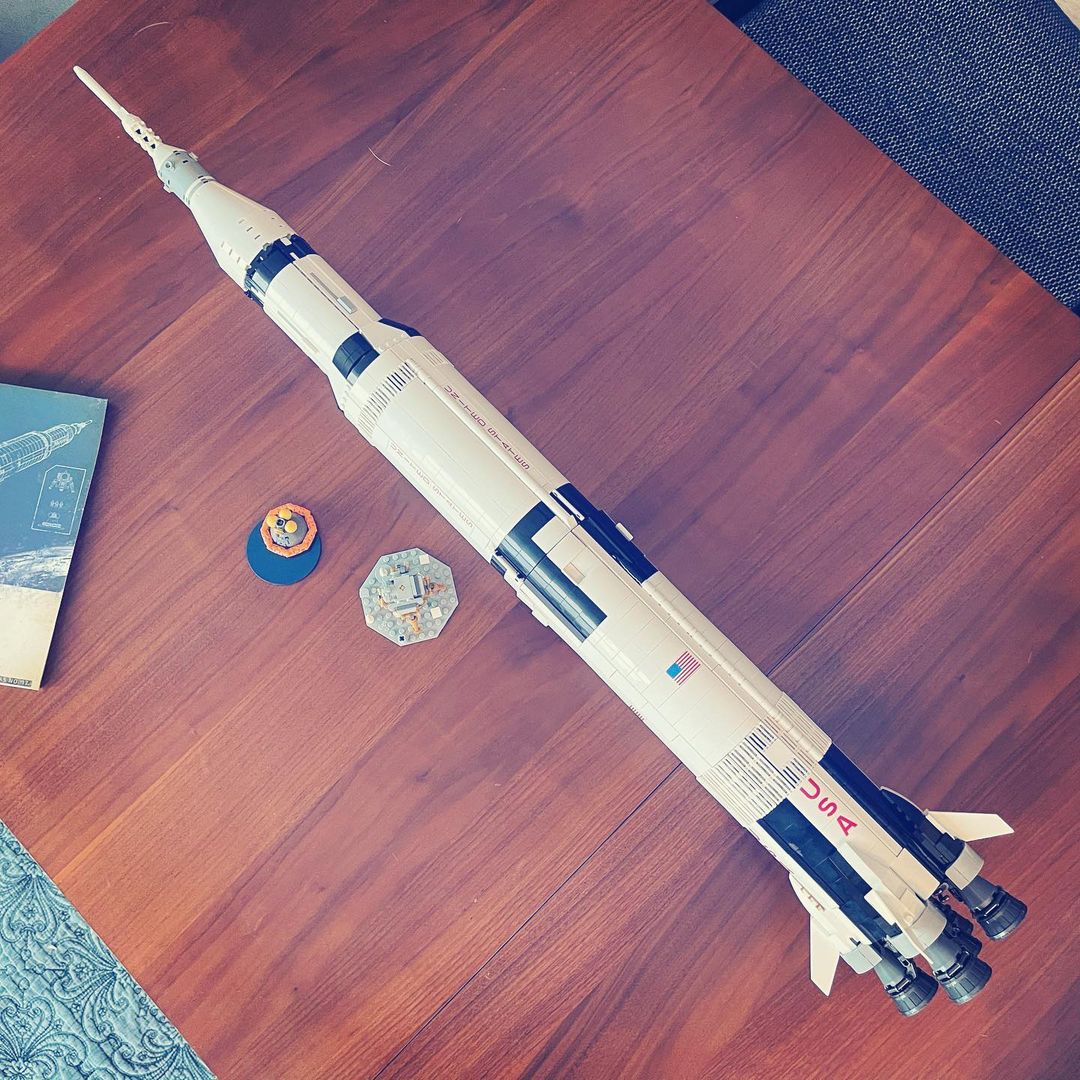
I built a rocket this weekend

???

Being cooped up has left me a bit drained of my creative juices. My husband noticed this and bought me a birthday gift that not only sparked creativity, but a lot of joy too. This year, he got me Legos that allowed me to build a rocket ship! His gift was a great side project for me which helped scratch my “creative itch” and reignite my love of outer space.

I dedicated the weekend to building my [Apollo ?] Lego rocket ship. It was a replica of a rocket that landed on the moon! What makes outer space so fascinating is its vastness. Although it may be cliche, the stars aligned when my husband and I met. I love him (and my new rocket ship) to the moon and back.

Seattle Space Needle

There’s something about looking up at the Seattle Space Needle from directly below that makes the city feel quieter than it is. The legs lean inward like a careful brace, and the saucer above hangs there with a kind of calm confidence—steel and geometry holding their place against a soft, shifting sky.

Today the clouds are scattered, bright and uncommitted, and the white structure catches the light in a way that feels almost domestic—like a familiar porch light in a neighborhood you haven’t visited in years. It’s a landmark, sure, but it also has the steady presence of something that has watched a lot of ordinary days go by.

I like monuments best when they don’t demand anything from you. When they just stand there and let you move around them, letting your thoughts fill in the empty space. The Space Needle does that. It doesn’t need to be explained; it just needs to be seen, from the street, from the park, from the angle that makes you notice the bones of it.

If you’re visiting, you can do the obvious things. But if you live nearby, or if you’re passing through with time to spare, it’s worth stopping for a minute and looking up—letting the wind and the traffic fade, and letting the city feel a little bigger, a little brighter.

32 Days of Donald Drinks! Cheers!

For the second year I am displaying a portion of my Donald Duck collection. This year’s theme is Drinks and Glasses.

| This mug i call Darth-Donald. Every collection needs a Star Wars variant! |

See more with tag #donald duck and more of my collection here!

Wiki Galaxy

Wiki Galaxy

| @wikipedia @chromelabs #space #galaxy |

VIEW | VIDEO

From the Author:

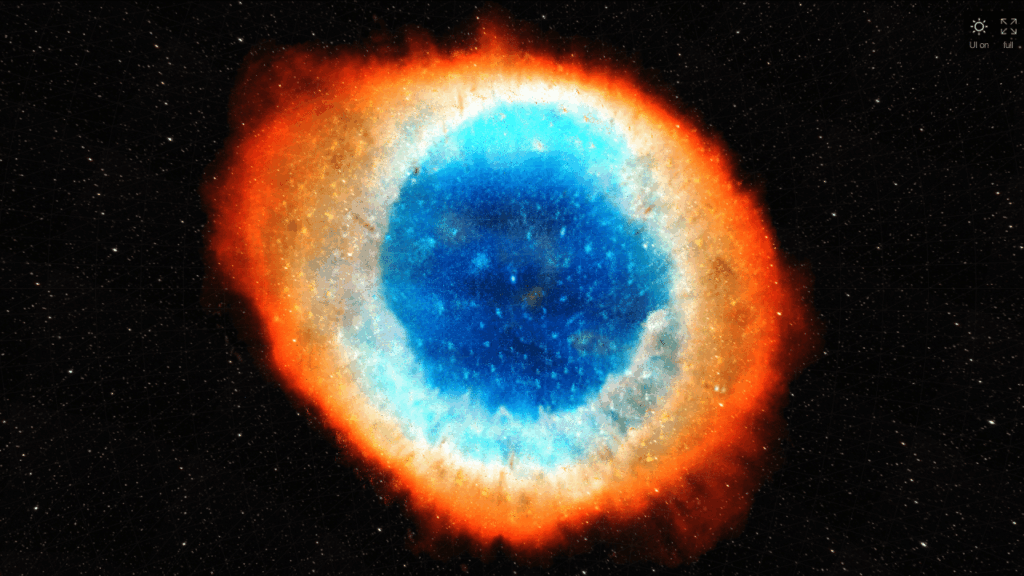
An interactive visualization of Wikipedia articles as a galaxy of stars.
Relevant articles are grouped together into clusters of stars, creating a constellation of human knowledge.
Explore with the galaxy map or fly through the stars in first person view.
Search and read articles in fullscreen, or scan through their links.
Compile your search history and marvel at the constellation you left in your wake.

Discovering the Wonders of Alien Planets

the-star-stuff:

A Field Guide to Alien Planets

(January 10, 2011)

Alien planets come in all shapes and sizes. Generally speaking, these planets — known to astronomers as exoplanets or extrasolar planets — orbit stars outside our solar system, but there are a few surprises out there. Here’s a look at the types of exotic worlds that scientists have discovered so far.

Pulsar planets

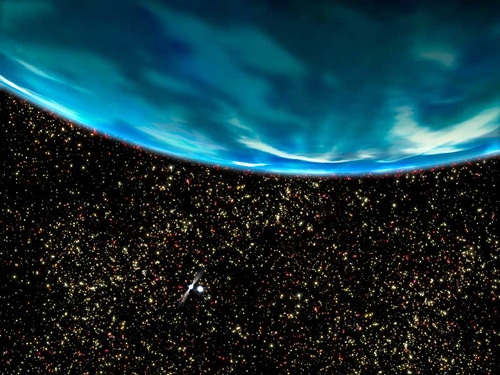
The first true discovery of extrasolar planets came in 1994, when radio astronomers discovered worlds around the pulsar PSR B1257+12, about 980 light-years away in the constellation Virgo. A pulsar is not a normal star, but a dense, rapidly spinning remnant of a supernova explosion. The oldest exoplanet known yet, PSR B1620-26 b, nicknamed Methuselah, is also a pulsar planet, located 5,600 light years from Earth in the constellation Scorpius

Hot Jupiters

A “Hot Jupiter” is a gas giant that is as close or closer to its star than Mercury is to our sun. The first discovery of an extrasolar planet around a sun-like star was 51 Pegasi B, an exoplanet roughly 50 light-years away. Of the 429 exoplanets discovered to date, 89 have been hot Jupiters, most likely because their large size and proximity to their stars makes them easier to spot using current techniques.

Exo-Earths

Although the vast majority of the exoplanets found have been gas or ice giants, terrestrial exoplanets most likely outnumber these behemoths, and upcoming missions may soon finally discover rocky worlds the size of Earth with atmospheric conditions that mimic our own. To harbor life, these “Goldilocks planets” would have to orbit their star at just the right distance from  to not roast or freeze — as well as be large enough to retain an atmosphere , but not so large as to become a gas giant.

Super-Earths

A super-Earth is a planet with a mass roughly 10 times greater than Earth’s. The first super-Earths ever found were two of the planets around PSR B1257+12. Super-Earths might be more geologically active than our planet, as astronomers at the Harvard-Smithsonian Center for Astrophysics suggest they experience more vigorous plate tectonics because they possess thinner plates that are under more stress.

Eccentric planets

The planets in our solar system have, for the most part, fairly circular orbits. The exoplanets found so far, however, can have far more eccentric orbits, moving in close and then far from their stars. Where a perfect circle has an eccentricity value of zero, roughly half of exoplanets seen thus far have an eccentricity of 0.25 or greater. These eccentric orbits can cause exoplanets to experience extreme heat waves.

Super Neptunes

Only one “super Neptune” has been discovered so far: In 2009, astronomers discovered a planet somewhat larger and more massive than Neptune orbiting a star 120 light-years from Earth. The solid planet earned the name “super Neptune” because it shares many of the physical characteristics of our Neptune. Neptune has a diameter 3.8 times that of Earth and a mass 17 times Earth’s, the Super Neptune (named HAT-P-11b) is 4.7 times the size of Earth and has 25 Earth masses.

Water worlds

There are two kinds of worlds that might be entirely covered with water . “One is a terrestrial Earth-like planet that’s just covered with a lot more water than our world, like the Kevin Costner movie, but is otherwise still familiar,” said astronomer Charles Beichman, executive director of NASA’s Exoplanet Science Institute. “Or you can imagine a hot Neptune which is almost totally composed of water that is close enough to its star to not be frozen, but instead have an ocean thousands of kilometers deep and perhaps an atmosphere like a gas giant’s, with lots of hydrogen and water vapor.”

Chthonian planets

Sometimes hot Jupiters or hot Neptunes orbit too close to their stars, and the star’s heat and extreme gravity can rip away the planet’s water or atmosphere, leaving behind the rocky core. Scientists have dubbed these evaporated remnant cores “chthonian planets.” Their proximity to their stars could mean they are covered in lava.

Free-floating planets

There are hints that a number of bodies with the mass of gas giants might be free-floating, rather than orbiting a star. These bodies might either have escaped from their suns or never had a star to begin with, born in star-forming regions without the mass needed to ignite.

Rogue planets

A rogue planet is a planet-sized object that has been ejected from its system and is no longer gravitationally bound to any star, so it orbits the galaxy directly. To become a rogue planet, a planetary-mass object would have to be ejected from its solar system, making it starless. This could be achieved by the competing gravitational forces of the sun and larger planets. Also known as interstellar planet, or orphan planet, a rogue planet would require geothermal activity in to sustain life without energy from a star.

Exit mobile version