Weekend Office Work

The weekend has a different kind of quiet when you choose to work. Not the quiet of sleeping in, or drifting from coffee to errands, but the steady hush of doing what needs to be done while the rest of the world pretends time is endless.

Outside, Takayama feels composed and patient. The old wooden house stands in clean lines and dark beams, white walls tucked beneath a deep roof. Pine branches lean in from the edge of the frame like they’re keeping watch. Everything looks built to last: not flashy, not hurried, just held together by craft and years.

I like that contrast—trying to answer emails and finish tasks while a place like this sits nearby, unconcerned. It reminds me that work is rarely dramatic. It’s repetitive and ordinary. And still, it shapes the days.

There’s something grounding about being around buildings that have weathered seasons without announcing it. The wood darkens, the roof carries its own history, and the whole structure seems to say: keep going, but don’t rush.

So the weekend office work happens. A few loose ends get tied, a few plans become less vague. And when I look up from the screen, I’m grateful for the calm presence of Takayama’s traditional streets—quiet proof that time can move slowly and still get everything done.

The Cover Letter Confidential – Why Cover Letters are Pointless.

To Whom this concerns / The Human Resource Department,

I have applied to my fair share of job openings and I am astonished that I am still being asked for a cover letter in the application process. Typically a cover letters function as a leg up on other applicants by providing an additional supplement to a submitted CV or Resume. The cover letter is the supporting document used to express interest for the company one is applying to, expound additional qualifications for the position, and offer insight into related professional goals.

Continue reading The Cover Letter Confidential – Why Cover Letters are Pointless.

A Desk – Finally

| Crate & Barrel’s Sloane Desk in Java + Elston Side Chair. Now I can be more productive while i’m working from home! Plus it fit the space between my windows perfectly!

| ??✏️ | Read Insta-comments -> http://ift.tt/1ufnZcy

Last day at WSJ lunch

Last day at WSJ lunch

| My last day at The Wall Street Journal (for this project anyway). What an… interesting 1-¾ years … LOL Get ready for some new exciting projects coming up soon. There are quite a few!

| ???

| Read Insta-comments -> http://ift.tt/1nUYXf2

| Havannah Central! FourSquare -> http://4sq.com/mEngtz

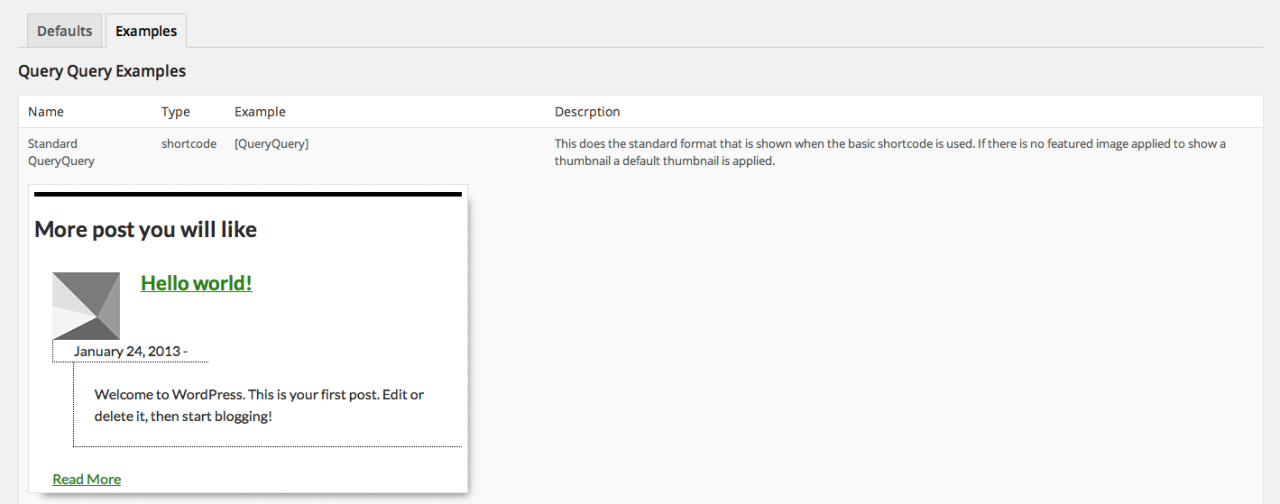
[QueryQuery] – WordPress Shortcode Plugin

[ QueryQuery] – WordPress Shortcode Plugin

I finally got around to publishing a WordPress plugin instead of writing custom code all the time…. This is an expansion on a little code I wrote for a client to show events within a certain time frame.

Ability to make WP_Query within Posts and Pages through shortcode. It can also be used to create “related” post content.

Allows you to set how many months Forward and how many months Backward to index post in the query.

Download via Github = [Download]
Download via WordPress.org = [Download]

Please Donate if you use and for more dev = [DONATE]

On Time is the New Late

A couple of years ago, I stepped into one of my first managerial roles as a retail supervisor. As a lowly college student at the time, it felt like a real promotion—one small rung up the ladder of upper-underlings, complete with slightly better pay and the undeniable perk of better/free clothing. But beyond the extras, that job handed me one of the most useful rules I’ve ever picked up.

Our district manager (DM) was leading the training sessions—an eccentric, boisterous guy who took leadership personally and punctuality even more so. On the first day, the store manager, the other supervisor, and I showed up twenty minutes early and helped him set up. At the scheduled start time, we still burned ten minutes on formalities, tracking down people who were lost, and waiting while others settled in with food and drinks.

Once everyone finally sat down, the DM didn’t ease into it.

“Out of twelve, only three of you made it here on time. EARLY is the new ON-TIME; ON-TIME is the new LATE; LATE is the new you’re FIRED! If this happens again this week, I can’t guarantee you’ll have a position.”

It wasn’t the most original idea, but it landed. And after working more jobs—and having to hire, train, and depend on other people—I’ve come back to that statement over and over. I’ve even applied it to the personal side of my life. Here’s why “on-time is the new late.”

“On time” in general

If you arrive exactly on time, you usually miss the first impression. You’re probably not the first one there, which means you’re walking into something already in motion. Whether it’s a date or a meeting, you’ve made yourself the one reaching for the handshake instead of offering it, the one reacting instead of leading, the one trying to catch up instead of setting the tone. Even if you’re technically on time, you’re functionally a minute late while all of that unfolds.

“On time” when you’re leading a meeting

Showing up right at start time often means you’ve kept someone waiting or, at minimum, left them wondering if they’re in the right place. You’re still setting up as people file in. You haven’t chosen the best seat, tested what needs testing, or gotten yourself positioned to be heard clearly. And if you’re known for being “on time,” people will trend late anyway—because they know you won’t really start without them. The end result is simple: your thirty-minute meeting becomes twenty.

“On time” for a date or a friend

Arriving exactly on time can quietly signal that this wasn’t worth any extra effort—that it fit where it fit, and only when your schedule allowed it. It can also suggest you didn’t plan well: not enough time to get ready, confirm details, or account for travel delays. And then you end up doing the worst part: explaining how you “made it just in time,” along with the excuse tour that no one asked for and no one enjoys.

Are there extenuating circumstances? Of course. Things happen. But that’s why showing up early matters: it gives you room for reality. If you’re late, you’d better have a good reason—because otherwise, it’s the new “you’re FIRED!”

Read Full Article on Thought Catalog -> http://bt.zamartz.com/155MA9w

image – epSos.de
American Made but no one to Make it?

On Aug. 20, 2013, I was glad to stumble upon a discussion on “American Made” held at Story in the downtown Meatpacking District. This open panel raised a lot of good points and turned into a surprisingly constructive conversation. The discussion touched everything from factory safety and product sustainability to the idea of an American manufacturing rebirth—and the outdated mindsets that have treated labor as a commodity.

All of those topics can stand on their own, but I want to drill into the question I introduced: the stigma of learning a trade skill, and the lack of a younger workforce to support any real rebirth in U.S. manufacturing and craftsmanship.

After graduating high school, most students are pushed toward college with the promise that it leads to a higher salary and a stable career. Many are also told that certain concentrations—business, finance, and similar tracks—will practically guarantee a “high salary” job. On the rare occasion that this actually plays out, good for them: it takes hard work and a bit of luck. In reality, plenty of graduates enter the world with no job, let alone one in their field, and they’re already buried in debt.

Meanwhile, many of the options that used to exist during America’s manufacturing boom are now all but extinct. The workforce that has kept these industries alive is quickly retiring, and there’s no replacement line behind them. Family-owned businesses and trade schools that once sustained this lifeline of labor are too often treated like dumping grounds for glamour-less work—or a place to send “problem kids” to be straightened out by hard labor. The idea of honing a skill and becoming a craftsman has been reduced to micro-businesses, niche products, and small pockets of urban economy rather than being recognized as a real path to a stable, respected career.

In the American fashion manufacturing industry, it’s nearly impossible to find quality sewers, pattern makers, pattern cutters, leather workers, and other skilled labor—let alone people who actually want to learn the craft. Many of these roles can pay $40–100k a year, yet there isn’t a strong workforce pipeline to replace retirees, and there aren’t enough craftspeople to expand as demand returns.

This doesn’t improve until we revive the idea that apprenticing is education—and that working with your hands is not second-class, not a last resort, not a stereotype for the underprivileged, the simple-minded, or a placeholder for cheap immigrant labor. We should welcome back the idea of being a master of a trade as something honorable and valuable. We should support companies that invest in employees, and recognize the obvious truth: when a company stands behind its people, it usually correlates directly with the quality and standards of its product.

What can we do about it?

This isn’t complicated, but it does require people to stop pretending it’s someone else’s problem.

  • Bring shop and trade programs back into schools (and treat them as legitimate, not “alternative”). If a district can fund sports, it can fund skills.
  • Normalize paid apprenticeships as a real post–high school path. If someone can take on debt for a degree, they can take on structured training for a trade—except one of those paths actually produces a job-ready worker.
  • Brands and manufacturers should build pipelines, not just complain about shortages. If you need skilled labor, train it: paid apprenticeships, mentorship, and clear wage progression.
  • Stop pretending “Made in USA” is free. If consumers want domestic production, they have to accept the real cost of fair wages, safe factories, and skilled labor.
  • Promote the people behind the product. Make craftsmanship visible again: pattern cutters, sewers, tech designers, and machinists should be treated like experts—because they are.

If “American Made” is going to be more than a label, we need to stop treating skilled labor like a backup plan. You can’t rebuild manufacturing with marketing. You rebuild it with people.

Made + Story Panel = Nanette Lepore, Alex Bogusky and Sheryl Connelly

photo via @nanettelepore

Exit mobile version