
There are places where the air feels asked to remember. Hiroshima is one of them, and the Children’s Peace Monument holds that weight without raising its voice.
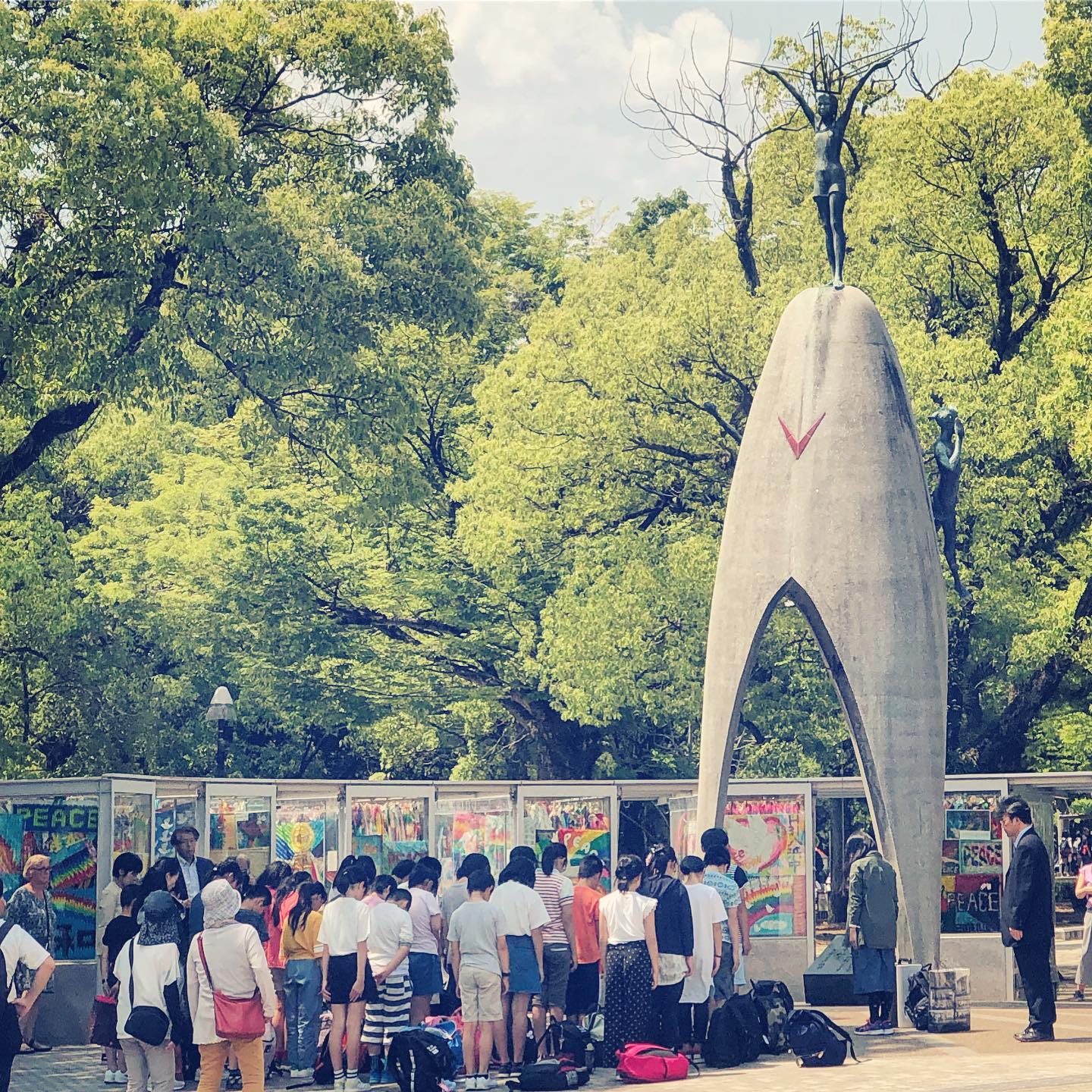
In the image, a group of children gathers beneath the pale arching structure, their heads inclined in a single shared gesture. Behind them, panels filled with bright drawings and handwritten messages line the walkway—colorful, almost tender, as if the simplest materials are the only honest way to speak about what can’t be fixed. The trees are thick and green, the sky mild. The day looks ordinary, which is part of what makes it difficult.
Nothing shows the horrors of war more than children bowing and singing. The contrast is sharp: young bodies practicing reverence for lives interrupted long before they had the chance to become unremarkable. The song, imagined or heard, isn’t a performance. It feels like a small, steady insistence that peace is not a concept but an action repeated, taught, and carried forward.
What stays with me is the quiet choreography of it all: backpacks set down, a hush moving through a crowd, adults standing to the side as witnesses. The monument doesn’t let grief end the story, and it doesn’t let hope pretend the past is clean. It simply stands there, asking us to look at what war takes first—and what peace must protect every day.
Leave a Reply
You must be logged in to post a comment.