
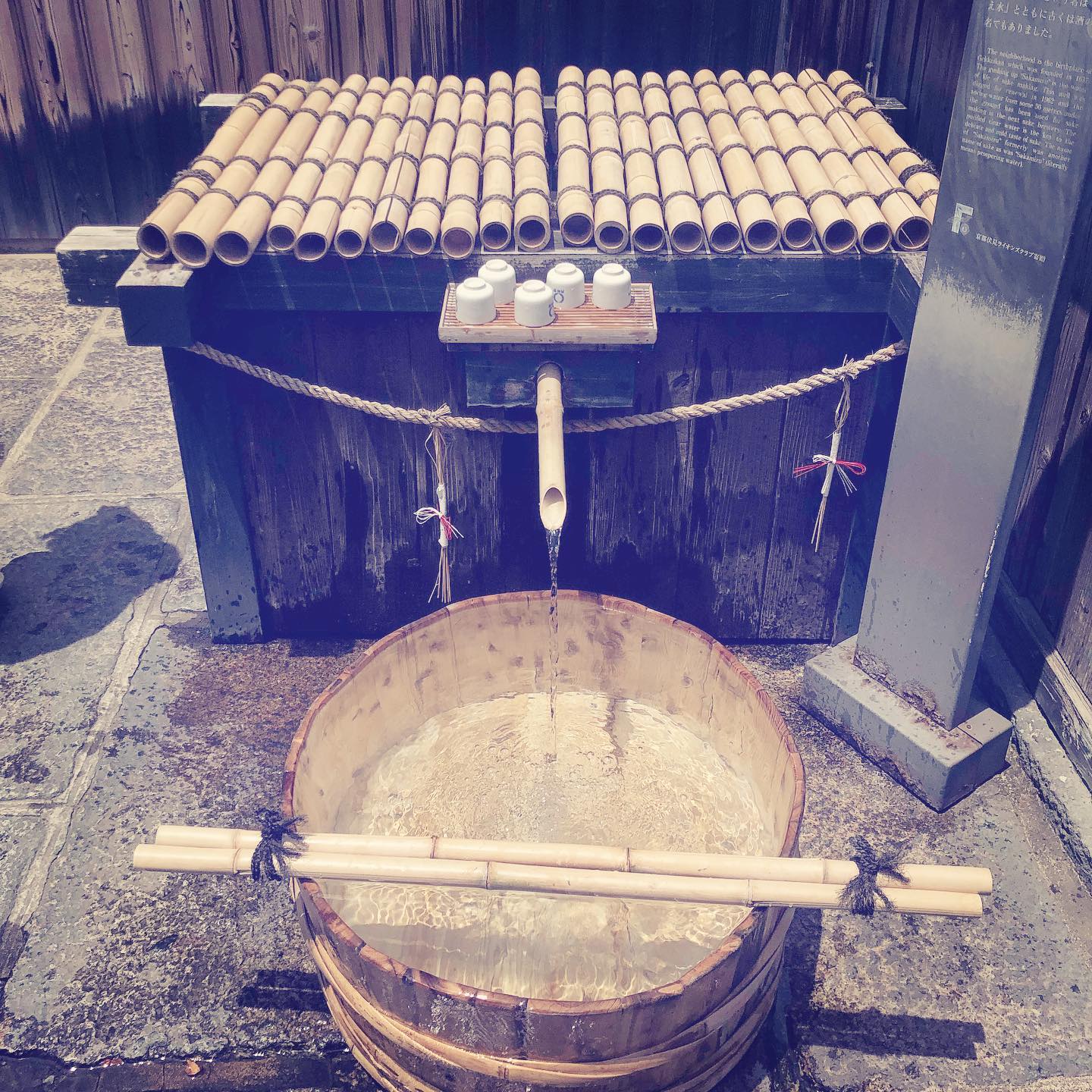
There’s a kind of quiet you only notice when you stop long enough to hear it. In Kyoto, spring water feels like that—steady, clear, unhurried.
This little bamboo spout and wooden basin look simple at first glance, but they carry the patient rhythm of a place that has been doing the same small thing for a long time. Water gathers, spills over, and starts again. The bamboo troughs line up like tools put away carefully after use. Even the cups feel like they’re waiting with purpose.
I keep thinking about how certain places “live alongside you.” Not by demanding attention, but by staying consistent. Spring water is like that. It doesn’t try to be anything more than what it is, and somehow that’s exactly what makes it memorable.
Kyoto sake begins here, long before the tasting notes and labels—before the conversations at a counter, before the warm glow of a lantern on a side street. It begins with cold, clean water moving through wood and stone, meeting a bucket, then disappearing again.
Standing in front of it, you can feel the world get a little larger and a little calmer. Just enough to remind you that the most ordinary motions—pouring, filling, flowing—are often the ones that hold the most history.
Leave a Reply
You must be logged in to post a comment.