SmartSheet Conference 2018

Seattle can feel like a place made of soft light and hard edges—glass, water, and that steady hum of people moving with purpose. Inside the SmartSheet Conference 2018, the room had its own weather: blue stage lights washing over a packed crowd, chandeliers hanging above like quiet constellations, and a low, constant rustle of anticipation.

From the back of the ballroom, the stage read ENGAGE ’18, but what stood out more than the lettering was the feeling of momentum. Hundreds of conversations gathering in one place, all of them circling the same question: how do we make work clearer, simpler, and more human?

Conferences are often loud in the obvious ways—keynotes, applause, microphones—but the real noise is subtler. It’s the click of a laptop waking up. It’s the quick note taken before it disappears. It’s the small shift in posture when someone hears an idea that finally fits.

Sitting there, I kept thinking about how spaces hold memory. Just like an old house keeps the creaks and warmth of years, a room like this holds a shared attention for a brief stretch of time, then lets it go. People file out, the lights change, and the moment becomes something you carry instead of something you stand inside.

That’s what I’ll remember from Seattle: a blue-lit room, a focused crowd, and the sense that planning is its own kind of hope.
Burgers with the People

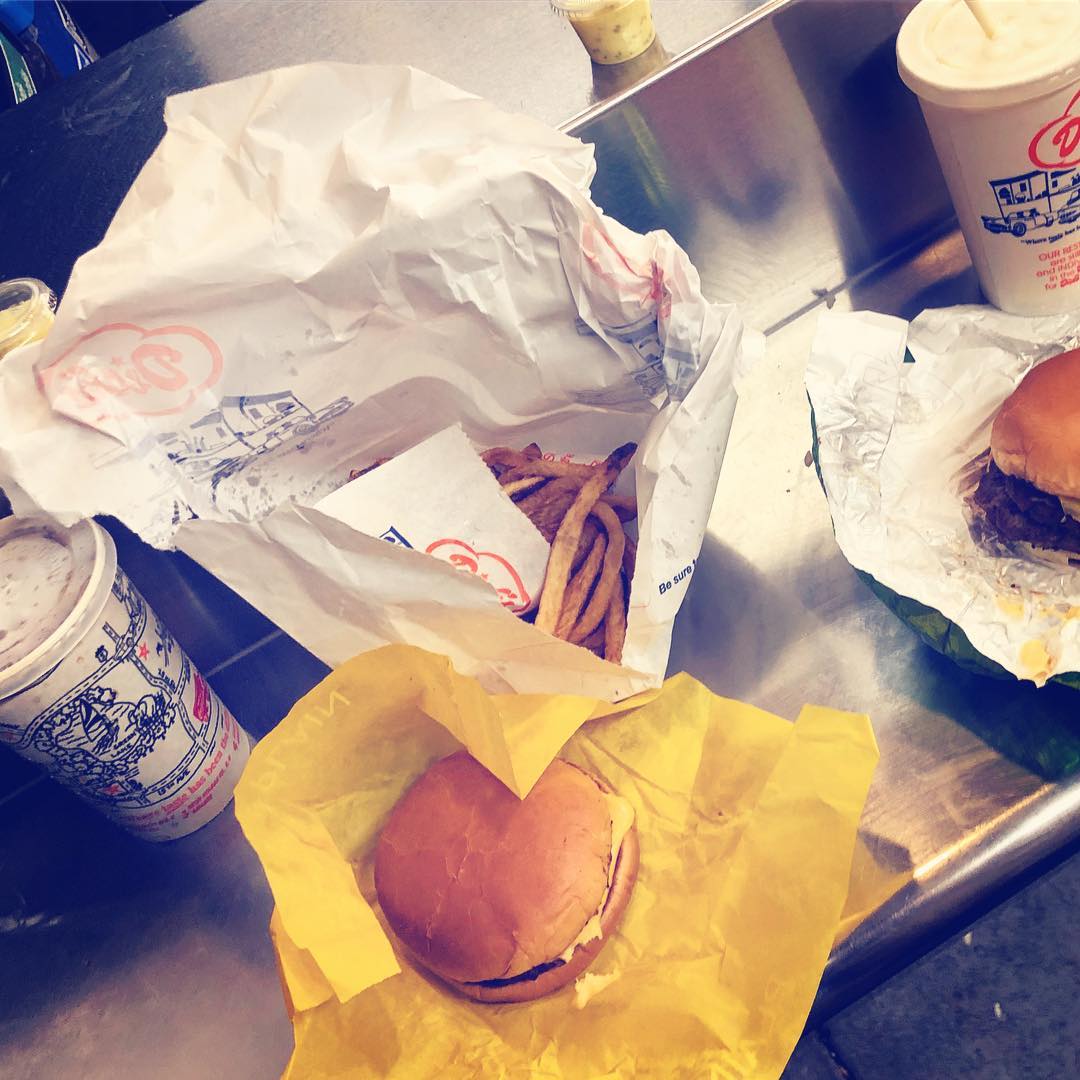
There’s something comforting about a counter scattered with wrappers and cups—proof that people were here, hungry, laughing, passing things hand to hand.

Today’s scene is simple: burgers in soft buns, fries spilling out like they couldn’t wait to be noticed, and milkshakes sweating in plastic cups. Nothing styled. Nothing precious. Just the small, ordinary mess that comes from eating together.

I like how places like this feel lived alongside you, the way an old house does. You sit down for something quick and end up staying longer than planned. The table collects evidence—salt, napkins, a smear of ketchup—little marks of the moment. It’s mundane, and that’s the point.

“Burgers with the People” sounds like a joke and a mission at the same time. The best meals aren’t the ones that demand silence; they’re the ones that make room for everyone, for stories that overlap, for the easy decision to order one more thing because someone else is.

Maybe that’s why this kind of food holds its own kind of nostalgia. It’s not trying to be anything other than what it is: warm, filling, shared. And when you walk away, you carry it with you—grease on your fingers, sweetness on your tongue, and a quiet sense that the day got a little brighter at the table.

Great Hiking Weekend

There are weekends that feel like a small reset—quiet enough to hear your own thoughts again, steady enough to remind you where your body fits in the world.

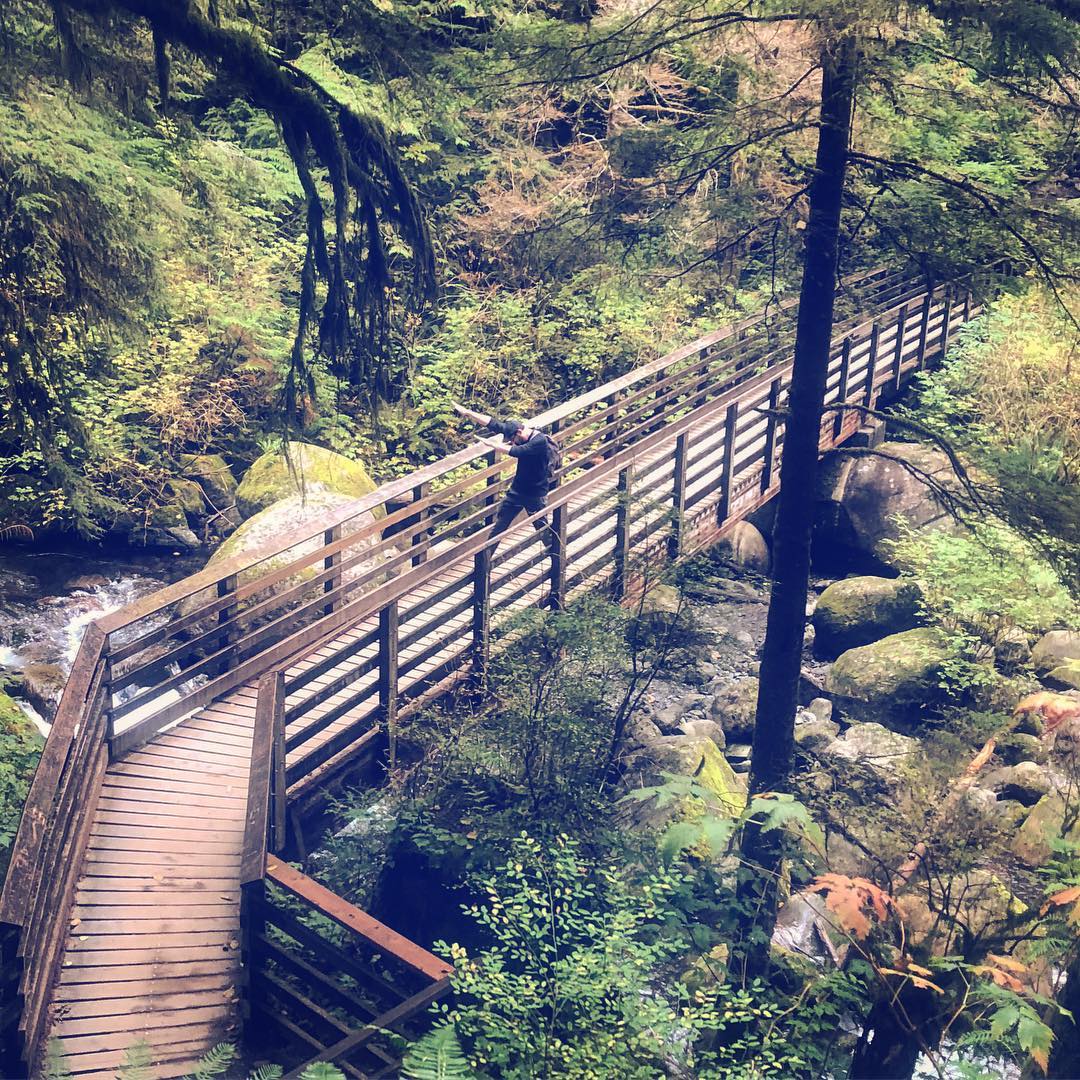
This was one of those. A wooden footbridge cuts across a rushing creek, tucked into thick green woods. The boards look worn in the comforting way that says people have been coming here for a long time, crossing over and back, letting the water do what it does below. Mossy boulders sit like old punctuation marks along the bank, and the trees hang over everything, making the whole place feel private, almost kept.

Somewhere in the middle of the bridge you stop without deciding to. You lean on the railing, look down, and it’s simple—water moving fast, air smelling like wet leaves, the day asking nothing from you except to be in it.

Great Hiking Weekend didn’t need a big destination or a dramatic view. It had that slow accumulation of small details: the soft light under the canopy, the steady rhythm of steps, the brief stillness when you realize you’ve been holding your breath in everyday life.

By the time you turn back, you’re not exactly new—but you’re clearer, like something inside you got rinsed out and set back in place.

Rainy Day Ramen

Rainy days have a way of shrinking the city down to a few warm places: the fogged windows, the steady murmur of voices, the simple comfort of a bowl set in front of you like it’s always belonged there.

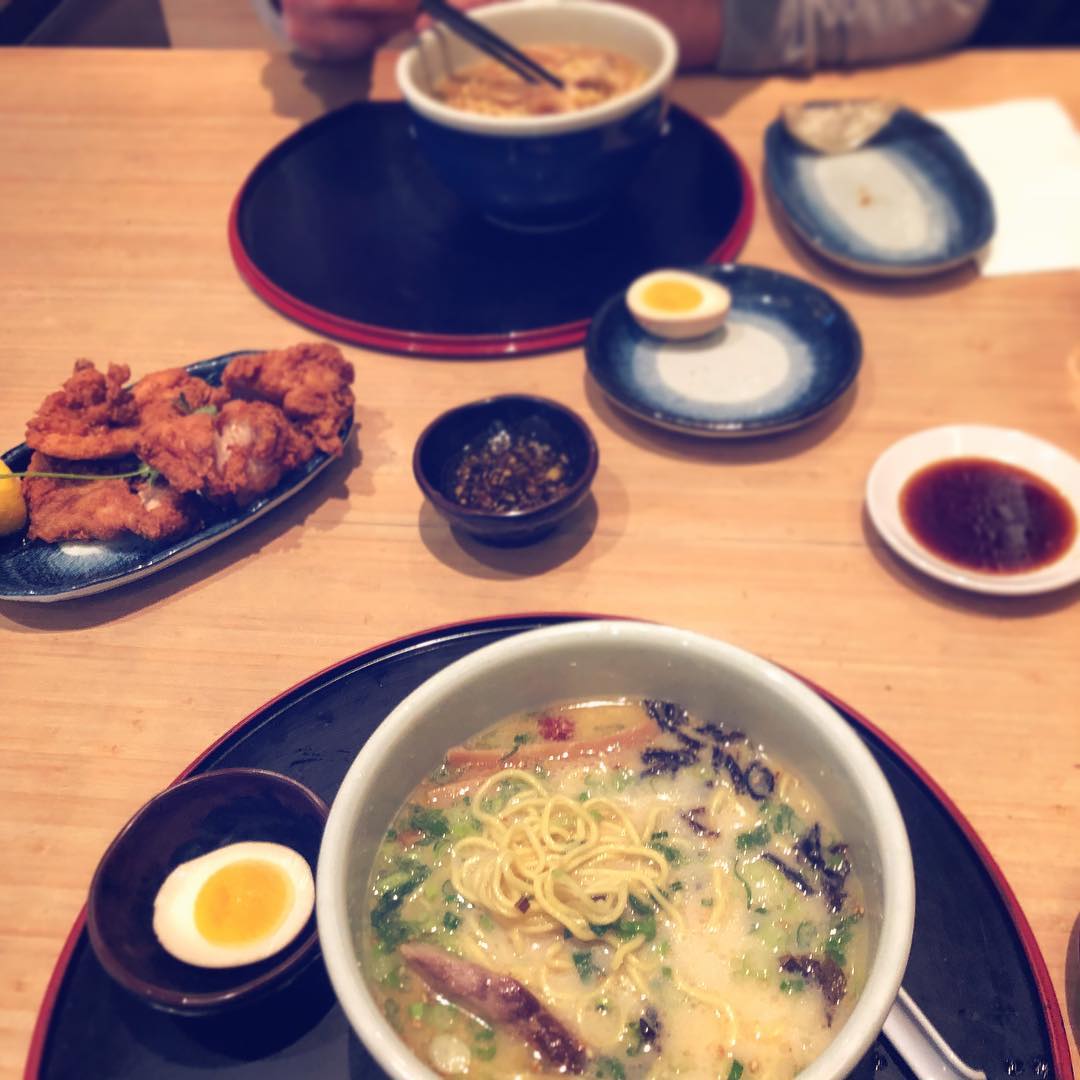
This lunch in Seattle came in quiet pieces. A deep bowl of ramen, pale and steaming, with noodles gathered under the surface and greens and dark seaweed drifting along the top. Half a soft-boiled egg sat nearby, bright and calm, like a small lantern on a black dish. Around it were the supporting notes—little pools of sauce, a small bowl of seasoning, and a plate of fried bites that looked crisp enough to crackle when you picked one up.

There’s something grounding about ramen on a wet day. The broth keeps its own weather. It fills the space between you and the outside, turning the afternoon into something slower and more deliberate. You eat, you pause, you listen to the room and the rain you can’t quite see, and for a moment the day feels less like something to get through and more like something you can inhabit.

Rainy Day Ramen wasn’t just lunch—it was a small shelter, built out of steam and salt and the kind of warmth that stays with you after you leave.

Checking in with the locals

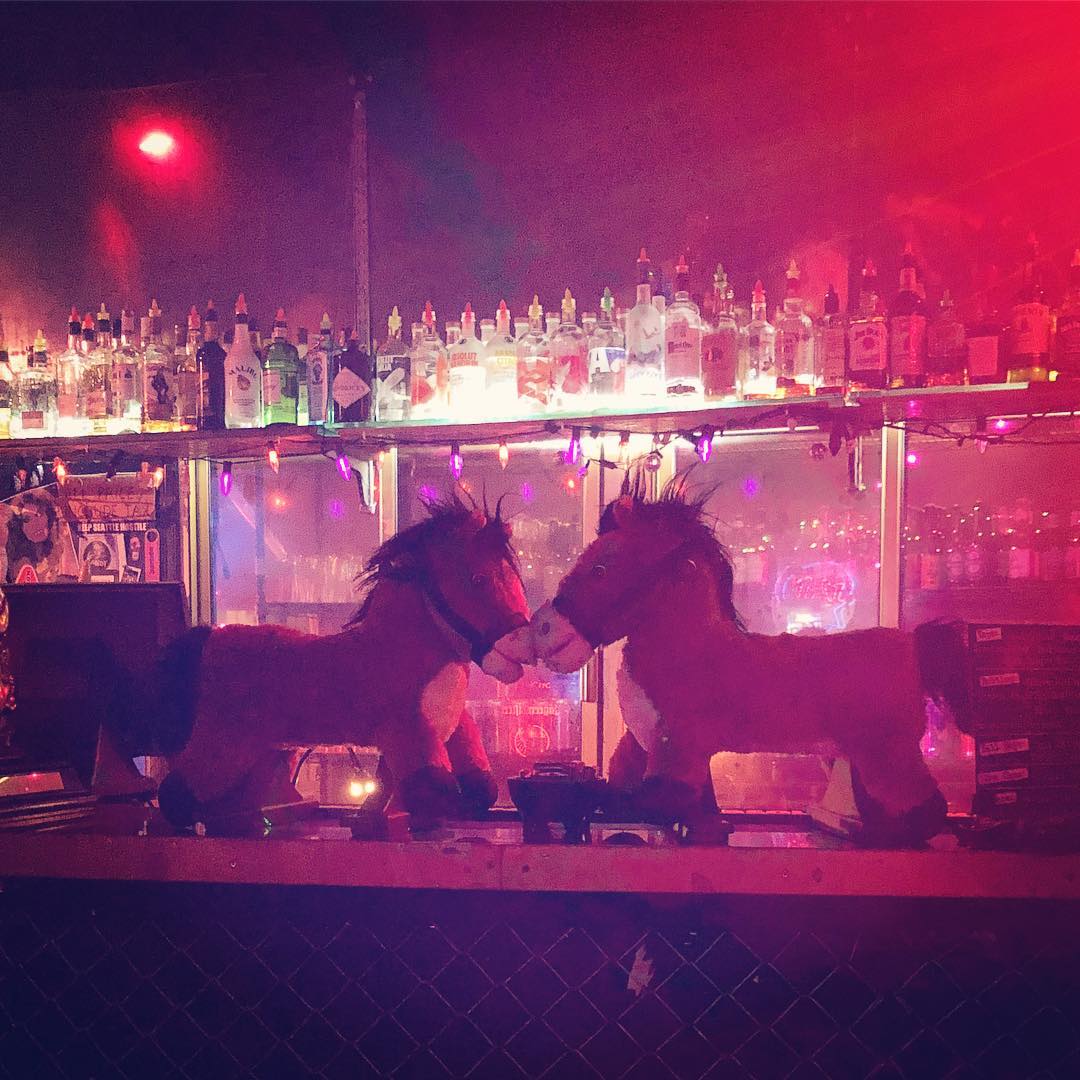
Checking in with the locals, I ended up studying the backbar the way you study a skyline when you don’t know the city yet—quietly, bottle by bottle, light by light.

Everything was washed in neon: pinks, purples, the kind of glow that makes time feel softer around the edges. The shelves were crowded with familiar labels, but what held the room together wasn’t the liquor. It was the small, ridiculous detail perched on the counter—two toy horses facing each other, muzzles almost touching, like they were mid-argument or mid-kiss, like they’d been assigned the job of keeping the peace.

Bars have their own local language. Some places shout it. Others whisper. This one spoke in clutter and color, in the gentle chaos of a lived-in space. The horses didn’t match anything, which made them perfect. They were a tiny reminder that someone once decided the room needed a mascot, or a joke, or a little protection from taking itself too seriously.

I didn’t learn everyone’s name. I didn’t need to. The locals were in the atmosphere: in the way people leaned in to hear each other, in the patience of the bartender, in the background hum that says you can stay awhile. For a minute, the night felt less like passing through and more like being held.

Cascade Range – Wallace Falls

There are places where the world feels like it’s speaking in two voices at once—stone and water, stillness and motion.

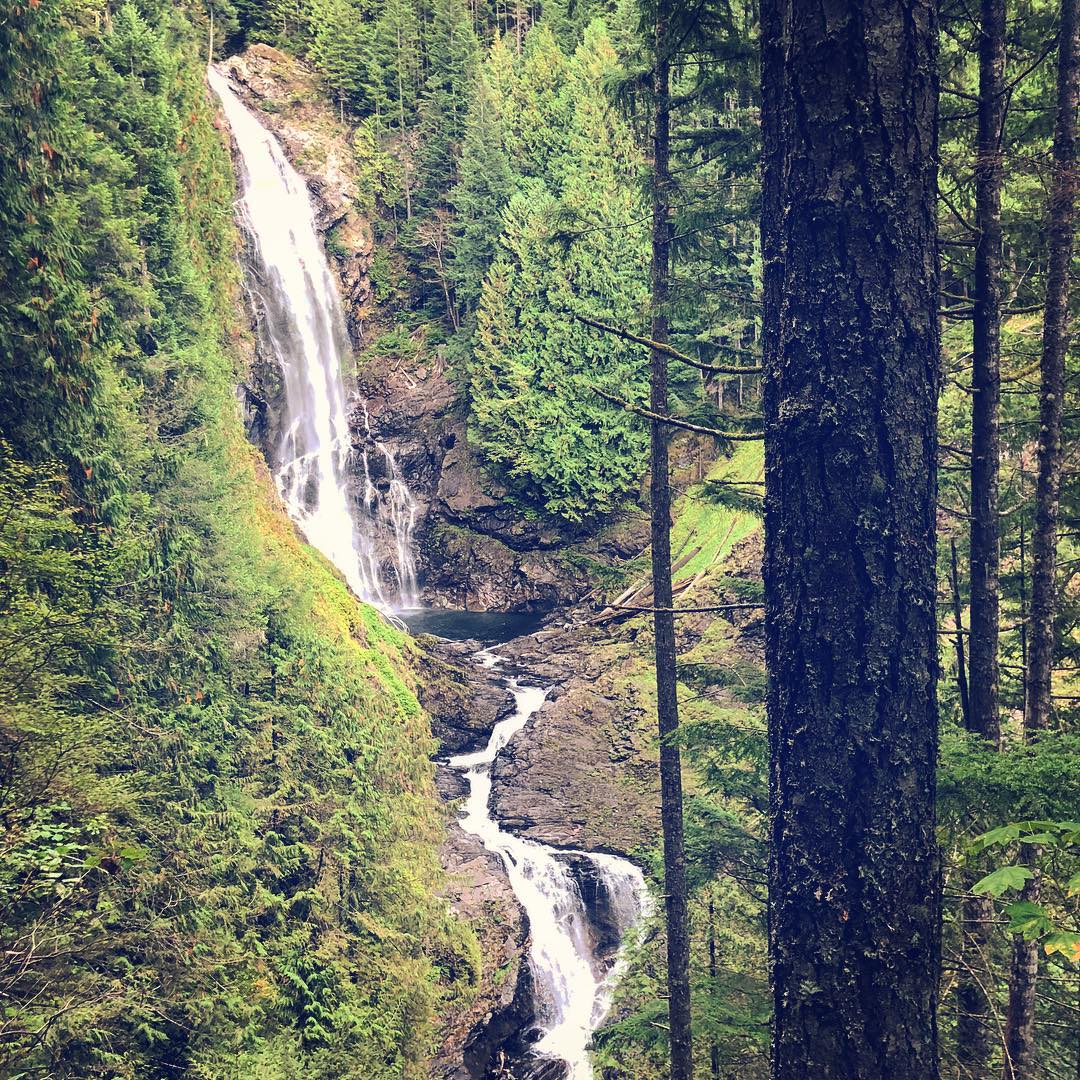
Wallace Falls drops through the Cascade Range like a bright thread pulled tight against dark rock, the whole scene held in place by firs that look older than any plan we make for a weekend. You can stand there and watch the white water write the same sentence again and again, never repeating it exactly.

The trail has that particular Northwest honesty: damp air, soft greens, and the quiet effort of walking upward while everything around you looks as if it has been growing without interruption. The forest doesn’t perform; it just exists—moss, bark, needle, and shadow—until the falls appear and you realize you’ve been listening for them all along.

From this angle, Wallace Falls feels tucked into the hillside, partly hidden, as if it’s not for announcing itself but for continuing. The water gathers, breaks, gathers again, and slips downstream—patient and unbothered.

I left with that familiar mix of calm and smallness, the kind you only get when something ancient and steady reminds you how much motion can live inside a landscape that looks still.

The Sunday ritual on the West Coast

There’s something about a Sunday on the West Coast that feels quieter than it looks. The light comes in soft, the day stretches out, and even the busiest corners of a café seem to agree to slow down.

On the table: a paper cup with a careful leaf of latte art, an iced coffee catching the room in its dark shine, and the small tools that make the whole thing feel intentional—milk, a lid, the clink of metal against metal. It’s ordinary, but it isn’t. Not really.

This is the kind of ritual that doesn’t need much explaining. Someone brews, someone waits, and in between you get that small, steady comfort of being looked after without a big announcement. The coffee is warm (or cold), but the feeling is the same: the day has started, and it doesn’t have to rush.

I like how these routines anchor a place. They’re not milestones, they’re not plans—just repeated moments that quietly collect into a life. A familiar table, the smell of espresso, the first sip that makes everything else feel possible.

If you’re lucky, Sunday finds you here: a little tired, a little grateful, and held together by caffeine and the simple kindness of someone who knows your order.

Washington Waves

The water in Washington has a way of meeting you halfway.

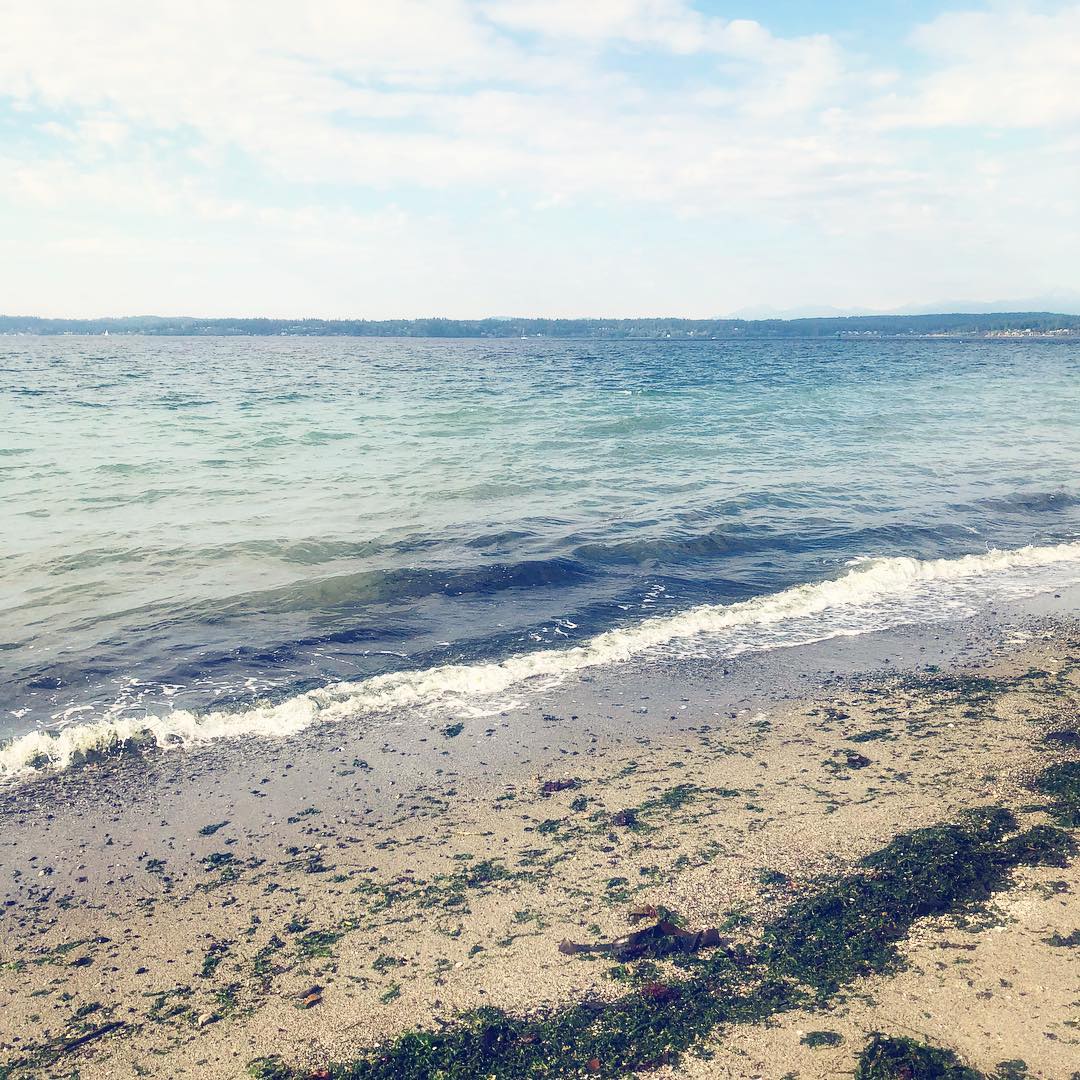
In this moment, the shore is a simple line of sand and scattered seaweed, and the waves come in with a steady, unbothered rhythm. The surface shifts from pale, glassy green near the beach to a deeper blue farther out, like the day is gently deciding what mood it wants to keep. Across the water, the land sits low and quiet, softened by distance. Above it all, the sky is bright and wide, patched with light clouds that look as if they were placed there without urgency.

I like how places like this make room for thinking. Not the loud kind that demands answers, but the slow kind that just notices: the hiss of foam as it thins on the sand, the way the next wave erases the last wave’s edge, the small bits the tide returns and takes back again.

“Washington Waves” feels like the right name for it, because it isn’t only about motion. It’s about repetition that doesn’t get old. It’s about standing still long enough to feel how the world keeps moving without you, and how comforting that can be.

If you’re near the water, let yourself linger. Let the shoreline do what it does best—keep time, quietly.

Seattle Sightseeing

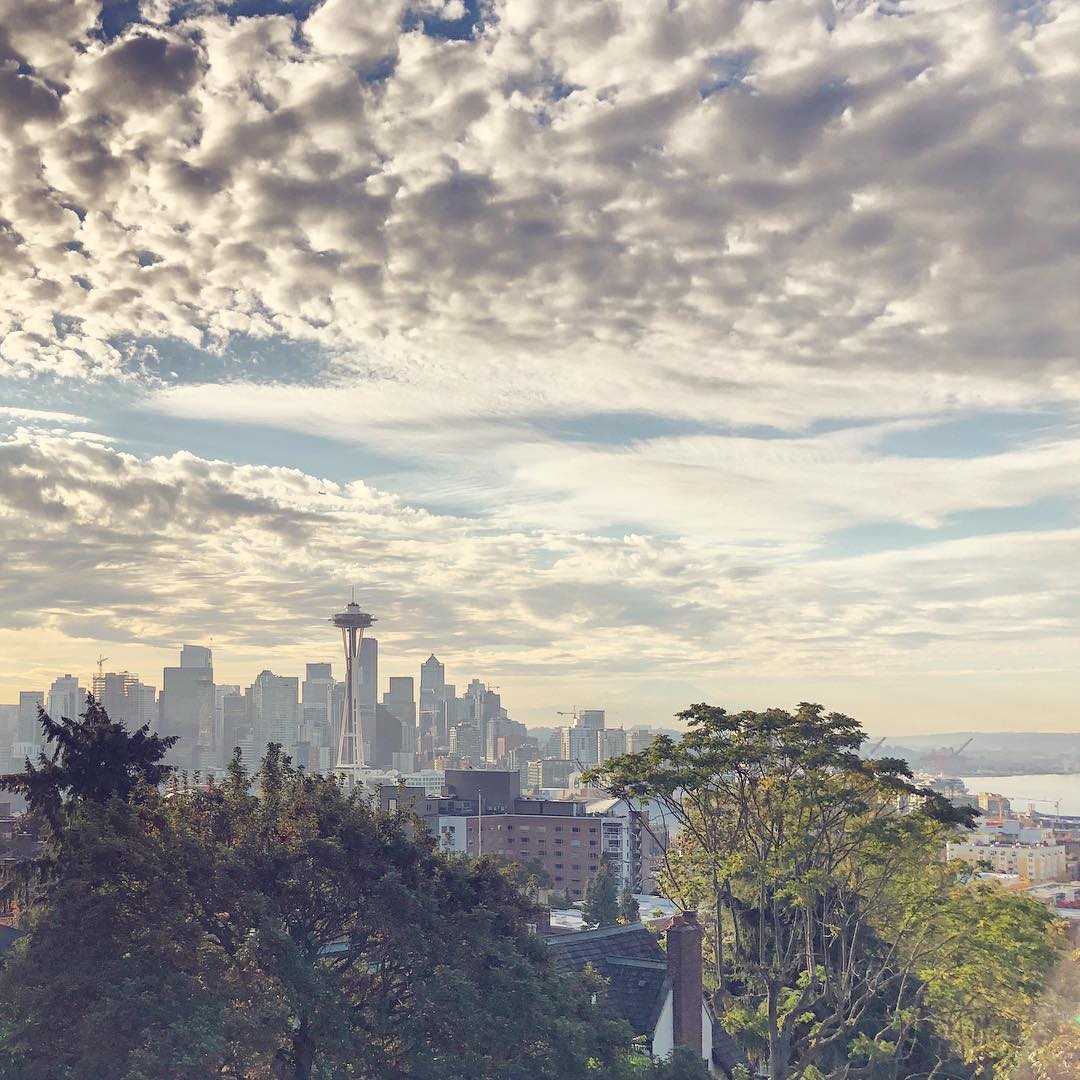
Seattle Sightseeing is supposed to feel like motion—tickets, turns, the bright insistence of places you’re meant to see. But this morning the city is doing something gentler.

From a hillside vantage, the Seattle skyline sits behind a seam of trees, as if the neighborhood is holding the view in its hands. The Space Needle rises like a compass point, less a spectacle than a quiet reassurance: yes, you’re here. The buildings gather around it in clean edges and softened grays, while the sky refuses to be tidy.

Clouds spread in layers, mottled and luminous, the kind of weather that can’t decide whether it’s clearing or arriving. The light is early and careful, turning glass into something almost warm. Off to the side, water glints faintly, not demanding attention—just present.

I think this is the kind of sightseeing that sticks. Not the rushing kind, but the moment you pause and the city becomes a landscape instead of a checklist. Green in the foreground, steel in the distance, morning threaded through everything.

If you’re looking for a Seattle view, you could chase the famous angles. Or you could find a hill, stand still, and let the skyline meet you where you are—beneath a sky that looks like it’s still deciding what the day will be.

Seattle Space Needle

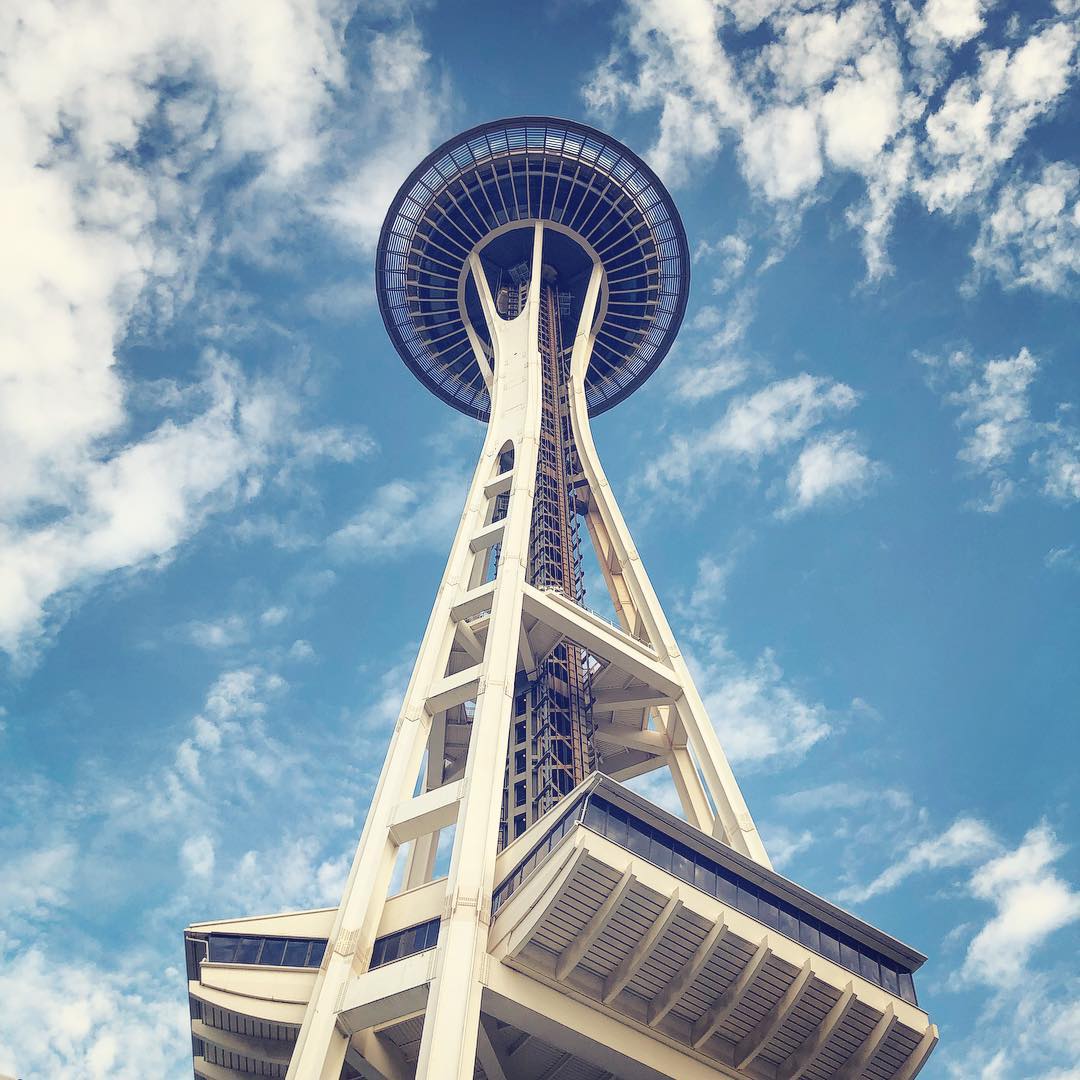
There’s something about looking up at the Seattle Space Needle from directly below that makes the city feel quieter than it is. The legs lean inward like a careful brace, and the saucer above hangs there with a kind of calm confidence—steel and geometry holding their place against a soft, shifting sky.

Today the clouds are scattered, bright and uncommitted, and the white structure catches the light in a way that feels almost domestic—like a familiar porch light in a neighborhood you haven’t visited in years. It’s a landmark, sure, but it also has the steady presence of something that has watched a lot of ordinary days go by.

I like monuments best when they don’t demand anything from you. When they just stand there and let you move around them, letting your thoughts fill in the empty space. The Space Needle does that. It doesn’t need to be explained; it just needs to be seen, from the street, from the park, from the angle that makes you notice the bones of it.

If you’re visiting, you can do the obvious things. But if you live nearby, or if you’re passing through with time to spare, it’s worth stopping for a minute and looking up—letting the wind and the traffic fade, and letting the city feel a little bigger, a little brighter.

OMG best skewers

There are foods that feel like a small, bright interruption in the middle of an ordinary day—warm, salty, and just smoky enough to make you stop walking.

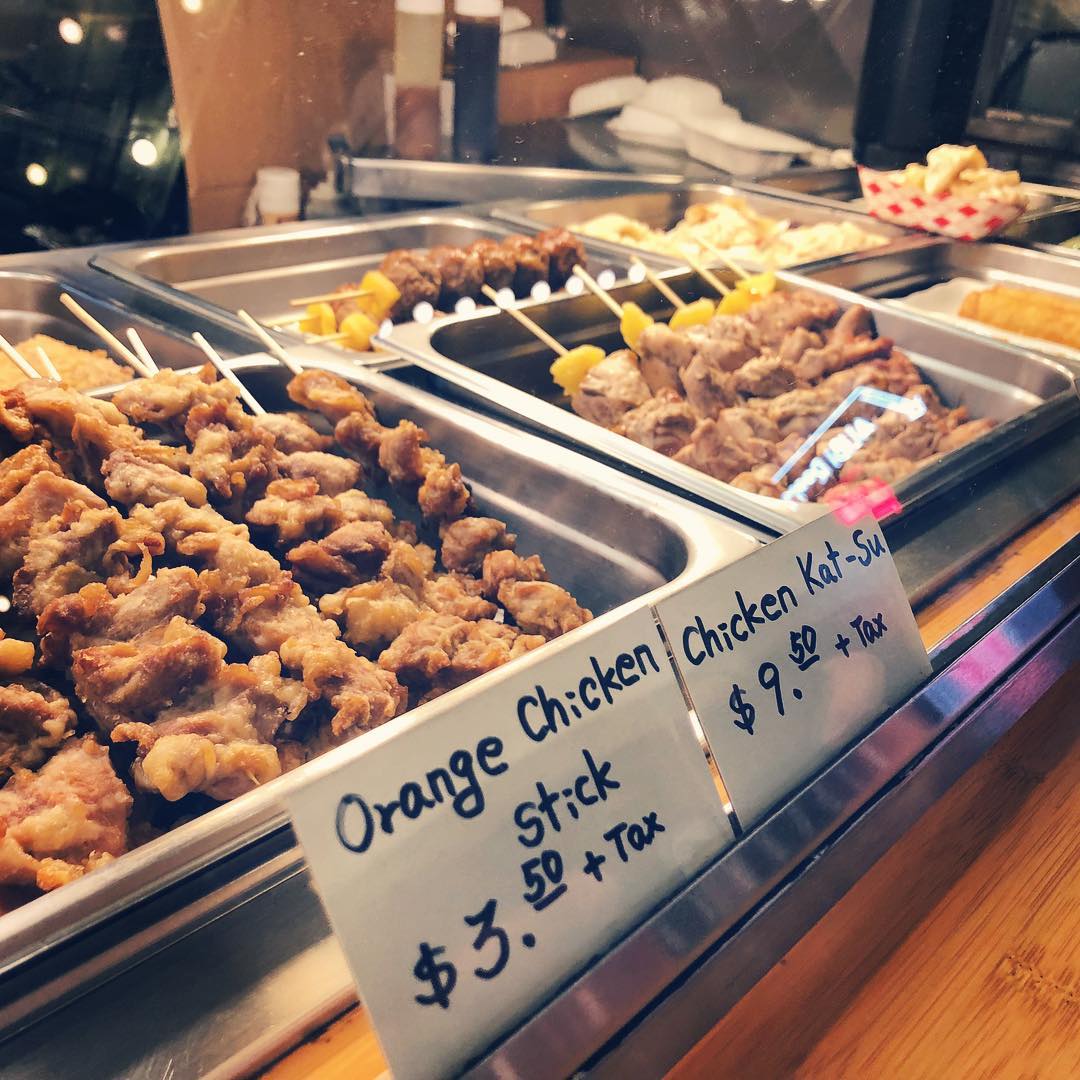
At Pike Place Market, I found myself lingering at a glass counter of skewers and fried bites, lined up like little promises. Handwritten signs leaned forward with their prices—orange chicken on a stick, chicken katsu—simple names for something that smells impossibly good when you’re moving through a busy market.

“OMG best skewers” is the only headline I had. Not because it’s clever, but because it’s true in the way a craving is true: immediate and a little breathless.

The food is the kind of comfort you can carry. Crisp edges that give way to tender meat, a hint of sweetness, a whisper of smoke. You don’t need a table or a plan—just a paper tray warming your hands while the market keeps streaming around you.

Pike Place always feels loud from the outside, but up close it’s made of smaller sounds: tongs tapping metal, paper crinkling, a low murmur behind the counter. Taking a minute to eat something hot and simple turns all that motion into background music.

If you go, let yourself be guided by the case under the glass. Pick a skewer, pause, and let it be enough for a moment.

Oyster Goodness

The table is set with the kind of casual order that makes you slow down: a blue-check cloth, water glasses catching the light, the steady red of a ketchup bottle in its wire basket. Outside the frame there’s the soft clatter of a market day, but here everything narrows to what’s in front of you.

A plate of oysters on the half shell, their edges rugged and salt-dark, sitting in melted ice. Lemon wedges bright as punctuation. A small cup of cocktail sauce waiting like a dare. Nearby, a bowl of chowder—pale, warm, and unhurried—holding its heat the way an old house holds winter, quietly and without complaint.

Lunch like this feels simple, but it isn’t. It’s the ocean translated into a mouthful: cold brine, a clean metallic snap, and then the comfort of something creamy and familiar. The kind of meal that makes the day feel a little larger, as if the city and the water and whatever you’ve been carrying all morning can fit on one small table.

I like how food can do that—how it gathers the mundane and turns it into a small ceremony. A squeeze of lemon, a sip of water, the hum of other people eating nearby. For a moment, it’s enough to just be here, tasting the place.

Exit mobile version