Weekend Art Culture

Weekend Art Culture is the small miracle where the city loosens its grip for an hour and lets you breathe differently. You step off the sidewalk and into a room that feels tuned—quieter, brighter, like the air has been edited.

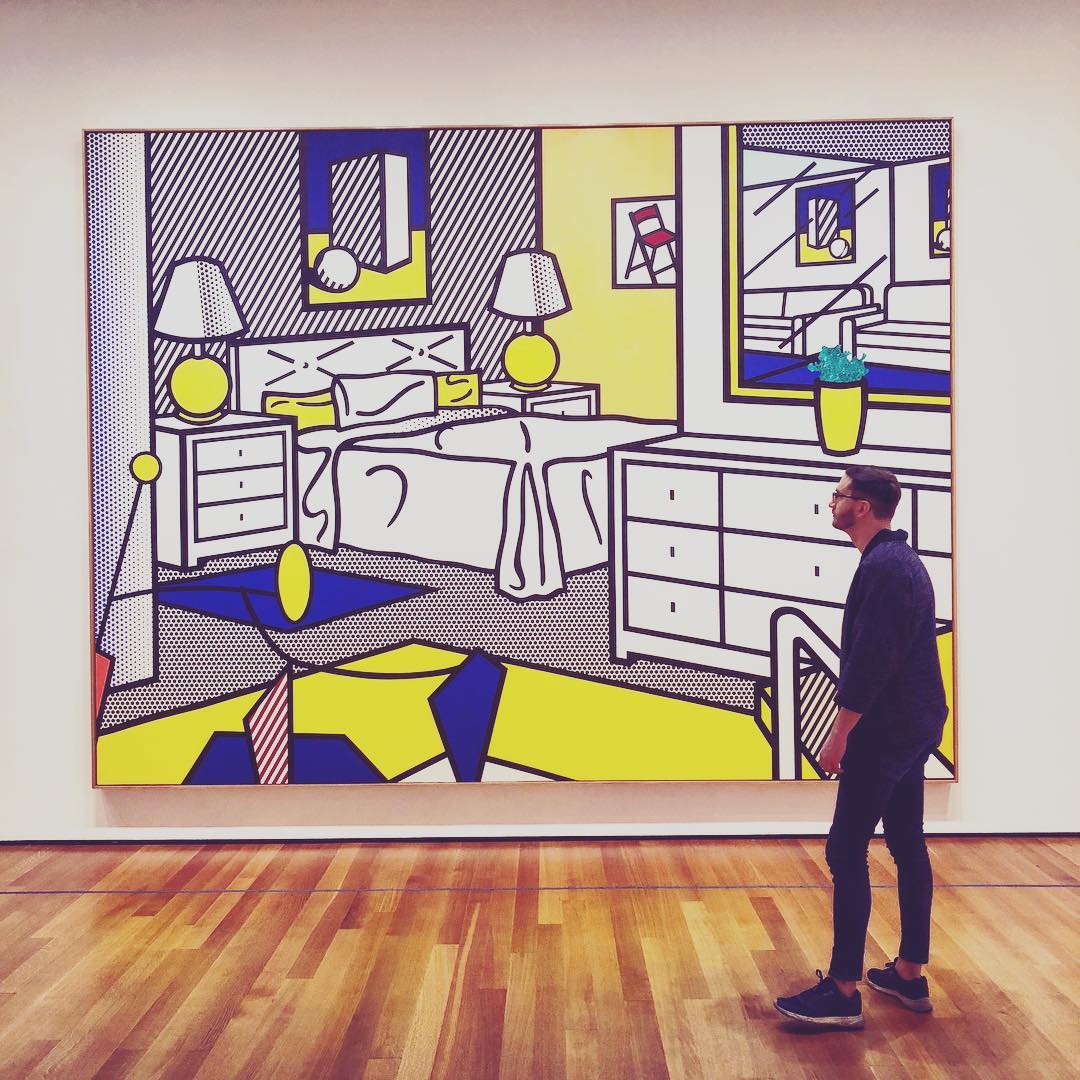
In front of Roy Lichtenstein bedroom pop art, I watched a bedroom turn into a kind of diagram: crisp outlines, punchy color, dots that pretend to be texture but also refuse it. A lamp becomes a statement. A bed becomes a rectangle of intention. Even the shadows look like they agreed to behave.

The funny thing is how familiar it all is. You recognize the furniture the way you recognize a dream after waking—almost yours, but not quite. The tidy scene feels domestic and distant at the same time, like home remembered through a window.

Museums always return you to yourself in little ways. The soft scuff of shoes on wood floors. The pause of a stranger who stops beside you, both of you measuring the same image, both of you briefly quiet. And then you leave, back into the city’s noise, carrying a cleaner line of thought—something bright and flat that makes the real world look newly textured.

ZAMartz Best of 2017

| #2017bestnine #nye #boyfriendswhobestof
| ???
| Wow, What a year it has been. There have certainly been many highs and lows, but I’m going to focus on the positive, ZAMartz best of 2017, information to recap. I will be covering some of the best content and pageviews on the ZAMartz website as well as the best social media post of 2017 on instagram.

Top 10 ZAMartz Pageviews of 2017

  1. Bank Card (Credit Card) Layout : PSD Template (Free Version)
  2. Kai Guang Amulet – Namas Guanyin Bodhisattva
  3. ZAMartz Homepage
  4. Digital Marketing Google AdWords Auto tagging & Adobe Omniture
  5. Bank Card (Credit Card) Layout PLUS with ENV Chip : PSD Template
  6. Digital Marketing Channel Interaction Attribution Models
  7. WooCommerce Disqus Comments and Ratings
  8. Powerpuff Yourself or Rowdyruff Boys ~ duh
  9. My new sofa has arrived from Interior Define
  10. About

Top Products Sold for 2017

  1. Free Bank Card (Credit Card) PSD Template : Donation
  2. Bank Card (Credit Card) PLUS PSD Template : Donation
  3. WooCommerce Disqus Comments and Ratings
  4. WooCommerce Hide Billing Fields

WordPress Extension Details

  • 1698 Total downloads of two extensions launched mid-year 2017
  • Overall Rating 4 out of 5 stars

Top ZAMartz Instagram Posts of 2017

  1. Philly weekend with Bae – Mom’s Bday
  2. Birthday Party Club Monaco Crew
  3. End of Club Monaco tour with Monetate
  4. Puppy hijack of Connolly
  5. My 30th Birthday Party Setup
  6. Summer Vacation to Florida, Tampa, Clearwater, St Petersburg
  7. Last Day at Club Monaco and Ralph Lauren
  8. End of Summer Cuteness New Jersey Shore
  9. Brunch’n with Bae at the Smile NYC

| Read Insta-comments -> http://bt.zamartz.com/2C1f8Fi
There is no way to recap this year in one post, so please take the time to go through a few of the above articles and excerpts to see some of the Best of ZAMartz 2017.

I will end this post with a memorial mention to my brother Jared, who sadly lost a battle with addition this year. This is an unforgivable epidemic here in the United States.

Resting at Home Plate

Come eventide, with loaded bases, he framed the box to bat;
points into distant, setting sun, and slowly adjusts his cap.

Oh soaring mighty arc, over plate and chain-link fence,
delivered to heaven’s gates, come angelic presence whence.

Arrive amidst an all-star game, loved ones, long on deck;
hopes and praises reach you, to our MVP, we’ll never soon forget.</p

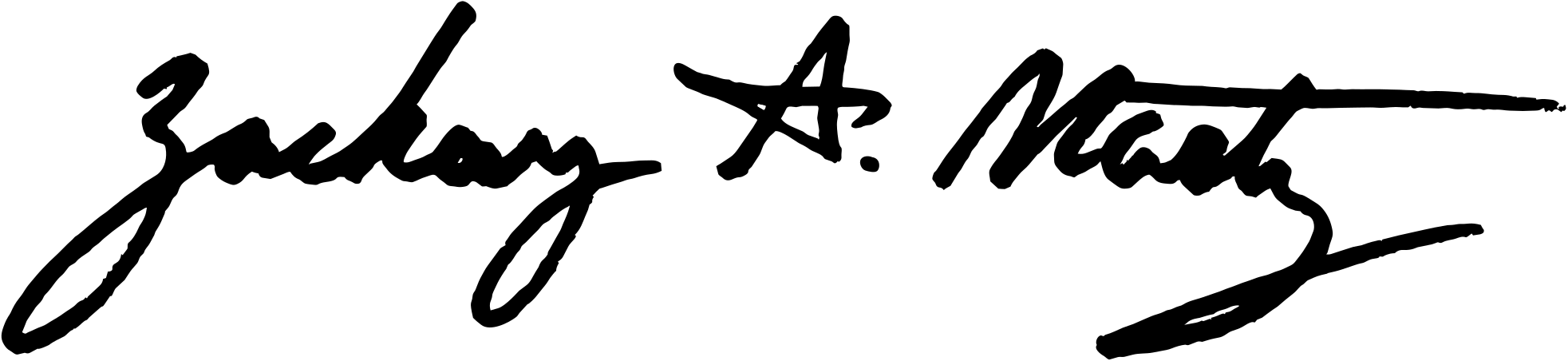
By Zachary A. Martz – In loving Memory of my little brother Jared Martz – 1990 to 2017

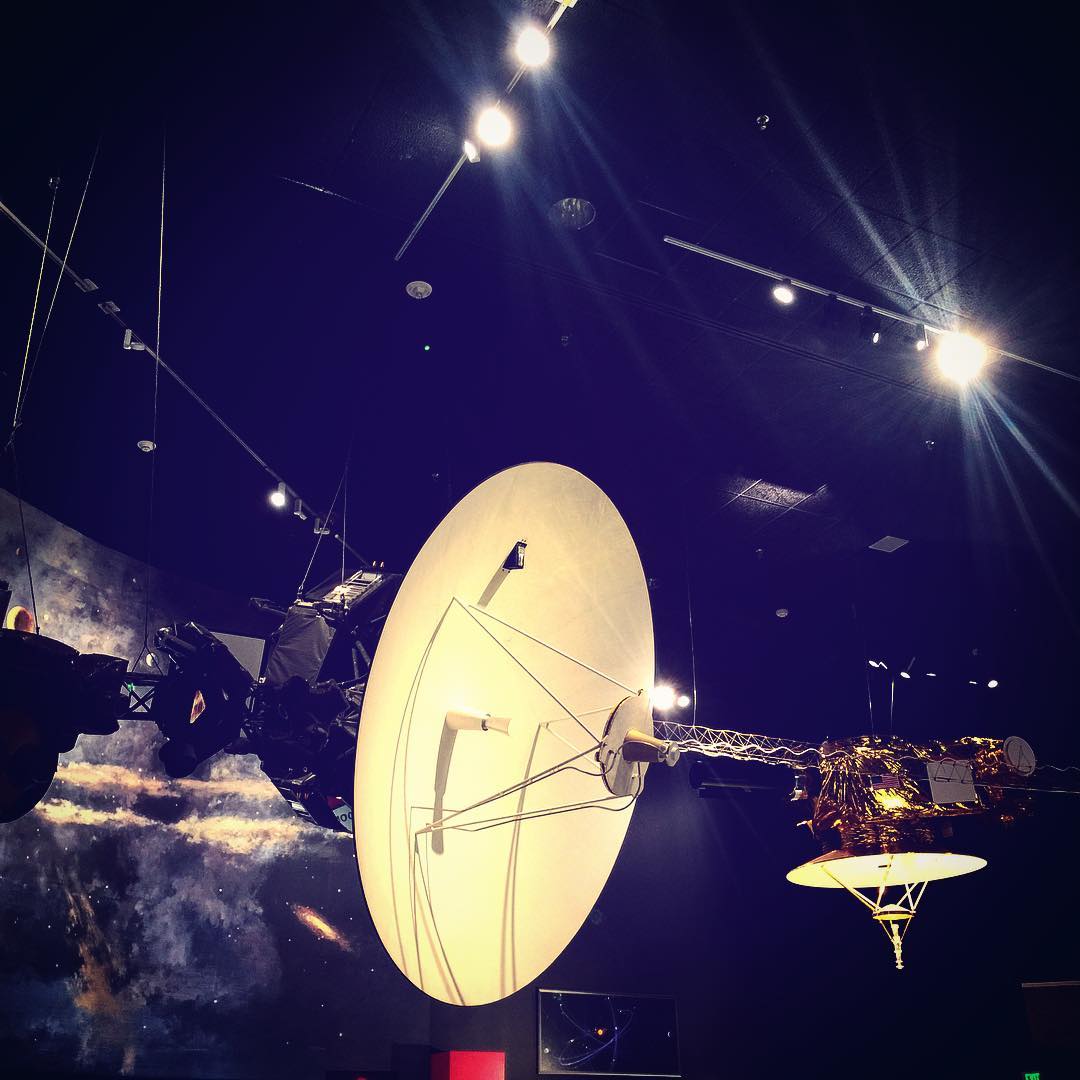
Into the Unknown

There’s something about standing beneath a satellite dish that makes the room feel bigger than it is. The ceiling disappears into black, punctured by bright museum lights, and the hardware hangs there like a paused sentence—part engineering, part daydream.

The dish’s clean curve points outward, as if it’s listening. Not just to space, but to the quiet between things: the static we usually ignore, the distance we can’t measure, the unknown we pretend is far away. Up close, it’s all struts and seams and careful angles—ordinary materials arranged into a kind of longing.

In Washington, DC, surrounded by exhibits and polished floors, I kept thinking about how the most enormous journeys begin in places like this: indoors, under lights, with a model you can walk around. We build these objects so we can imagine beyond ourselves. We send metal and gold foil into dark silence and call it exploration, but it’s also a way of admitting we’re curious—restless, even.

“Into the Unknown” sounds like a slogan until you’re standing under the dish and feel the scale of what it suggests. The unknown isn’t only out there. It’s in the way we look up, in the urge to travel without moving, in the small human hope that something is listening back.

And for a moment, the room hums with that possibility.

On the Hill

On the Hill, the city feels like it’s holding its breath.

From this angle the Capitol sits back in the distance, bright and rounded against a pale winter sky, while the foreground is all ironwork and glass—an ornate lamppost with milky globes, detailed and weathered in that patient way old fixtures get. The trees look bare but not bleak, their branches sketching thin lines over lawns and sidewalks where people move through the frame like quiet punctuation.

I like scenes like this because they show two worlds pressing up against each other. There’s the clean, official geometry of government buildings, and then there’s the everyday motion: footsteps on the paths, traffic humming beyond the grass, the simple business of crossing a street. You can stand still and listen and feel that overlap—history and routine, ceremony and errands.

Even without snow, it has that winter clarity: air that seems sharper, light that looks freshly rinsed. The hill makes you aware of distance, how far a place can be while still feeling close enough to reach in a long walk. And maybe that’s the best part—this reminder that the monumental is made of the same hours as the ordinary, and both are passing at the same steady pace.

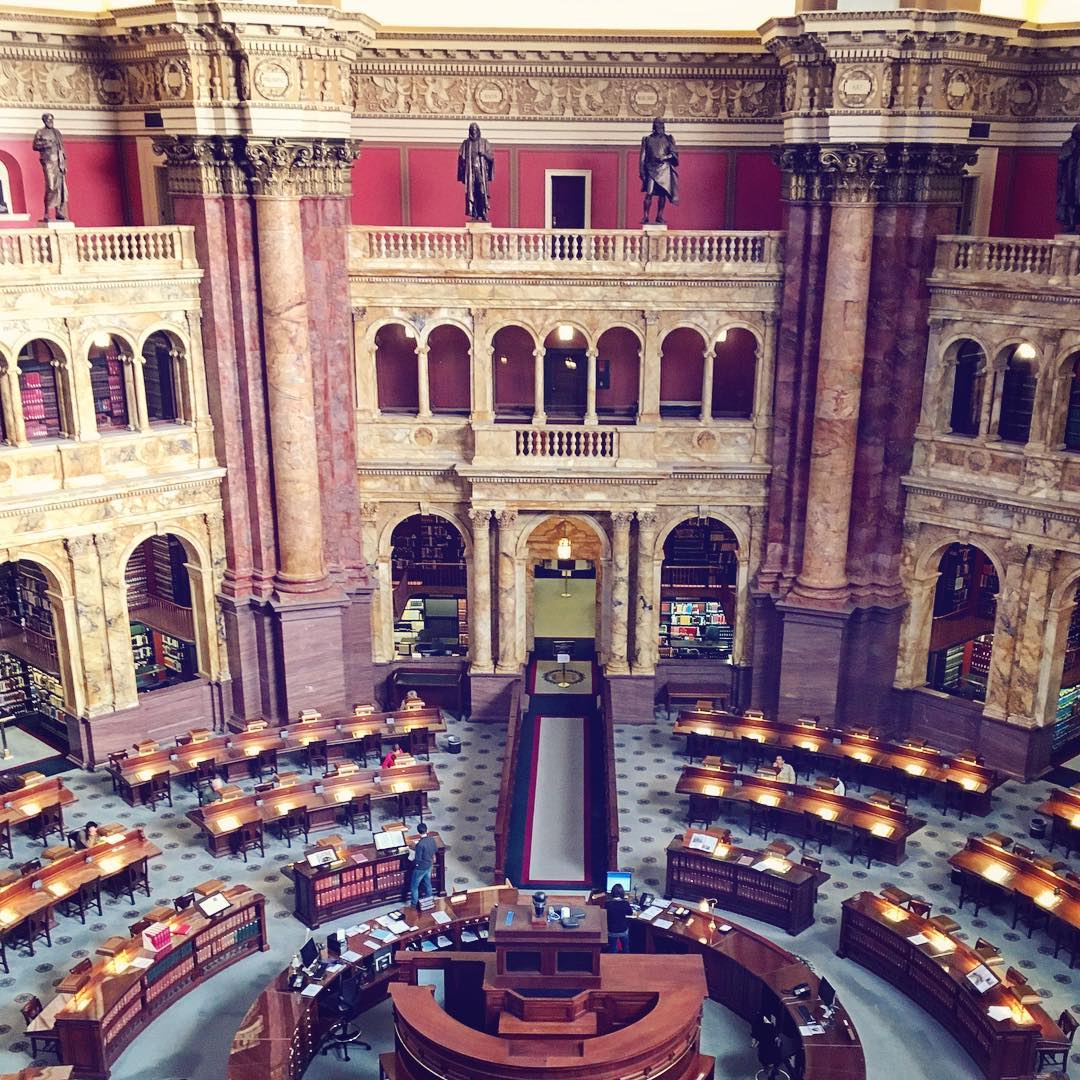
Library of Congress Main Reading Room

The Library of Congress Main Reading Room feels like a place that has been listening for a long time.

From above, the room opens into a careful geometry—rows of wooden desks lit by small, warm lamps; curved rails and aisles that guide you inward; book stacks tucked into shadowed edges like quiet promises. Marble columns rise up through layers of arches and balconies, and the red walls hold everything together with a kind of steady patience.

People move in small ways here: leaning over pages, pausing at a screen, settling into the simple work of paying attention. It’s not loud. It’s not hurried. The space does what old, well-made places do—it lives alongside you. It makes you aware of your own footsteps, your own breathing, the way your thoughts sound when you finally give them room.

There’s something comforting about being surrounded by so much collected memory. Not in a grand, museum way, but in the ordinary, human way—like finding a familiar coat by the door and realizing it has been part of the house all along.

In the Main Reading Room, knowledge isn’t a trophy. It’s a lamp on a desk, a seat pulled in, a quiet willingness to stay with a question a little longer.

Patent Pending

The first thing you notice isn’t the quiet, or even the symmetry—it’s the way the building seems to hold its breath.

Inside the old patent office in Washington, DC, light settles into the corridors and turns soft as it moves. White arches stack on arches, railings curve like careful handwriting, and a single globe of a chandelier hangs in the center as if it’s anchoring the whole place.

“Patent Pending” sounds like a punchline until you stand somewhere like this, where patience feels architectural. The tiled floor repeats itself in small, steady patterns, the way waiting does. Up above, balconies fold inward and outward, offering the same view from slightly different angles—proof that perspective can change without anything actually moving.

There’s a particular kind of hope in a government building: not loud, not cinematic. It’s quieter than that. It’s paperwork and stamps and long hallways, and still, somehow, it’s possibility. A thought someone has carried long enough to give it a name and a filing date.

I left thinking about the things we keep “pending” in our own lives—ideas, plans, versions of ourselves we’re not finished becoming. Maybe that’s the point. Not everything has to be approved yet to be real. Sometimes it just needs a place to wait, somewhere bright and orderly, until it’s ready to be claimed.

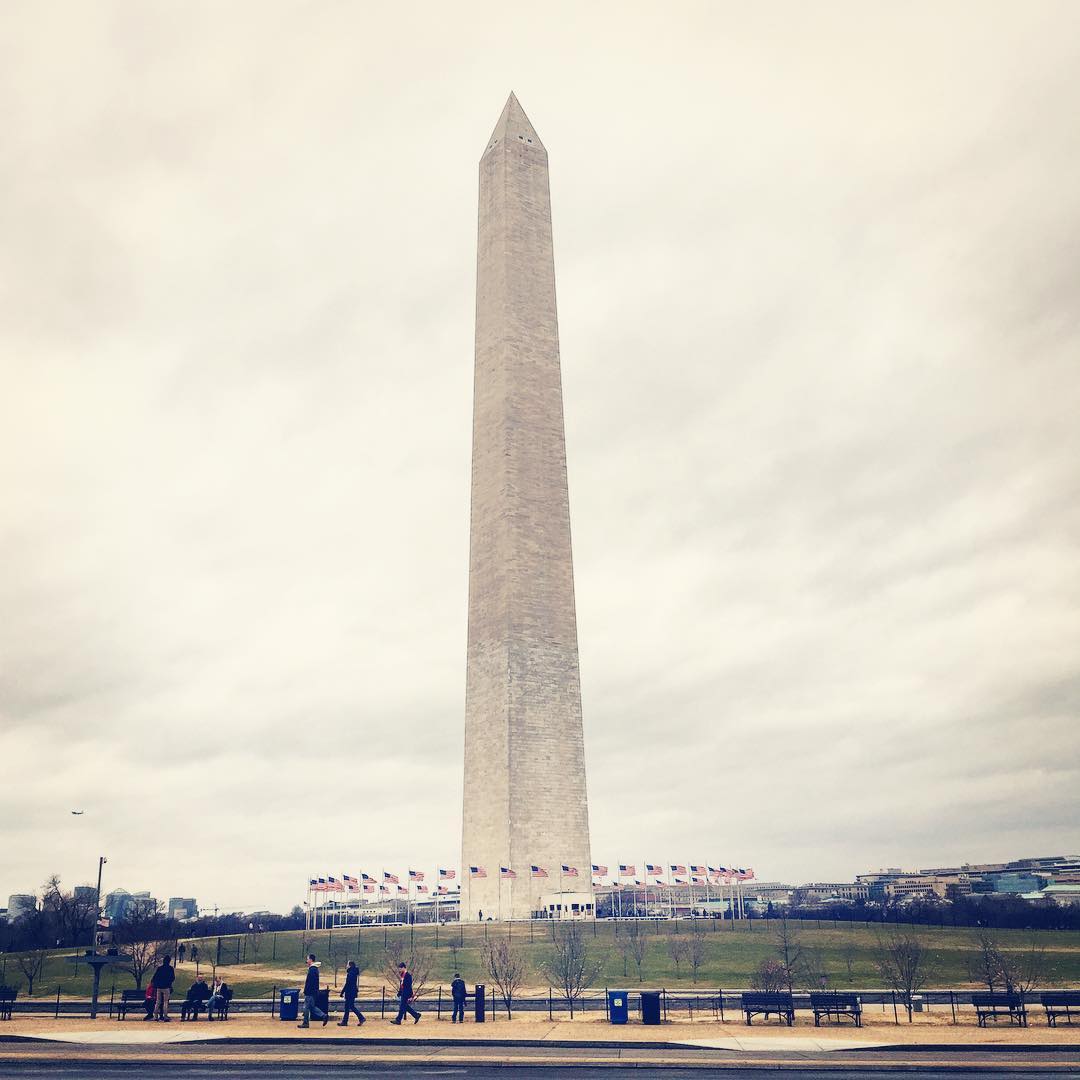
Thank you GW

There’s something about a monument that feels less like a tourist stop and more like a quiet instrument—measuring time, measuring weather, measuring the distance between what we imagine and what we live.

The Washington Monument rises into an overcast sky, pale and steady, as if it’s been holding that color for years. Below it, the flags keep moving, repeating their small, tireless gestures. People pass through the frame at ground level—walking, pausing, looking up—ordinary silhouettes against a structure built for the long view.

“Thank you GW” is a simple line, almost casual, but it lands with weight when you’re standing there. Not in the loud, celebratory way. More like the way an old house creaks at night and reminds you it’s still around, still doing what it was made to do.

In Washington, DC, history isn’t tucked away; it’s out in the open air, sharing space with bus routes, winter grass, and the muted hum of a city going about its day. The monument doesn’t ask for much attention, but it gets it anyway—because it’s hard not to look at something that tall and think about what had to happen for it to be there.

Mostly, I felt grateful for the stillness. For the scale. For the reminder that some things are meant to outlast the weather.

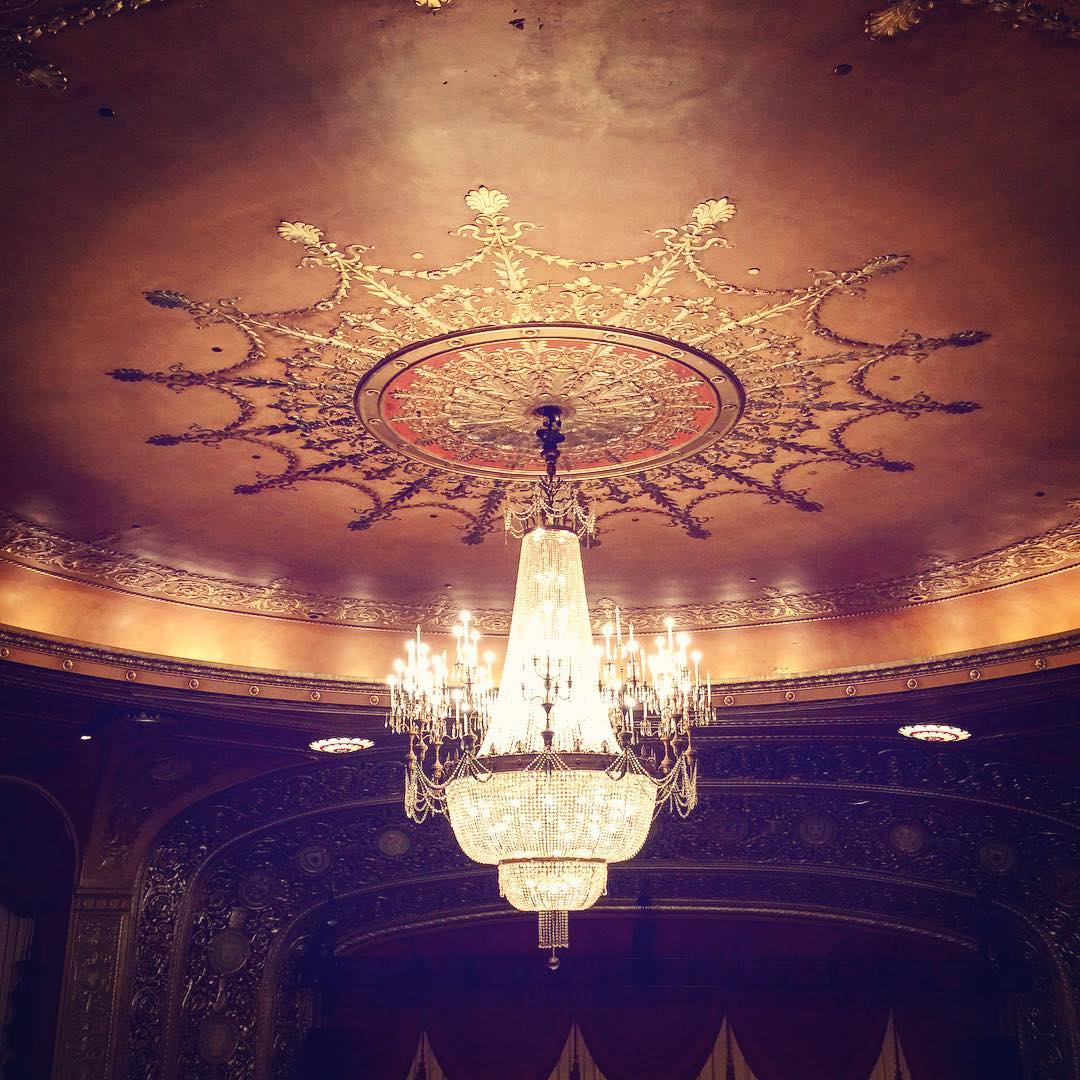
Nutcracker Night

There’s a particular hush that settles over a theater on a winter night, the kind that makes even your coat feel like part of the ritual. Outside, December presses in with its cold, but inside everything glows—gold leaf, velvet shadows, and the soft patience of people waiting for the first notes to rise.

I looked up before the lights could dim and found myself caught under a chandelier that felt less like décor and more like weather: a bright, suspended snowfall, spilling warmth over the balcony railings and the ornate ceiling that curls outward like careful handwriting. Old buildings do that. They don’t just hold people; they hold time. You can almost hear them living—quietly, in the way a room breathes when it’s full.

Nutcracker Night always arrives the same way, yet never feels repeated. The story is familiar, but the feeling isn’t. It’s the small details that return differently: the shimmer of the house lights, the brief stillness before the curtain, the sense that for a few hours the world can be simpler—made of music, motion, and a little bit of wonder.

When I stepped back out afterward, the cold was waiting like it always is. But the brightness came with me, lingering the way a melody does when you’re already halfway home.

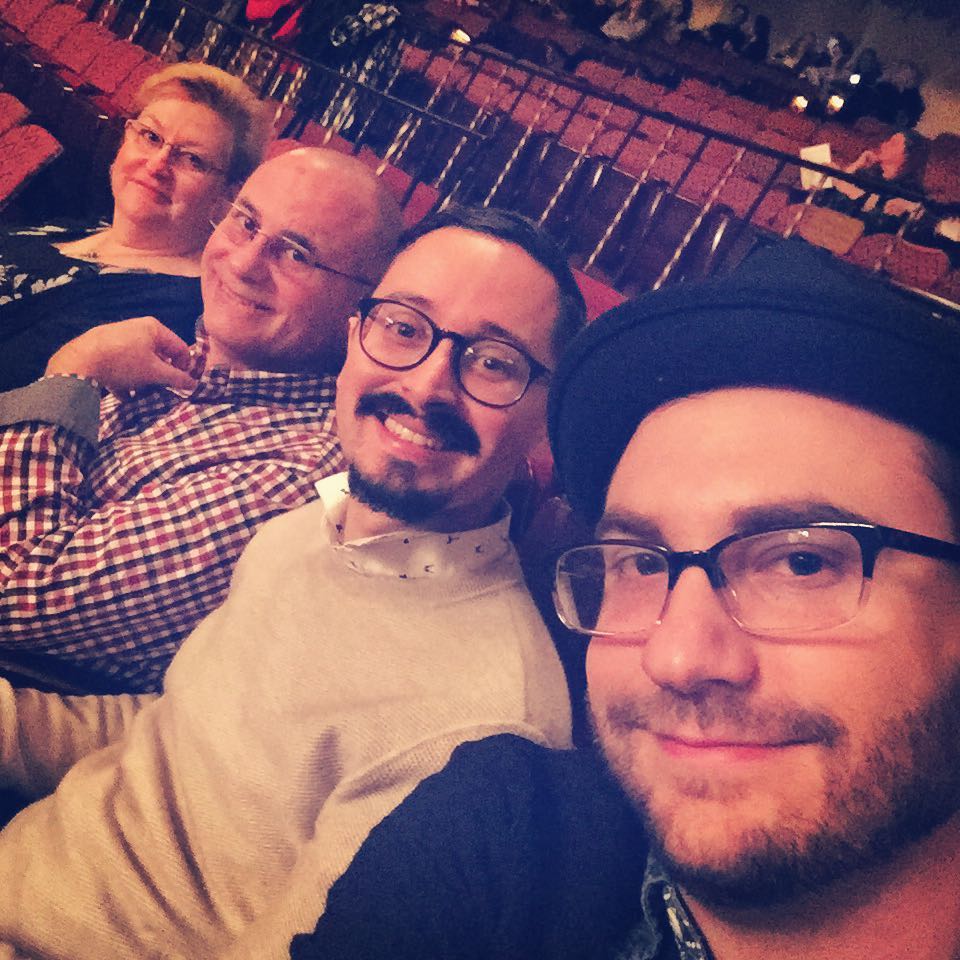
Holiday at the theatre

It’s funny how a holiday outing can feel like stepping into a different kind of weather.

The theatre was warm and dim, that soft amber glow you only get when the house lights are still up and everyone is settling in. Rows of red seats rose behind us like quiet waves. We leaned in for a quick photo—four faces, close together—carrying that small pre-show excitement that doesn’t need much explanation.

Outside, the season is always louder: errands, plans, glittering lists. But inside a theatre, the world narrows down. You can hear small sounds—the rustle of coats, a laugh a few rows away, the faint clink of someone’s drink—like the building is breathing alongside the crowd.

We came for a holiday night at the ballet, for that familiar winter ritual: the Nutcracker, the music that seems to remember you before you remember it. There’s something comforting about sitting still while a story moves in front of you, as if the year’s rush can be folded and put away for a couple of hours.

When the curtain finally pulls you in, you realize the best part isn’t just the performance. It’s this moment right before it starts—when you’re together, waiting, and the room feels full of possibility.

That Capital Dome Though

The Capitol dome sat there like it was holding the whole sky in place.

From a distance, it doesn’t feel like a building as much as a landmark for your thoughts—something you keep in the corner of your vision while the rest of the city moves below. The day I saw it, the clouds were low and pale, and everything felt softened: the white stone, the winter trees, the long line of cars threading through the streets.

I watched it for a while and tried to listen to the scene the way you listen to a house—quietly, for the small sounds that tell you it’s alive. Traffic pulsed and paused. People drifted along the sidewalks in little clusters. The dome stayed steady, bright against the muted air, like the city had decided to pin one clean idea to the horizon.

There’s something comforting about that kind of permanence, even if you’re only visiting. You come to Washington, DC for the monuments and the history, but you leave remembering the mood: a cold afternoon, a wide view, and the feeling of standing between the ordinary and the enormous.

That capital dome, though. It really does linger with you.

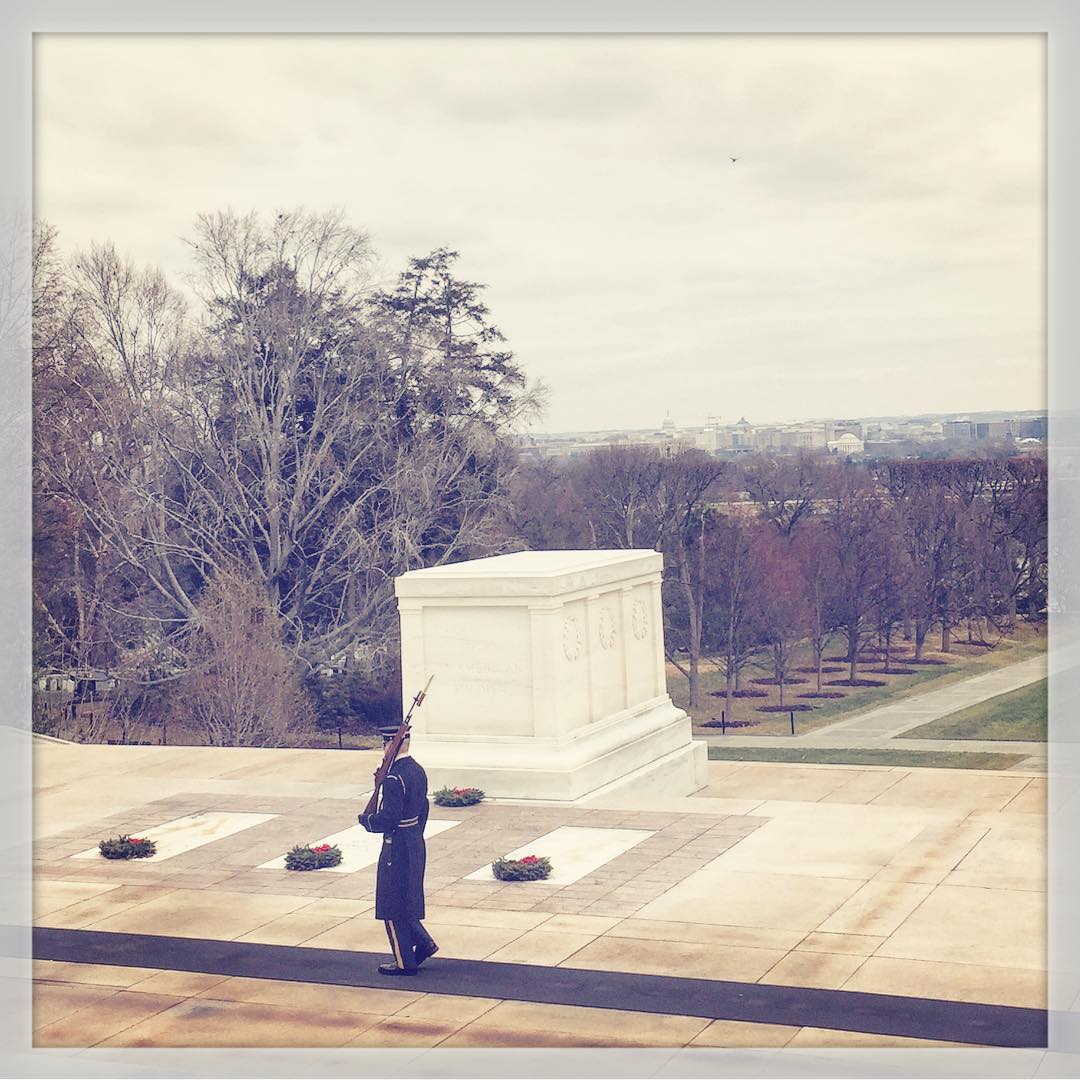
Tomb of the Unknown Soldier

There are places where the air feels different—not heavier, exactly, just more awake. The Tomb of the Unknown Soldier is one of those places. The stone sits clean and bright against a muted sky, and everything around it seems to lower its voice.

A lone sentinel moves with a practiced stillness, each step measured, each turn exact. It isn’t performance. It’s repetition turned into devotion. The ceremony is simple enough to describe, but harder to explain: a small set of motions that somehow holds an enormous amount of meaning.

Standing there, I kept noticing the quiet details—the wreaths laid out on the pale ground, the broad openness of Arlington, the winter-bare trees, and beyond them the distant shape of the city. It’s strange how far you can see from that hill, and how close it all feels at the same time.

I thought about names you never learn, stories that don’t come with neat endings, and families who carried an absence home. The tomb doesn’t try to answer any of that. It just marks it. It keeps watch.

The changing of the guard asks for your attention, and then it teaches you what to do with it: stand still, listen, remember—without needing to make it about yourself.

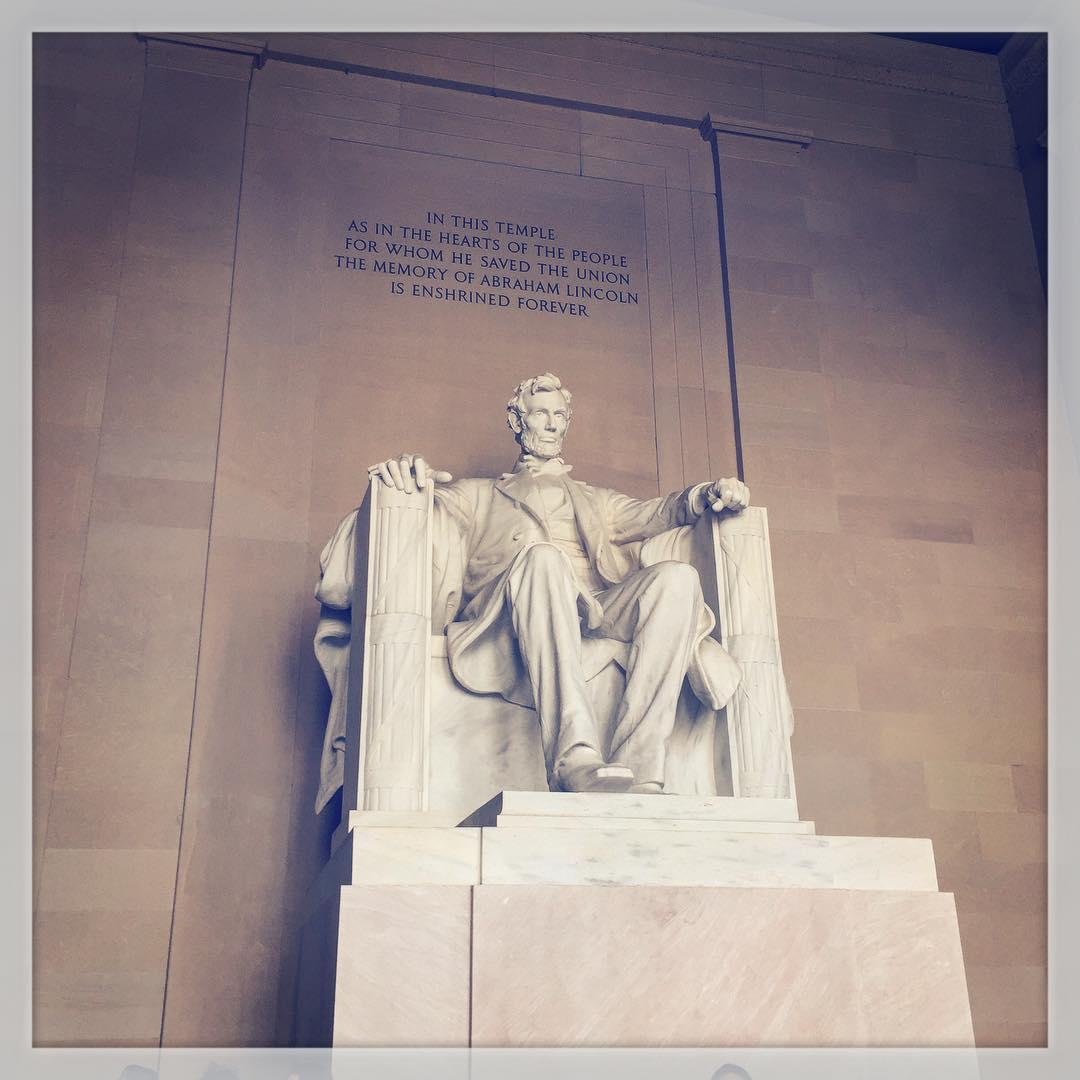
Lincoln Memorial

Inside the Lincoln Memorial, the air feels hushed, like the building is holding its breath. The stone walls rise up and out, plain and patient, and the seated figure at the center carries a kind of weight that isn’t only marble.

I keep looking from the statue to the inscription above it, the words set high as if they’ve been there forever, as if they’ve always belonged to the room. The light is cool and soft, and it settles into the folds of the sculpture the way winter light settles into an old house—quietly, without needing attention.

There’s something steady about this place. Not loud patriotism, not spectacle—just a calm reminder of what people can be asked to carry, and what they can choose to hold together. Even with footsteps and distant voices moving through the hall, it still feels like a private moment.

Some landmarks overwhelm you with detail. This one does it with space. You stand there, small against all that stone, and you can almost hear one world pushing up against another: the present pressing forward, the past refusing to be smoothed over.

I left with that familiar mix of calm and melancholy—the sense that memory lives in structures, and that certain rooms are built to keep it from slipping away.

Exit mobile version