
Stay Hydrated today NYC

Some days in New York City, the work doesn’t feel loud until you pause long enough to notice how dry you’ve become—how your thoughts start to stick, how your shoulders rise without permission.

On a countertop sits a glass drink dispenser, cloudy with citrus and chilled with thin cucumber rounds. It’s simple, almost ordinary. But it has that quiet competence of something that’s been placed there on purpose: a small reminder that the body is part of the day, too.

I like the way the scene holds both worlds at once—the office monitors and the fern’s soft spill of green, the cut pineapple like a bright, open bowl, the water turning into something more than water. Among the mundane, there’s a slowly growing feeling of care.

“Stay Hydrated today NYC” reads like a quick note to yourself, the kind you’d write on a sticky pad and forget until it matters. Drink. Breathe. Reset. The city keeps moving, but you don’t have to match its speed every second.

If you’re lucky, you take a cup, feel the cold condensation, and for a moment the day becomes quieter—like standing still while one world gently presses up against another.
Morning Bean

Morning in Chicago has a particular kind of hush. The sky sits low and pale, and the city feels like it’s still deciding what kind of day it will be.

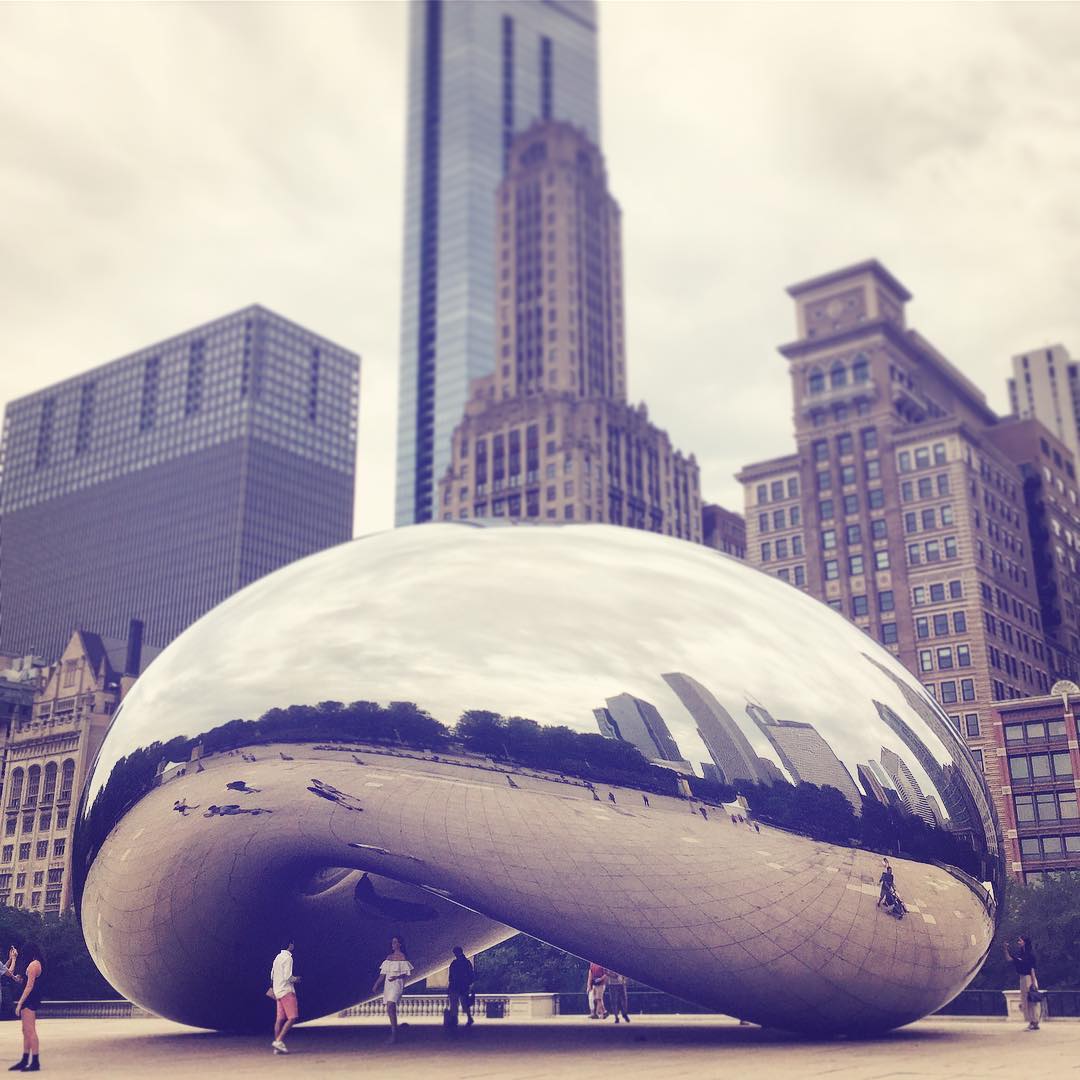
Cloud Gate—always called The Bean, as if it’s too familiar to bother with formality—rests in the middle of it all, catching the skyline and bending it into something softer. Towers become brushstrokes. The plaza turns into a wide, curved reflection where people drift like small punctuation marks.

There’s something calming about watching a place you know get rearranged. The Bean doesn’t just mirror the city; it edits it. It rounds off hard edges, pulls the ground up into the buildings, and makes the ordinary feel briefly unreal.

Standing there, you can see the morning reflected back at you: a handful of early walkers, a few pauses for photos, the quiet weight of architecture behind a single polished surface. It’s public and intimate at the same time, like the city is letting you in on a secret it tells every day.

Maybe that’s why it fits the morning so well. Before the crowds, before the noise, it’s just Chicago—held still for a second, brightened and distorted, and somehow made gentler.

Living that Mulit-City Burger life

There’s a certain kind of evening you can only really measure by what’s left on the plate.

A burger arrives the way a small city does in the distance—warm lights, a promise, a little too much to take in at once. The bun is glossy in the low bar light, the kind that looks like it’s been brushed with patience. When you cut into it (or just give in and lift the first half), it doesn’t fall apart; it opens. Steam, melted cheese, and that concentrated smell of beef and salt that feels older than any neighborhood.

This is the multi-city burger life: a few blocks that aren’t yours, a table that could belong to anyone, the familiar weight of a drink beside your hand. You’re in Chicago’s Loop, but you’re also nowhere special—just a dim room, a candle, and the soft clink of glass that makes the world seem briefly organized.

Between bites, the night slows down. The noise becomes a hum, like traffic heard from far away. You remember how places can be both ordinary and mysterious at the same time, how a simple meal can hold a whole day’s worth of motion.

Later, what stays isn’t a checklist of toppings. It’s the feeling: that you found something hearty in the middle of the city, and for a moment, it felt like it belonged to you.

Another Beetle Buddy

Another Beetle Buddy showed up the way small surprises usually do: quietly, and close to the ground.

On a worn slab of stone in Chicago, a beetle sat like a polished button dropped from someone’s pocket. Its back caught the light in a soft green that faded into coppery edges, the whole thing looking less like an insect and more like a tiny piece of metalwork left out in the weather.

I paused longer than I meant to. Cities teach you to keep moving, but there are moments when you can hear two worlds press up against each other—the steady, indifferent grain of concrete and stone, and the delicate insistence of something alive tracing its way across it.

I don’t know where it was headed. Maybe nowhere in particular. Maybe just away from the heat of the sidewalk, toward shade, toward a crack in the pavement that felt like shelter. Watching it made the street feel briefly quieter, as if the day had a slower rhythm underneath all the noise.

I took the photo and moved on, but the image lingered: a small companion on an ordinary surface, reminding me that even in the most familiar places, there’s still mystery if you stop and look.

Chicago Commuters

There’s a particular kind of motion that belongs to downtown Chicago—measured, practiced, almost quiet even when it’s loud.

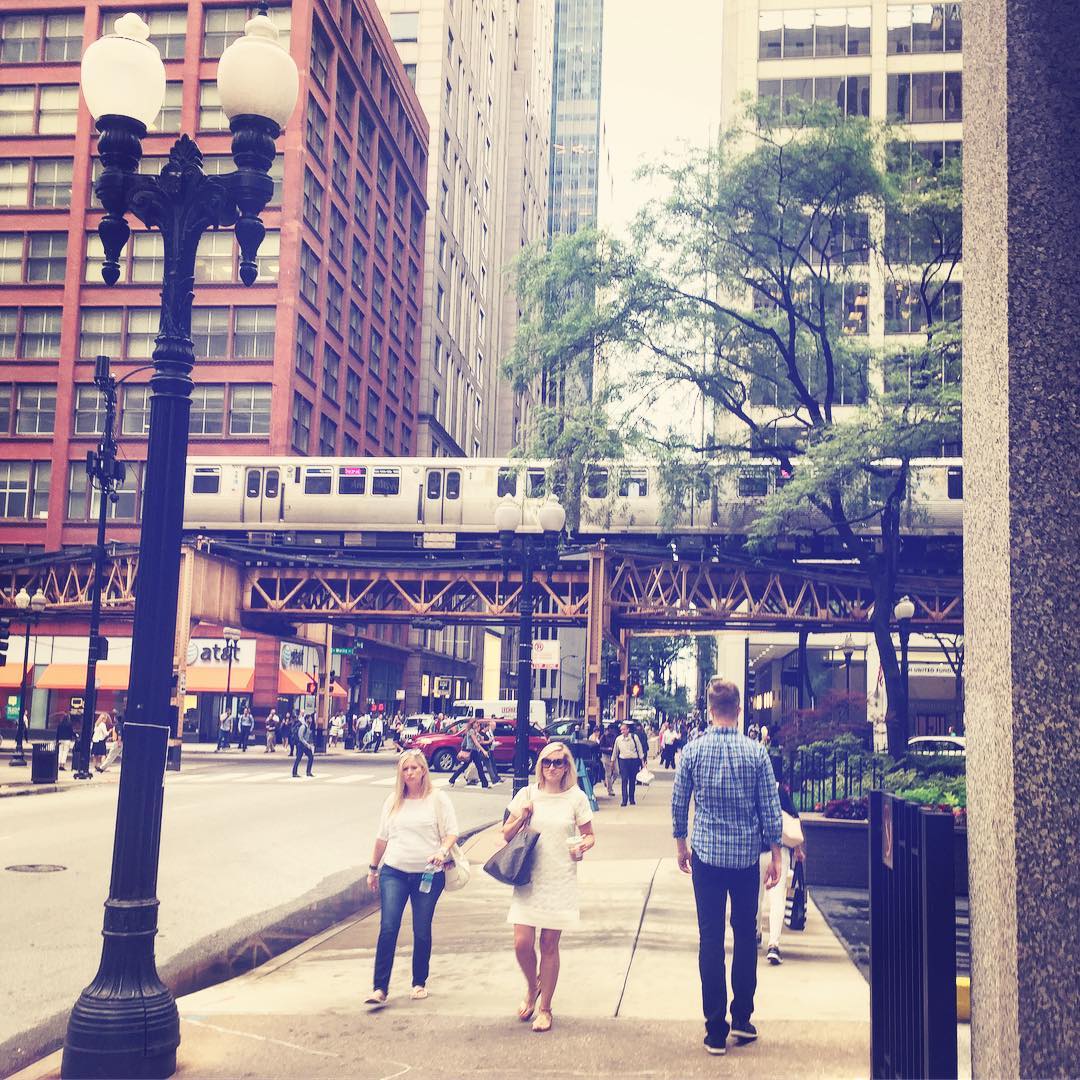
In the photo, the street feels like a corridor between tall buildings, a place built for passing through. A train slides along the elevated tracks overhead, metal and windows moving like a thought you can’t quite hold onto. Below, people cross at the corner and drift down the sidewalk, each of them carrying a small version of the day: a bag, a drink, a destination, a pace.

The old streetlamps stand like something left behind from another era, steady and decorative against the hard grid of glass and brick. A tree leans into the scene too, softening the edges, reminding you that the city still has living things threaded through it.

Commuting is often described as wasted time, but it doesn’t always feel that way. Sometimes it’s the most honest part of the day—when you can watch the world continue without needing anything from it. Just a few minutes of being one person among many, moving forward under the tracks, letting the train go by like weather.

Chicago Commuters isn’t a spectacle. It’s a familiar rhythm: street, sidewalk, steel above, and the simple act of getting where you’re going.

Who are Carnival Animals

There’s something quietly comforting about a carnival prize once the lights are gone.

A plush animal—soft, a little lopsided, built for being carried home—ends up in the most ordinary places: on a rumpled bedspread, tucked under an arm, pressed against a palm like it has a pulse of its own. In the daylight, you start to notice the small details. The stitched face. The worn fur. The way it seems to settle into the fabric as if it’s always belonged there.

That’s what I keep thinking about when I ask, “Who are Carnival Animals?” Not what they’re called on a tag, or what booth they came from, but what they become after. The prizes are supposed to be loud trophies, proof that you won something. But at home they turn quiet. They collect the warmth of a room. They hold onto the memory of a night—music in the distance, the clack of games, a moment of luck that felt like fate.

Maybe carnival animals are just that: small ghosts of a good evening. They don’t haunt anything. They simply inherit a corner of your life, taking their place among blankets and everyday routines, becoming part of the softness of the house.

If you’ve ever brought one home, you know the feeling. You don’t really win a stuffed animal. You bring back a piece of the in-between: the brief, bright world that disappears as soon as you leave it.

Boys night to Burger

Boys night to Burger.

There’s something quietly comforting about a shared table on a regular night—the kind where the marble is cool under your forearms and the room hums with low conversation and clinking glass. A wooden board arrives like a small stage: a glossy bun pinned in place, a thick burger beneath it, and a pale sauce that doesn’t bother staying neatly contained.

On the side, brussels sprouts are taken right to the edge—dark, crisp, and a little chaotic in the best way. They look like they’ve been left long enough to pick up that deep roast, the bitterness softened into something sweeter. It’s the sort of plate that feels more honest than polished.

West Village has a way of making even a simple burger feel like a moment. Not because it’s rare or reinvented, but because you’re there with people you like, letting the evening stretch out just a bit. No rushing, no ceremony—just the steady satisfaction of good food and the quiet permission to linger.

Some nights don’t need a plan beyond that: a burger, something roasted until it’s almost black, and the easy company that makes the whole thing feel bigger than the sum of its parts.

That weekend roof life

That weekend roof life was the kind of small escape that doesn’t announce itself. Just a few flights up, a door that sticks, and then the city opens—low roofs, distant towers, and the sky doing its slow work.

The light was soft and bruised at the edges, purple sliding into pale gold. Clouds moved like they had their own plans, stretching and folding until the whole horizon looked painted over. The skyline sat in silhouette, steady and familiar, while the day gave up its heat.

Up there, everything feels both closer and farther away. You can see the shape of the city—its lines, its stacks, its little mistakes—and still feel how it keeps living underneath you. The hum is constant, even when you stop talking.

I like places like this because they hold a quiet kind of memory. Not the loud, postcard version of New York, but the one made of wind, leftover warmth on a ledge, and a sky that changes by the minute. A rooftop doesn’t try to be anything more than a roof. It just lets you stand there long enough to notice what’s been happening all day.

By the time the colors thinned out, it felt like the weekend had already started slipping away—still beautiful, still right there, but moving on without asking.

Weekend Cocktails

There’s something quietly satisfying about a weekend drink that doesn’t try too hard. A gin and tonic arrives looking almost unfinished—clear ice, a wedge of lime pressed against the glass, beads of cold gathering like weather on the outside. It’s simple, but it feels lived-in, the way a familiar room settles around you.

I had one in Williamsburg, at a table that caught the afternoon light. The wood was warm, the glass was sweating, and everything else in the background softened into a blur—stools, counters, the low hum of people passing through. The kind of scene that doesn’t demand attention, but still leaves a mark.

A good G&T is mostly about small details: the bite of tonic, the clean edge of gin, citrus that brightens without taking over. It’s not a spectacle. It’s a pause. And weekends are made of pauses—the ones where you notice the room temperature change, the street noise thin out, the condensation slide down to the coaster.

I like drinks like this because they carry a kind of calm. Among the ordinary parts of the day, there’s a brief feeling of curiosity—how something so minimal can feel so complete.

If you’ve got a lime and a few cubes of ice, you’re already most of the way there.

Monday Mantis Mood

Monday Mantis Mood.

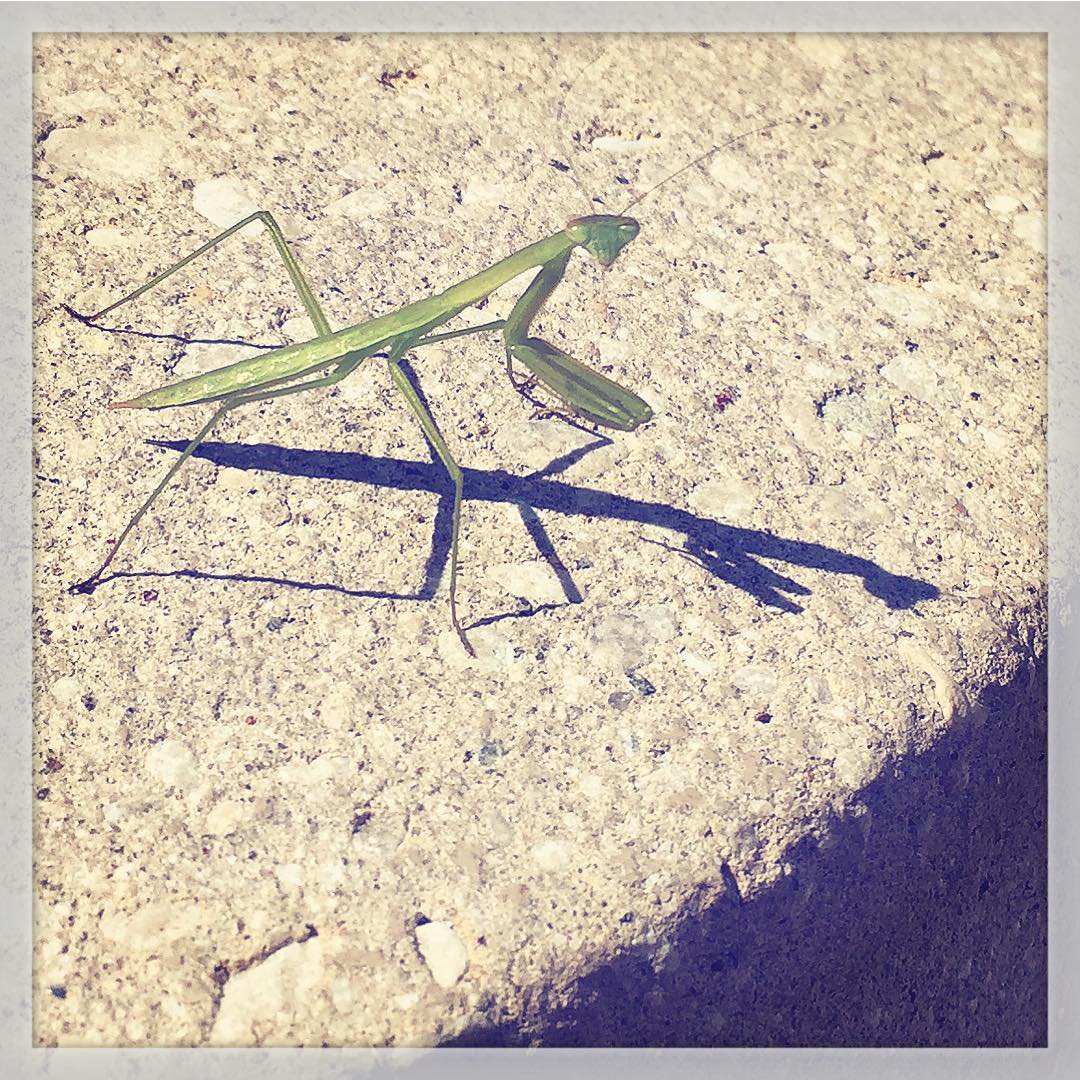
A praying mantis paused on a sun-warmed slab of stone, green and angular against the pale grit. In the hard light it looks almost assembled rather than born—thin legs like hinges, a narrow body held just above the ground, and that small, steady head turned as if it can hear the world thinking.

I stood there longer than I meant to, watching the shadow stretch out beside it, darker than the insect itself. There’s something quietly ceremonial in the way a mantis holds its front legs, as if patience is a posture. On a Monday, that feels like instruction.

The day has its usual noise—cars in the distance, errands tugging at the edge of attention—but this tiny hunter makes a different kind of room. For a moment, everything becomes simple: sun, stone, stillness. It’s a reminder that the ordinary isn’t empty; it’s just waiting to be noticed.

I left it where it was, keeping its little pocket of calm intact, and carried that mood with me—slow, watchful, and a bit more spacious than the calendar allowed.

Weekend Mood

Some weekends don’t announce themselves with plans. They arrive in small shifts: rain thinning out, light changing its mind, the city looking briefly rinsed and new.

Today that shift showed up as a rainbow arcing over Williamsburg, stretched above the clean edges of apartment windows and rooftops. It’s the kind of scene that makes you pause mid-thought. The sky is still heavy, still gray in places, but it’s letting color through anyway.

I like moments like this because they don’t ask for much. You don’t have to chase them or frame them perfectly. You just have to notice. The buildings stay steady and quiet beneath it all, holding their straight lines while the weather does something soft and impossible overhead.

There’s a strange comfort in that contrast. The city can feel fast and loud, but sometimes it gives you a view that feels private, like it was meant for one person looking up at exactly the right time.

That’s the weekend mood I want: a little rain, a little light, and a reminder that ordinary streets can still surprise you.

Boys in the Back yard

Some evenings feel like they’ve been waiting all day to arrive.

The backyard is still, the kind of stillness that doesn’t ask for silence, just a little attention. Light pours through the trees and settles on the deck rails, turning plain wood into something warmer, almost new. It’s the same yard, the same familiar space, but the hour changes everything—softening edges, stretching shadows, making the ordinary look briefly cared for by the sun.

Boys in the back yard can mean a lot of things. Sometimes it’s noise and motion. Sometimes it’s just being there—sitting down, breathing out, letting the day fall away in small pieces. A chair that holds your weight. A breeze that moves through leaves without much effort. A dog nearby, content and watchful, as if this routine is part of the yard’s foundation.

I like moments like this because they feel unedited. Nothing is being improved or renovated. There’s no big event, no announcement—just a quiet scene that reminds you how much of life is made from repeat places and passing light.

If you stay long enough, the sun slips behind the trees and the yard returns to itself. But for a while, it’s enough to sit on the deck and let the evening do what it does best: make a home feel bigger.

Exit mobile version