Coffee blooming

Coffee blooming feels like a small, dependable ceremony—especially on a slow weekend morning when the light leans in through the window and the house is quiet enough to hear itself.

On the table, the kettle waits with a soft metallic patience, the glass carafe already showing yesterday’s ghosted droplets. The filter sits open like a little stage. Then the first pour hits the grounds and everything changes: the surface swells, dark and velvety, releasing a warm breath that fills the kitchen. For a moment it’s not just coffee, it’s a living thing—rising, settling, making room.

I like how ordinary tools can feel almost reverent when you pay attention. Steam on the dripper. Sun on the wood grain. The slow drip that asks you to stand there and do nothing but watch time become something you can drink.

And then there’s the mug—bright and a little playful, like a souvenir that outlasts the trip. A small nod to Disney on a countertop that otherwise belongs to daily life. It doesn’t shout; it just sits there, reminding you that wonder can be practical.

When the bloom finally fades and the last drops fall through, the morning feels set in place. Not fixed forever—just settled, for now.

After the storm

The title says After the storm, but what lingers is the quiet that comes after—the way light returns carefully, as if it’s testing the room before it settles.

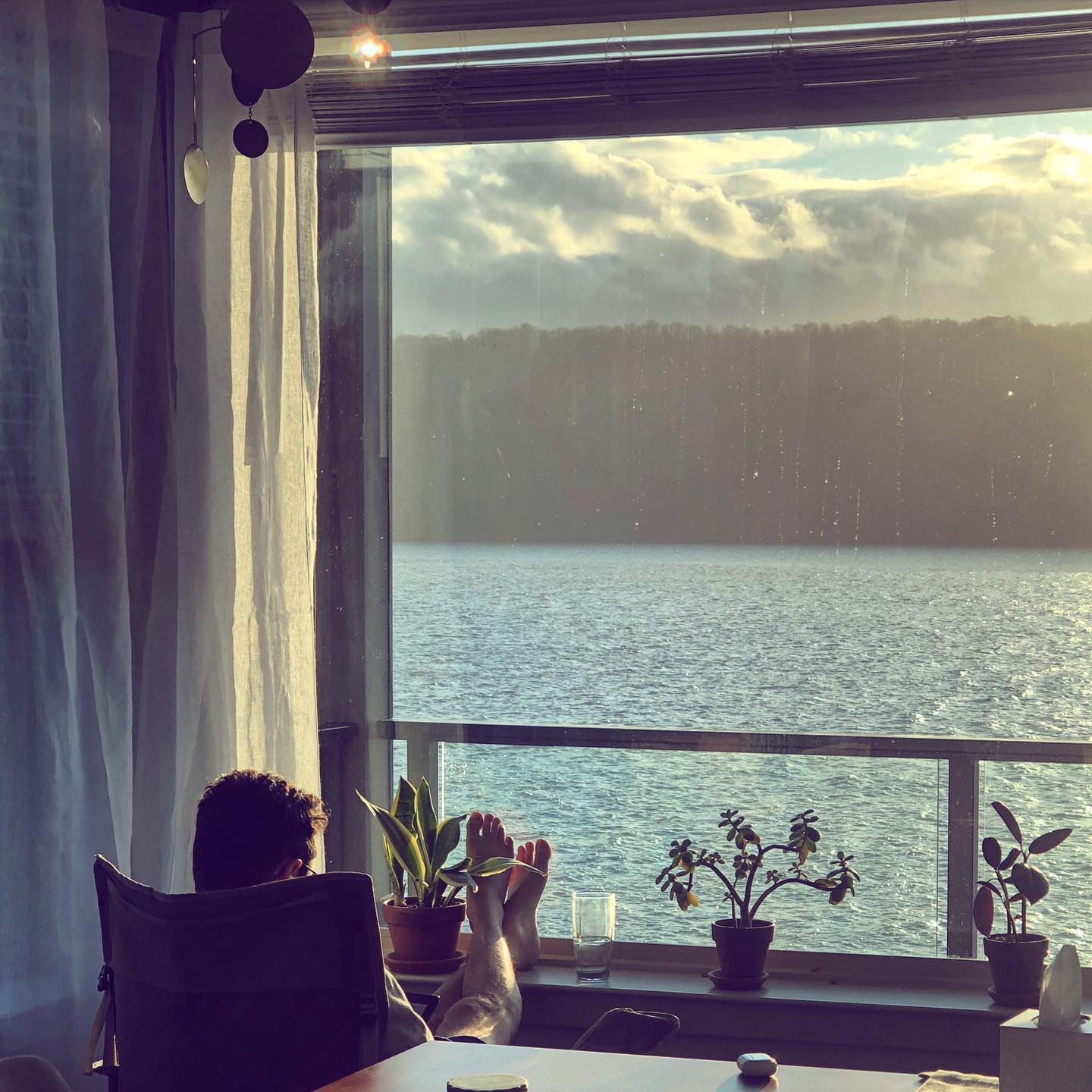
From inside, the world feels framed: curtains at the edge of the glass, a few houseplants keeping watch on the sill, and beyond them a wide stretch of water under a sky still carrying the storm’s leftover breath. The clouds look heavy but softened, like they’ve been wrung out.

A chair faces the window. Feet are up, relaxed, and unhurried, the kind of posture you fall into when there’s nowhere else you need to be. There’s a small glass waiting on the ledge, ordinary and clear, and in that simplicity is the whole point. After weather moves through, it leaves behind a strange calm—an openness that makes you listen for the house to speak: a faint creak, a shift of air, the hush of water in the distance.

Staying in doesn’t always feel like missing out. Sometimes it’s a return. The storm passes, and what’s left is a gentler world, bright around the edges, asking for nothing more than to be noticed.

Happy Bunny Day

There’s something quietly comforting about Bunny Day on the island—like a small, bright world that doesn’t ask anything of you except to look.

In today’s scene, the grass is a clean spring green and the sky is an easy blue, the kind that makes everything feel lighter than it was a minute ago. Balloons drift above the trees, and patterned eggs sit in clusters like little, painted secrets left out in the open. In the middle of it all, my character stands dressed for the occasion, and Zipper watches on with that familiar, strange cheer.

Animal Crossing has a way of turning a holiday into a place. Not a big event, not a loud celebration—just a pocket of color and repetition: gather, craft, wander, pause. It’s playful on the surface, but it also feels like a reminder that small traditions matter, even the silly ones. Especially the silly ones.

Happy Bunny Day. If you want to see the original post and read the comments, you can find it here: https://instagr.am/p/B-4aKW2F_uk/

Good Morning Thursday

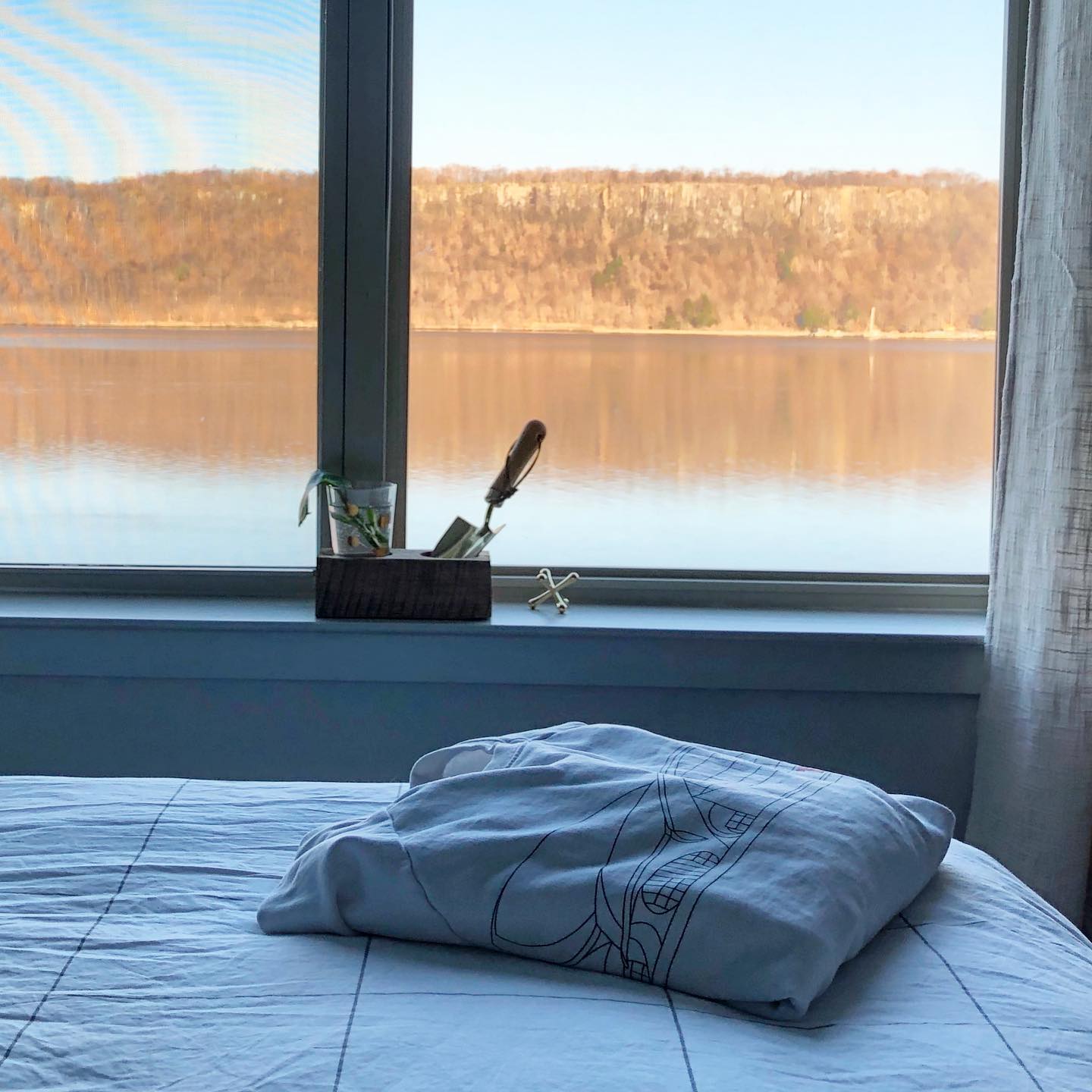
Thursday morning arrives quietly, as if it doesn’t want to disturb anything still soft in the room. The bed is unmade in that honest way—creases holding the shape of sleep—while the window does the work of waking the day.

Outside, the river sits calm and reflective, taking in the pale sky and the far line of trees that look paused between seasons. There’s a steadiness to it, the kind that makes you breathe slower without thinking. Nothing dramatic happens. The light simply spreads.

On the sill, a few small things wait where you left them, ordinary and useful, like proof that life continues in small routines. In moments like this, the world feels both closer and farther away: close enough to touch through glass, far enough to let your thoughts wander without interruption.

Good Morning Thursday. Not as a loud announcement, but as a simple noticing. A reminder that some mornings don’t ask for much—just a bed you can return to, a view that holds still, and a little time to let the day become itself.

If you’re staying in, let the quiet be part of the plan. If you’re heading out, take this calm with you like a pocket of warm air.

Goodnight Tuesday

Goodnight Tuesday.

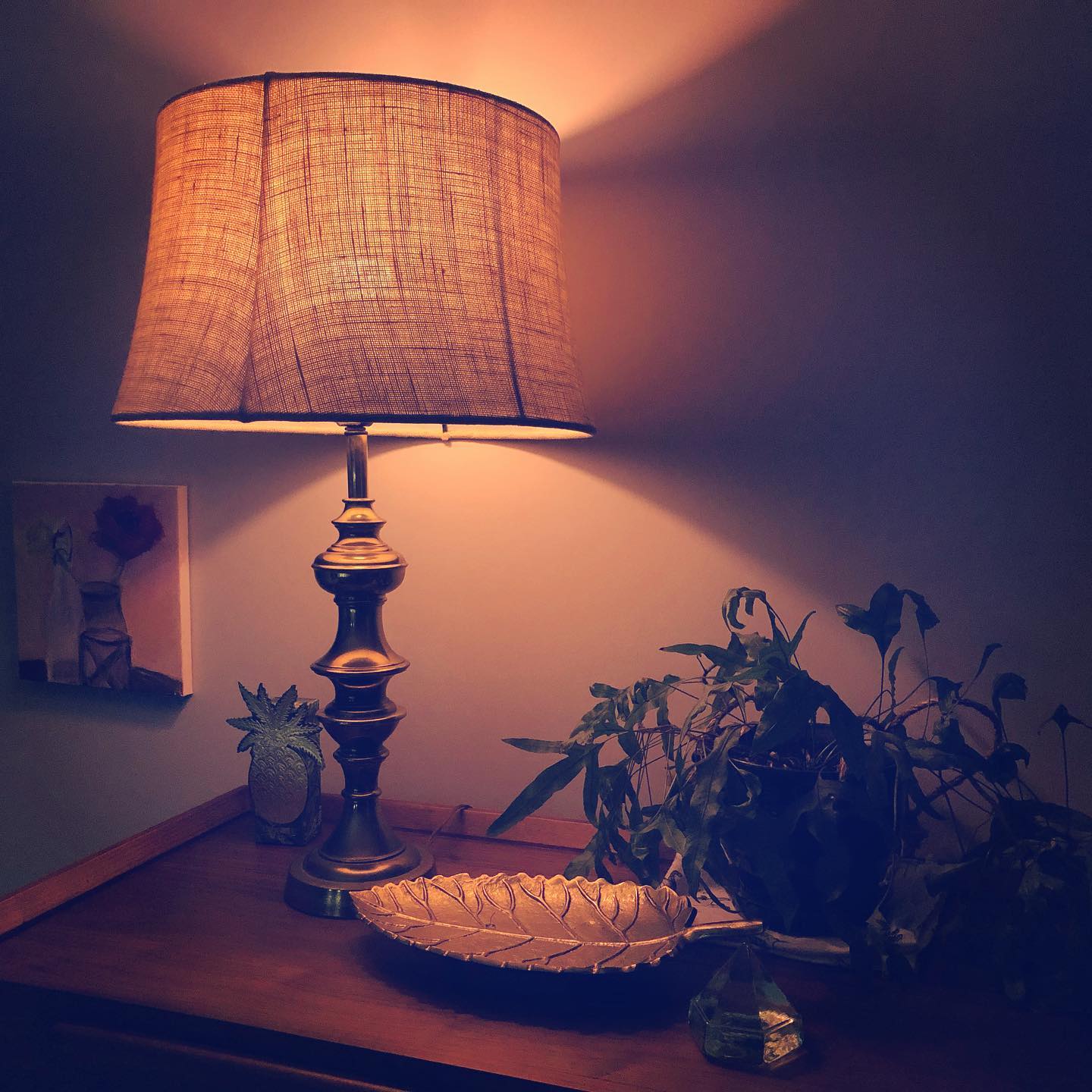
The apartment gets quiet in a particular way at the end of the day, as if the rooms are finally done pretending to be busy. A single lamp holds its place on the side table, throwing a soft amber cone across the wall and the corners we usually ignore. The shade glows like fabric warmed from the inside, and for a moment the light feels less like illumination and more like company.

On the table, small objects settle into their roles: a dish, a framed photo, a plant leaning toward the heat. Nothing dramatic happens, but the ordinary starts to feel layered. You can almost hear the home living—small shifts, a hush in the air, the day closing its door without a sound.

Staying in makes you notice how a space remembers you. The lamp becomes a marker for time, a gentle cue that it’s okay to stop scrolling, stop planning, stop trying to outrun tomorrow. There’s comfort in that warm pool of light, in the way it softens the edges of everything it touches.

Tonight the world can wait outside the walls. Here, it’s just a calm corner of an apartment and the simple ritual of turning down the day.

Goodnight.

Good Morning Wednesday

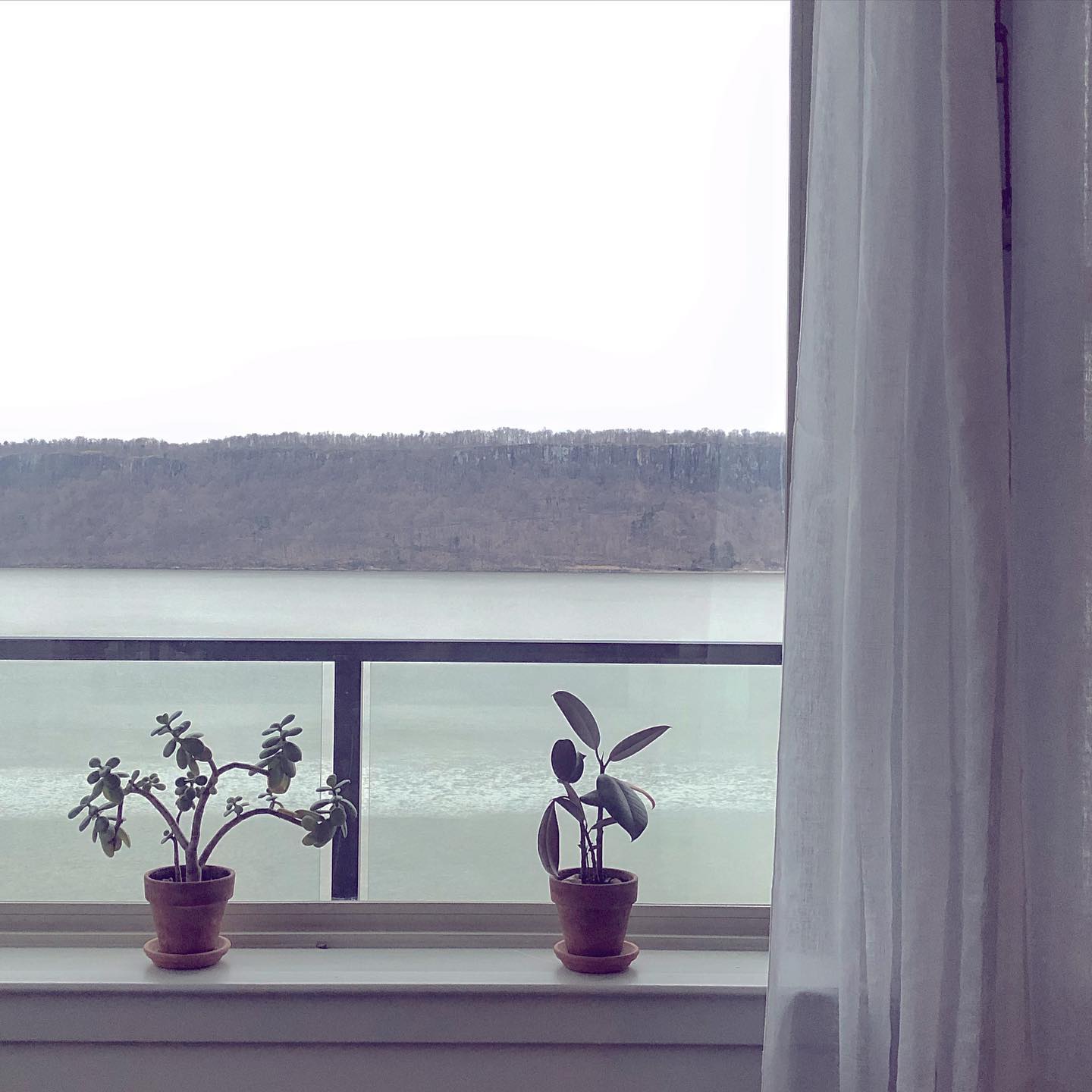
Morning arrives quietly, the way it does when you’ve stayed in long enough to notice the small shifts. The light is pale and steady, pressed up against the glass. Beyond it, the Hudson lies flat and muted, and the Palisades hold their dark line across the water—solid, familiar, trusted even when half-seen.

On the sill, two potted plants lean toward the day. They don’t hurry. They simply keep reaching, as if that’s the whole practice: living alongside slow weather, a long view, the ordinary hours.

Good morning, Wednesday. It’s a simple phrase, but it has room inside it. Room for routines that have softened. Room for the quiet work of keeping a home settled—coffee cooling, curtains half drawn, the outside world held at a distance a little longer.

There’s comfort in these midweek mornings, when nothing is finished and nothing has to be. Just a window, a ledge, a few living things turning toward whatever light is available. Some days, that’s enough.

Day 1 living on Dysontopia Island

Day 1 living on Dysontopia Island, and everything feels both tiny and endless at the same time.

Inside the tent, the night glows warm and soft—like a little pocket of safety stitched into a dark sky. A lantern sits steady beside a few simple things: a radio waiting to speak up, a small box of supplies, the kind of items you wouldn’t call “home” yet, but you already start treating them like they are. Even the air feels different when you’re starting from nothing. It’s quiet, but it isn’t empty.

I keep thinking about how first nights always have this strange honesty to them. No routines. No shortcuts. Just the basics: light, a place to rest, and the idea that tomorrow will ask you to build something with your hands.

Outside, the island is still mostly a mystery—shapes you can’t quite name until morning. But that’s part of it: you can sense the space around you, the way one world pushes up against another. Familiar game sounds drift through the tent, and for a moment it feels like listening to a faraway place that’s trying to become real.

Day 1 doesn’t need much. Just a tent, a lamp, and the quiet promise that if you stay long enough, the island will start remembering you.

Love in any weather on Dysontopia

Rain doesn’t ask permission; it just arrives, soft and steady, turning everything a little quieter. On Dysontopia, two Animal Crossing neighbors sit back-to-back on a green bench, letting the weather do what it does—streaking the air, blurring the distance, making the moment feel briefly suspended.

There’s something honest about a scene like this. No grand gesture, no posed perfection—just companionship that holds its shape even when the sky changes its mind. The rain draws a thin veil between them and the world behind: a bulletin board, softened trees, the gentle rhythm of island life continuing as if it has all the time in the world.

Love in any weather on Dysontopia feels like that kind of steadiness. The kind you notice in small details: a shared pause, a patient closeness, the way two people can face different directions and still be together. It’s a quiet reminder that warmth isn’t always about sunshine. Sometimes it’s simply having someone near while the day turns gray, and choosing to stay put until it passes.

Sweet potato chips with Cornwall salt

Sweet potato chips with Cornwall salt

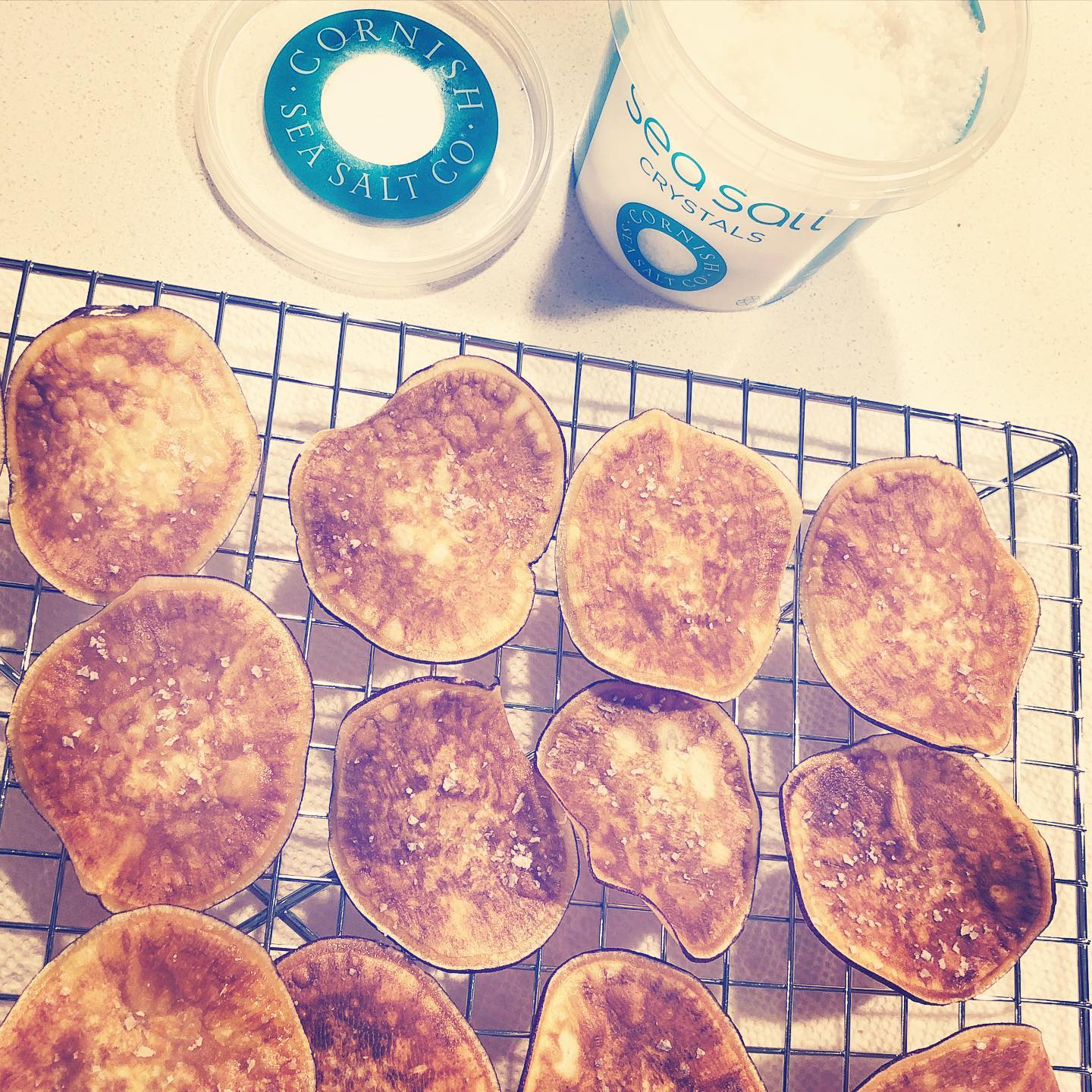
There’s something quietly satisfying about seeing them laid out on a cooling rack—thin, bronzed slices, edges curled just a little, the kind of simple food that feels like a small, steady craft.

Sweet potatoes have that gentle sweetness that doesn’t need much help. But a pinch of Cornwall sea salt changes the whole thing. The crystals catch the light and settle into the warm surface, making each chip taste sharper, cleaner—sweet and mineral at once.

I like the moment right after they come out, when the kitchen still holds the heat and the air smells faintly caramelized. The chips look almost translucent in places, mottled and toasted, like they’ve taken on the story of the oven. It’s the kind of snack that doesn’t shout. It just sits there, inviting you back for one more.

If you’re making your own, slice them as evenly as you can and give them room to breathe. Crowding turns crisp into soft. And salt them while they’re hot—so the crystals stick, and so the first bite lands exactly where it should.

Sweet potato chips on rack feels like the honest version of a treat: a little time, a little heat, and something good finished with salt.

Cooking class Hartz Style

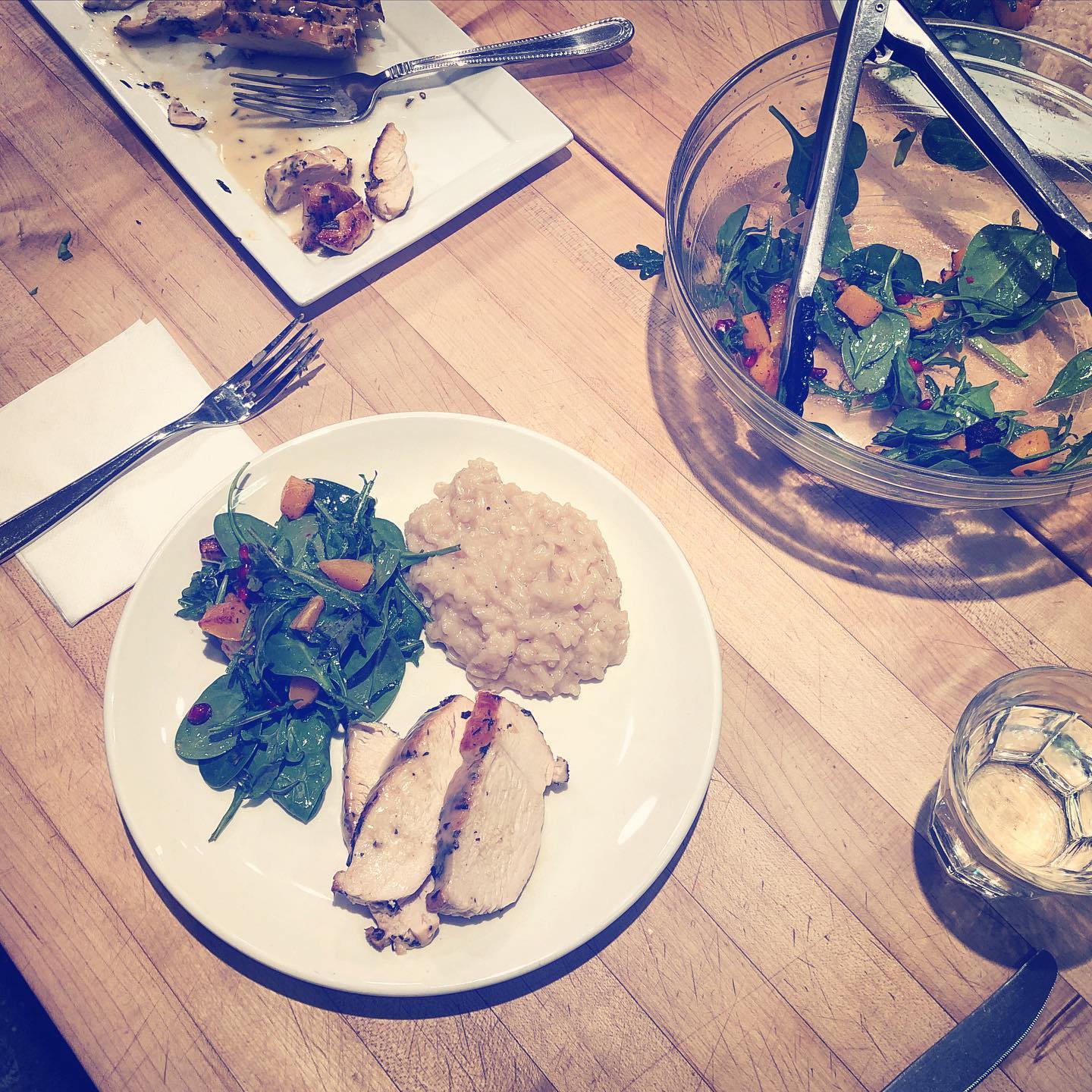
The table tells the story first.

A wooden surface warmed by use, a bowl that’s been dipped into more than once, and a plate set down without ceremony: sliced chicken, a spoonful of something creamy and patient, and a scatter of greens with bright bites mixed in. It’s the kind of meal that doesn’t try to impress, but still feels carefully made—quietly balanced, familiar, and real.

Cooking class Hartz Style felt like that. Less about perfection, more about paying attention. The small motions matter: how you cut, how you taste, how you wait. You learn the way flavors settle into each other, how a simple salad becomes better when it’s handled gently, and how the main dish doesn’t need much when it’s cooked well.

What I loved most was the ease of it all. People reaching for forks, sharing space, taking seconds from the bowl, leaving a few crumbs behind. A class, yes—but also a pause in the day where food becomes a kind of ordinary comfort.

If you’re curious about how everyone experienced it, the Instagram comments are worth a read. Sometimes the best review is just someone saying they went home thinking differently about dinner.

My new snazzy sweater

There’s something quietly thrilling about a new sweater—like stepping into a slightly different version of yourself.

This one is snazzy in the way good winter things are: soft, sturdy, and a little unexpected. The knit is thick and pale, scattered with blue like weather moving in over an empty field. It doesn’t try too hard, which is exactly why it works. The kind of piece you throw on without thinking, and then later realize you’ve been wearing all day because it feels like a small shelter.

I caught myself looking down at it and smiling. Not because it’s “new clothes” new, but because it carries that calm, settled feeling—like something that can live alongside you. Like the familiar creak of boards in an old house, or the way winter air changes everything into a softer version of itself.

There’s no big story here, just a simple upgrade to the everyday: cuffs rolled, collar peeking out, the world a little brighter and bigger for an afternoon. Sometimes that’s enough.

If you’ve ever had a piece of clothing turn into a season—something you reach for when the light gets thin—then you know exactly what I mean.

Paint colors for new apartment accent walls

There’s a quiet confidence in choosing paint before you’ve fully settled in. A new apartment still echoes a little—bare walls, sharp corners, that in-between feeling where nothing has a history yet. But color has a way of moving in fast, softening the space and making it feel lived alongside you.

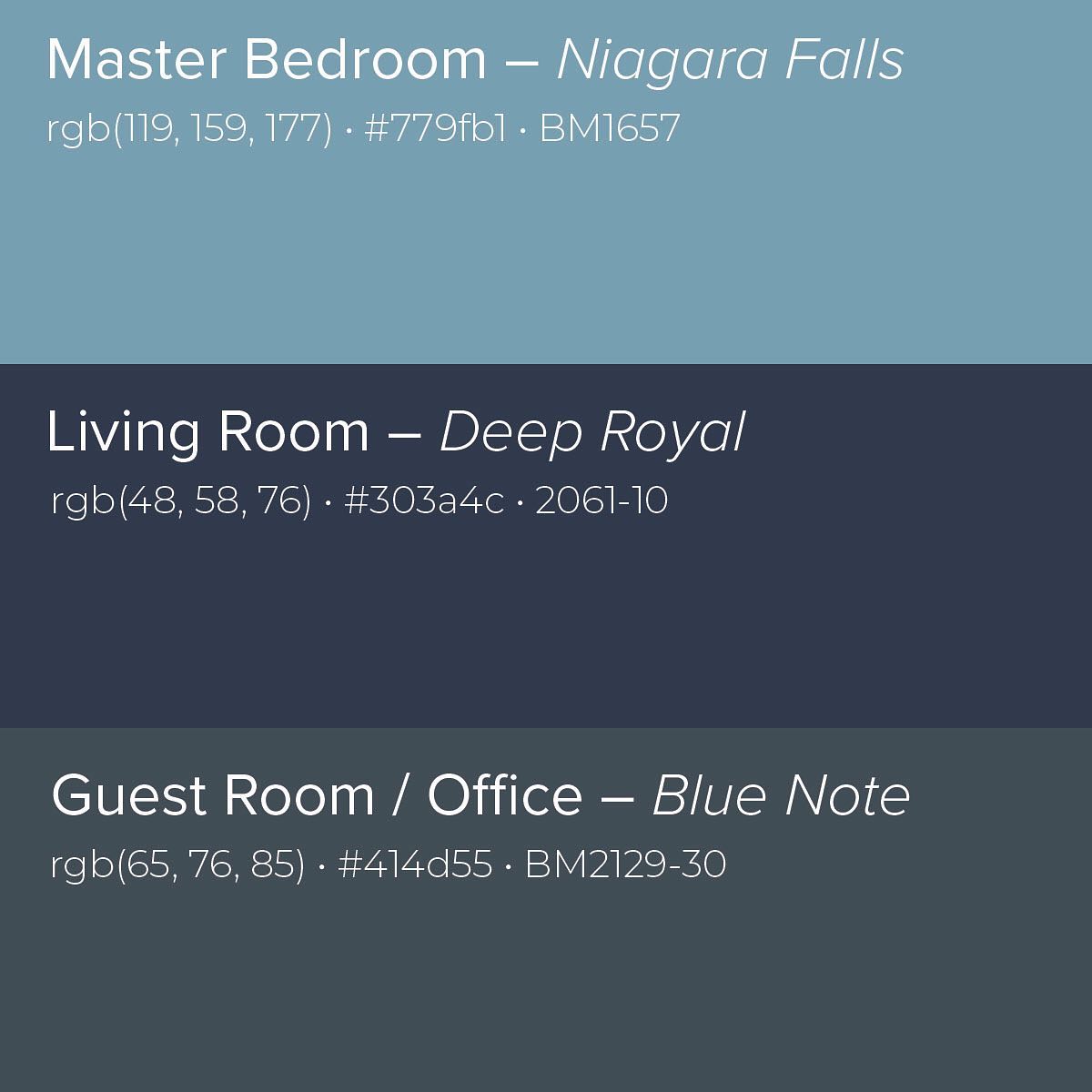
For accent walls, I keep coming back to blues that feel steady rather than loud. The palette here leans cool and grounded: Niagara Falls for a master bedroom, Deep Royal for a living room, and Blue Note for a guest room or office. Even the names read like places you could go when you need a little air.

Niagara Falls is the kind of blue-green that lifts a room without turning it into a statement you have to defend. It works well where you want rest—behind the bed, paired with warm whites and natural wood.

Deep Royal is heavier, calmer, and a bit more formal. It’s ideal for a living room accent wall where you want the space to feel anchored, especially in the evenings when the light drops and everything gets quieter.

Blue Note sits between the two: practical, muted, thoughtful. In an office or guest room it adds depth without stealing focus, like a low hum in the background.

Paint is a small decision that changes the way you walk through your day. And sometimes that’s all a new place needs to start feeling like yours.

Exit mobile version