Frozen Watermelon Margarita Friday

Some Fridays ask for a little ceremony—something cold, bright, and simple enough to let the week finally loosen its grip.

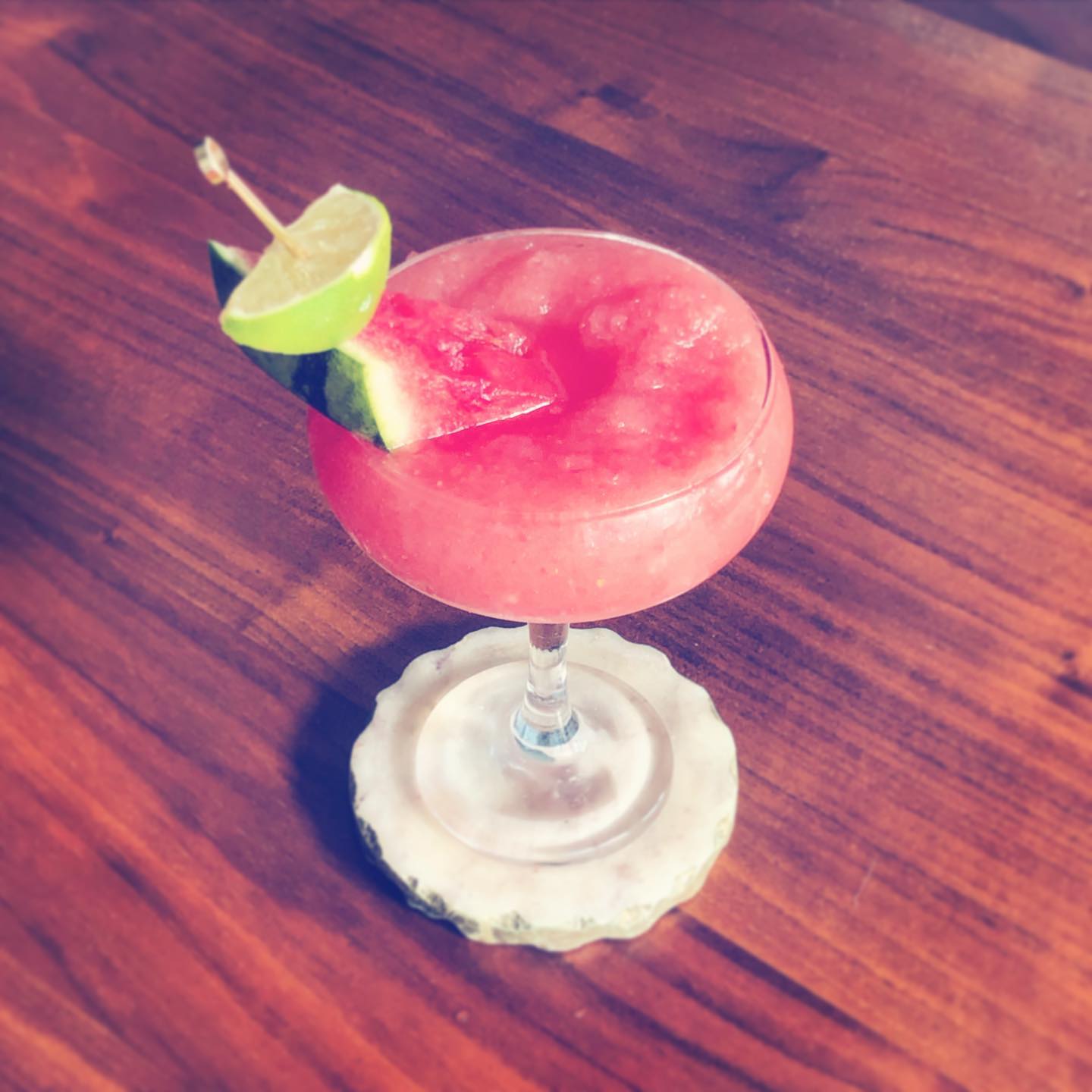
Frozen Watermelon Margarita Friday is exactly that: a glass of pink ice, the kind that looks like late afternoon light, with a wedge of watermelon and a lime perched on the rim like small reminders that summer is still here. It’s sweet without being heavy, tart in the way that wakes you up, and frosty enough to slow you down.

I like drinks like this because they feel ordinary in the best way. No fuss, no performance—just the familiar clink of ice, the first sharp sip, and the quiet pause that follows when you realize you’ve been holding your breath all week.

If you’re making one at home, think in easy ratios: watermelon for softness, lime for brightness, tequila for warmth, a little triple sec if you want it rounded, and a handful of ice to turn it all into a slush. Salt the rim if you’re in the mood for that small, perfect contrast.

Pour it, take it outside if you can, and let the evening arrive at its own pace.

Sunsets on Sheets

The title says Sunsets on Sheets, but the light in this room feels like it’s doing what it always does when we slow down enough to notice: it turns the ordinary into a small landscape.

A bed isn’t just a bed when the day is ending. It’s a place where time gathers—creases and folds like quiet hills, the grid of the fabric becoming streets you could imagine walking. The window light lays across it in long bands, warm and pale, as if the sun is trying to touch everything it can before it slips away.

Staying home can make the world feel smaller, but it also makes details louder. The soft drag of cloth. The way shadows sharpen and then soften. The simple comfort of familiar patterns, repeated until they start to feel like a kind of order.

I like the idea that a sunset doesn’t need a horizon. Sometimes it lands right where you are—on rumpled sheets, on a room you’ve seen a thousand times, on the quiet proof that you made it to the end of another day.

Maybe that’s what this image holds: not a grand view, just a gentle one. A reminder that the day can close softly, and that a little light, even indoors, can feel like a blessing.

Learning to Draw on iPad

Learning to draw on iPad feels like borrowing a little quiet from the day. The tools are digital, but the habit is old: sit down, look closely, try a line, try again.

The image shows a person curled into a couch with an iPad, focused on an open canvas—small, intent, private. It has that soft, end-of-afternoon mood where nothing needs to happen except the next stroke. You can almost hear the room settling.

With the iPad, practice becomes gentler. Mistakes don’t leave a smudge on the page; they disappear with a tap. That can make you brave. You test shapes, adjust the brush, nudge the line until it begins to match what you meant. And slowly, the screen stops feeling like a device and starts feeling like a sketchbook you can carry anywhere.

If you’re learning, keep the sessions short and honest. Draw what’s near you. Repeat the same subject on different days. Notice how your hand changes when you’re tired, or when you’re calm. The point isn’t to make a perfect drawing—it’s to return, and let your eyes get better at seeing.

Over time, the iPad doesn’t replace the feeling of drawing. It simply gives you another doorway into it.

Spring Night Sunset

The river was quiet tonight, the kind of quiet that isn’t empty but full—full of distance, full of the day finally letting go.

Spring Night Sunset is a simple title, but the sky didn’t feel simple. It spread out in soft smoke and lavender, then leaned into pink and orange as if it were remembering something. The far ridge sat black and steady, a single shape holding the whole scene in place. Out on the Hudson River, the water took on the color of whatever the sky offered—muted at first, then slowly brighter, then calm again.

There’s a certain patience in these evenings. The world doesn’t announce the change from day to night; it just slides into it. You watch for a while and realize you’ve stopped thinking about anything else. The surface of the water goes on moving, but it feels like it’s moving less for you than for itself.

What I like most about a spring sunset is how it makes familiar places feel newly made. The shoreline, the distant lights, the last bit of warmth in the air—everything looks the same and still feels different. For a few minutes, it’s enough to stand still and let the color pass through.

Hudson River Spring Sunset, and then darkness. Not sudden, not dramatic. Just the day folding up and putting itself away.

Boba tea break

Boba tea break.

It’s a small pause in the middle of the day, the kind that doesn’t ask for much—just a little light through the window and a quiet table to set things down on. The pitcher is still fogged from warmth, the milk tea the color of soft tan walls, and the tapioca pearls waiting like small stones at the bottom of the glass.

I like how the ordinary parts of a day can feel almost ceremonial when you slow them down. A straw standing straight, condensation collecting in patient beads, a patterned cloth underneath everything like a calm night sky. It’s not a grand moment, but it’s steady. The kind of steadiness you can taste.

There’s something comforting about making it yourself: measuring, pouring, watching the tea turn creamy, hearing the quiet clink of glass. Outside, the world keeps moving—cars passing, distant noise, the soft insistence of time—but for a few minutes it all sits at the edge of the room.

If you need a breath between tasks, this is a good one to take. A boba tea break doesn’t fix anything. It just gives the day a small, sweet seam to hold onto.

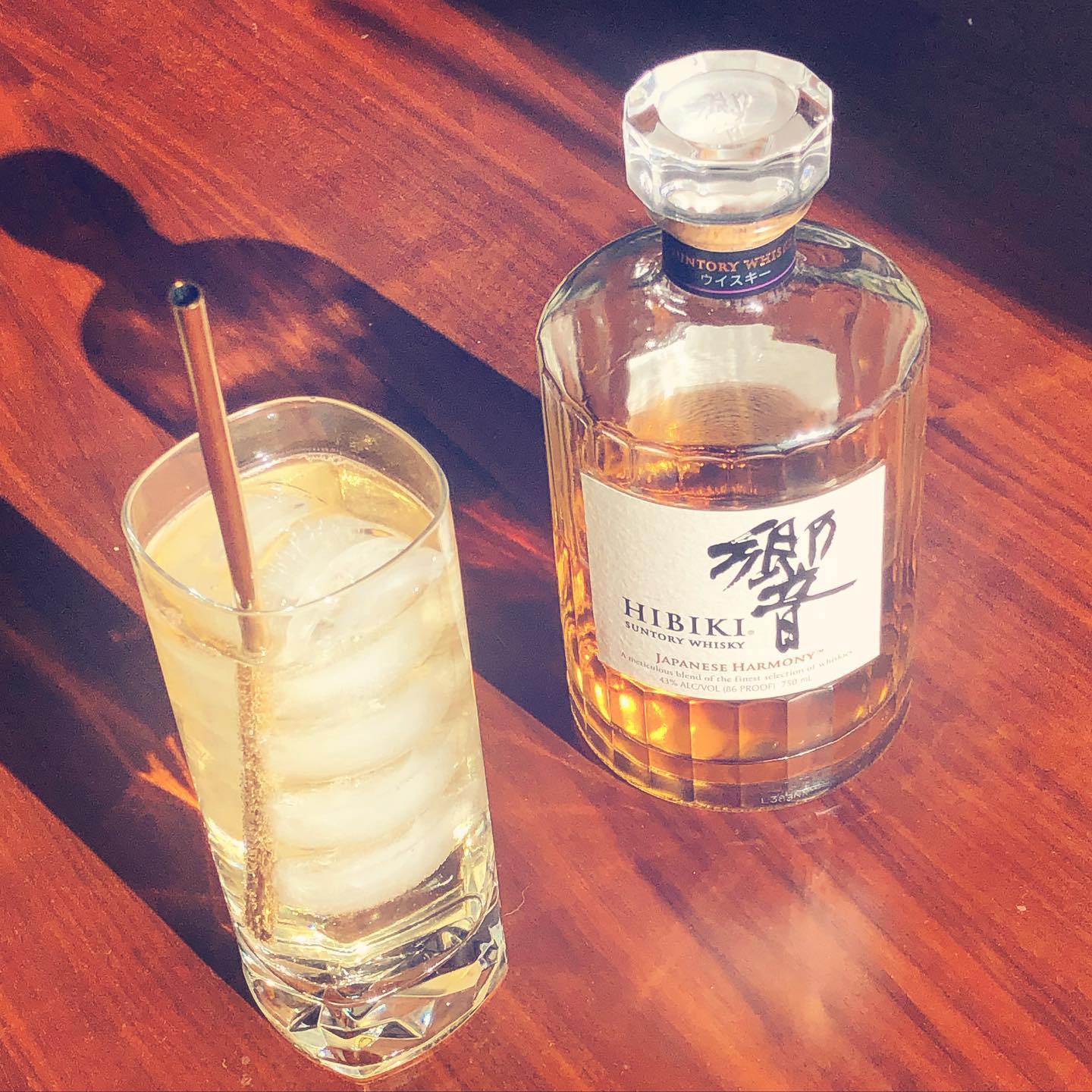
Japanese Whiskey Soda – take me back

There are certain drinks that don’t just taste like something—they sound like something. Ice settling. Glass sweating. A thin clink as you stir and everything goes briefly quiet.

A Japanese whiskey soda does that to me. It’s simple in the way good things are simple: whiskey, a tall glass, clean ice, and soda that lifts everything up instead of burying it. In the photo, the Hibiki bottle sits close by, amber and steady, like it’s keeping watch over the moment.

“Japanese Whiskey Soda – take me back” is exactly right. It takes me back to evenings that felt unhurried, when the world was smaller and the night had room in it. The kind of memory where the details matter—the cold glass in your hand, the wooden table warming under low light, the quiet confidence of a drink that doesn’t need to prove anything.

If you want to make one at home, keep it gentle. Use plenty of ice. Stir the whiskey cold first, then add soda slowly so the bubbles stay alive. It’s not a cocktail that asks for attention; it’s one that rewards it.

Some tastes are a shortcut to a place you miss. This one is crisp, bright, and familiar—like a door you didn’t realize was still unlocked.

He looks out on the morning mist

He looks out on the morning mist.

From the balcony, the river is a sheet of quiet glass, holding the pale sky the way a house holds a familiar smell—something you don’t notice until it’s gone. Across the water, the hills sit in a single long exhale, their edges softened by fog that refuses to hurry.

He stands at the railing and watches as if the view is speaking in a language older than commands. No barking, no spinning in place. Just that forward-tilted attention, the kind that makes the rest of the morning feel like it should lower its voice.

Down below: a curve of path, a bench waiting out the season, stones stacked along the shore like punctuation. Out there: the Hudson, slow and wide, carrying the day in without ceremony. Even the distant boat looks like a thought you almost remember.

The mist makes everything honest by making it unsure. It blurs the line between what’s happening and what you’re imagining, and somehow that’s comforting. You don’t have to name the feeling. You just have to stand near it.

Dog Overlooking Misty River: a small moment, held still long enough to feel like a place you can return to.

Throwback to outside life

There’s a kind of photo that doesn’t just show you a day—it returns you to it.

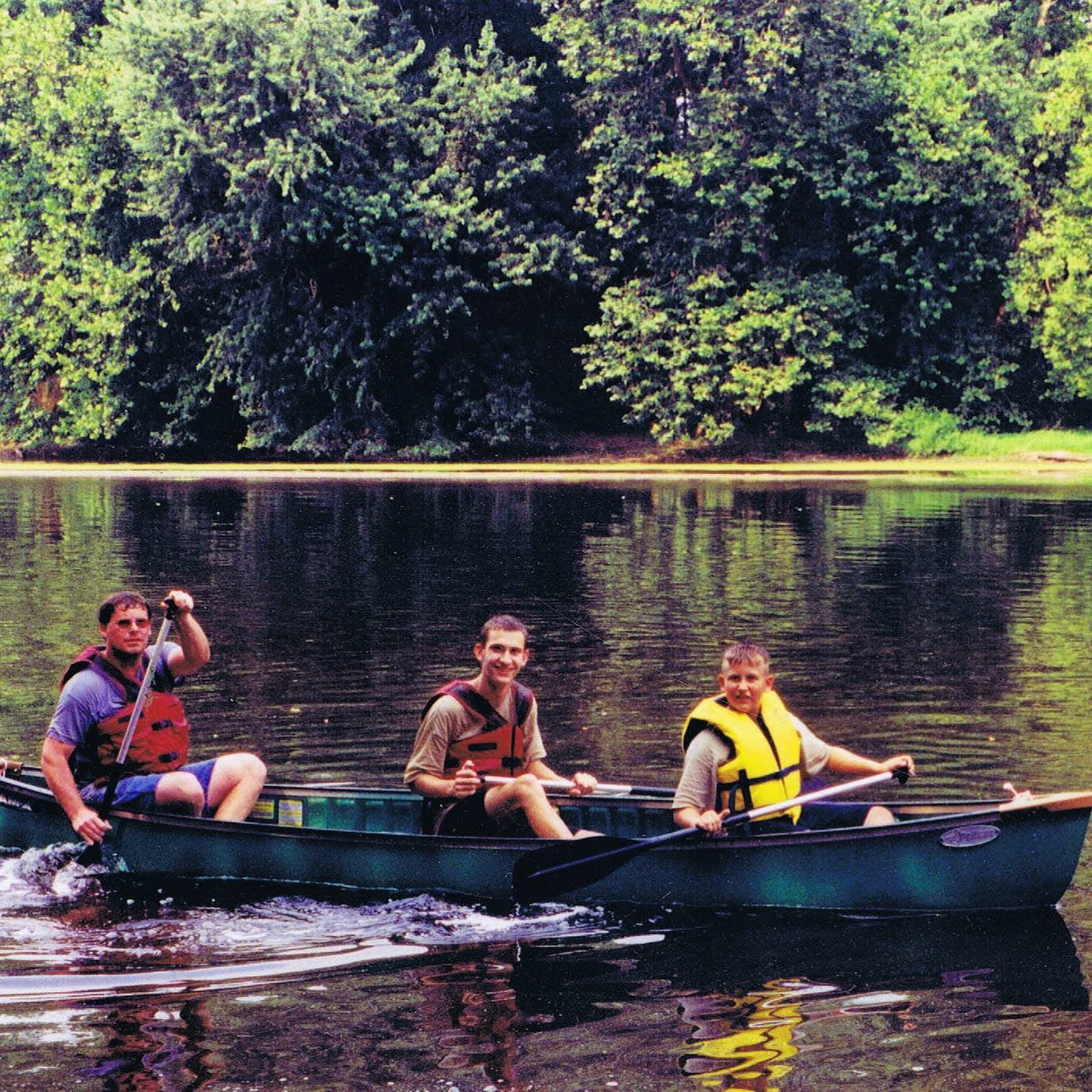
Throwback to outside life feels like that. Three of us in a canoe, spaced out along the same narrow hull, drifting across dark water that mirrors the tree line. The river looks quiet enough to hear your own thoughts, but busy with small movements: a paddle lifting, a ripple widening, the slow, steady pull forward.

I miss how simple “outside” used to be. Not a plan or a productivity goal, just a default setting. You put on a life jacket, push off from the bank, and let the current and the conversation do the work. The trees keep their distance but still feel close, like a familiar backdrop that never needed explaining.

Looking back, it’s the ordinary details that feel most alive—the uneven rhythm of paddling, the water tapping the metal sides, the way everyone’s attention is on the same direction even if we’re each doing our own part.

Maybe that’s why this picture sticks. It’s proof that the world can be wide without being complicated. A canoe, a stretch of river, and the quiet assurance that you belong to the day you’re living.

Everything the light touches…

The caption says, “Everything the light touches…,” and it’s hard not to believe it when the morning hits the floor in clean, angled stripes.

By the window, the room feels quiet in that settled way—like it has already decided what kind of day it will be. A small dog lies stretched on a dark, plush bed, paws folded around a worn toy, ears lifted as if listening to the house breathe. The sunlight doesn’t just brighten the space; it softens it, turning ordinary corners into something almost familiar, almost remembered.

There’s a table nearby with a patterned runner and a book left open, as if someone paused mid-thought and stepped away. The rug holds the light in pale patches, and the rest of the room stays gentle and still.

I like moments like this because they don’t ask for much. They’re not grand. They’re just proof that warmth can land wherever it wants—on a rug, on a tabletop, on a dog who has claimed a bed as if it’s always been theirs.

Everything the light touches becomes its own small world for a while, and if you stand there long enough, you can feel the day widen.

Bubbles from the Mountains

Two coupe glasses catch the light on the countertop, pale gold and busy with a quiet rush of bubbles. Beside them, a bottle stands half-turned, label clean and spare, as if it doesn’t want to interrupt the moment. Even the cap set off to the side feels deliberate, a small punctuation mark.

Bubbles from the Mountains is the kind of phrase that makes you pause. It suggests elevation and cold air, the long patience of hills, and the way a place can shape what ends up in your glass. The Catskills have that steady presence—familiar but never fully known—where ordinary evenings can feel a little more spacious.

I like sparkling wine for how it changes the room. Not louder, not busier—just brighter. It turns a kitchen counter into a table worth lingering at. It makes you notice the shape of the glass, the faint swirl of foam at the edges, the tiny constellations rising up and vanishing.

There’s something comforting in that: a simple ritual that doesn’t ask for a special occasion. Just pour, listen, and let the day settle. Outside, the mountains keep their own time. Inside, the bubbles do the same—brief, shimmering, and perfectly enough.

Pineapple Daiquiri

There are drinks that announce themselves, all bright and loud. And then there are drinks that arrive quietly, the way a good weekend does—soft edges, sunlight on wood, a little hush in the room.

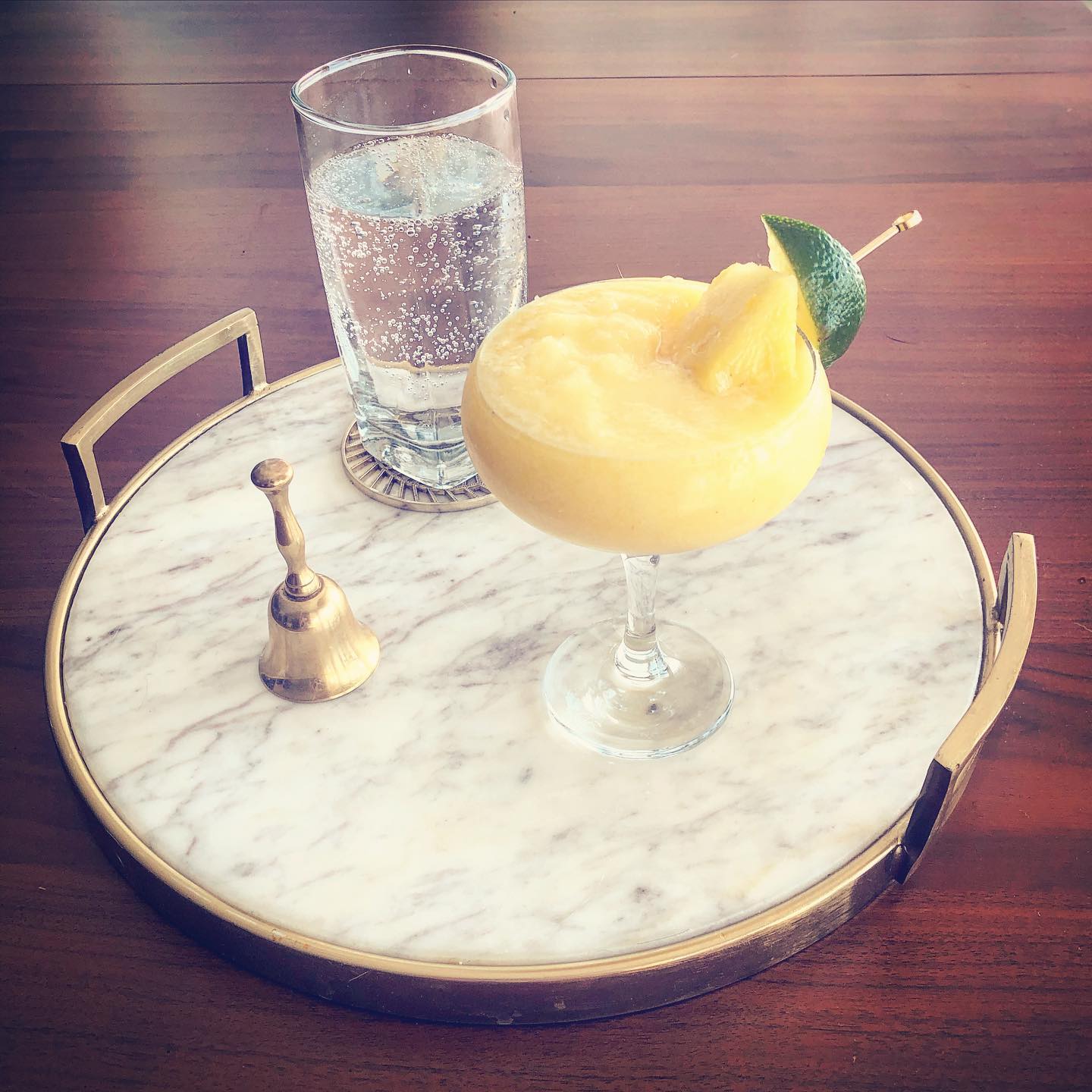
This Pineapple Daiquiri feels like that. A pale, frozen yellow in a stemmed glass, set on a cool marble tray. A wedge of lime and a small spear of pineapple sit on the rim like a simple reminder: this is fruit, this is summer, this is meant to be taken slowly. Behind it, a tall glass of sparkling water catches the light, full of tiny rising bubbles—steady, ordinary, comforting.

I like the contrast. Something blended and sweet beside something clear and crisp. It’s the kind of pairing that makes the moment feel more complete, like opening a window for fresh air even when you’re staying in.

If you’re making one at home, keep it unfussy: ripe pineapple flavor, a clean tartness, plenty of ice. Let it be cold enough that the first sip feels like stepping into shade.

Some weekends don’t need plans. They just need a small ritual—one glass, one garnish, a quiet place to set it down—so the hours can slow back into themselves.

Sunset Lighting

There’s a certain honesty to the way sunset moves through a room. It doesn’t brighten everything evenly; it chooses. It lays long, patient bands of gold across the wall, catches the edge of a curtain, and turns ordinary furniture into something quieter and more deliberate.

Today the light found the bookshelf first. Spines and stacked pages warmed up as if they had their own small pulse, and the wood looked older in a good way—lived-in, not worn out. The shadows stretched and sharpened, turning the room into a set of simple lines: shelf, wall, window, time.

Staying home has made me notice these little shifts more. The house isn’t just a backdrop; it’s a thing that lives alongside you. It creaks, it holds heat, it collects objects you forget you love. And then, for a few minutes, the sun comes through at the right angle and reminds you that even stillness has movement.

I don’t always have the words for what I’m feeling, but the light does. It says: slow down, look longer, let the day end gently. And for a moment, the room feels settled—bright, calm, and wide enough to breathe.

Exit mobile version