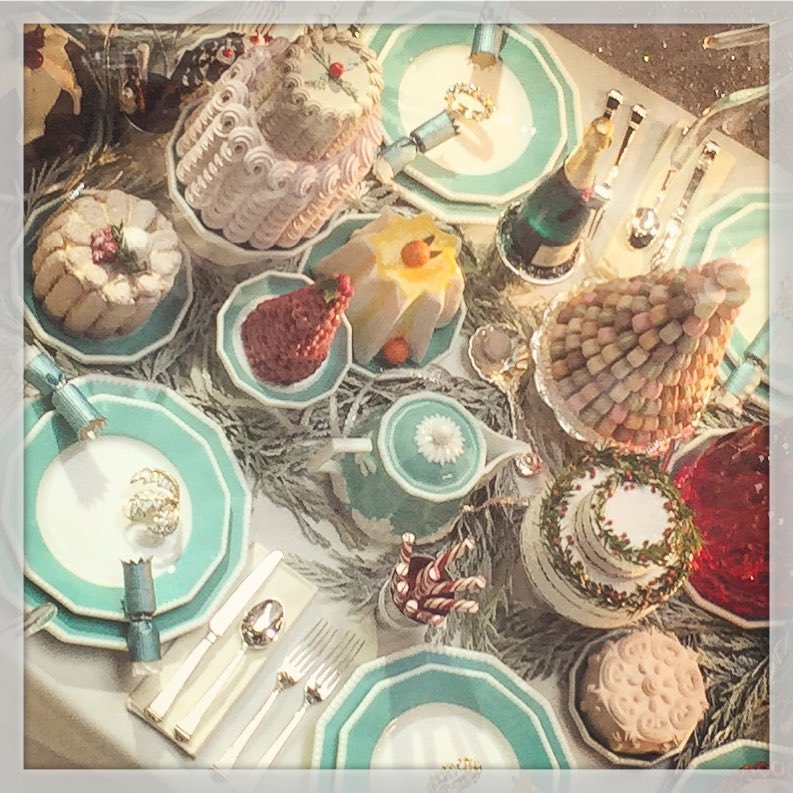
Holiday Window Tradition Continues

There’s something comforting about coming back to the holiday windows each year—the same tradition, but never quite the same scene.

This one feels like a small winter table set for a quiet celebration: turquoise-rimmed plates, neatly placed silverware, and a soft scatter of evergreen. The glass catches the light the way snow does under streetlamps—bright, a little hazy, and somehow gentle. In the center, the desserts look almost too perfect to be real: iced cakes, tiny pastries, sugar-dusted details, and candy-striped pieces arranged like ornaments.

Holiday windows have a way of making the city slow down. You stand there a moment longer than you planned to, noticing small things—the curve of frosting, the gleam of a spoon, the way the whole display suggests warmth without ever showing a person.

Maybe that’s why the tradition lasts. It’s not just about the spectacle. It’s about being reminded, briefly, that the season can still feel orderly and bright—even if everything else outside the glass is moving too fast.

Holiday Window Tradition Continues, and I’m happy to stop and look again.

The Book Club – Holiday Windows

The Book Club – Holiday Windows feels like a small world paused behind glass, where the season turns into a story you can’t quite step into, only stand close enough to fog the pane with your breath.

In this window, the jungle shows up dressed for winter: deep greens and shaggy textures, a gorilla shape holding its ground beside a mannequin in a bold, tropical dress. The scene is crowded in the best way—leaves, shadows, and patterned fabric pressing forward as if the display is listening back to the street.

There’s something comforting about holiday windows when the days get short. They don’t ask you to buy a new life; they offer a brief kind of shelter, a place where imagination is allowed to be loud. You can see the careful work in the layers—every prop placed to feel accidental, every color meant to pull you in a little longer.

I like that this one doesn’t lean on the usual sparkle. It leans on mood. It turns the holiday ritual into a destination: not far away, not exotic, just here, framed in a storefront, reminding you that wonder can be built out of fabric, light, and patience.

If you find yourself walking past it, slow down. Let it be a page you don’t rush through.

Pokémon Sun & Moon

| #pokemon #nintendo #sunandmoon
| So excited today to go and purchase Pokemon Sun & Moon at Nintendo World NYC with my friend Andrew and my boyfriend Angel.
Continue reading Pokémon Sun & Moon

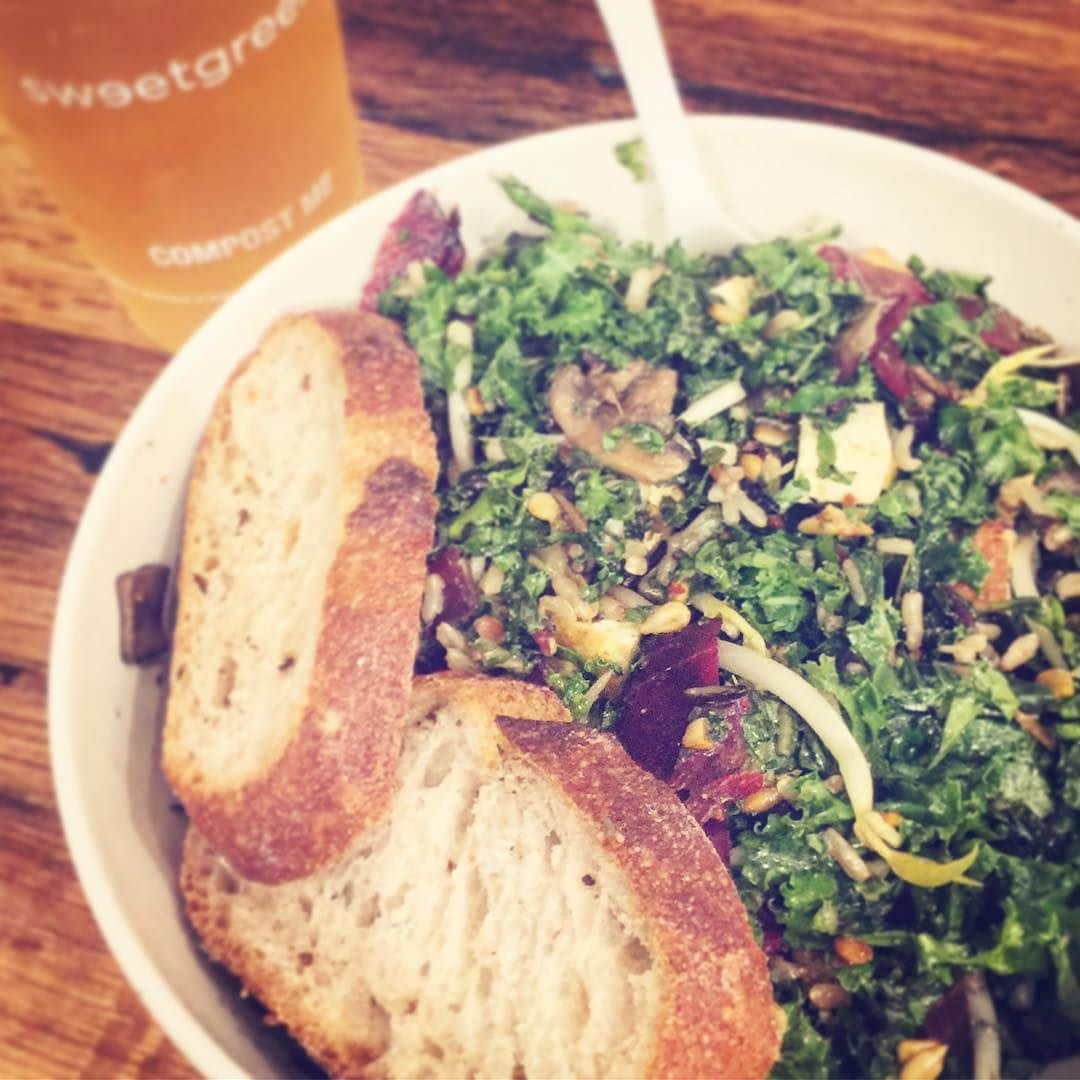
Almost Winter Healthy with Sweetgreen

@sweetgreen #salad #vegan #mushroom
| I am always able to find something I like at Sweetgreen. This night, it was a Sweetgreen date with my boyfriend Angel.
I ended up saving half the salad for the next day and using the bread for some homemade soup.
Continue reading Almost Winter Healthy with Sweetgreen

Tea. Earl Grey. Hot. Harney & Sons

|@HarneyTea @SirPatStew @StarTrek #startrek #jeanlucpicard #tea
| A great weekend with my good friend Terry could only get better with a bit of happenstance at Harney & Sons.
Terry and I are big Star Trek fans and we were happily surprised to see Jean-Luc Picard (Sir Patrick Stewart) saying one of his more famous quotes, when ordering from the replicator;
Continue reading Tea. Earl Grey. Hot. Harney & Sons

Absinth-lutely a good Sunday

Sunday has a way of arriving quietly, like the last light slipping across the kitchen floor—soft, unhurried, and asking very little of you.

Today it arrived in two glasses set down on a pale counter: one drink the color of late afternoon, the other a deeper shade, like dusk gathering itself. Behind them, the tools of the small ritual—stirrers, glassware, a bottle waiting its turn—stand like familiar furniture. Nothing dramatic, just the gentle order of things that have been used before and will be used again.

“Absinth-lutely a good Sunday” makes it sound playful, but there’s something steadier underneath. Absinthe always carries a little myth with it, even when it’s simply part of a well-made cocktail. The first sip can feel like opening a window in a room you thought you knew: herbal, sharp, then suddenly rounded by sweetness and chill.

I like moments like this because they’re ordinary in the best way. A small pause. A brief ceremony. A reminder that the week doesn’t have to start with a sprint; it can start with a slow exhale, the clink of glass, and the mild comfort of something carefully made.

If you’re taking Sunday as it comes, take it with intention—measure, stir, taste, and let the afternoon keep its shape a little longer.

Chrysanthemum : Kiku

Chrysanthemum : Kiku

A patch of kiku catches the light the way old rooms do in winter—soft at the edges, quietly bright. The blooms are round and dense, little suns held just above the dark green leaves, as if the garden decided to keep its warmth close to the ground.

I’ve always liked how chrysanthemums don’t feel fragile. They look carefully made, each petal tucked in, each sphere complete. In a botanical garden they can be easy to pass by, especially when you’re hunting for rare shapes or loud color, but these golden heads pull you back into the simple, steady kind of looking.

Standing near them, the world seems to get smaller in a good way. The grass leans in, the shadows settle, and there’s that familiar feeling of seasons turning—nothing dramatic, just the slow work of change. Kiku has a way of being both celebratory and calm, like something you’d bring home and then realize it’s been part of the house all along.

If you’ve never lingered with chrysanthemums, this is a good place to start: Golden chrysanthemum blooms, clustered together, holding their color like a memory that doesn’t fade when you touch it.

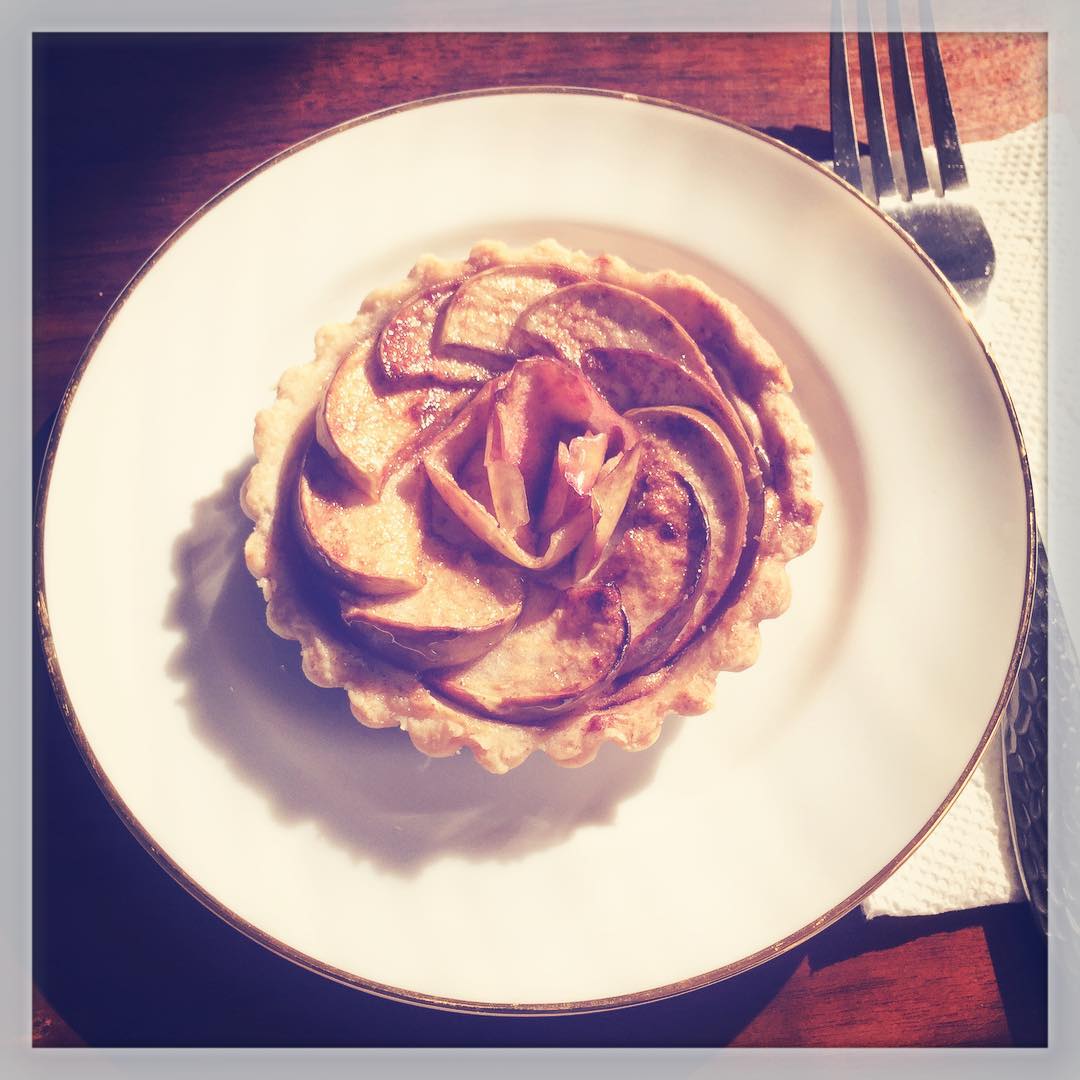
Apple Tart-Torte

There’s something quietly satisfying about a small dessert centered on a wide, empty plate. This Apple Tart-Torte looks almost like a rose caught mid-bloom—thin apple slices curled into petals, browned at the edges, tucked into a crimped crust.

I keep thinking about how baking makes a room feel lived in. Not loud, not busy—just warm, as if the air is holding onto whatever happened there a few minutes ago. Butter and fruit and heat doing their simple work.

The best part of an apple tart is the patience it asks for. You slice, you layer, you fold the fruit into a pattern that only really reveals itself when it comes out of the oven. The apples soften and darken, the crust sets, and suddenly the whole thing looks more intentional than it felt while you were making it.

Serve it the way it’s pictured here: plain, honest, no distractions. A fork on the side, a napkin underneath, and a little space around it. It’s a small thing, but it carries a kind of calm—like you can hear the day slow down for a moment.

If you make one, eat it while it’s still warm, when the apples smell like late afternoon and the kitchen feels a little brighter.

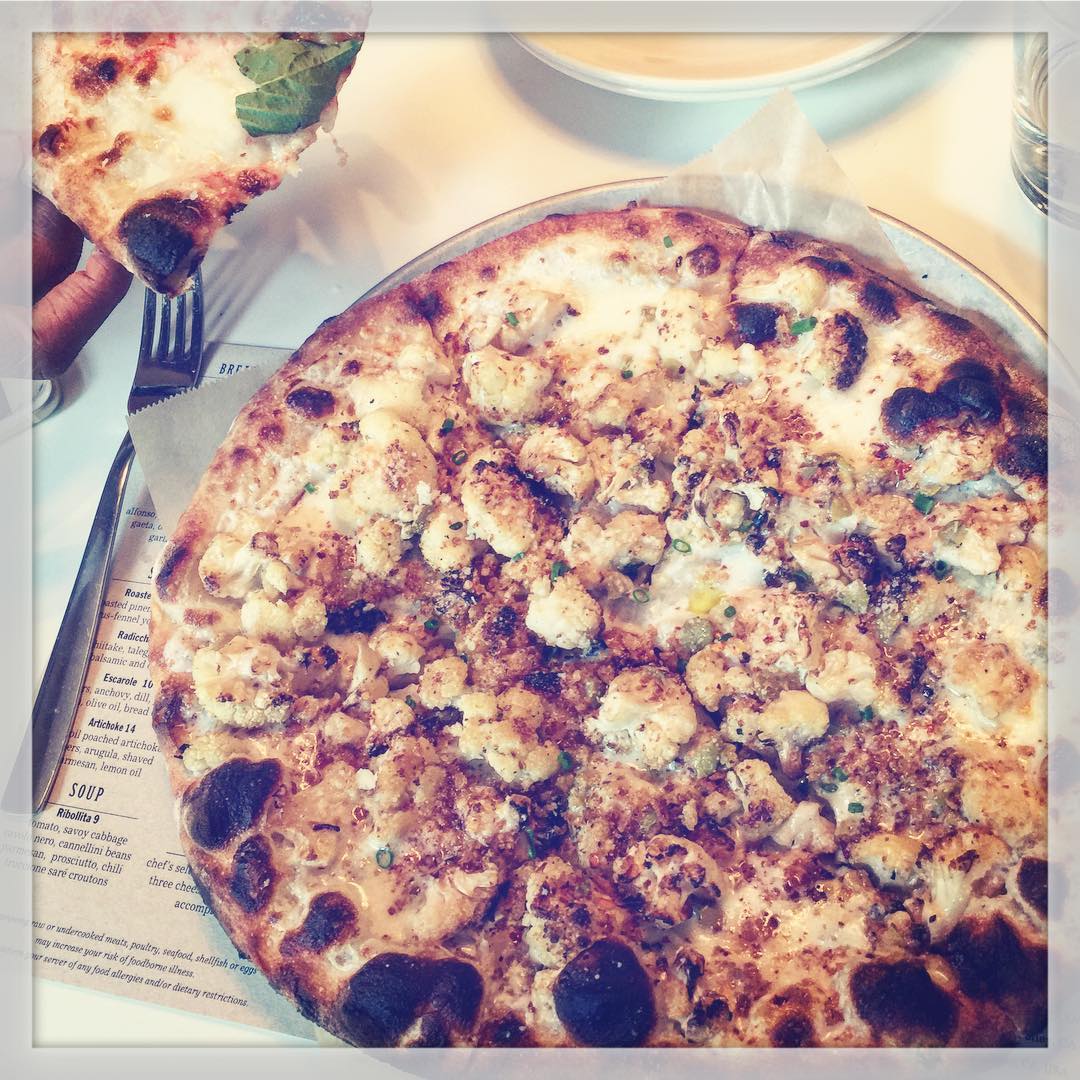
Clouds and Cauliflower

There’s a moment before the first bite where the whole table feels hushed—like weather about to change. A thin, blistered crust arrives, still breathing heat, and the cauliflower sits across the surface in little pale mounds, browned at the edges. It looks like something between comfort and surprise, familiar and slightly unplaceable. Clouds, if clouds could caramelize.

I’ve always liked foods that seem ordinary until you pay attention. Cauliflower can be that way—quiet, dependable, never asking for much—until it’s roasted and suddenly it has a voice. On this pizza it’s not pretending to be anything else. It’s just itself: softened, toasted, a little nutty, scattered over melted cheese and a crust that wears its char like freckles.

There’s an honesty to it. The kind you notice when you’re hungry and the day has been long, when you want something warm that doesn’t try too hard. A slice lifts, strings of cheese trailing, and the smell is all browned edges and salt and that faint vegetable sweetness.

I don’t know what the “right” topping is, or what makes a meal memorable. Sometimes it’s just the way a simple thing shows up—golden, imperfect, and exactly enough—and you realize you’ve been waiting for it.

Jump into the pool at Goldie’s

Goldie’s has that kind of glow that makes time slow down. You step inside and the noise from the street turns into a muffled hum, like it’s been tucked behind the door with your coat. The light is low and warm, and the room feels lived-in—soft around the edges.

There’s a pool table sitting back in the frame like a centerpiece, waiting. It’s not flashy. It’s familiar. The sort of place where you can hold a conversation without raising your voice, where you can watch someone line up a shot and notice the small pauses in between.

“Jump into the pool” is the kind of line that sounds like a dare, but really it’s an invitation: come as you are, stay a while, let the night stretch out. Order a drink, find a corner, take a turn at the table. Let the dimness do its work.

Some bars feel like they’re trying to be remembered. Goldie’s doesn’t need to try. It just sits there, steady, with its quiet lights and its calm pockets of space—ready for happy hour, ready for late hours, ready for the simple ritual of chalk, glass, and an unhurried evening.

Tea Time on Ken’s Patio

The patio has that quiet, in-between feeling fall does so well—bright enough to sit outside, cool enough that the warmth has to come from somewhere else. A cup of tea does the work patiently, steeping while the table settles into its small arrangement: saucers lined up, spoons resting where they were last set down, and a plate of cookies waiting like they’ve already heard the conversation.

There’s something comforting about how simple tea can be. It doesn’t ask for much. It just fills the space with a gentle kind of attention—the clink of ceramic, the thin curl of steam, the pause you take before the first sip.

On Ken’s patio, that pause feels larger. The day slows to match it. A few leaves have wandered onto the table, as if the season wants a seat too. The cookies look homemade, pressed with tidy lines, and the tea has gone amber in the cup, catching the light like it’s holding onto the last of the afternoon.

Moments like this don’t announce themselves as memories while they’re happening. They just sit there, ordinary and steady, until later—when you’re back inside and the air has turned colder—and you realize how much you needed the quiet.

Exit mobile version