Sunday Feels

Sunday Feels is the quiet kind of bright.

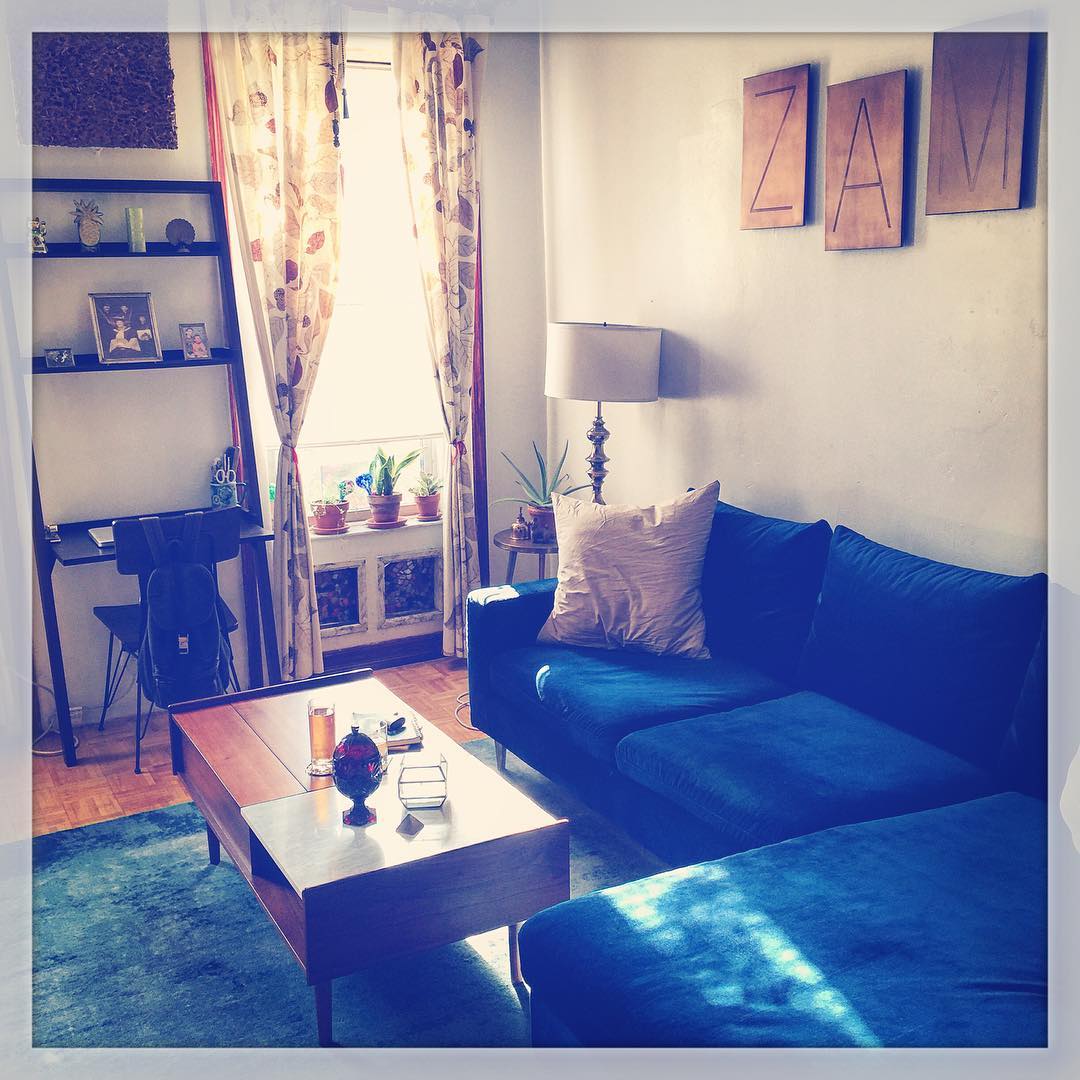
Light comes in hard through the window and softens as it lands—on the blue couch, across the rug, along the edge of the coffee table. The room looks lived with, not staged: a lamp ready for later, books and small objects left where hands last set them down, plants lined up like patient little witnesses in the sill.

There’s something comforting about a space that holds its shape while the week keeps moving. The furniture doesn’t try too hard. The shelves don’t feel like a showroom. Even the letters on the wall—simple, playful, a little bold—make the room feel claimed, like it belongs to the person who wakes up here and lets the day start slow.

This is the kind of Brooklyn afternoon that doesn’t need a plan. You can sit on the couch and listen to the city through the glass, watch sunlight shift across the floor, and let the air in the room settle back into itself. Not cluttered by busyness, not sterilized by perfection—just a home being a home.

Sometimes that’s the whole point of Sunday: a small pause, a warm corner, and enough light to make everything feel new again.
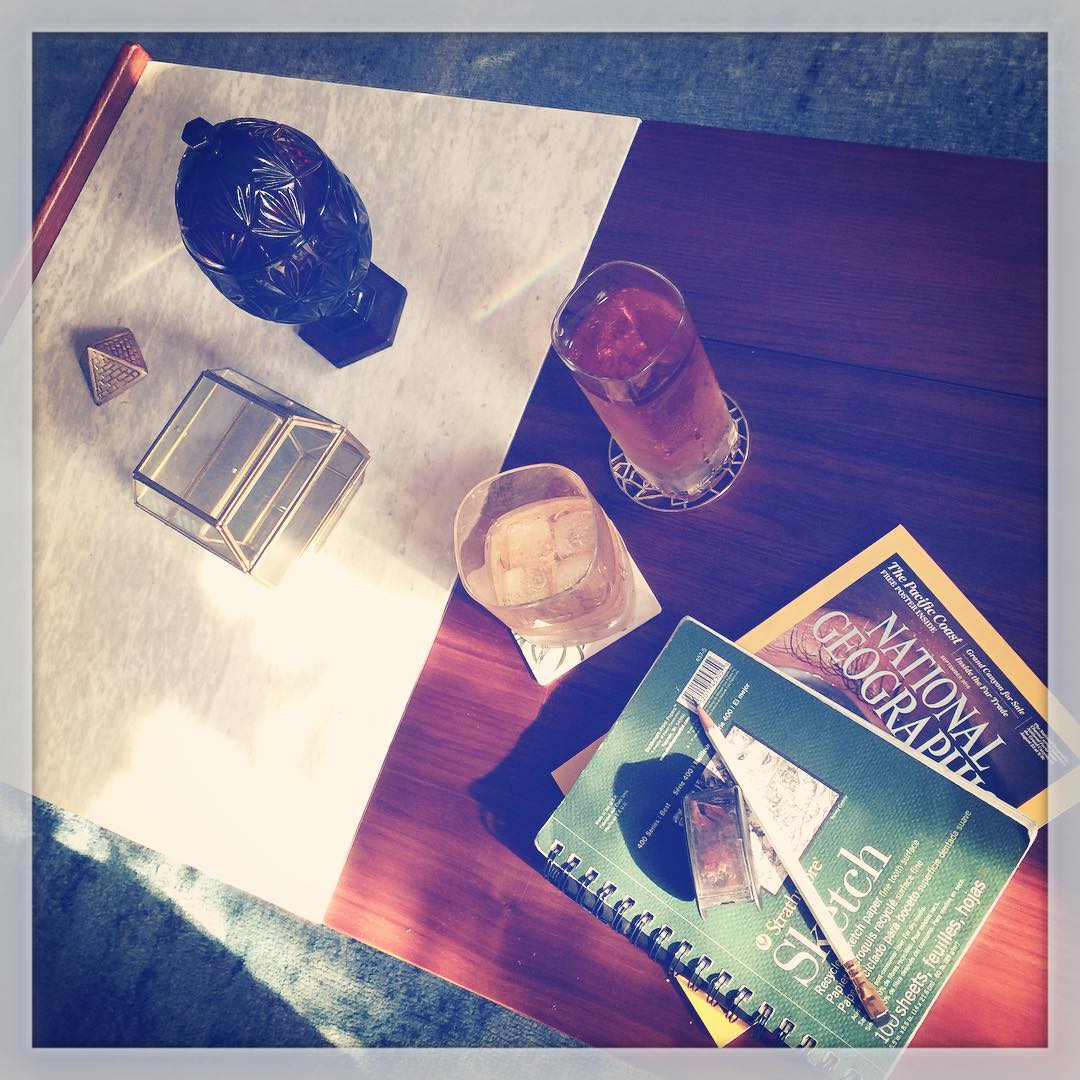
Tea and Whiskey Feeling Nifty

There’s something quietly satisfying about a table that feels lived-in but not cluttered—like it’s been listening all week and finally gets to exhale on Sunday.

Tea and Whiskey Feeling Nifty could be a whole mood, but it also fits this little still life: two glasses catching the light, a cool slab of marble cutting through warm wood, and a small stack of paper—National Geographic and a sketchpad—waiting like an unfinished sentence. The room doesn’t demand attention. It just holds it.

I keep thinking about how objects settle into their places over time. A glass ends up on the same coaster. The pen drifts toward the notebook. The magazines pile in a corner, not as décor, but as proof that you paused long enough to read, to look, to be.

The best interiors aren’t the ones that shout. They hum. They let the sunlight make its own geometry across the table and call it enough.

If you need a tiny reset, try this: clear one surface, keep only what you’ll actually touch—something to sip, something to flip through, something to write on—and let the rest of the day arrive on its own.

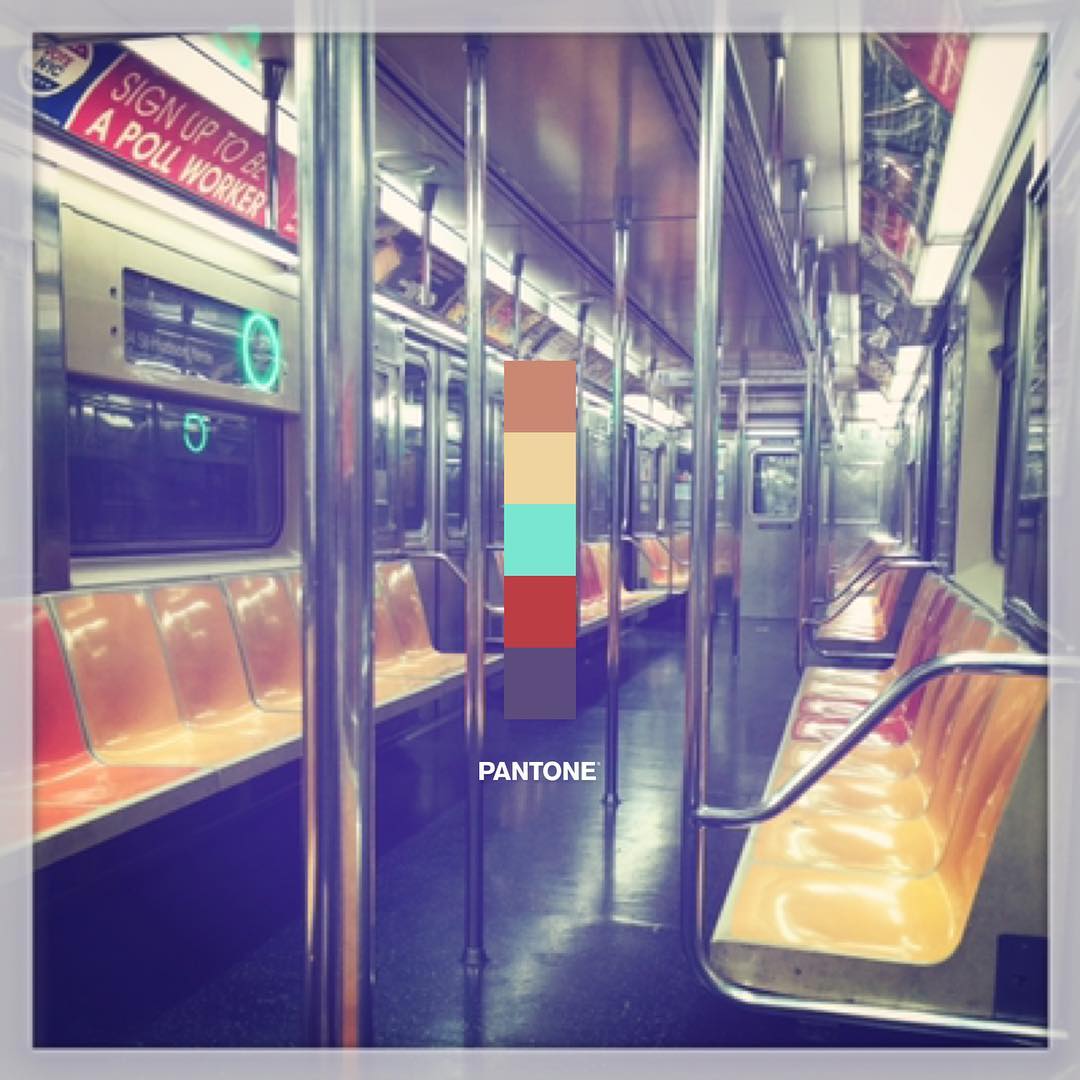
7 Train Friday Morning

The 7 Train has its own kind of quiet, especially on a Friday morning when the city feels like it’s still deciding what it wants to be.

Inside the car, the orange and yellow seats line up like a familiar refrain—worn smooth by countless commutes—while the poles and windows turn the space into a long, reflective corridor. It’s ordinary in the way that most daily things are ordinary: easy to overlook until you stop long enough to notice how much atmosphere they carry.

What caught me here was the color. Not just the bright plastic seats, but the whole palette of the ride: cool metal, soft glare from overhead lights, the dark floor soaking up footsteps. The Pantone stack in the center feels like a small attempt to name that mood—like pinning a label to a passing moment before it slips into the next station.

Public transit always holds two worlds at once: the practical world of getting somewhere, and the quieter one where you can just sit, listen, and let the day arrive. On this 7 Train Friday Morning, the car felt briefly emptied out, as if the city had paused to breathe. I’m glad I noticed.

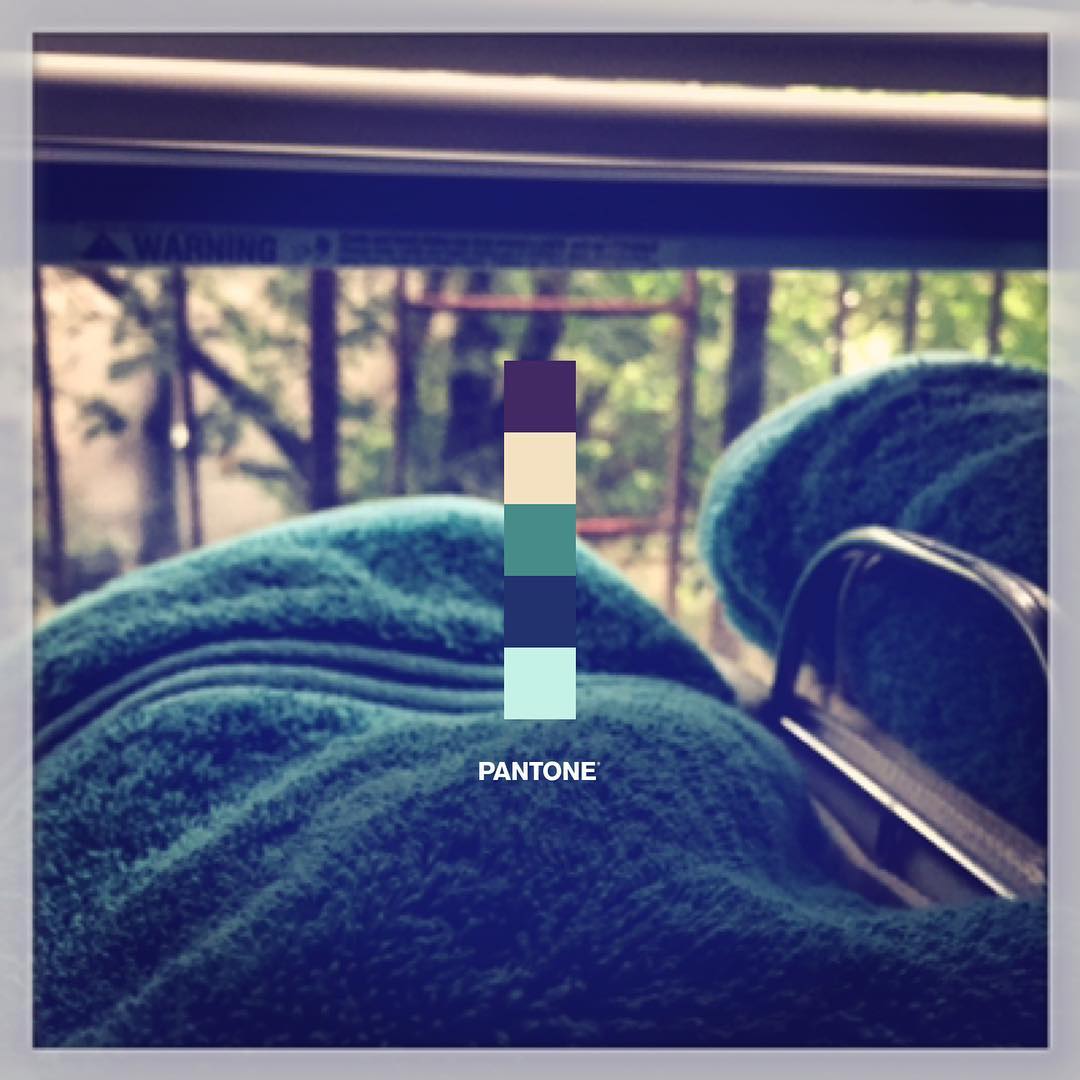
Clouded Towels

There’s something quietly grounding about a stack of towels—ordinary, useful, waiting. In this moment they feel less like linens and more like weather: deep teal piled into soft hills, with a window beyond them holding its own muted greens.

The palette is simple, but it doesn’t feel empty. Dark blue like shade under trees. A calm, worn teal. A pale wash of light that could be sky or steam. Even the smallest strip of off-white reads like a pause—breath between seasons.

“Clouded Towels” makes me think of the way everyday things collect atmosphere. You don’t notice it while you’re moving through your day, but it’s there: the damp quiet after a shower, the hush of a room before anyone wakes, the soft persistence of fabric that’s been washed and used and folded again.

Outside the glass, the world looks slightly distant, as if it’s being remembered instead of watched. Inside, the colors settle into each other, not trying to be bright, just trying to be true.

If you’re building a space—home, studio, routine—this is a gentle reminder that design doesn’t always announce itself. Sometimes it’s a stack of towels and the light that falls across them, and the feeling that something ordinary can still hold a little mystery.

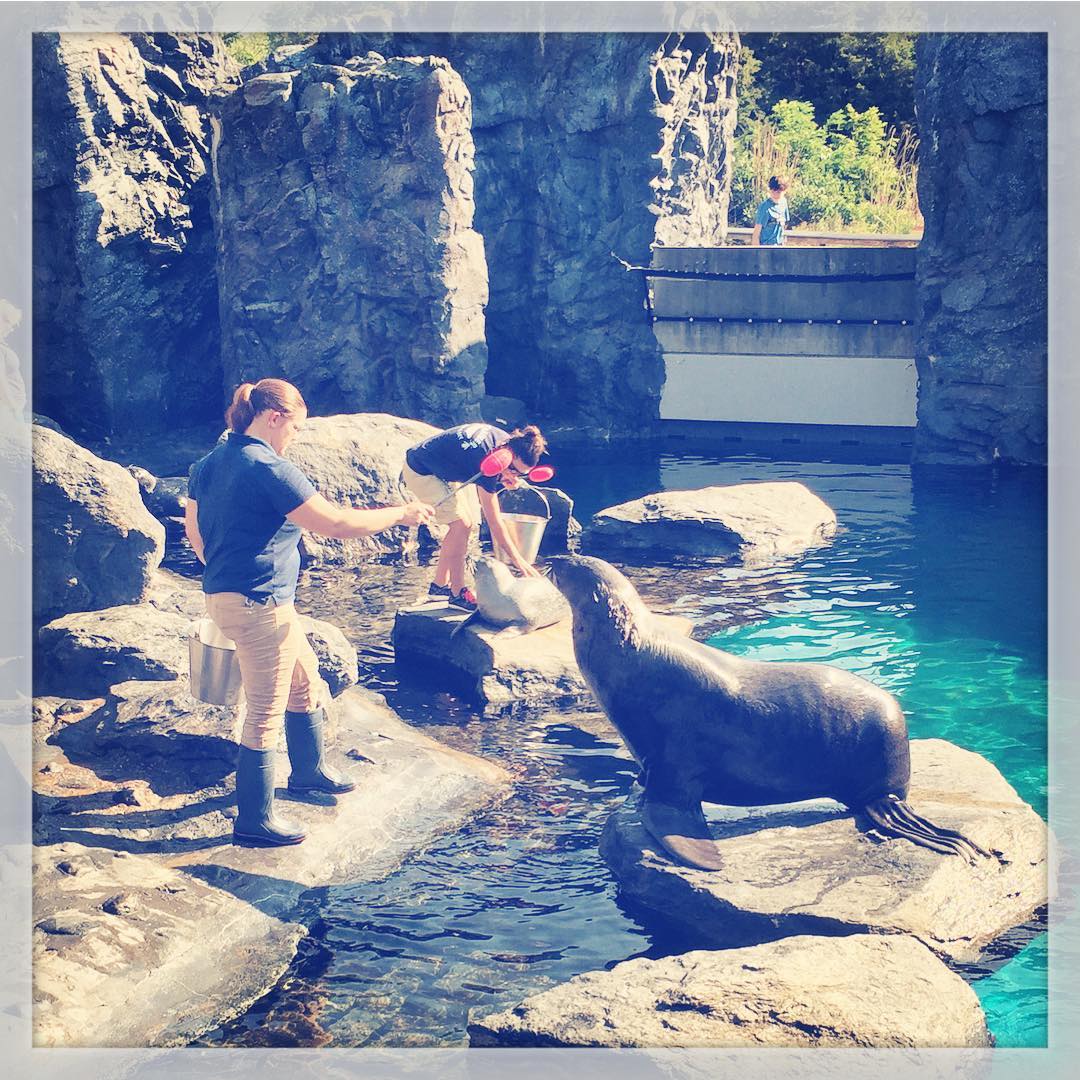
Sea lions, Seals, & Penguins; oh my!

The show floor feels like its own small world—rock walls holding the day in place, water shifting from deep blue to that bright aquarium green, and a quiet patience in the air.

A sea lion hauls itself onto the stone ledge like it’s done this a thousand times, not rushed, not performing for the camera so much as listening. Two trainers stand close, boots planted on wet rock, moving with practiced calm. A target, a gesture, a pause. Then the gentle exchange: attention for a reward, trust for consistency.

“Sea lions, Seals, & Penguins; oh my!” was the headline, but what I keep thinking about is how much of it is really about rhythm. The small repetitions. The way an animal leans in to learn, and the way a person learns to be steady enough to teach.

From the seats and railings, it’s easy to see only the splash and the shine. Up close, you notice the quieter details: the slick stone underfoot, the light cutting across the enclosure, the careful spacing, the momentary stillness before motion.

Later, walking away, the scene stays with me like an afterimage—bright water, rugged rock, and that calm, curious feeling that shows up when the ordinary turns a little mysterious.

If you’re curious, the Insta-comments tell their own story too—little echoes of the day from everyone who stopped and watched.

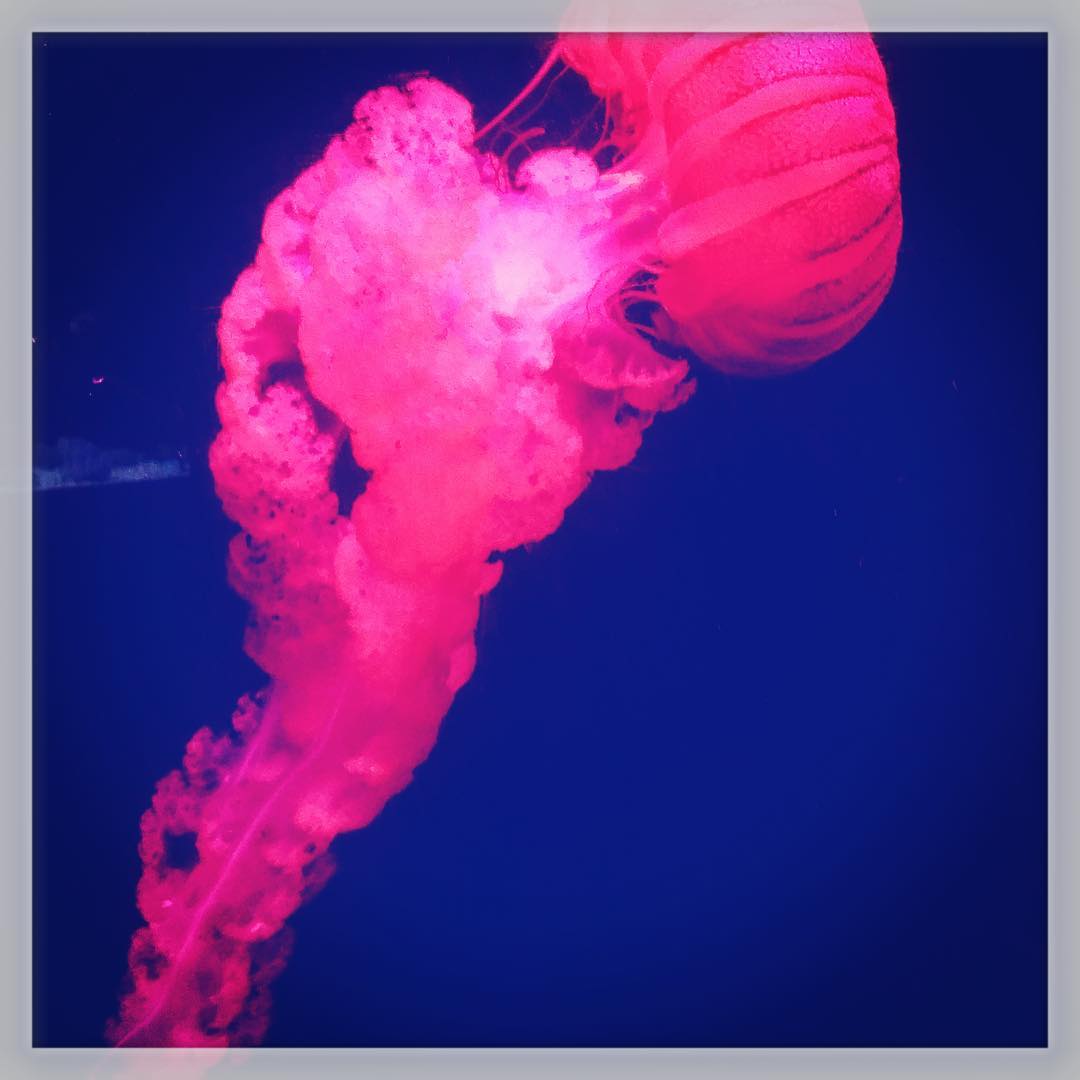
Don’t be Jelly of my 4 day weekend

There’s a particular kind of quiet you find in an aquarium—the sort that makes your thoughts slow down and drift. I spent part of my four day weekend standing in that blue-lit hush, watching a glowing pink jellyfish pulse forward like a living lantern.

The funny thing about time off is that it’s supposed to feel big, like you’ll fill it with something memorable. But the best parts are usually small: the dim room, the soft crowd noise dissolving into water, and the steady rhythm of something ancient moving without hurry.

Don’t be Jelly of my 4 day weekend—because it wasn’t a checklist of adventures. It was a reminder that wonder doesn’t need a lot of space. It just needs you to stop long enough to notice it.

Jellyfish look delicate, almost unreal, yet they keep going—drifting, flexing, unfurling, gathering themselves again. I watched that slow repetition and felt my own week untangle a little. The days didn’t suddenly become perfect. They just became quieter.

If you ever find yourself with an extra day, try spending part of it somewhere dim and blue, where the world can’t rush you. Let the ordinary become strange again, and let the strange feel familiar.

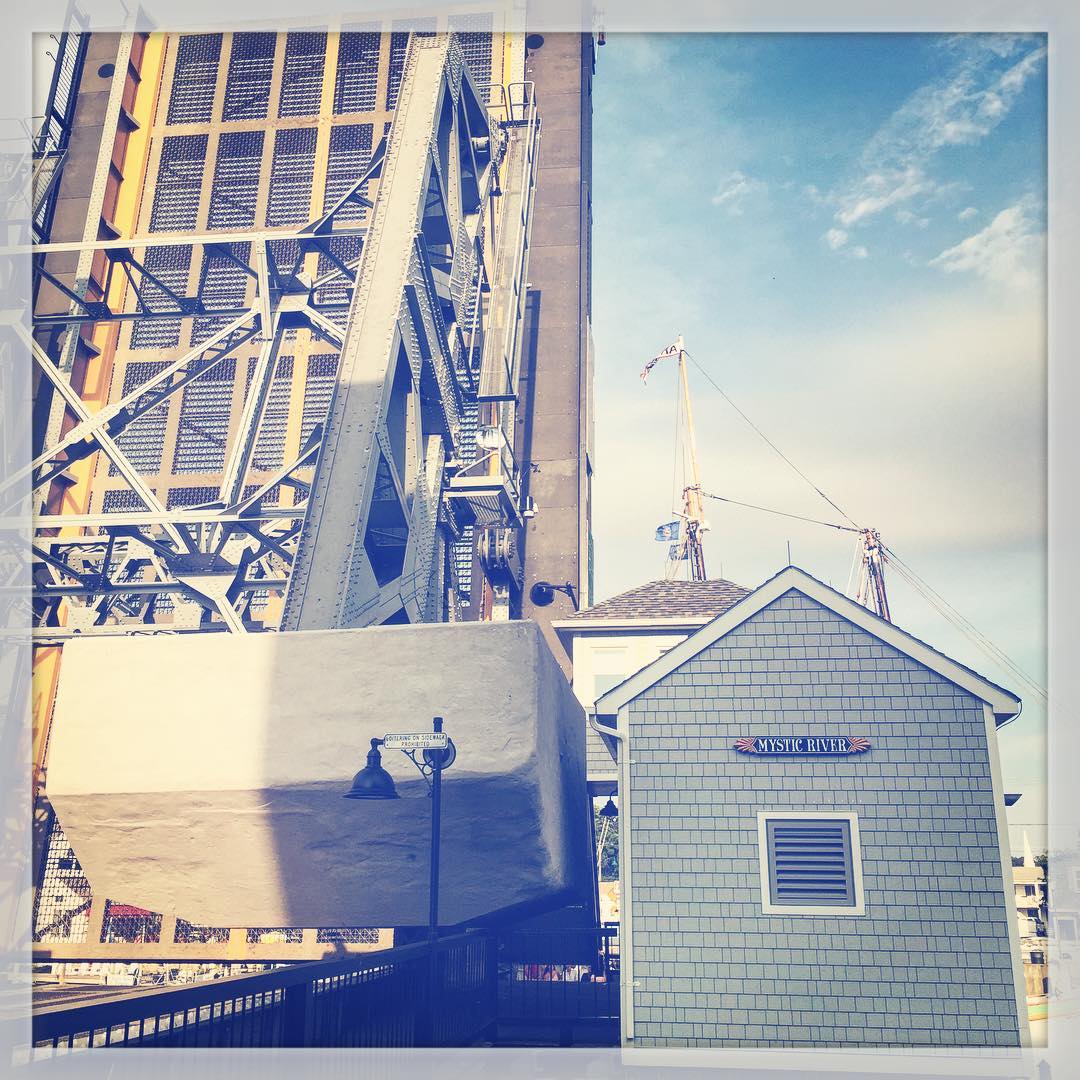
Goodbye Mystic

The drawbridge sits half-open like a sentence that hasn’t decided how to end. Steel and rivets, catwalks and cables—an honest piece of work—holding its place over the Mystic River while the day moves on without asking permission.

Down at the edge of it, the little shingled building wears its “Mystic River” sign like a name stitched into an old coat. A bell hangs nearby, the kind of detail you don’t notice until you’re already leaving and your brain starts saving small things for later.

There’s a sailboat mast in the background, and it feels right—like a reminder that even when you’re on land you’re still close to motion, close to departure. The sky is bright and roomy, the kind of blue that makes goodbyes feel a little cleaner, even when they aren’t.

Goodbye, Mystic. Not forever, maybe. But goodbye in the way you say it when you’ve been somewhere long enough for it to pick up your footprints. The bridge will lift for someone else, the river will keep doing what rivers do, and the town will keep its quiet machinery of daily life.

I’m just trying to hold the scene still for a moment before it becomes memory.

A Slice of Heaven

There’s a kind of happiness that arrives quietly, without ceremony—just a warm pan set down on a wooden table and the familiar sheen of melted cheese catching the light.

A Slice of Heaven, they called it. And it fits. Not because it’s extravagant, but because it’s steady. A pizza cut into wide, simple slices, browned in spots where the cheese bubbles and settles, like the surface of a small, edible landscape.

I’ve always liked places that feel lived alongside you. The kind of spot where you don’t rush, where you can sit and let the day loosen its grip. Mystic Pizza has that feeling—comfort without performance. It’s not trying to be mysterious; it just is. A little worn-in, a little bright, and perfectly okay with being ordinary.

Food does this sometimes. It becomes a marker in time. A quick stop that turns into a memory you can return to, the way you might return to an old road or a familiar room. You taste the salt and the richness and suddenly you’re not thinking about what’s next.

You’re just there: a pan of Mystic Pizza cheese slices between you and the afternoon, a small pause that feels, for a moment, like enough.

Start of a Mystic Weekend

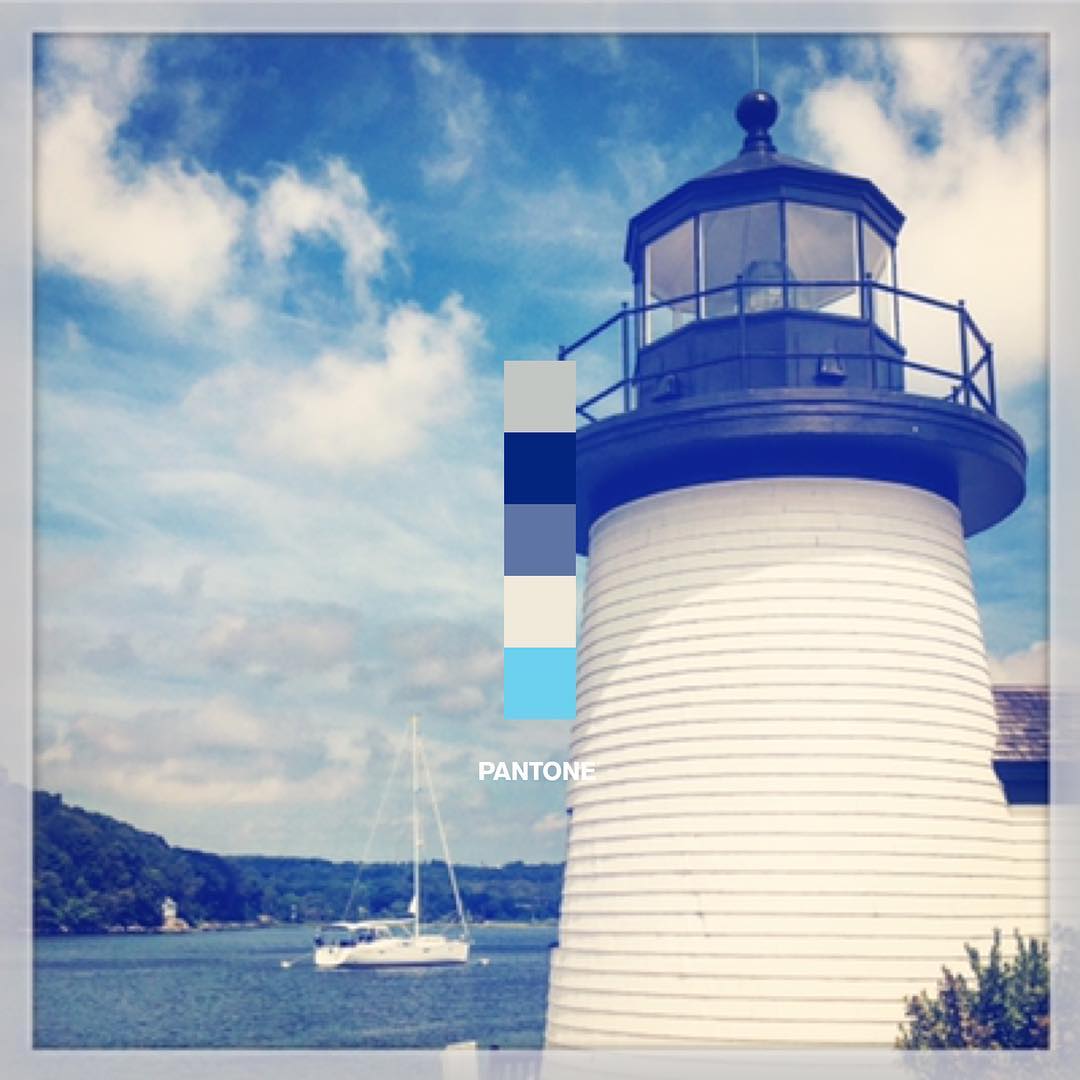
There’s a particular kind of beginning that happens near water—quiet, almost unnoticed at first. The sky is open and bright, and everything feels rinsed clean: the blue stacked in layers, the clouds soft at their edges, the day wide enough to wander in.

At Mystic Seaport the lighthouse stands the way old things do when they’ve had time to become part of the landscape—steady, unbothered, keeping its own company. The white siding catches the light, and the darker cap on top looks like a thought held carefully in place.

Out on the harbor, a sailboat drifts as if it has nowhere urgent to be. It’s the kind of scene that makes you slow down without trying. You can hear the place living: distant voices, water shifting against the shoreline, the small mechanical clinks that belong to boats and docks.

“Start of a Mystic Weekend” sounds simple, but weekends like this have a way of opening up. Not with big plans, but with the feeling that there’s something to notice if you keep your eyes up—history in the boards, salt in the air, and that steady pull of the sea.

We came for the coast and the whale stories, but stayed for the calm. There’s a gentle mystery in it—how a lighthouse can make you feel both far away and somehow at home at the same time.

Mystic Oysters, Fresh

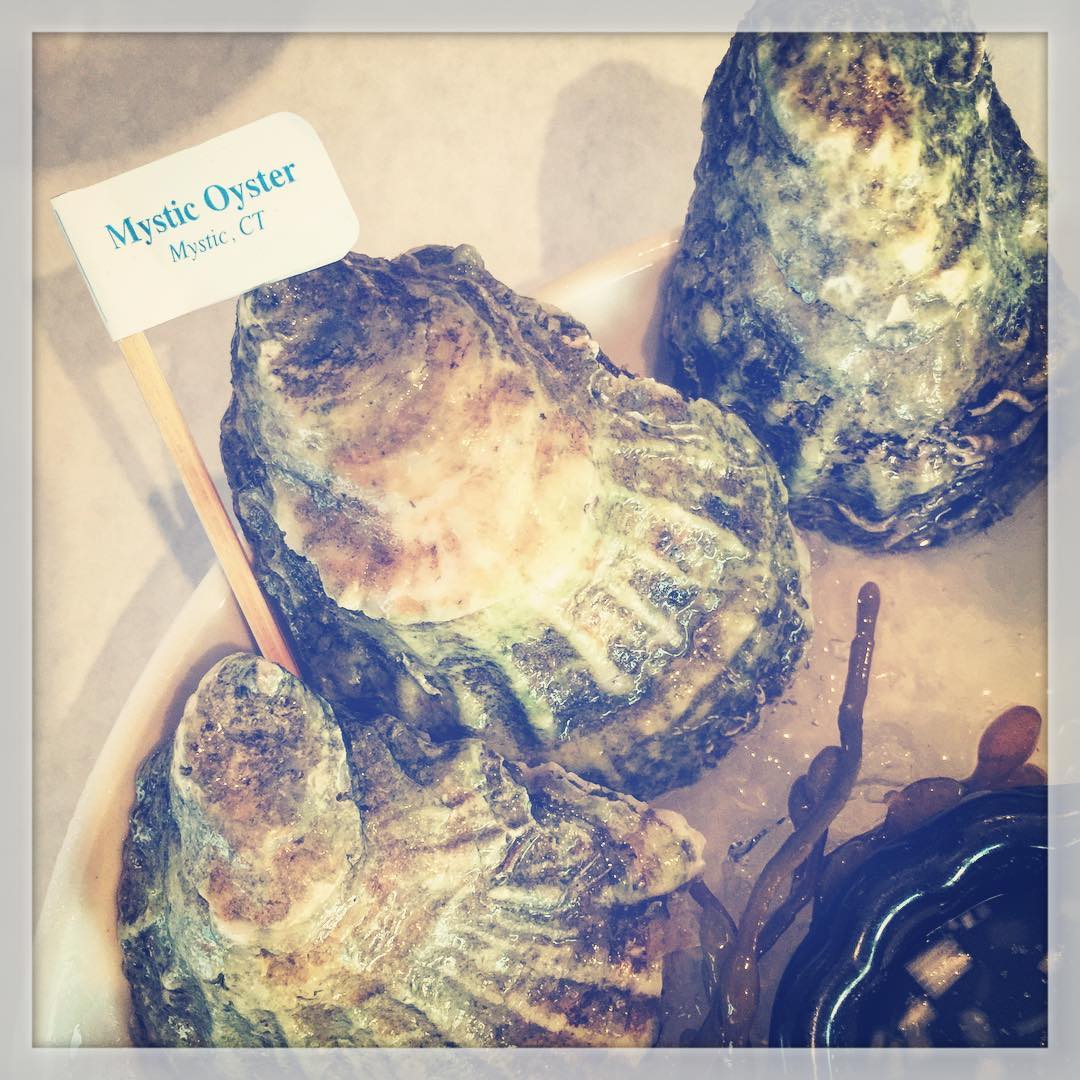
A plate of Mystic oysters sits on ice like a small shoreline you can bring to the table—rough shells, briny hush, and the quiet confidence of something that doesn’t need much help.

Mystic Oysters, Fresh is a simple promise, but it carries a whole place inside it. You can almost hear the room around them: the soft clink of ice shifting, the pause before the first taste, the way good food makes time feel slower and more spacious.

There’s something grounding about oysters in the shell. They don’t try to be pretty; they just are. The ocean has already done the work—salt, cold, and patience—leaving you with a bite that tastes clean and alive.

If you’re building a raw bar moment at home, keep it spare. Cold plate, plenty of ice, a knife you trust, and whatever small rituals you like. Let them be what they are: a little weather, a little water, and a reminder that the ordinary can still feel mysterious when you stop and pay attention.

Some meals fill you up. Others feel like they open a window. These do both.

Rainy day museum day

Rainy day museum day.

Outside, the city felt rinsed and heavy, the kind of weather that turns every block into a long exhale. Inside the museum, everything was quieter. Even footsteps sounded like they were trying not to interrupt.

I found myself looking down into a courtyard: pale tiles darkened by scattered rain, three round planters like small ponds holding lily pads and green drift. Thin lines cut across the space like careful strokes, as if someone had measured the air and decided where it should rest. A few benches sat empty, waiting patiently. The whole scene felt arranged, not staged—settled, like a room that has learned how to live alongside the day.

I like museums most when the weather pushes you into them. You don’t rush. You wander. You let the building hold the noise for you for a while. And for a moment, the outside world feels far enough away to become interesting again, something you can return to with fresh eyes.

When I finally stepped back out, the rain was still there, doing its slow work on the streets. Somehow it didn’t feel like it was keeping me from anything. It felt like it had given the afternoon a shape.

After the party closet disaster

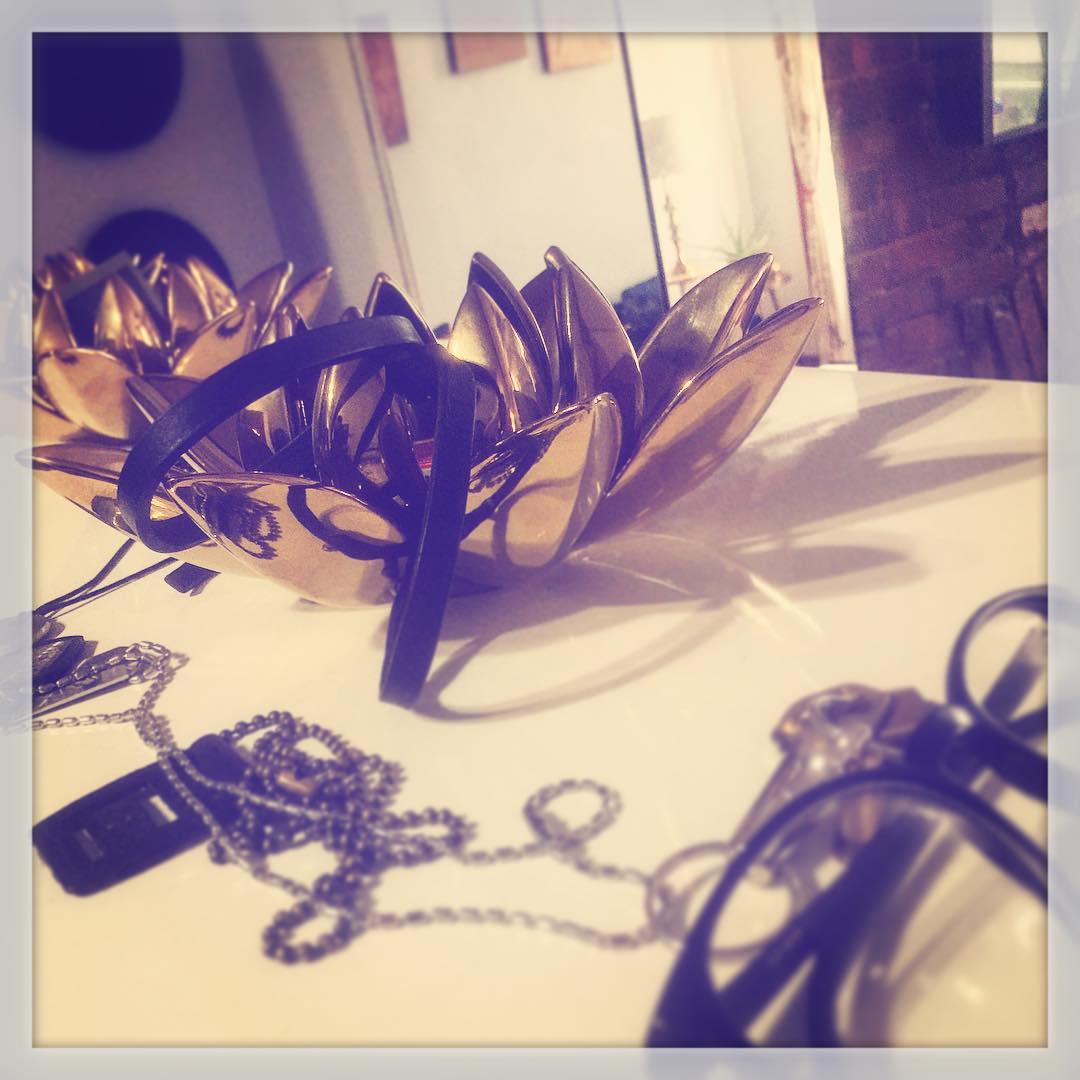
There’s a particular kind of quiet that shows up after a party—the kind that makes even a familiar room feel a little different. The closet door is still, but the evidence has wandered out into the open: a tangle of chain, a small key, black ribbon looping over itself, and that gold headpiece slumped like a tired crown.

In the bright, honest light of morning, everything looks more deliberate than it was. The shiny pieces catch the sun and throw it back in soft reflections, as if they’re trying to remember the music. I stand there long enough to hear the apartment settle—floorboards, distant street noise, the faint hum of the day starting without us.

It’s funny how the smallest items can hold the whole night. Not the loud parts, not the blurry parts, but the in-between: laughing in a hallway, leaning into a mirror to fix one last detail, the moment you decide you’re fine to stay out five more minutes.

Later, I’ll sort the mess. I’ll unknot the chain and return the key to wherever keys are supposed to live. For now, I let the scene sit as it is: a modest still life from Williamsburg, proof that something happened here, and that it was worth cleaning up after.

Exit mobile version