Project
Silver Gelatin Darkroom Photography | Hand-Developed Film
College darkroom work, made the slow way. Shot on a Canon AE-1 with Ilford Delta 400, hand-developed in D-76, and printed on silver gelatin paper, including photograms in the Man Ray tradition with real glassware sitting on the emulsion.

Process
Silver Gelatin Darkroom Photography
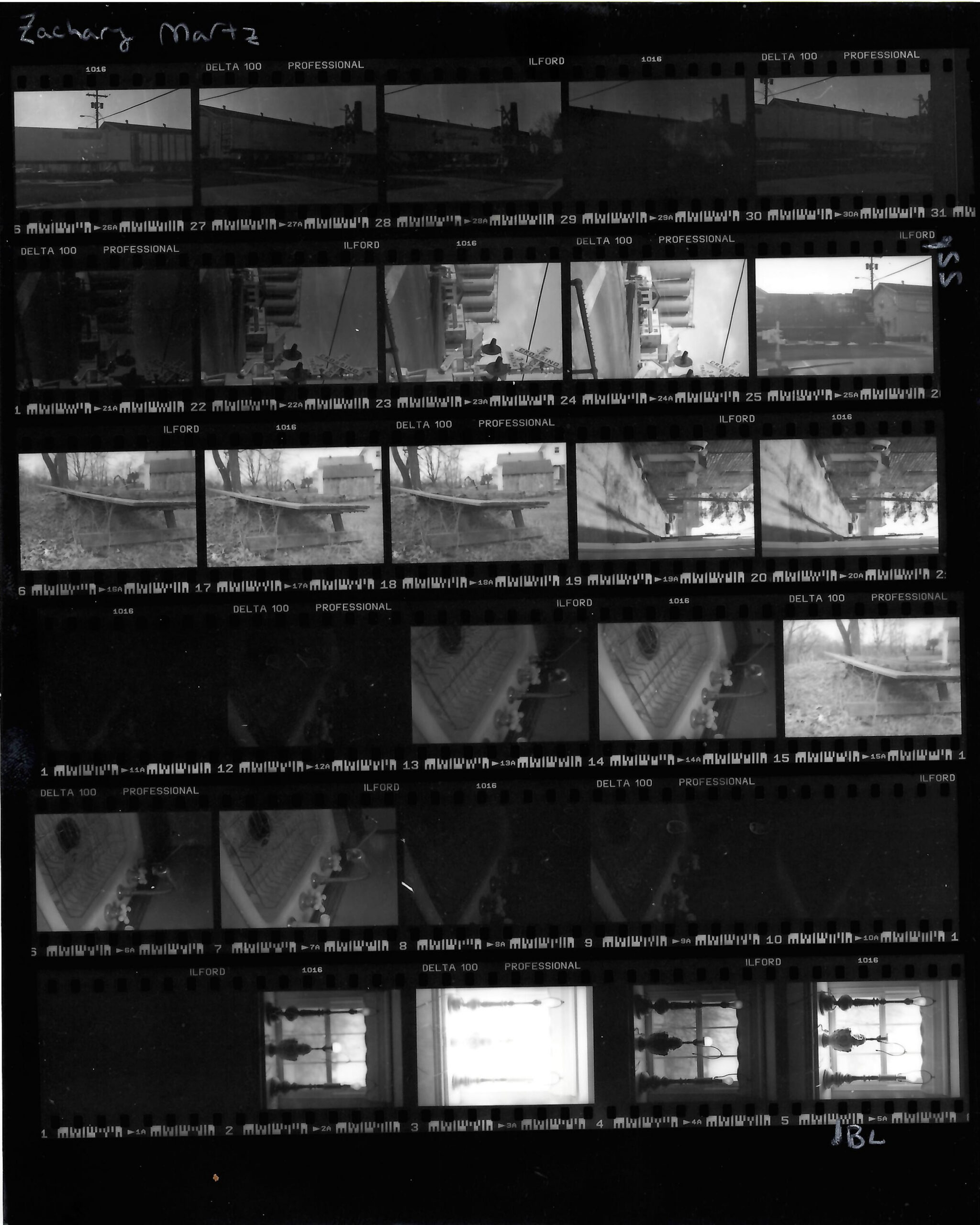
Everything in this post was made the slow way. Each image started as a frame of black-and-white film, shot on a Canon AE-1 through its standard 50mm lens, hand-developed, and printed as a silver gelatin print under an enlarger during my college coursework at Kutztown University in Spring 2008. Nothing here was point-and-shoot, and nothing went to a drugstore lab. The negatives, the chemistry, and the prints all passed through my hands.
The camera was the easy part. The darkroom was the work.
Follow the process
Every print came out of the same hands-on workflow:
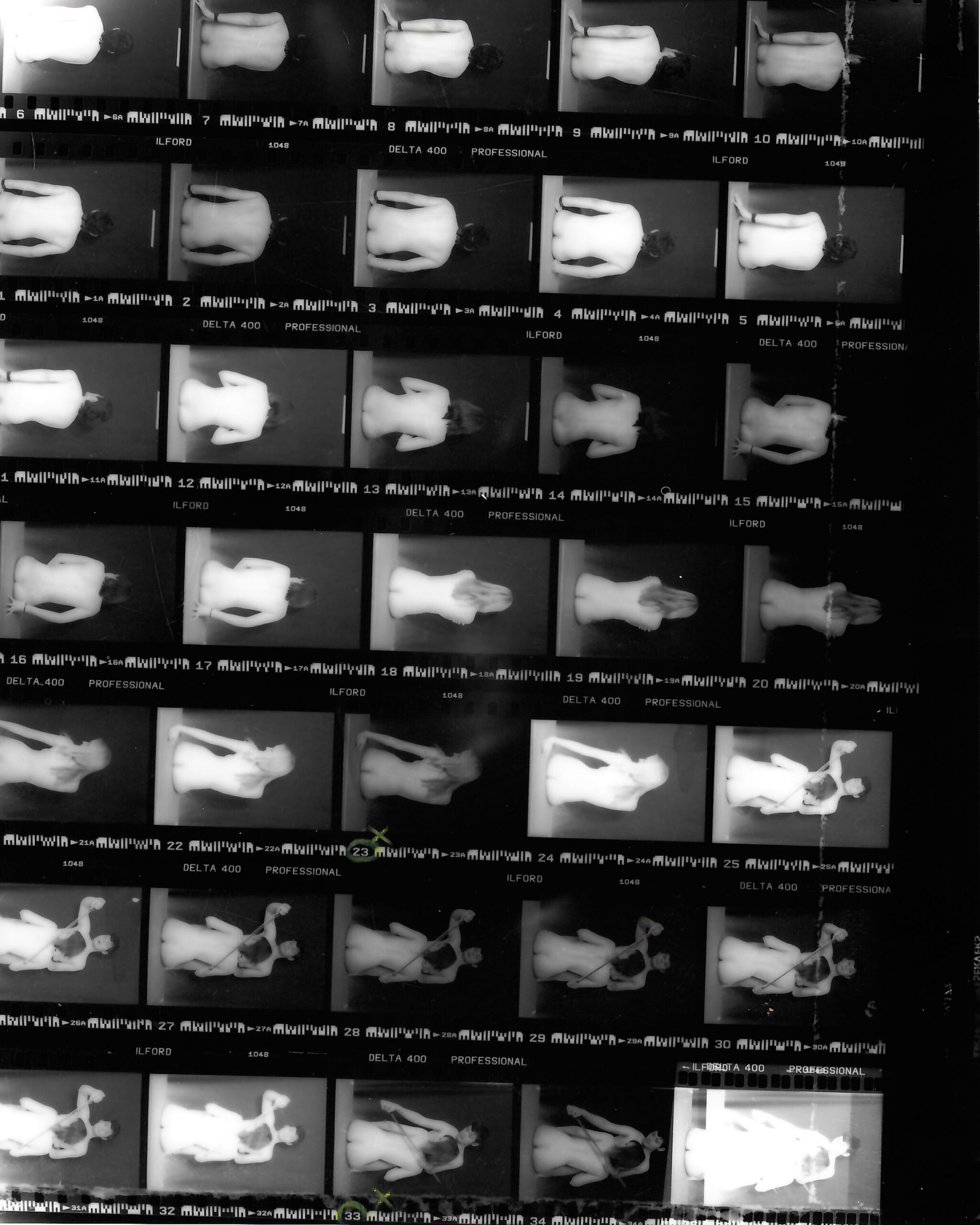
- Shot on Ilford Delta 400 Professional, 35mm
- Rolled onto reels in total darkness and developed by hand in Kodak D-76
- Frames selected from contact sheets, not screens
- Enlarger exposures dodged and burned print by print, with contrast dialed in through filter grades on variable-contrast paper
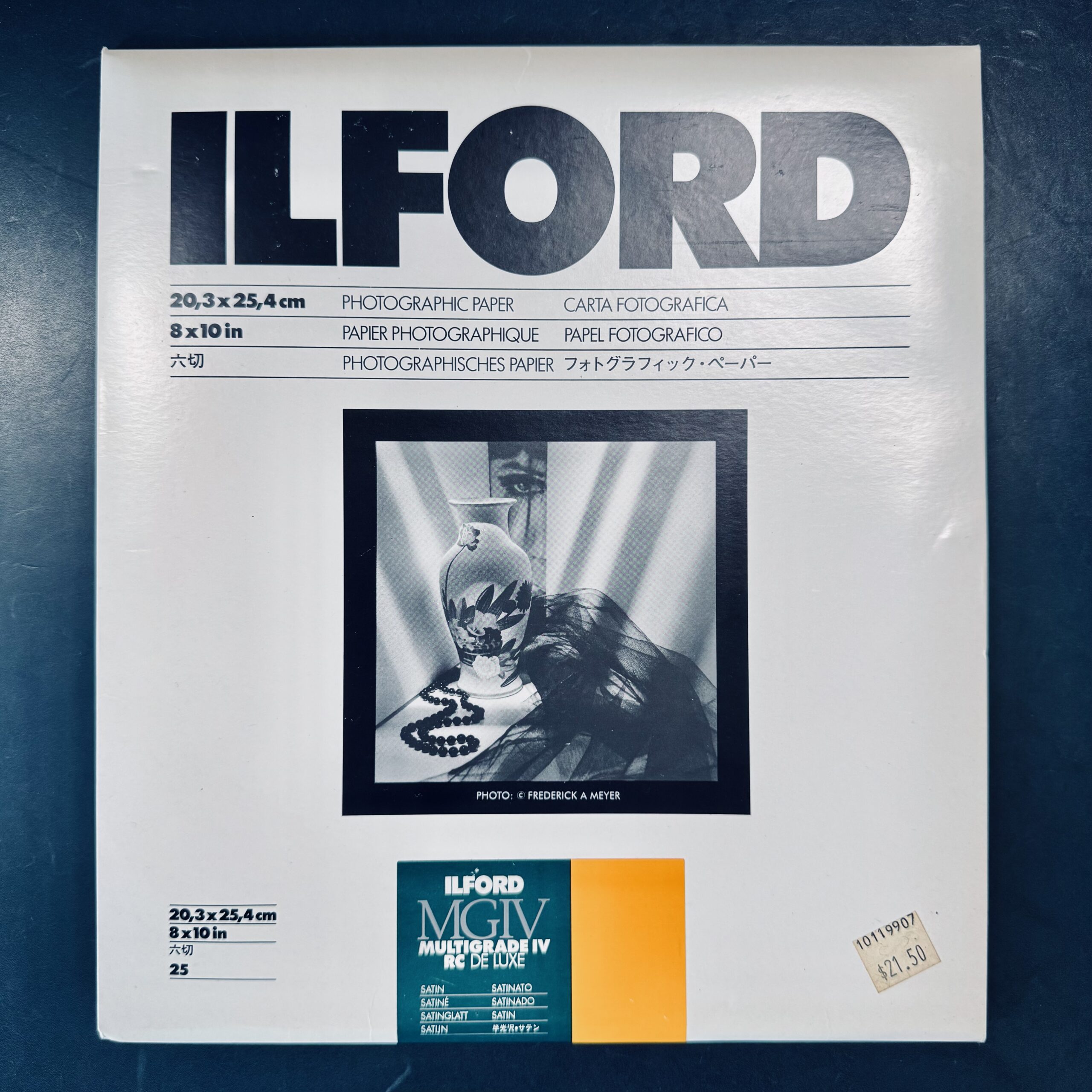
- Printed on Ilford Multigrade IV RC De Luxe (satin, 8×10) and run through developer, stop bath, and fixer in open trays
- Photogram technique in the Man Ray tradition: physical glassware (a tumbler, a vase) sitting directly on the paper during exposure, distorting the projected image on its way to the emulsion
My work was Ilford end to end, Delta 400 negatives printed on Multigrade paper. That wasn’t an accident. Keeping the materials consistent meant the variables that changed between prints were mine.
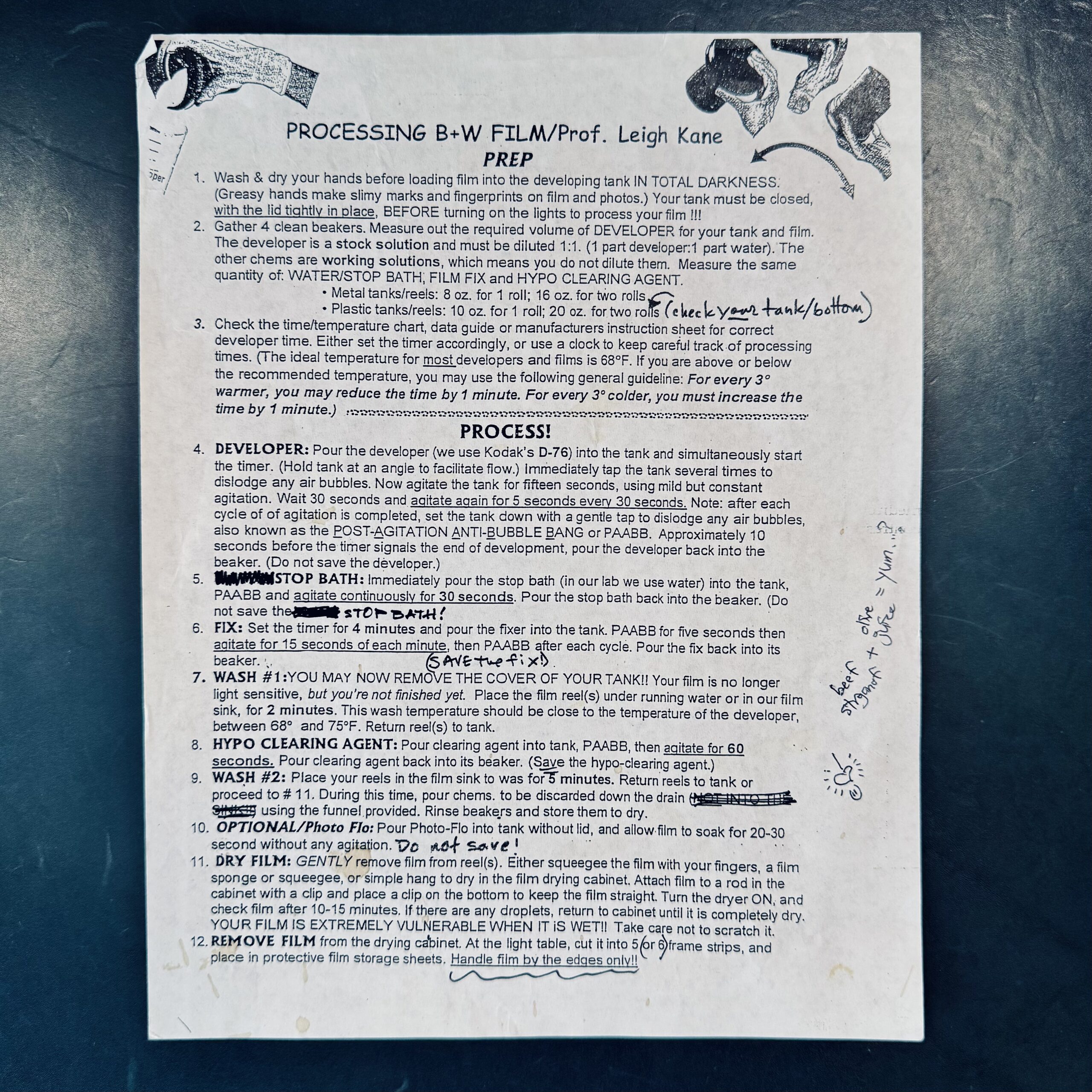
I still have the processing handout from Prof. Kane’s class, annotated in my own handwriting: agitation every 30 seconds, times adjusted for developer temperature, “IN TOTAL DARKNESS” underlined because it mattered. It’s the kind of document you keep without knowing why, until it becomes the proof.
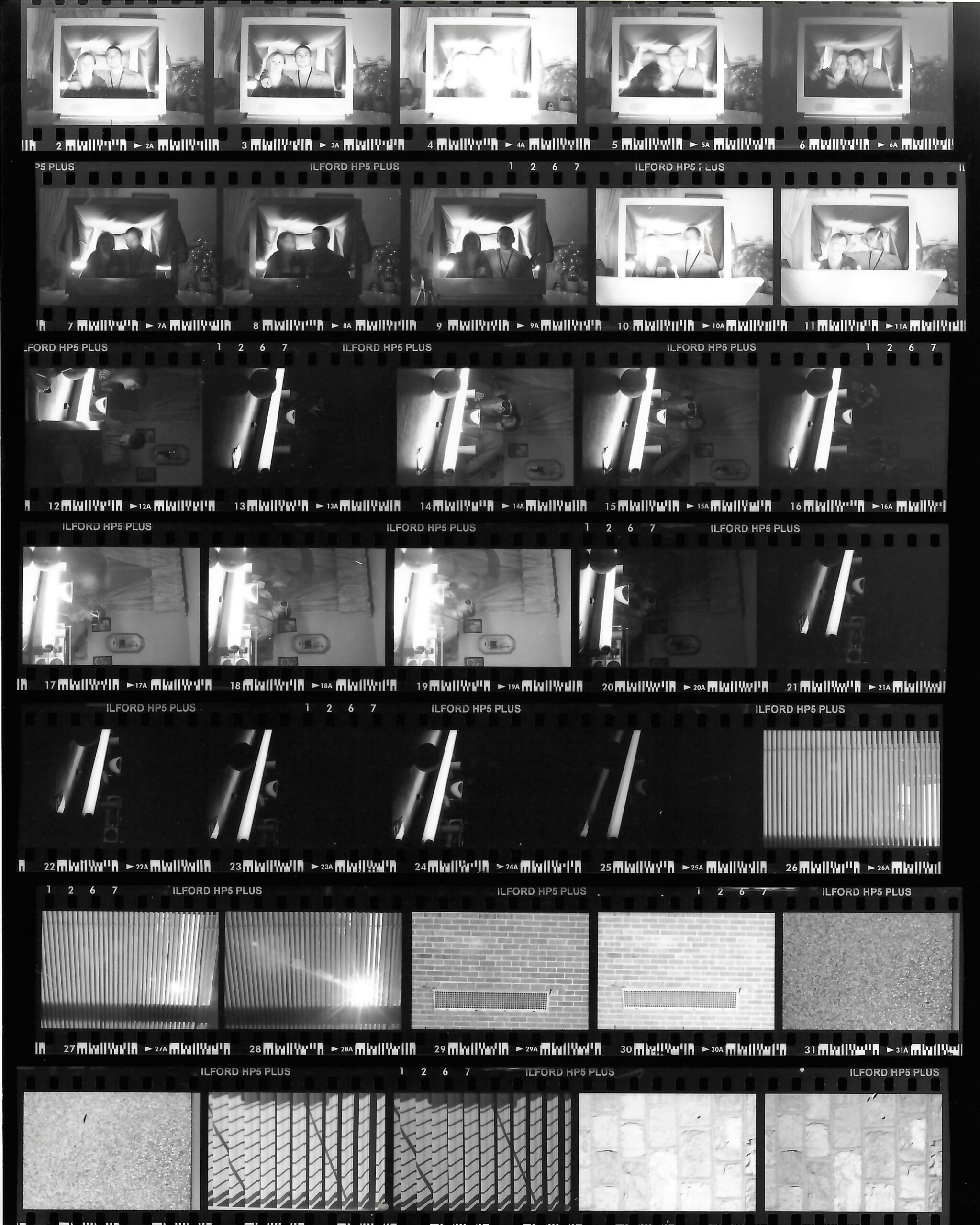
(Images: scan of the annotated B&W processing handout, photo of the Ilford Multigrade IV box with negative sleeves, plus negative strips for each series as process examples)
There was no undo. When a print came out wrong, you adjusted the exposure, swapped the filter grade, and made another one. That constraint is baked into every image here, and it’s why the flaws that survive feel earned rather than accidental.
I still have the negatives and the paper. The box in the photo below cost $21.50 for 25 sheets, which meant every bad print had a price on it, and you learned to meter before you learned to spray and pray.
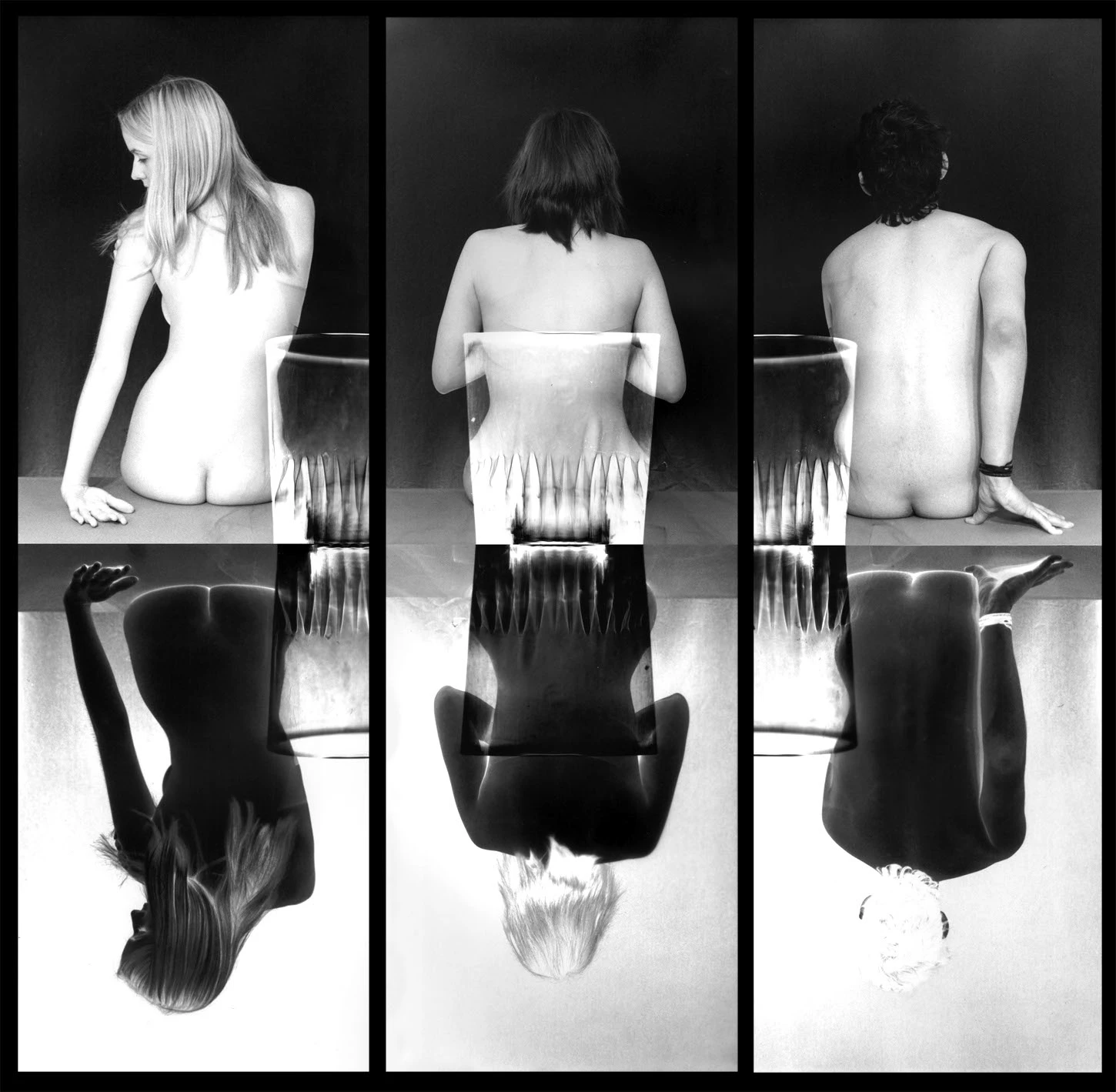
Series 01
Shelf Drink Man Ray
This series was inspired by the photogram effects of Man Ray, and the connection is physical, not just visual. A glass tumbler sat directly on top of the photographic paper while the negative projected down through it, bending the light on its way to the emulsion. The distortion in each panel is the actual glass, not an effect. That setup was repeated separately for each of the three prints, tumbler placed, exposure made, print developed, before moving to the next.
Then the set was turned into its inverted twin. I made a direct emulsion negative of the three, and that pass had to be balanced against the originals, matching the weight of the darks and lights so the positive and negative halves would read as one continuous six-panel piece rather than two trips through the darkroom.
The subject is ordinary (a figure, a shelf, a drink), but the treatment makes it read like a half-remembered image instead of a photograph. That’s the chord it borrows from the surrealists, and it only holds if the tonal match holds. A negative panel printed a stop too heavy would have given the whole trick away.

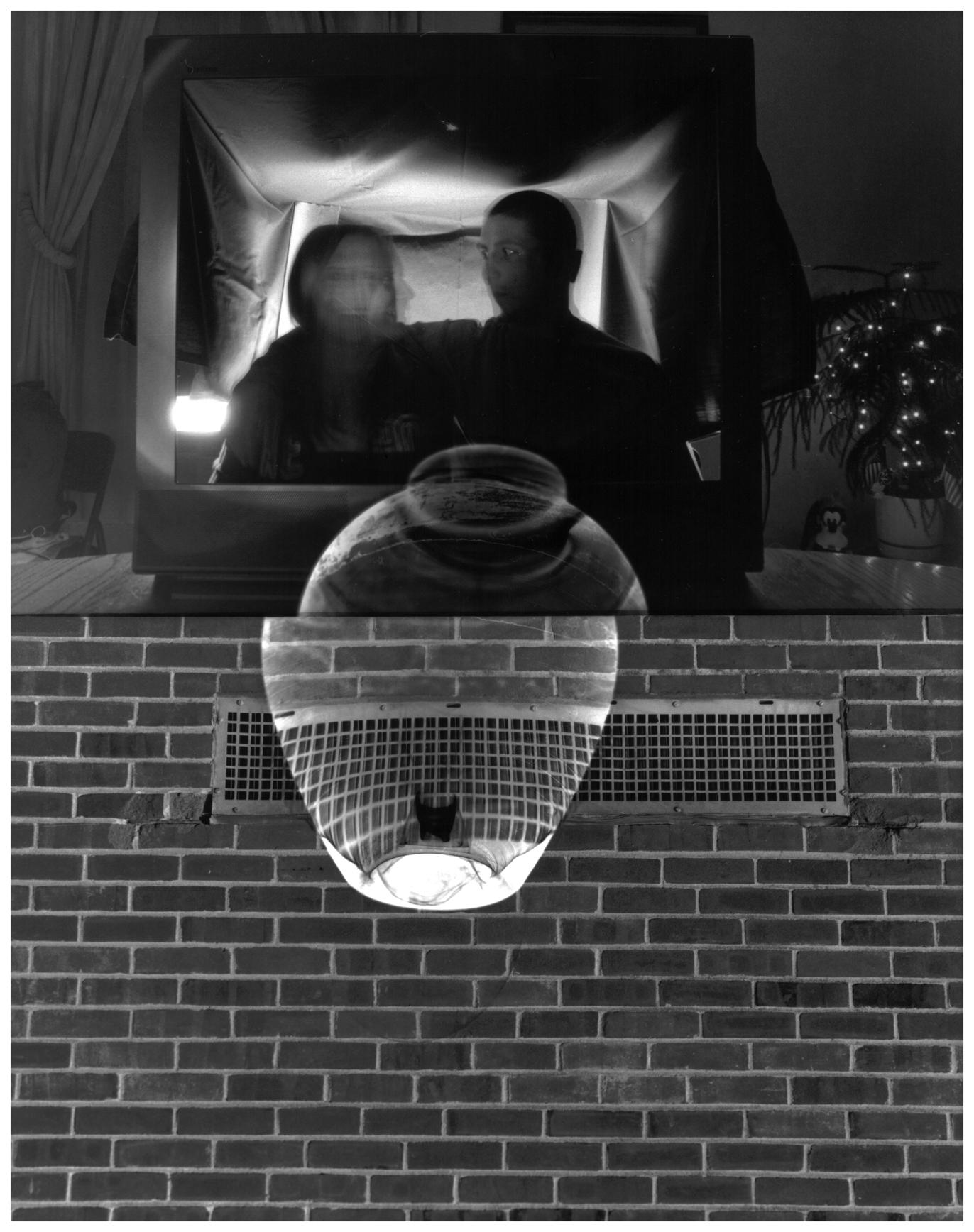
Series 02
Dividing Vase Series
The “dividing” in the title is literal. Each print carries half a vase, and the prints pair up two at a time so the halves complete a whole vase across the seam. Four prints, two pairs, two different vases, and every print developed on its own.
The vase forms weren’t drawn in or composited. A physical glass vase sat over the photographic paper during exposure, distorting the enlarger light the same way the tumbler does in the Man Ray series. Which made this a registration problem on top of a printing one: the glass had to land in the right position, and the exposure at the right density, on each sheet, so that two independently made prints would read as one object the moment they sat side by side. Light has to pass cleanly where the halves meet, and there’s no compositing tool to nudge anything after the fact. If one print drifts, the pair fails, and you start that sheet over.
The scenes around the vase halves stay ordinary on purpose: venetian blinds, a couple, a brick wall. Mundane settings with a shape passing through them that doesn’t belong. That tension is right there in how I tagged the series at the time, both “bizarre” and “mundane.”
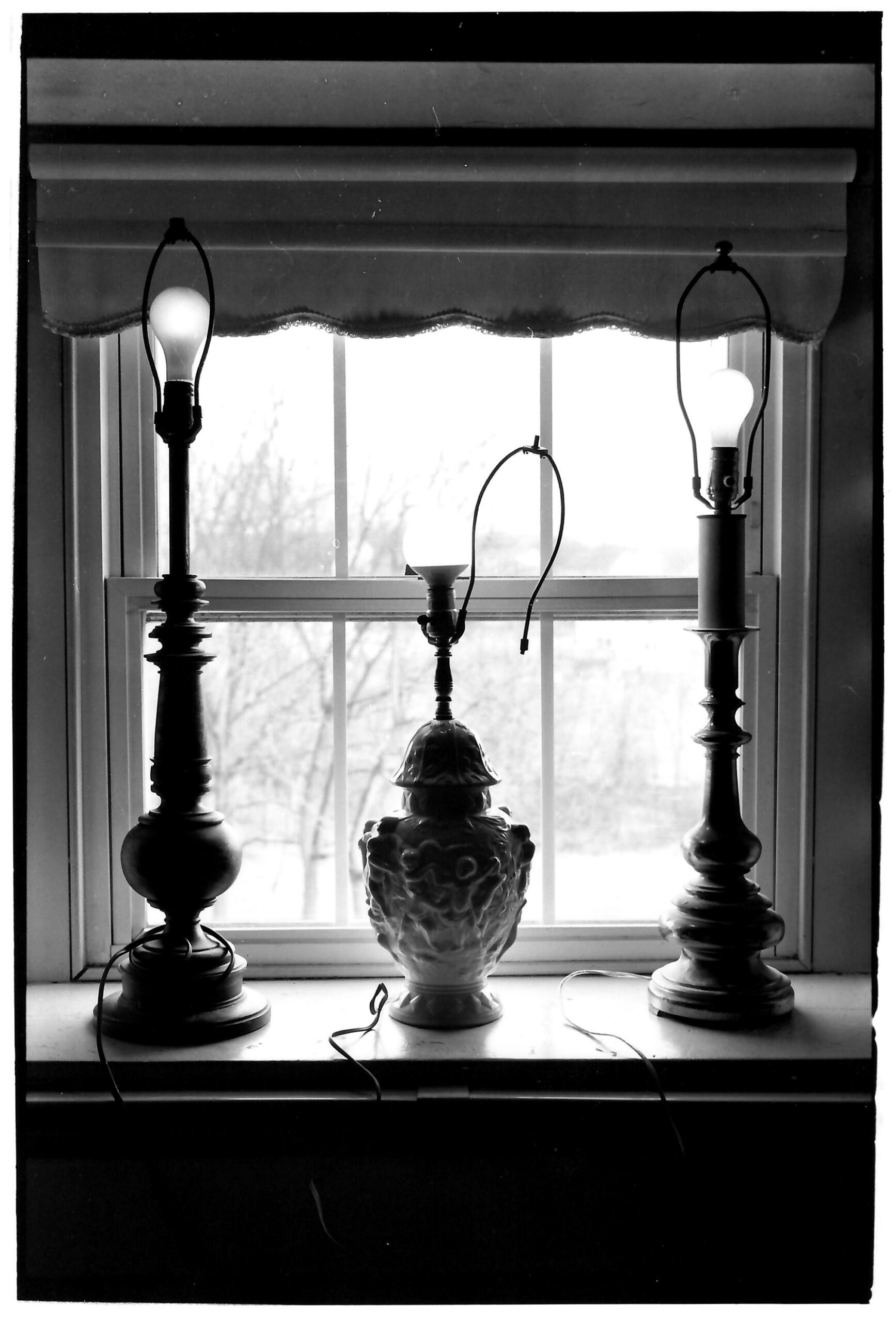
The Lamps is a backlit still life, two lamps and a vase on a windowsill. The exposure problem stacked three ways: daylight blowing out the window behind, one bulb switched on and glowing, and lamp bases in both light and dark finishes. No single exposure holds all of that on paper.
So the balance was built by hand under the enlarger, with the classic tools. A wire with a small black cardboard disc dodged the areas that needed to stay open, keeping the dark bases from sinking to solid black, and a sheet of paper with a hole in it burned extra exposure into the window so it wouldn’t blow out to paper white. Both moving constantly, so the edges wouldn’t show. Software does this with a slider now. In 2008 it was your hands and a count in your head.
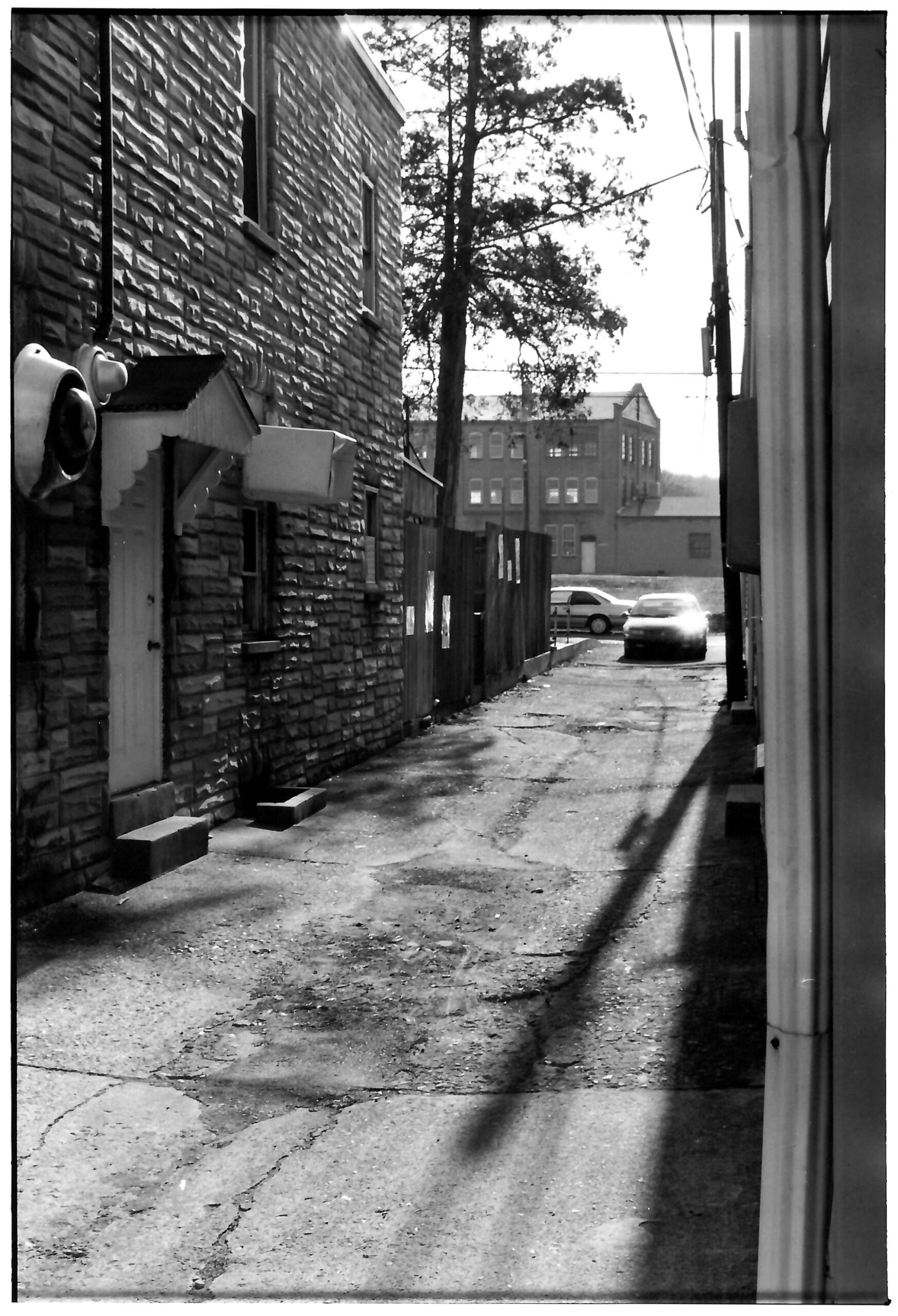
Fleetwood Alley was shot in Fleetwood, PA. Deep shadow down one wall, hard light down the other, and a car surfacing at the end of the lane. It’s the kind of frame where the print either holds the shadow detail or it doesn’t, and there’s nowhere to hide.
Series 03
Select Misc.
Not every print needed a concept. These two are straight silver gelatin prints, and they’re here because the fundamentals matter as much as the experiments.