Remember Weekend Brunch

Remember Weekend Brunch

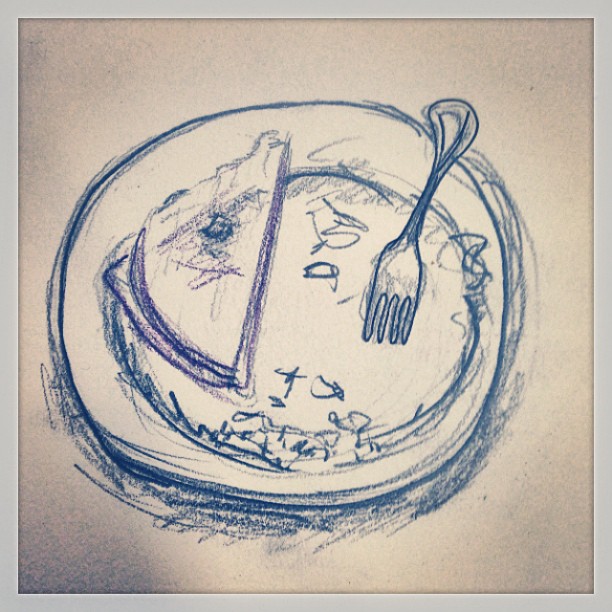
The best part of brunch was the 10 second sketch. For all the allure of unlimited Brunch drinks of Cameo (formerly the Lovin Cup), the meal was sub-par at best and the drinks were of equal caliber.

| ??

| Read Insta-comments -> http://bt.zamartz.com/1dj5uvq

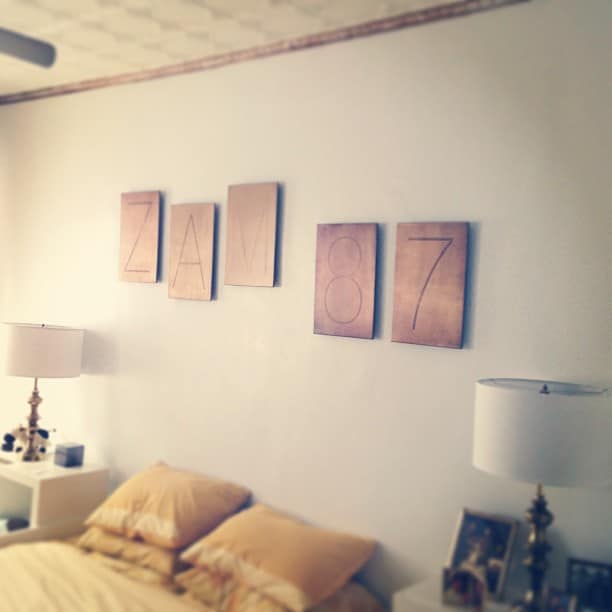
ZAM87 Bedroom Typography

I am so excited to have type this big hanging on my wall! Especially since it fits my theme of Gold (ish) and White! If you would like to buy your own here is the link on Crate & Barrel.

| ??

| Read Insta-comments -> http://bt.zamartz.com/18N5SxR

On Time is the New Late

A couple of years ago, I stepped into one of my first managerial roles as a retail supervisor. As a lowly college student at the time, it felt like a real promotion—one small rung up the ladder of upper-underlings, complete with slightly better pay and the undeniable perk of better/free clothing. But beyond the extras, that job handed me one of the most useful rules I’ve ever picked up.

Our district manager (DM) was leading the training sessions—an eccentric, boisterous guy who took leadership personally and punctuality even more so. On the first day, the store manager, the other supervisor, and I showed up twenty minutes early and helped him set up. At the scheduled start time, we still burned ten minutes on formalities, tracking down people who were lost, and waiting while others settled in with food and drinks.

Once everyone finally sat down, the DM didn’t ease into it.

“Out of twelve, only three of you made it here on time. EARLY is the new ON-TIME; ON-TIME is the new LATE; LATE is the new you’re FIRED! If this happens again this week, I can’t guarantee you’ll have a position.”

It wasn’t the most original idea, but it landed. And after working more jobs—and having to hire, train, and depend on other people—I’ve come back to that statement over and over. I’ve even applied it to the personal side of my life. Here’s why “on-time is the new late.”

“On time” in general

If you arrive exactly on time, you usually miss the first impression. You’re probably not the first one there, which means you’re walking into something already in motion. Whether it’s a date or a meeting, you’ve made yourself the one reaching for the handshake instead of offering it, the one reacting instead of leading, the one trying to catch up instead of setting the tone. Even if you’re technically on time, you’re functionally a minute late while all of that unfolds.

“On time” when you’re leading a meeting

Showing up right at start time often means you’ve kept someone waiting or, at minimum, left them wondering if they’re in the right place. You’re still setting up as people file in. You haven’t chosen the best seat, tested what needs testing, or gotten yourself positioned to be heard clearly. And if you’re known for being “on time,” people will trend late anyway—because they know you won’t really start without them. The end result is simple: your thirty-minute meeting becomes twenty.

“On time” for a date or a friend

Arriving exactly on time can quietly signal that this wasn’t worth any extra effort—that it fit where it fit, and only when your schedule allowed it. It can also suggest you didn’t plan well: not enough time to get ready, confirm details, or account for travel delays. And then you end up doing the worst part: explaining how you “made it just in time,” along with the excuse tour that no one asked for and no one enjoys.

Are there extenuating circumstances? Of course. Things happen. But that’s why showing up early matters: it gives you room for reality. If you’re late, you’d better have a good reason—because otherwise, it’s the new “you’re FIRED!”

Read Full Article on Thought Catalog -> http://bt.zamartz.com/155MA9w

image – epSos.de
Palomino Blackwing Pearl & Long Point Sharpener

The Palomino Blackwing Pearl is the latest addition to the Blackwing family of pencils, notebooks, and lifestyle products. It features a pearl white finish, black imprint and eraser, and a balanced and smooth graphite core that is softer than the graphite found in the Palomino Blackwing 602, but firmer than the graphite found in the Palomino Blackwing. Its unique and iconic ferrule allows you to extend and replace its eraser after extensive use and even “hack” your pencil to give it a custom look.

| ✏️? |  Read Insta-comments -> http://bt.zamartz.com/141DAhM

American Made but no one to Make it?

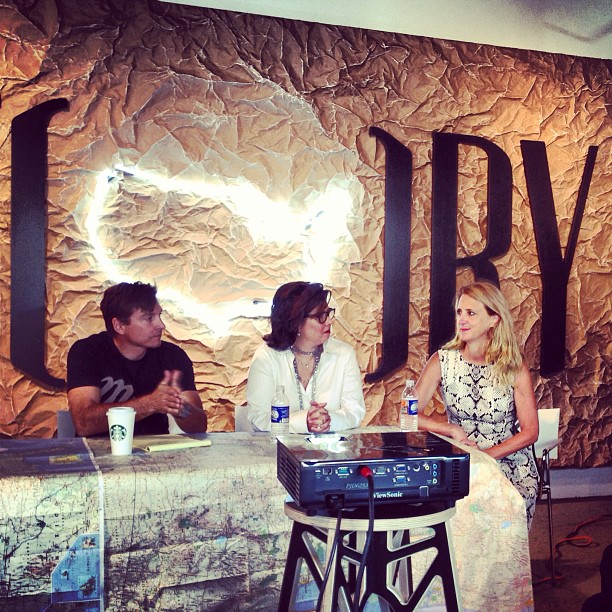
On Aug. 20, 2013, I was glad to stumble upon a discussion on “American Made” held at Story in the downtown Meatpacking District. This open panel raised a lot of good points and turned into a surprisingly constructive conversation. The discussion touched everything from factory safety and product sustainability to the idea of an American manufacturing rebirth—and the outdated mindsets that have treated labor as a commodity.

All of those topics can stand on their own, but I want to drill into the question I introduced: the stigma of learning a trade skill, and the lack of a younger workforce to support any real rebirth in U.S. manufacturing and craftsmanship.

After graduating high school, most students are pushed toward college with the promise that it leads to a higher salary and a stable career. Many are also told that certain concentrations—business, finance, and similar tracks—will practically guarantee a “high salary” job. On the rare occasion that this actually plays out, good for them: it takes hard work and a bit of luck. In reality, plenty of graduates enter the world with no job, let alone one in their field, and they’re already buried in debt.

Meanwhile, many of the options that used to exist during America’s manufacturing boom are now all but extinct. The workforce that has kept these industries alive is quickly retiring, and there’s no replacement line behind them. Family-owned businesses and trade schools that once sustained this lifeline of labor are too often treated like dumping grounds for glamour-less work—or a place to send “problem kids” to be straightened out by hard labor. The idea of honing a skill and becoming a craftsman has been reduced to micro-businesses, niche products, and small pockets of urban economy rather than being recognized as a real path to a stable, respected career.

In the American fashion manufacturing industry, it’s nearly impossible to find quality sewers, pattern makers, pattern cutters, leather workers, and other skilled labor—let alone people who actually want to learn the craft. Many of these roles can pay $40–100k a year, yet there isn’t a strong workforce pipeline to replace retirees, and there aren’t enough craftspeople to expand as demand returns.

This doesn’t improve until we revive the idea that apprenticing is education—and that working with your hands is not second-class, not a last resort, not a stereotype for the underprivileged, the simple-minded, or a placeholder for cheap immigrant labor. We should welcome back the idea of being a master of a trade as something honorable and valuable. We should support companies that invest in employees, and recognize the obvious truth: when a company stands behind its people, it usually correlates directly with the quality and standards of its product.

What can we do about it?

This isn’t complicated, but it does require people to stop pretending it’s someone else’s problem.

  • Bring shop and trade programs back into schools (and treat them as legitimate, not “alternative”). If a district can fund sports, it can fund skills.
  • Normalize paid apprenticeships as a real post–high school path. If someone can take on debt for a degree, they can take on structured training for a trade—except one of those paths actually produces a job-ready worker.
  • Brands and manufacturers should build pipelines, not just complain about shortages. If you need skilled labor, train it: paid apprenticeships, mentorship, and clear wage progression.
  • Stop pretending “Made in USA” is free. If consumers want domestic production, they have to accept the real cost of fair wages, safe factories, and skilled labor.
  • Promote the people behind the product. Make craftsmanship visible again: pattern cutters, sewers, tech designers, and machinists should be treated like experts—because they are.

If “American Made” is going to be more than a label, we need to stop treating skilled labor like a backup plan. You can’t rebuild manufacturing with marketing. You rebuild it with people.

Made + Story Panel = Nanette Lepore, Alex Bogusky and Sheryl Connelly

photo via @nanettelepore

10 Ways To Catch A Faux Fashionista


Fashion is a funny little beast—equal parts craft, commerce, obsession, and pure delusion. And while everyone’s welcome to love it, wear it, and talk about it… not everyone actually knows it. Some people have taste, some people have trends, and some people have a Pinterest board and the confidence of a Paris atelier. So if you’ve ever wondered whether you’re speaking to a real one or someone cosplaying “industry insider,” here’s a quick and mildly cruel checklist to separate the fashion fluent from the faux.

  1. When asked about what they do in the industry, they fail to say what company or brand they work for, nor the position they have. Conclusion, retail sales – everyone starts somewhere.
  2. When talking about a garment color they give a primary color like “blue”, instead of something more precise like “azure”, “cerulean”, “cobalt”, “ultramarine”, “navy”. They also have no idea how very different they all are.
  3. They have knowledge of one small fraction of the industry and do not know more than 5 of the following words or what they refer to (there are some freebies thrown in here): gingham, haberdashery, pirn, peak-toed, chambray, tunic, porkpie, weft, waistcoat, pinking, lapel, raglan sleeve, muslin, french cuffs, epaulet(s),milliner.
  4. In conversation they try and talk about a legacy fashion houses and pronounces one of these brands incorrectly – Givenchy, Versace, Hermes, Louis Vuitton, Chanel, Lanvin, Yves Saint Laurent.
  5. They have not purchased a new piece of clothing, footwear, or an accessory in a month. With closer inspection you see the pit stained, raw hemed, and faded “garments” they are wearing have a name in larger writing and/or say “Limited”, “Juicy”, or “Pink” on them… 
  6. It feel like the laws of physics are being explained when differences are pointed out between the labels of brands, why they have different colors in the names, or why the designer repeats their name excessively.  
    (Examples: Marc Jacobs, Marc by Marc Jacobs, Ralph Lauren, Ralph Lauren Purple label, Ralph Lauren Black label , Ralph Lauren RRL, Alexander McQueen, McQ by Alexander McQueen)
  7. They call “thrift shop” purchases “vintage”, “hand patched” apparel  “couture”, or “quick fashion” pieces “designer”.
  8. They think fashion week is only held at one place, once a year, only in NYC, and is still in “tents” at Bryant Park.
  9. They are clearly trying to drive you into your own grave because they guess at which of these designers are still alive: Jean Paul Gaultier, Karl Lagerfeld, Gabrielle Bonheur Chanel, Gianni Versace, Yves Saint Laurent (short name), Alexander McQueen, Ottavio Missoni, Liz Claiborne.
  10. They gave up on this little test at question two, called it “a total waste of time” and did not even bother to do some reasearch and fill in their knowledge gaps. After all, this is less than comprehensive and most people forgot more about the industry while starting as production assistants, pattern makers, retail sales, and/or producing their own lines before even taking a break to read this. When it comes down to it, this is just some fun from the normal day-to-day, mind-melting, glamour-nothingness that is fashion.


A faux fashionista is easy to spot: vague job claims, “blue” as a color description, and a vocabulary that collapses after “gingham.” They butcher designer names, confuse thrift with vintage and fast fashion with couture, and treat fashion week like it’s still trapped in 2008. They can’t grasp diffusion lines, guess wildly about who’s alive, and when challenged, they bail—because learning ruins the fantasy. In the end, it’s all just a little entertainment from the glamorous, exhausting, brain-melting nothingness that is fashion.

previously featured on  10 Ways To Catch A Faux Fashionista | Thought Catalog

A Call for Card Cases

This is my selection of card cases for the transitional pre-fall season. All a little crazy, all a little fun, all business!
by zamartz featuring a flat wallet
image

image

image

image

image

image

image

Lanvin Red Trilogy Leather Cardholder
$200 – liberty.co.uk

image

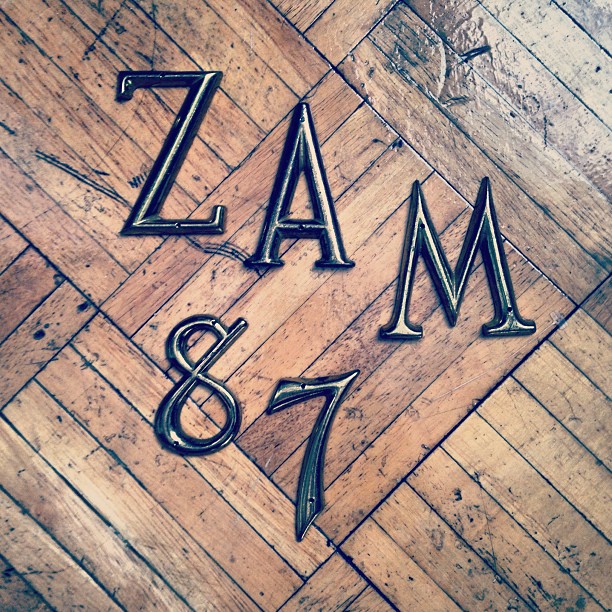
ZAM87 Typo-find

One of my cool typography finds in BK, just some address letters and numbers. Found at the “Junk” store on Driggs Ave. I did have to do some digging to find the “A” (worth it).

| ⭐️⚠️?| Read Insta-comments -> http://bt.zamartz.com/14bbJyl

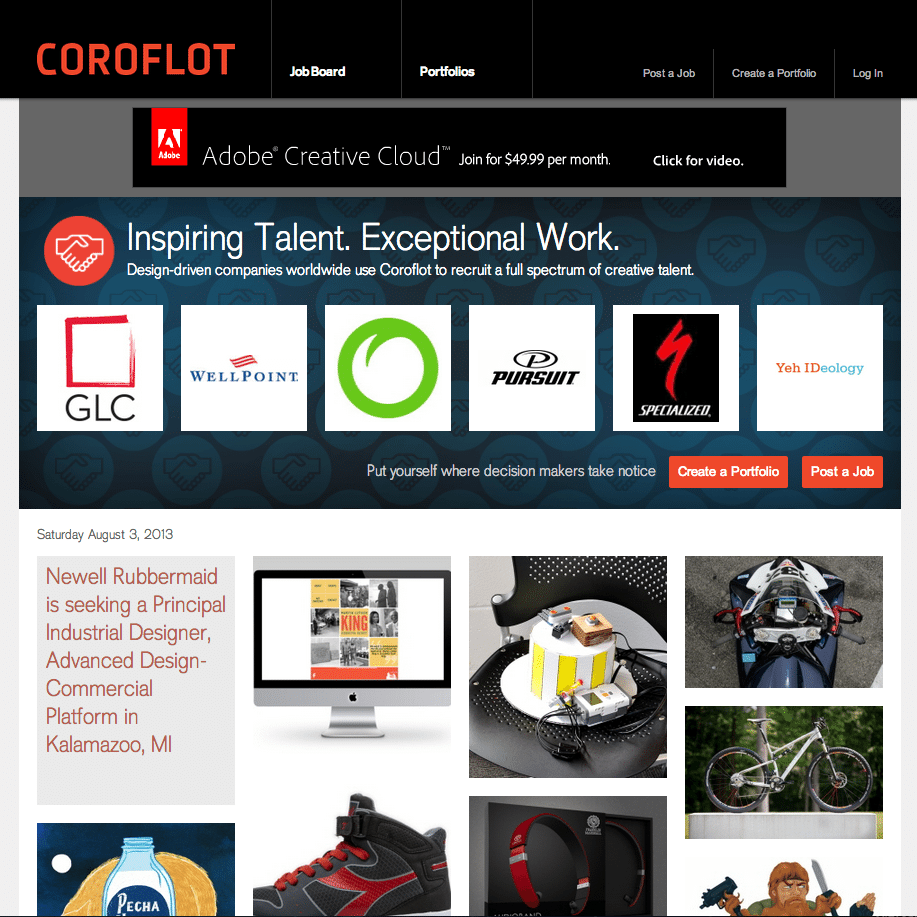
Coroflot.com Featured Project

DESIGNATHON:
24-hour event where teams of volunteer Communication Design students along with professors and alumni, design and produce pro-bono creative works for non-profits.
 
ORGANIZATION MISSION:

[WEBSITE]
To commemorate the life and continue the work of Dr. Martin Luther King Jr. & Coretta Scott King, by developing a memorial, programs and initiatives to honor the King Family and address issues of civil rights, world peace and economic equity for all.

DESIGN:
Simple flat layout design with shallow color pallet and hover-color black & white imagery.
• 100% Responsive design – Breakpoints at 900/600/300 widths
• CSS3 compound stylesheet structure
• Lightweight CMS (Pagelime) editng classes.
• Addaptive jQuery paragraph centering code
• Interactive Google Maps of live site
• Email Subscription and Domation forms

STUDENT DESIGNERS:
• Jessica Savard (Senior – team leader)
• Kirsten Detweiler
• Sydney Schollenberger
(Alumni Mentor – Zachary A. Martz “ME”)

Eastsport Website Simple Responsive Design

Eastsport Website Simple Responsive Design

ORGANIZATION MISSION:
[WEBSITE]
Affordable High-Quality Backpacks :: “Our Bags – Your Life”

DESIGN:
Simple flat layout design with shallow color pallet and homepage slideshows.
• 100% Responsive design – Breakpoints at 900/600/300 widths
• CSS3 compound stylesheet structure 
• Magento Store Theme
• Adaptive jQuery Share Button
• Homepage Slide-Show ares that are responsive
• Category page banners

• Large hit areas with easy to read fonts
• Clear User Flow to Checkout
Exit mobile version