
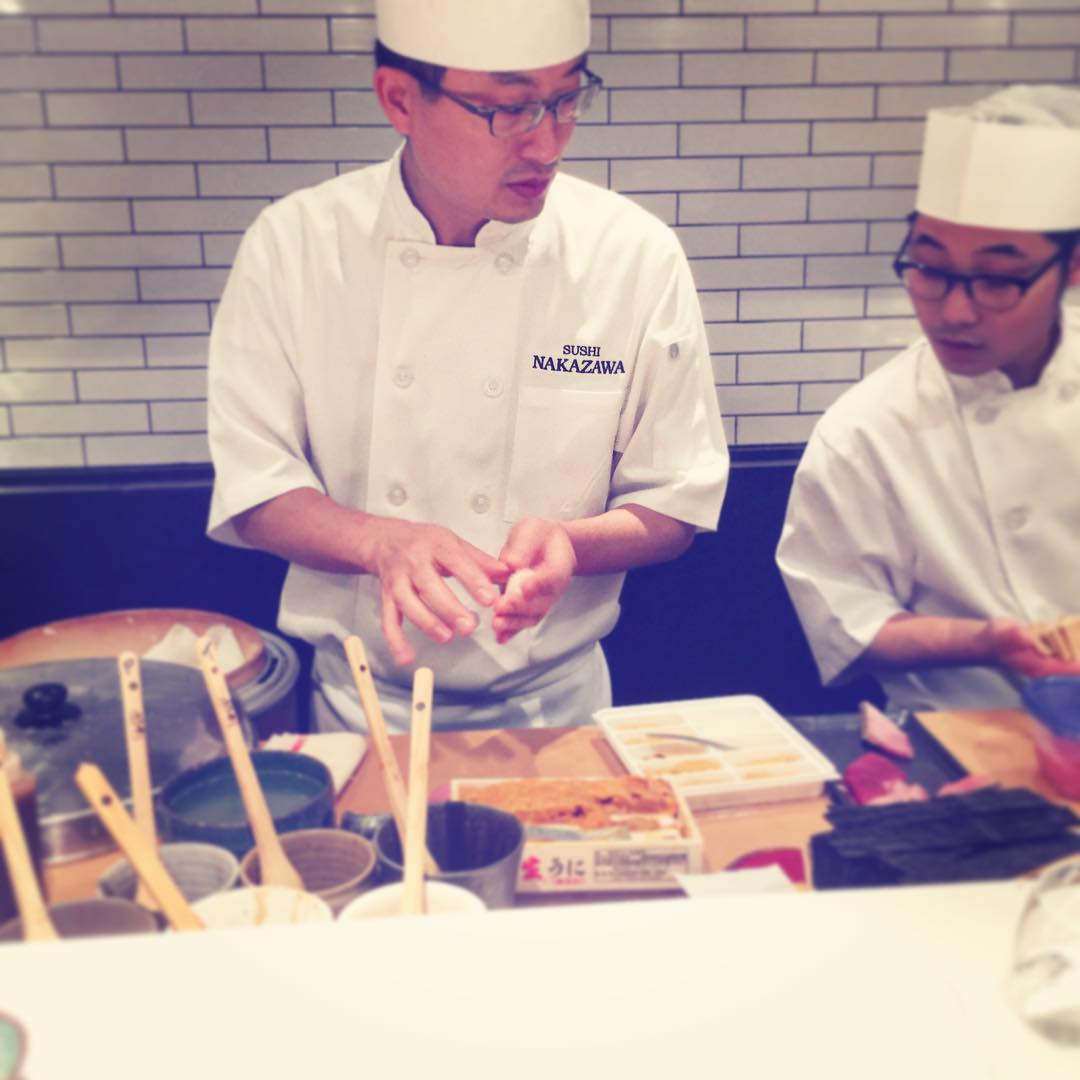
There’s something calming about watching an omakase unfold—like standing quietly in a familiar room and listening to the house creak and breathe. Behind the counter, the chef’s hands move with a practiced ease, pressing rice, smoothing edges, pausing just long enough to let each piece become its own small moment.
This was a 22 piece Sushi Omakase, the kind of meal that arrives one bite at a time and asks you to pay attention. You don’t rush it. You sit still. You let the rhythm set in: the soft thud of the knife, the whisper of nori, the clean scent of rice warming in the air.
Some pieces feel bright and ocean-clear; others are deeper, almost buttery, dissolving before you can name what you’re tasting. Between courses, the counter looks like a workbench—tools laid out, bowls and boards, the quiet order of someone who knows exactly where everything belongs.
Omakase means trust, but it also means surrendering your usual habit of deciding. There’s relief in that. The meal becomes less about choosing and more about noticing: texture, temperature, the way a brush of soy changes the finish, the way a single garnish can pull you back into the present.
By the end, I felt that familiar satisfaction that comes from simple craftsmanship—something made carefully, in sequence, with nothing extra. Just attention, handed across the counter.
Leave a Reply
You must be logged in to post a comment.