
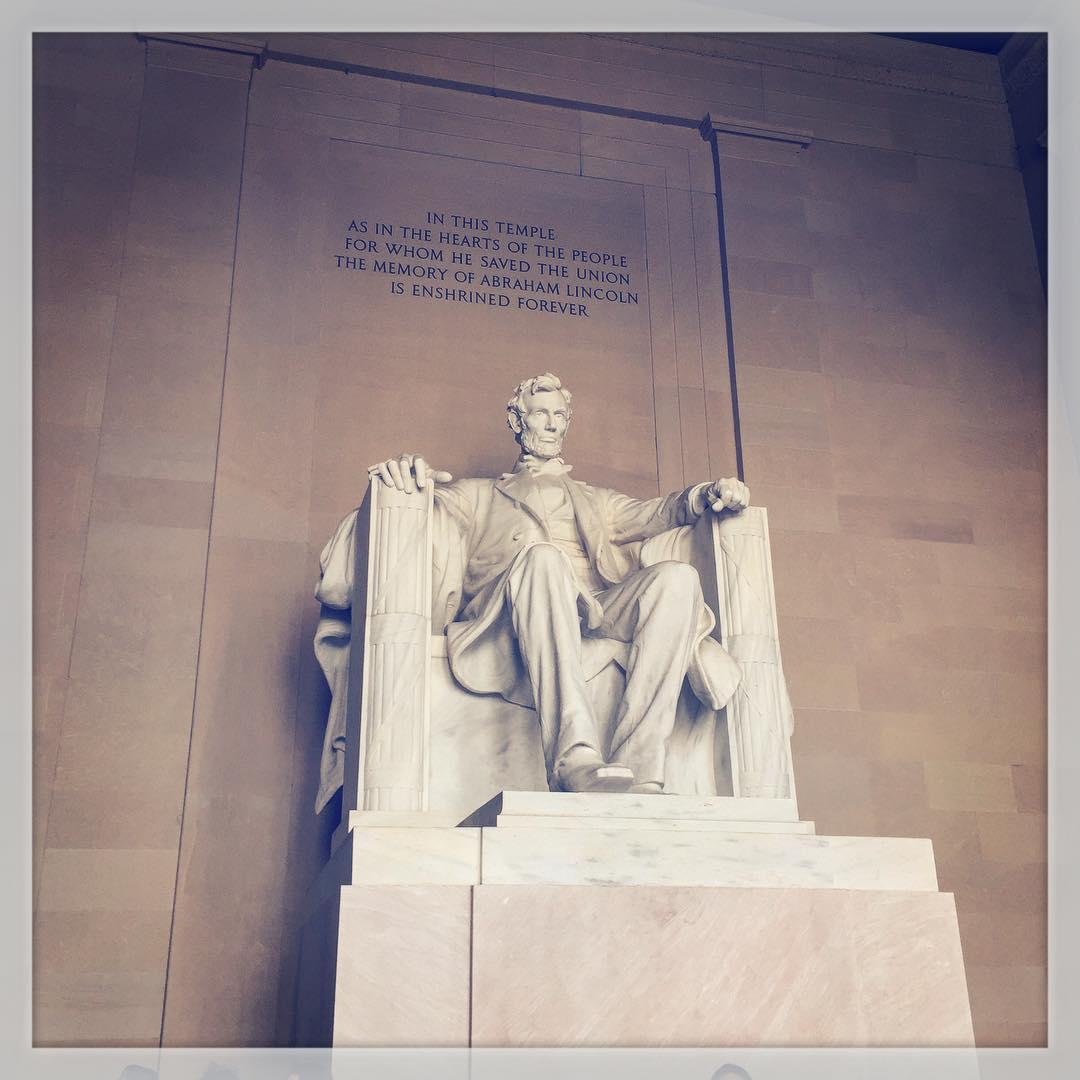
Inside the Lincoln Memorial, the air feels hushed, like the building is holding its breath. The stone walls rise up and out, plain and patient, and the seated figure at the center carries a kind of weight that isn’t only marble.
I keep looking from the statue to the inscription above it, the words set high as if they’ve been there forever, as if they’ve always belonged to the room. The light is cool and soft, and it settles into the folds of the sculpture the way winter light settles into an old house—quietly, without needing attention.
There’s something steady about this place. Not loud patriotism, not spectacle—just a calm reminder of what people can be asked to carry, and what they can choose to hold together. Even with footsteps and distant voices moving through the hall, it still feels like a private moment.
Some landmarks overwhelm you with detail. This one does it with space. You stand there, small against all that stone, and you can almost hear one world pushing up against another: the present pressing forward, the past refusing to be smoothed over.
I left with that familiar mix of calm and melancholy—the sense that memory lives in structures, and that certain rooms are built to keep it from slipping away.
Leave a Reply
You must be logged in to post a comment.