
A very Whiskey Weekend

The weekend had that soft, slow tilt to it—the kind where the hours don’t march so much as drift. A little whiskey on the counter, a little quiet in the room, and a small dog folded neatly into the blue rug like it was the only place that made sense.

Puppysitting sounds like a simple thing until you’re living inside it. You start listening for tiny movements. You learn the house’s new language: the shuffle of paws, the sigh that means “I’m settled,” the sudden alertness at nothing at all. Even the air feels different, held in place by watchfulness.

We called it “A very Whiskey Weekend,” partly as a joke and partly because it was true. Not a wild, bright story—more like a dim lamp in the corner, the kind that makes everything feel warmer than it is. The glass clinked once in a while. The conversation softened. And our temporary roommate kept us honest, eyes half-open, as if to say: don’t make a big production out of comfort.

By Sunday the rug had its own gravity. The dog stayed there, chin down, fur lit at the edges, looking like the weekend itself—tired, content, and unwilling to be hurried. Some moments don’t need improving. They just need noticing.
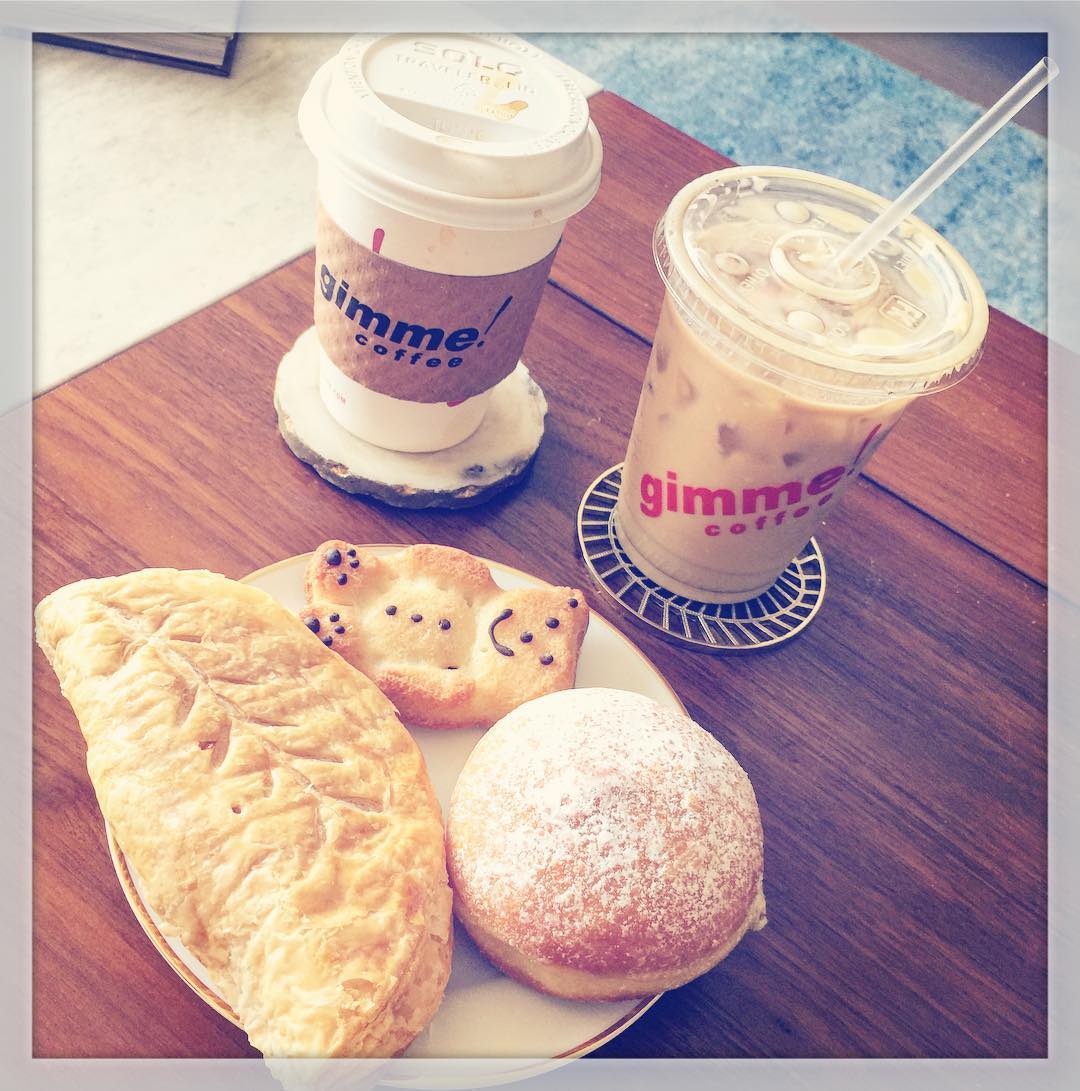
Weekend means Morning Coffee so Gimme

| ☕️?? | #coffee #boyfriendsWhoBrew #weekend @gimmecoffee
| Gimme that coffee please! Angel and I have been in our new apartment for several months now and we have been an a quest for a new coffee place.
Continue reading Weekend means Morning Coffee so Gimme

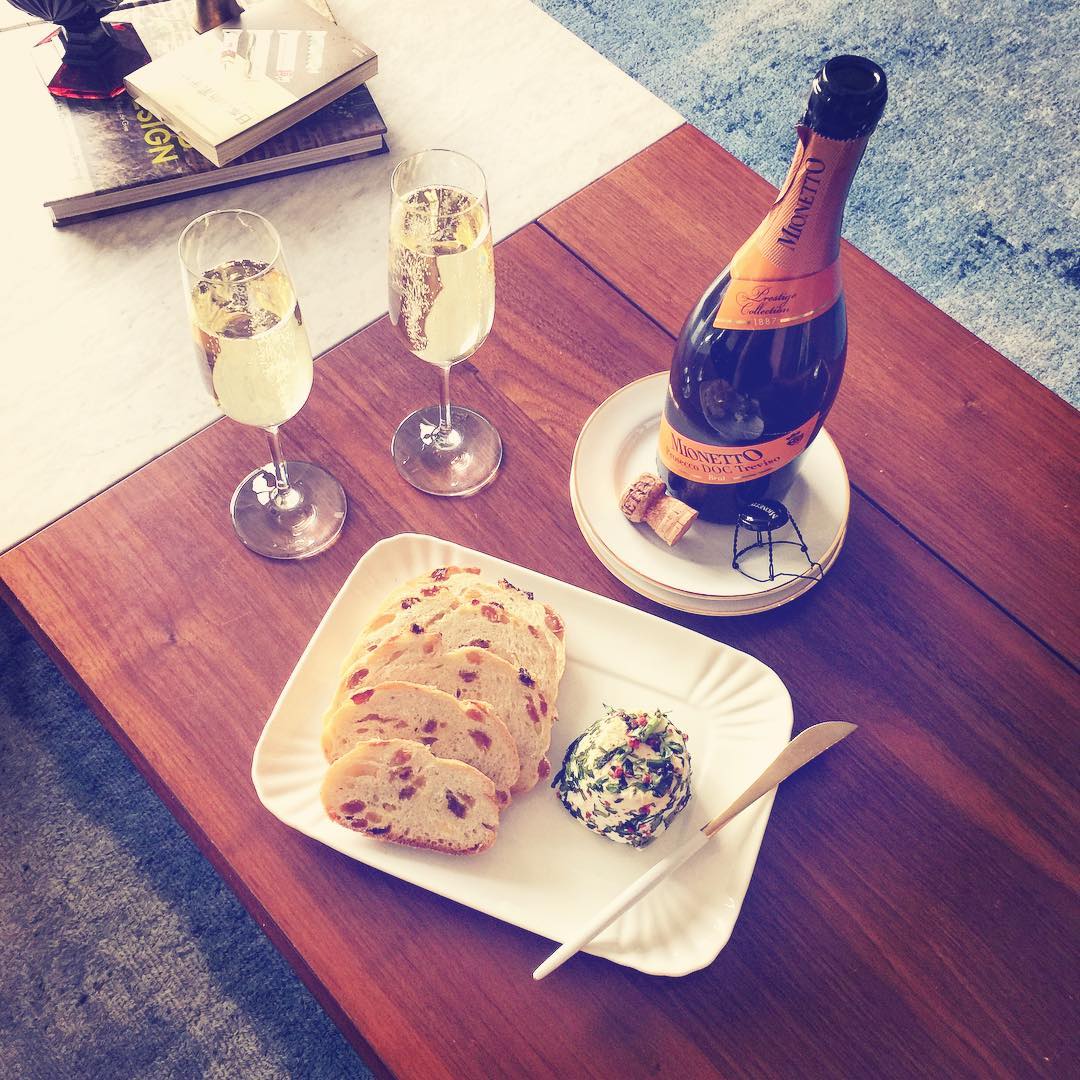
Saturday’s lunch of bubbles and cheese

Two flutes of bubbles catch the light the way a quiet afternoon does—suddenly, and then all at once. The bottle sits on a small plate, cork set aside like a tiny punctuation mark. In front of it: a square dish with slices of raisin bread and a round of herbed cheese, speckled with greens and little flecks of color.

It’s the kind of lunch that feels like you’re borrowing time from the day rather than spending it. No big plans, no ceremony—just the soft comfort of things that pair well together. Crisp bubbles that lift the room. Bread with sweet pockets. Cheese that tastes like someone pressed a garden into something creamy and bright.

I like meals like this because they don’t ask you to perform. They let you sit still. They make the ordinary feel settled—lived-in, not rushed, not polished.

Beyond the table, the world keeps moving with its familiar hum. But here everything slows down enough to notice small details: the wood grain, the cool glass, the knife laid across the plate, waiting.

Saturday’s lunch of bubbles and cheese is simple, but it leaves a trace—the way a good afternoon does—quietly, and for longer than you’d expect.

Sunday Morning Apartment

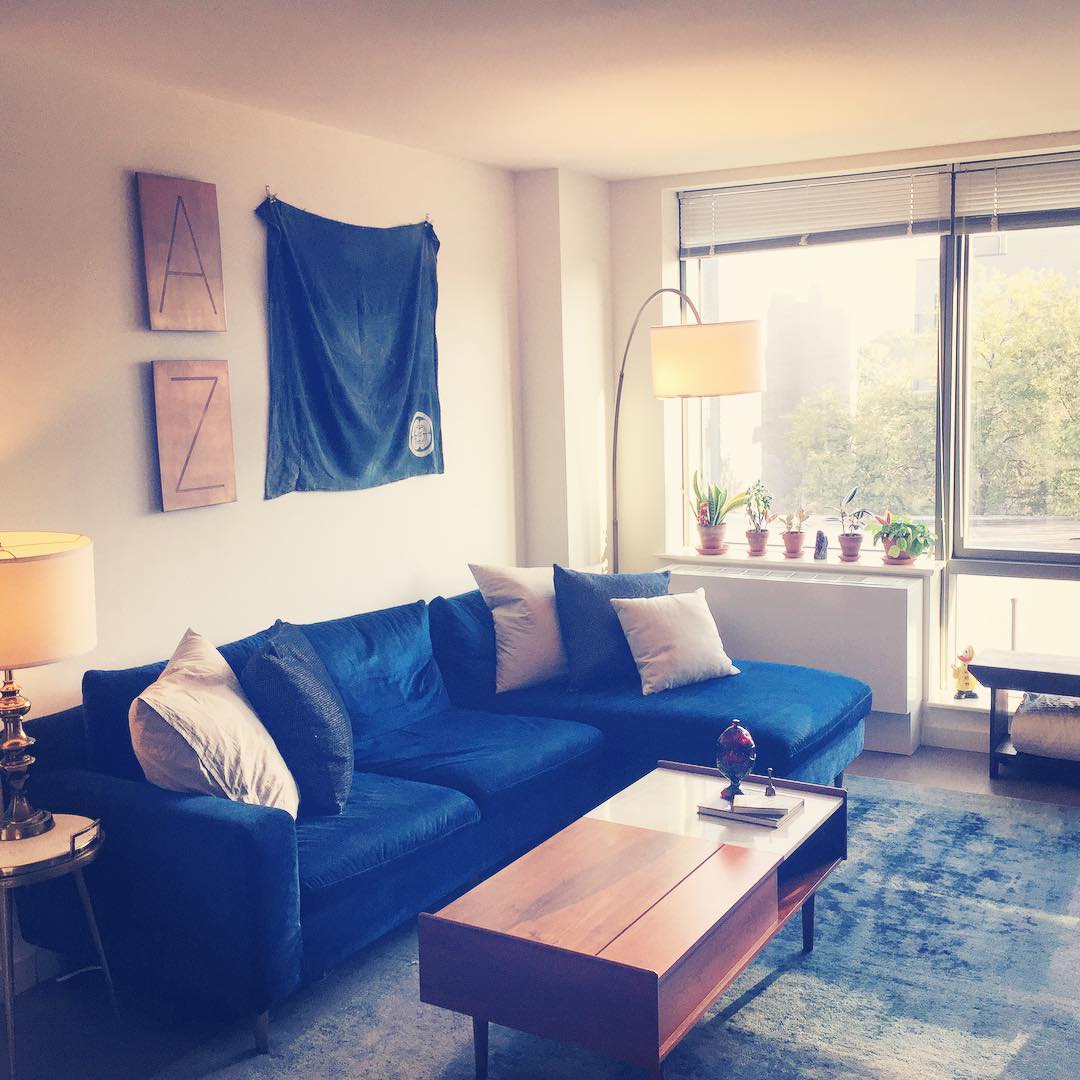
Sunday morning arrives quietly in this apartment, the kind of quiet that feels earned. Light leans in through the wide window and settles on the blue sectional like a warm hand. The room is simple, but not empty—soft lamps, a low wooden table, a scatter of plants lined up along the sill as if they’ve claimed the sun for themselves.

There’s something about a home in the morning that makes it feel alive in a different way. Not loud, not busy—just present. You notice the everyday things you walk past all week: the way the rug holds color, how the couch cushions keep their impressions, how the air looks brighter where it hits the glass.

I like how spaces hold onto small histories. The lived-in creases, the familiar corners, the ordinary objects that become a kind of ritual. Even the blue draped on the wall reads like a flag for the life you’re building together—nothing grand, just a marker that says: we are here, and this is ours.

Outside, the city keeps moving, but inside the morning stretches. Coffee cools. The light shifts. The apartment breathes along beside you, quietly doing its work of making the day feel possible.

Sunday Lunch with Friends

There’s something about Sunday lunch that makes time feel softer. The week may have been loud, cluttered, too fast—but a table set for friends slows everything down to a human pace.

Today was bowls of warm soup scattered with herbs, small plates arranged like little pauses between conversations, and a tall glass catching the light in the middle of it all. The kind of meal that doesn’t ask to be rushed. You take a spoonful, you listen, you laugh, you let the room fill up with the ordinary magic of being together.

I like how a table tells the story without trying. The smudges of sauce, the spoons set down mid-thought, the sharing of bites and opinions. The steady comfort of food that’s been made with care, and then offered up to whoever shows up.

We stayed longer than planned. It always happens that way when the company is easy. The plates emptied slowly, the conversation circled back on itself, and for a while the world outside the window felt distant—still there, just not demanding anything.

Sunday lunch with friends is simple, really. A few dishes, a few people, and the feeling that the day can hold you.

It was a Strange Friday

It was a Strange Friday, the kind that starts ordinary and then tilts, just a few degrees, into something else.

At work we ended up on that familiar couch, the one that feels like it’s been waiting for you since the eighties. Above us, the alphabet climbs the wall in dark, uneven strokes, and the colored lights hang there like tiny warnings or tiny invitations. It’s kitsch, sure, but it’s also oddly convincing—like a room that remembers more than it should.

We sat close, smiling the way you do when you’re trying to prove you’re not nervous. On the table: a Rubik’s Cube, a microphone, mugs and small clutter that makes the scene feel lived-in, like someone stepped out for a second and might come back at any moment. There’s even a little sign that just says “HELP!”—half joke, half mood.

I like spaces like that. They’re staged, but they still manage to press on something real: the hum of childhood TV glow, the comfort of an old living room, the quiet thrill of a mystery you can’t quite name. Among the faded and familiar, curiosity grows.

By the time we stood up, it felt like we’d visited a place that doesn’t exist anymore—except, somehow, it does. For a strange Friday, that was enough.

Seafood Sunday at the Sands

Sunday has its own pace—slow, unhurried, like a room settling after the door clicks shut. At the Sands, that pace comes on a wooden table crowded with plates and the quiet clink of glass.

The spread felt generous in the way good meals do: scallops seared to a caramel edge, shrimp tucked alongside, and thick pieces of fish marked by the grill. A lemon half sat charred and softened, ready to be squeezed until the last bright drop found its way into the sauce. There was a small dish of butter, a bowl of something creamy and comforting, and bread waiting in the background like an old friend.

It wasn’t just “Seafood Sunday” as a theme; it was a little ritual. You take a bite, you pause, you listen to the low noise of the place, and you realize you’re paying attention again—toward flavor, toward warmth, toward whoever is sitting across from you.

I like meals like this because they don’t demand anything dramatic. They just gather small details into one moment: salt, smoke, citrus, the cold glass sweating onto the table. Then the night moves on, and you leave with that settled feeling—fed, quieted, and somehow a little more present than when you arrived.

Union Square Mornings

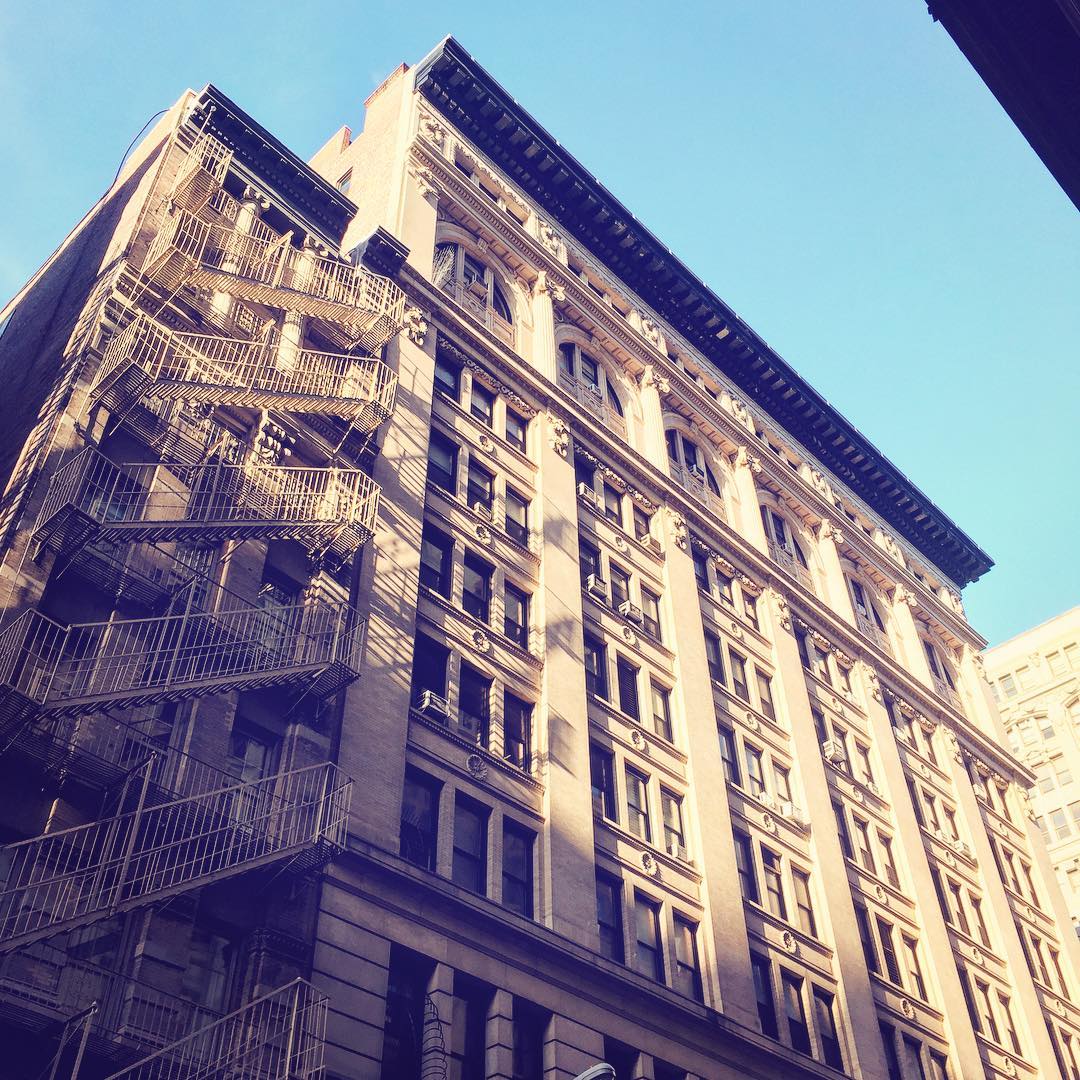
Some mornings in Union Square, the city looks like it’s just been rinsed clean—blue sky stretched tight overhead, light sliding down the face of an old building as if it’s remembering how to shine.

I tilted my head back and watched the geometry take over: rows of windows repeating like a steady breath, and that metal fire escape stitched along the side—practical, unglamorous, and somehow beautiful anyway. The shadows it throws are thin and nervous, like handwriting across brick.

There’s a particular kind of quiet that happens in New York when you catch it early enough. Not silence—never that—but a softer layering of sound. Footsteps, a distant engine, the first conversations of the day. You can feel one world pressing up against another: the rush that’s coming, and this brief pause before it arrives.

Union Square mornings have a way of making the familiar feel slightly secret. The buildings stand still while everything underneath them keeps changing, and for a second you get to be the one who notices. The light moves. The shadows rearrange. The day starts, not with a shout, but with the simple fact of looking up.

Puppy hijack of Connolly

| ????‍♂️
| #puppy #gayboy #puppylove
| This is a short and sweet story. I needed to waste some time between two event but still stay in the city (manhattan).
Ken let me stay at his apartment to order some takeout and play/watch the puppy he was sitting. The pups name is Connolly!
 
| Read Insta-comments -> http://bt.zamartz.com/2yMWU98

Last Vaca Splurge for Sushi

The last stretch of vacation always feels like standing in a doorway—half in the bright, roaming world and half in the quiet that waits back home. So we did what we always do when we’re trying to hold onto a moment: we splurged a little, and we ate slowly.

Two small white plates arrived like clean punctuation on the table. Each held a single piece of fish, lightly seared, the surface freckled and warm-looking, with a small green dab of wasabi and a dark pool of sauce that caught the light. Beside it, a sweating glass of water—simple, almost blank—like the kind of calm you don’t notice until you need it.

There’s something comforting about food this spare. Nothing to hide behind. You taste salt and smoke and the softness underneath, and for a minute the noise of travel fades out. It’s not just dinner; it’s a way of saying goodbye to the trip without making a speech about it.

I keep thinking about how vacations end the way seasons do: not abruptly, but with small changes you only recognize after. A final meal. A final walk back to the hotel. The last time you check the room for forgotten chargers.

If this was our last vacation splurge for sushi, it was a good one—clean, quiet, and memorable in the way simple things can be.

Bears of the Bronx Zoo

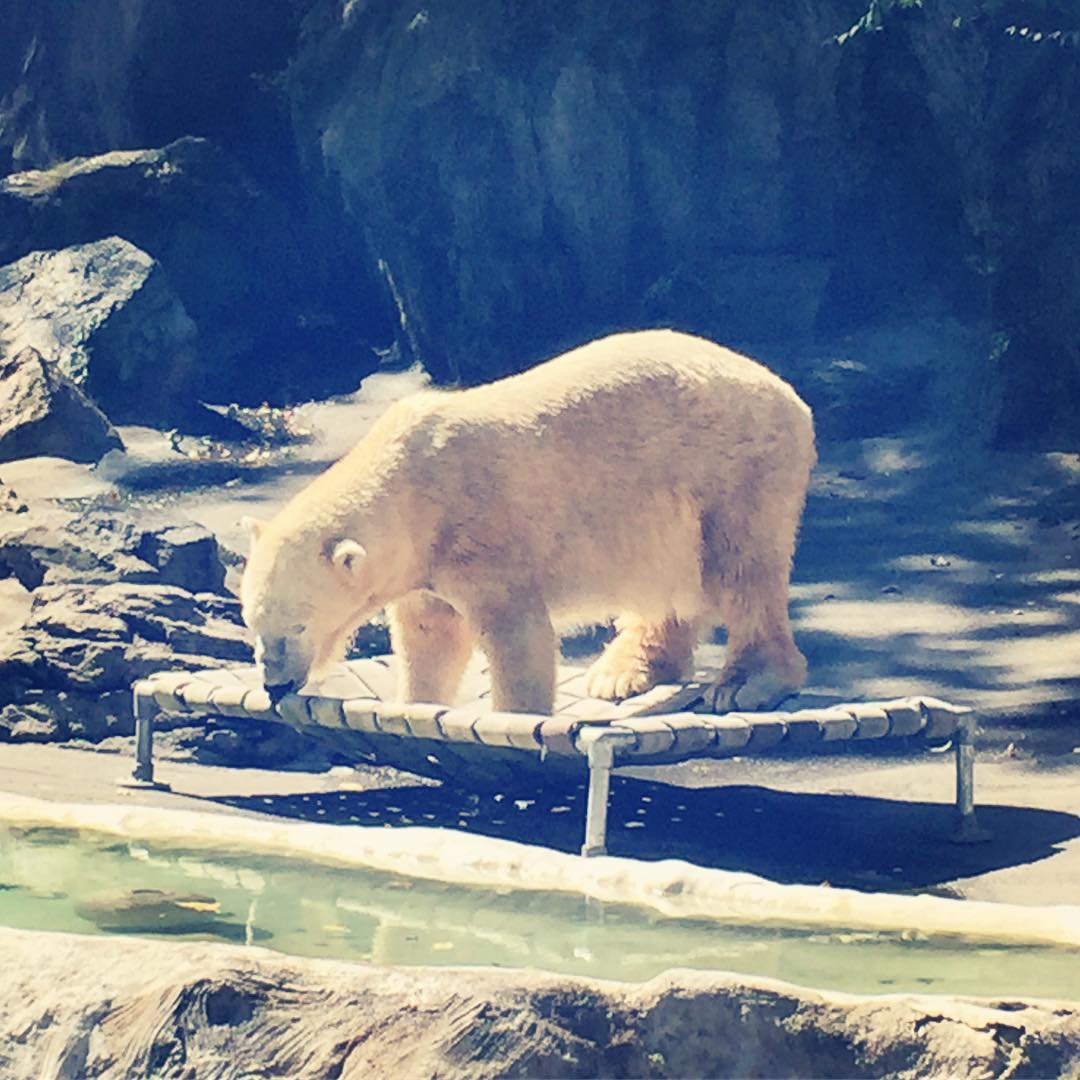
The bears at the Bronx Zoo have a way of making time feel slower. Not because they’re doing something dramatic—no spectacle required—but because they move like they belong to a different clock than the rest of us.

In this moment, a polar bear pads across a low platform beside the water, its pale coat catching the light until it almost looks dusted in snow. The rocks behind it sit dark and still, like old stone holding onto the day’s coolness. Everything feels quiet, contained, and oddly spacious, even with the city just outside the gates.

I keep thinking about how places can feel both constructed and alive at the same time. A zoo habitat is designed, measured, maintained—yet the bear’s presence changes it. Its weight, its patience, the way it lowers its head as it walks, makes the scene feel less like an exhibit and more like a small weather system passing through.

“Bears of the Bronx Zoo” sounds cheerful, like a postcard title, but the image holds something gentler: a calm, almost melancholy steadiness. The kind you notice only after you stop trying to rush the moment into being a story.

Rough Water and Wind

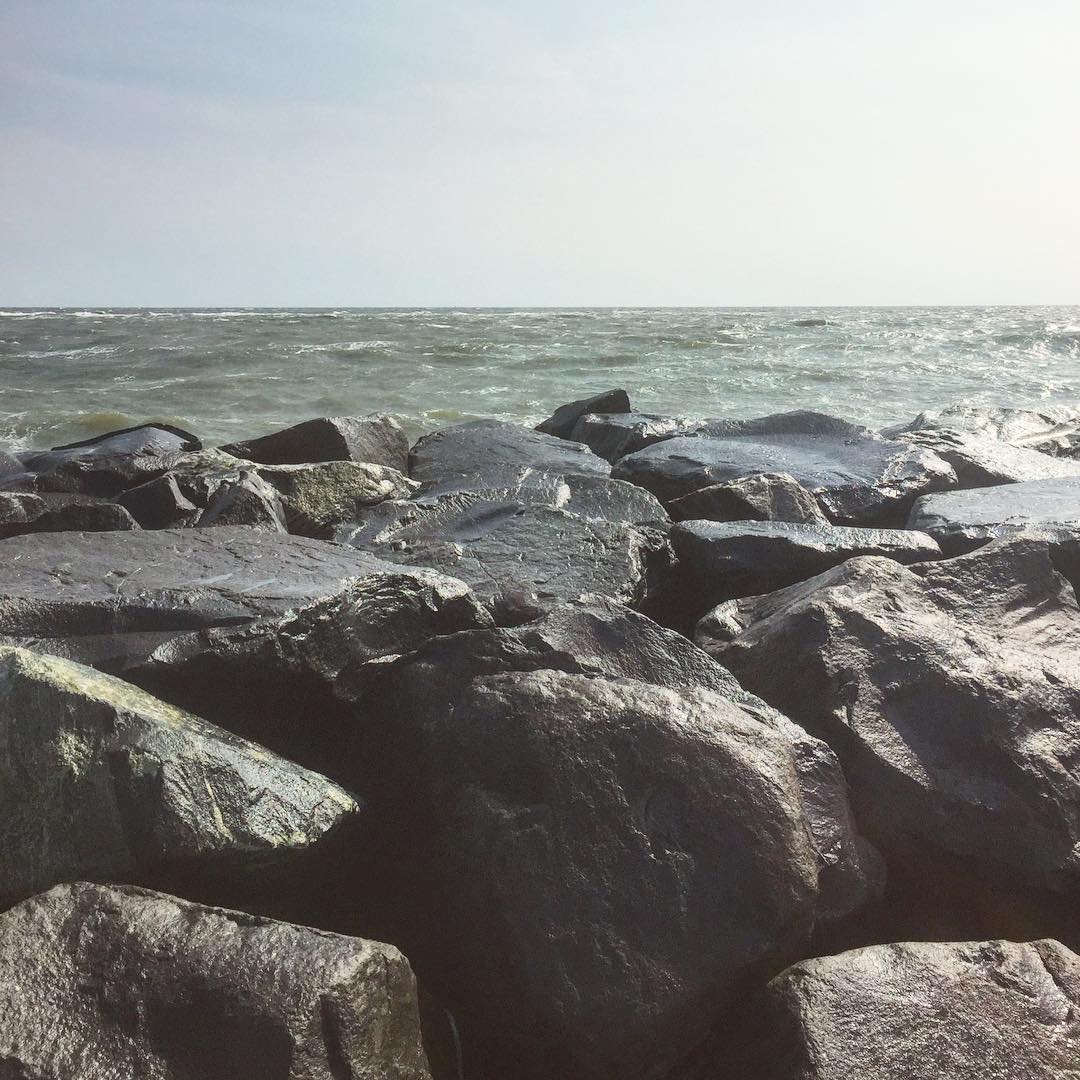
The ocean doesn’t ease into a day like this—it arrives all at once. Wind skims the surface and roughens it into a restless pattern, a field of dark green moving in every direction at the same time. Out on the jetty, the rocks shine with a cold, wet polish, as if the sea has been busy sanding and sealing them for years.

Standing near the water, you can feel how the coast lives alongside you. Not dramatic in the way of a storm with headlines, but in the quieter insistence of weather doing what it has always done: pushing, pulling, testing every edge it can find. The waves don’t break politely. They throw themselves forward, then retreat, then gather again—repeating the same work until the rocks look older and the horizon looks farther away.

Avalon has days that feel like postcards, and then it has days like this, when the beach is a kind of honest. The sky is pale and open, but nothing about the water is calm. It makes you listen harder. It makes you notice the small things—the salt on the air, the uneven rhythm of gusts, the way the light catches on wet stone.

There’s a comfort in that roughness. A reminder that some places don’t change to suit us; they simply continue. And if you stand still long enough, you can feel your own thoughts get stripped down to something simpler, something clean.

Exit mobile version